|
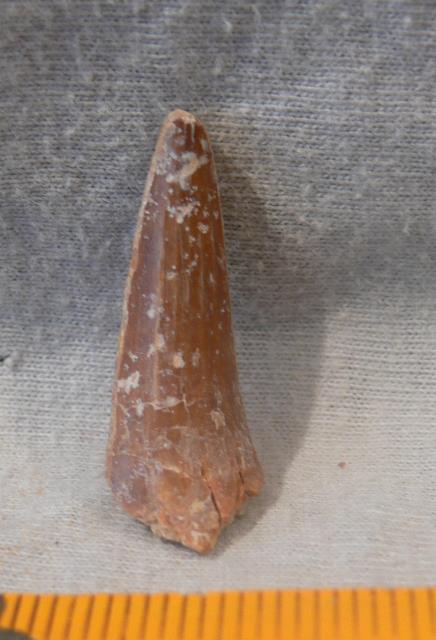
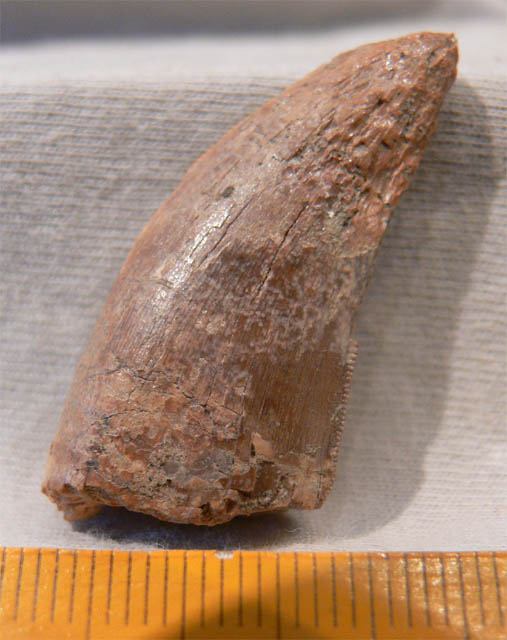
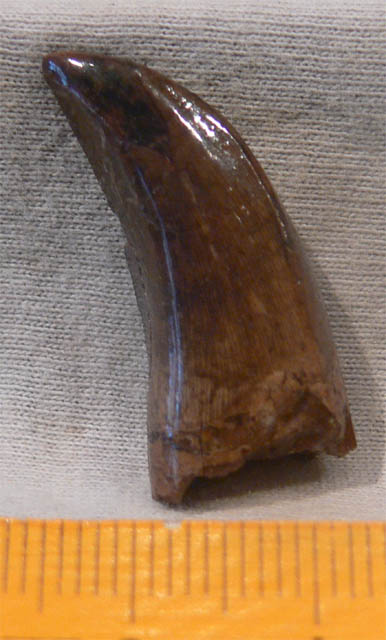
Spinosaurus spec. #VSS5104
African Spinosaurus tooth,
Tegana Formation (Cenomanian)
Cretaceous 95 million years old
Kem Kem Beds, Morocco
Size: 3.7 cm / 1.5 inch
Price: 35.-- |
Spinosaurus spec. #VSS5103
African Spinosaurus tooth,
Tegana Formation (Cenomanian)
Cretaceous 95 million years old
Kem Kem Beds, Morocco
Size: 4.1 cm / 1.6 inch
Price: 35.-- |

|
 |
Spinosaurus spec. #VSS5102
African Spinosaurus tooth,
Tegana Formation (Cenomanian)
Cretaceous 95 million years old
Kem Kem Beds, Morocco
Size: 4.6 cm / 1.8 inch
Price: 40.-- |
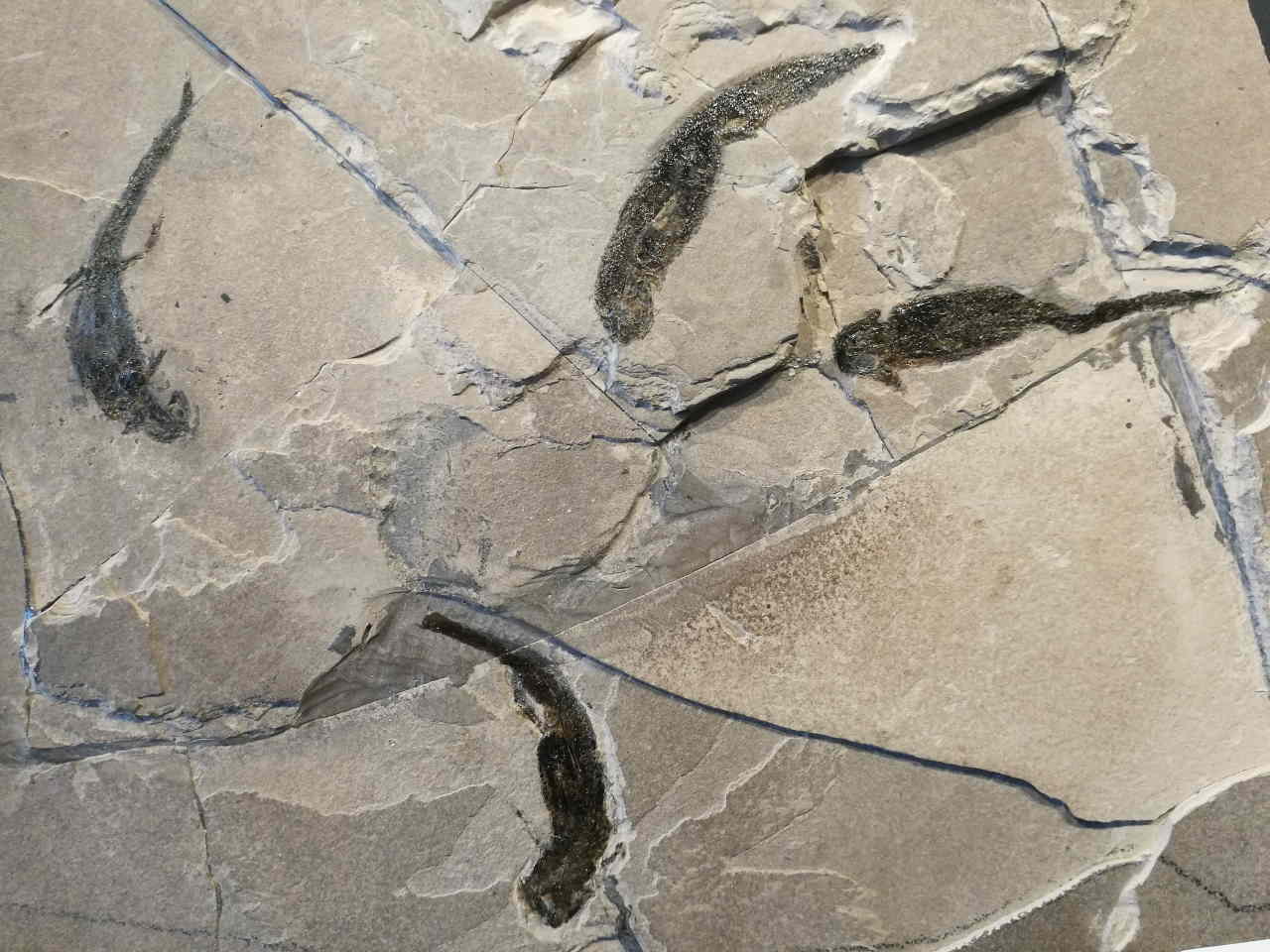
 | Keichousaurus hui #VKH6001
Extra large semi aquatic reptile
Lower Triassic, 242 Million years old
Huxia form, Guanglin, Guizhou province, China
Size matrix: 14.2 by 7.7 inch / 36 by 19.5 cm
Size fossil along curve: 15.2 inch / 38.5 cm
Price: Euro 2200.-- |
 |
Spinosaurus spec. #VSS5092
African Spinosaurus tooth,
Tegana Formation (Cenomanian)
Cretaceous 95 million years old
Kem Kem Beds, Morocco
Size: 2.75 inch / 7 cm
Price: 60.-- |
Spinosaurus spec. #VSS5093
African Spinosaurus tooth,
Tegana Formation (Cenomanian)
Cretaceous 95 million years old
Kem Kem Beds, Morocco
Size: 2.56 inch / 6.5 cm
Price: 60.-- |

|
 |
Spinosaurus spec. #VSS5094
African Spinosaurus tooth,
Tegana Formation (Cenomanian)
Cretaceous 95 million years old
Kem Kem Beds, Morocco
Size: 2.75 inch / 7 cm
Price: 60.-- |
Spinosaurus spec. #VSS5095
African Spinosaurus tooth,
Tegana Formation (Cenomanian)
Cretaceous 95 million years old
Kem Kem Beds, Morocco
Size: 2.75 inch / 7 cm
Price: 60.-- |

|
 |
Spinosaurus spec. #VSS5096
African Spinosaurus tooth,
Tegana Formation (Cenomanian)
Cretaceous 95 million years old
Kem Kem Beds, Morocco
Size: 2.75 inch / 7 cm
Price: 60.-- |
Spinosaurus spec. #VSS5097
African Spinosaurus tooth,
Tegana Formation (Cenomanian)
Cretaceous 95 million years old
Kem Kem Beds, Morocco
Size: 2.75 inch / 7 cm
Price: 60.-- |

|
 |
Spinosaurus spec. #VSS5098
African Spinosaurus tooth,
Tegana Formation (Cenomanian)
Cretaceous 95 million years old
Kem Kem Beds, Morocco
Size: 1.22 inch / 3.1 cm
Price: 25.-- |
Spinosaurus spec. #VSS5099
African Spinosaurus tooth,
Tegana Formation (Cenomanian)
Cretaceous 95 million years old
Kem Kem Beds, Morocco
Size: 1.34 inch / 3.4 cm
Price: 35.-- |

|
 |
Spinosaurus spec. #VSS5100
African Spinosaurus tooth,
Tegana Formation (Cenomanian)
Cretaceous 95 million years old
Kem Kem Beds, Morocco
Size: 1.57 inch / 4 cm
Price: 40.-- |
Spinosaurus spec. #VSS5101
African Spinosaurus tooth,
Tegana Formation (Cenomanian)
Cretaceous 95 million years old
Kem Kem Beds, Morocco
Size: 1.38 inch / 3.5 cm
Price: 35.-- |

|

|
Coloborhynchus moroccensis #VCM5088
African Pterosaur nice Tooth,
Also known as Siroccopteryx moroccensis
Tegana Formation (Cenomanian)
Cretaceous 95 million years old
Kem Kem Beds, Morocco
Size: 0.79 inch / 2 cm
Price: Euro 45.-- |
Siroccopteryx moroccensis #VCM5089
African Pterosaur nice Tooth,
Also known as Siroccopteryx moroccensis
Tegana Formation (Cenomanian)
Cretaceous 95 million years old
Kem Kem Beds, Morocco
Size: 0.51 inch / 1.3 cm
Price: Euro 35.-- |
 |

|
Deltadromaeus agilis #VDA5090
African Theropod tooth
Tegana Formation (Cenomanian)
Cretaceous 95 million years old
Kem Kem Beds, Morocco
Size: inch 0.75 / 1.9 cm
Price: Euro 45.-- |
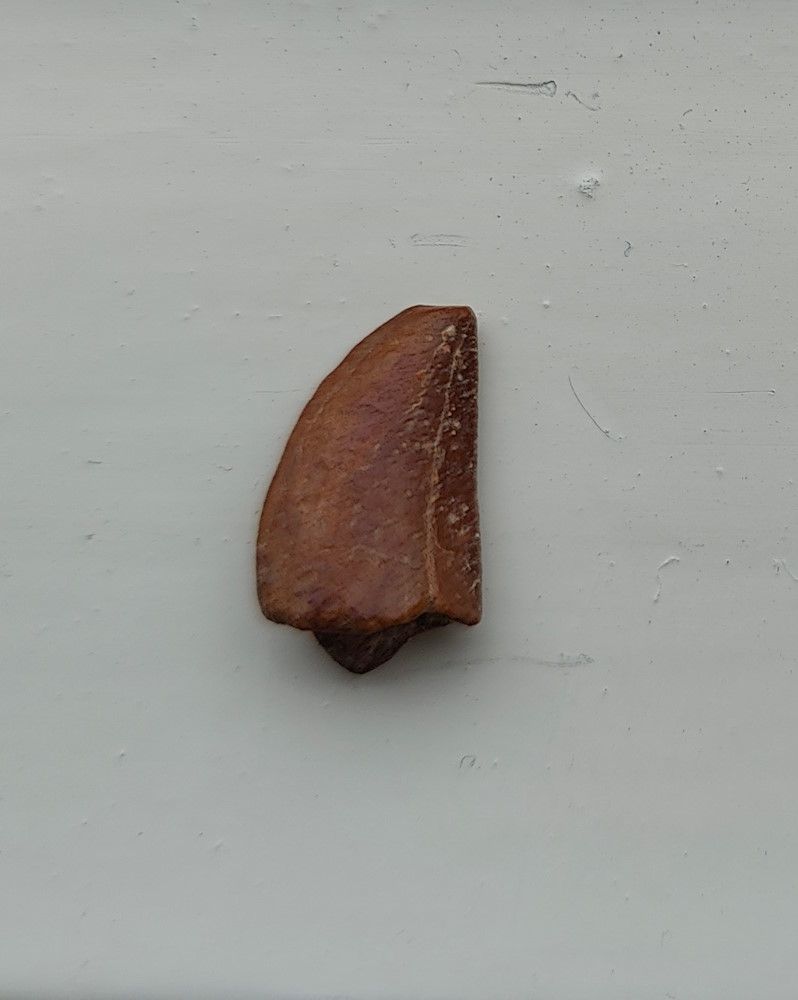
Deltadromaeus agilis #VDA5091
African Theropod tooth
Tegana Formation (Cenomanian)
Cretaceous 95 million years old
Kem Kem Beds, Morocco
Size: 0.59 inch / 1.5 cm
Price: Euro 40.-- |
 |
Spinosaurus spec. #VSS5087
African Spinosaurus tooth,
Tegana Formation (Cenomanian)
Cretaceous 95 million years old
Kem Kem Beds, Morocco
Size: 2.95 inch / 7.5 cm
Price: Euro 60.-- |

|
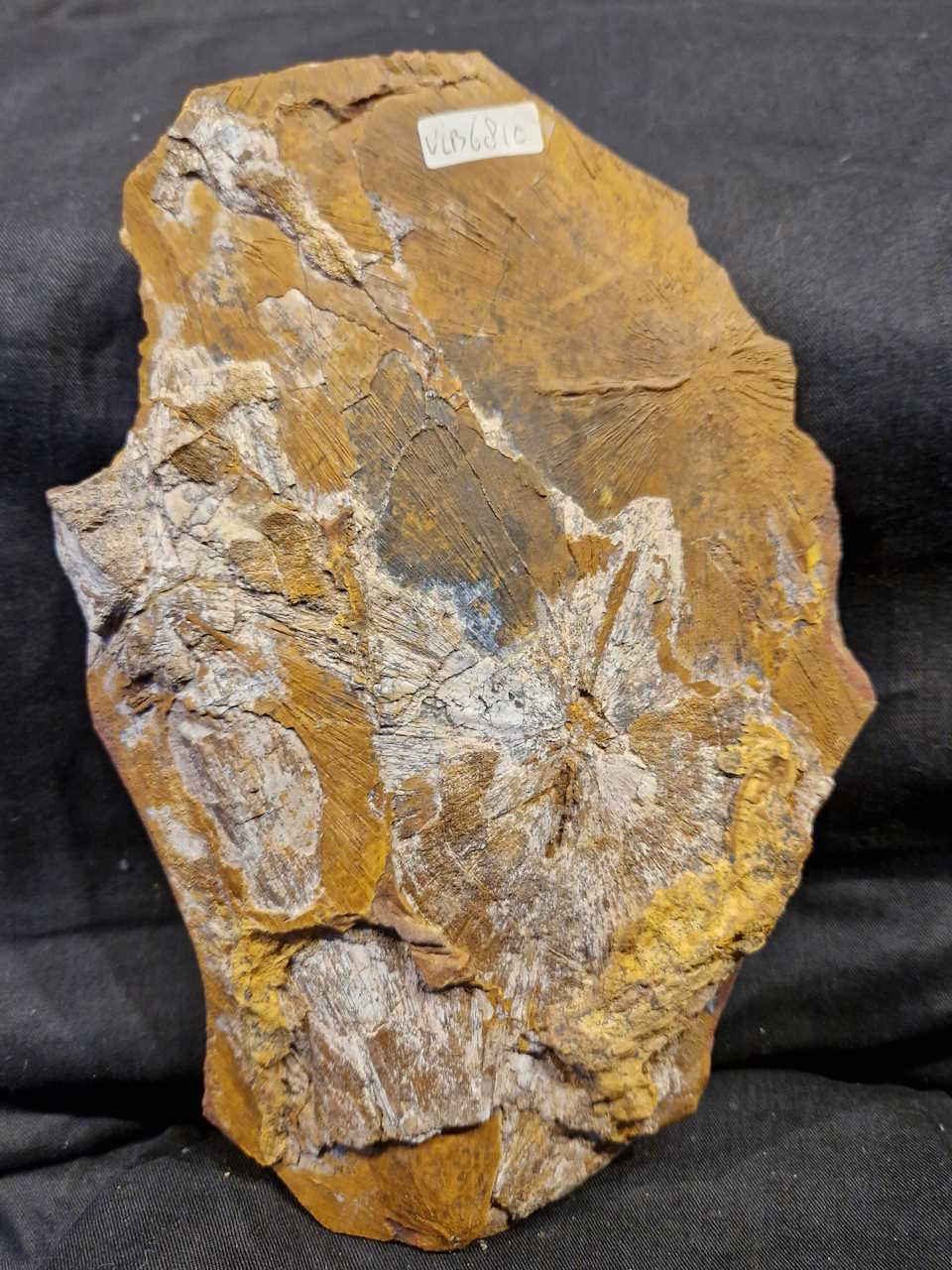
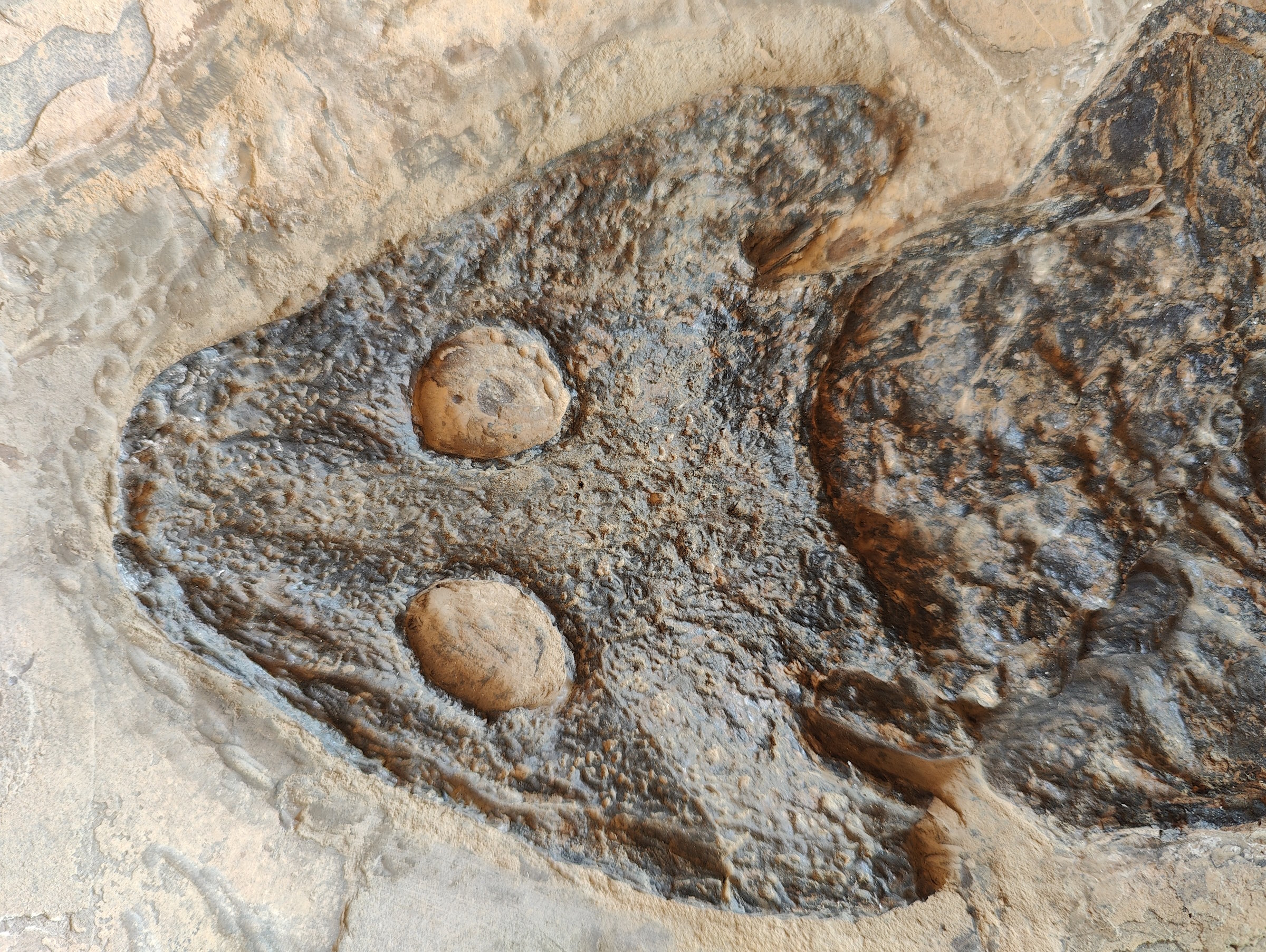
Labyrinthodont spec. #VLB6810
It is basically the whole skull roof of a very large labyrinthodont.
This piece is exceptional and extreme rare.
Blobs shale, M. Triassic, 237 million years old
Erskine Ranges, Western Australia
Size : 8.2 by 5.4 inch / 20.5 by 13.5 cm
Price: Euro 1240.--
|
 |
Spinosaurus spec. #VSS5081
Rare African Spinosaurus tooth,
Tegana Formation (Cenomanian)
Cretaceous 95 million years old
Kem Kem Beds, Morocco
Size: 2.17 inch / 5.5 cm
Price: Euro 40.-- |

|
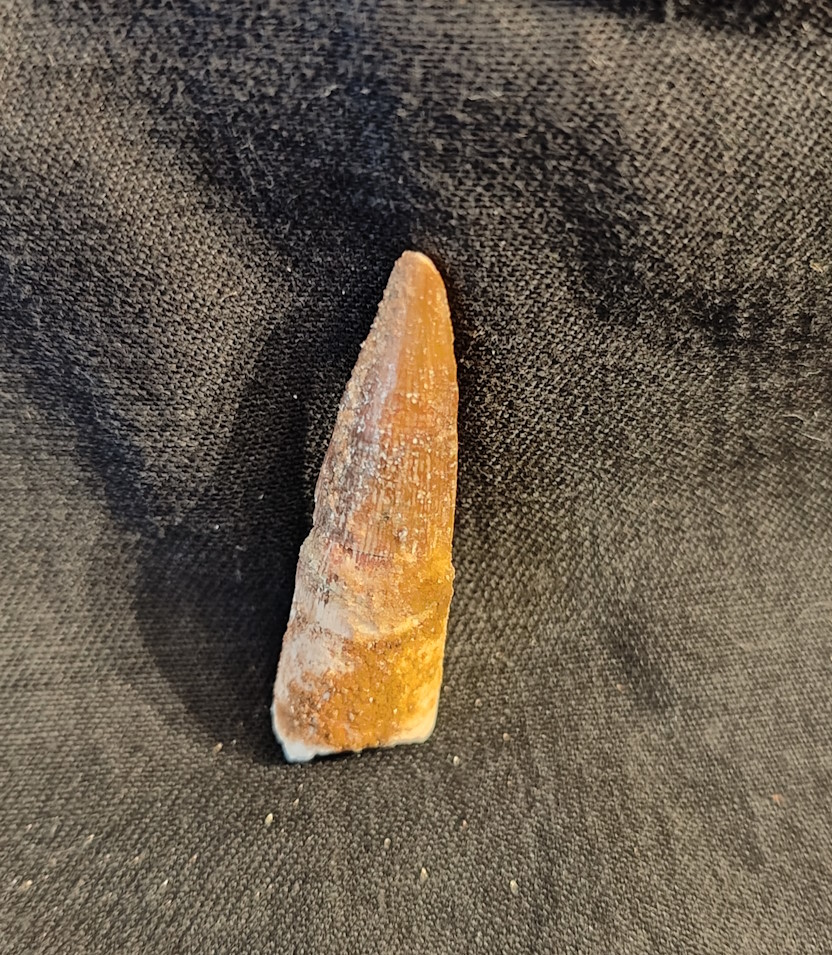
Spinosaurus spec. #VSS5085
Rare African Spinosaurus tooth,
Tegana Formation (Cenomanian)
Cretaceous 95 million years old
Kem Kem Beds, Morocco
Size: 1.42 inch / 3.6 cm
Price:  |
|
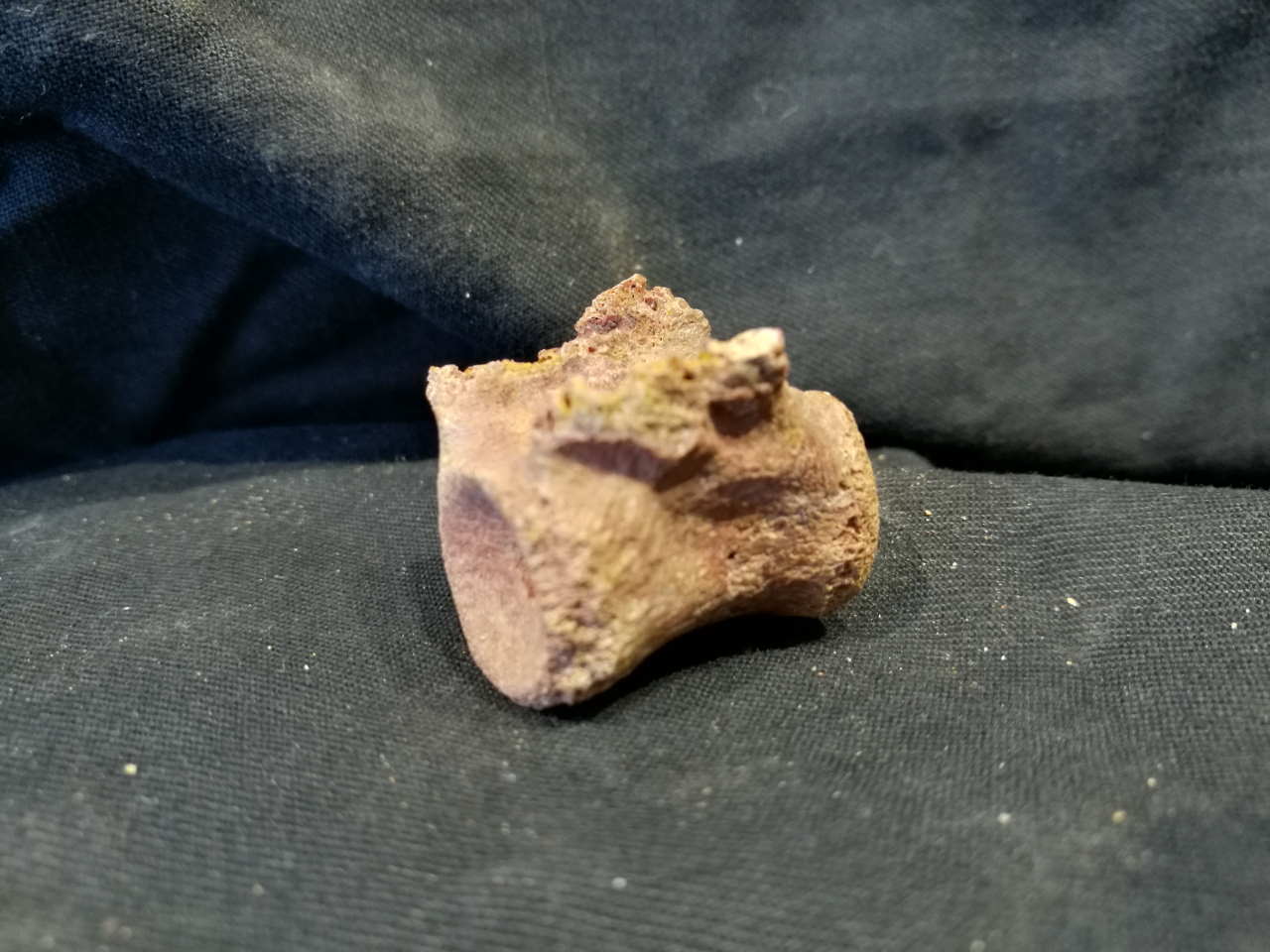
Deltadromeus cf. agilis #VDM4223
African Raptor/Ceratosaur nice vertebra,
No restoration
Tegana Formation (Cenomanian)
Cretaceous 95 million years old
Kem Kem Beds, Morocco
Size: 1 inch / 2.5 cm
Price: Euro 70 |
|
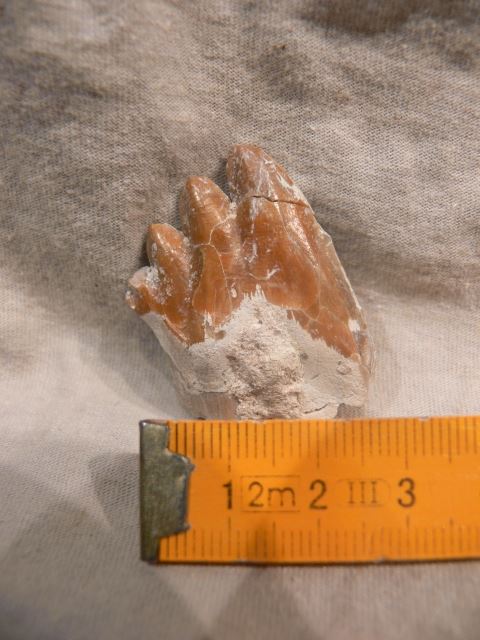 |
Zyghoriza sp.#SWM9309
Rare, Carniverous Basilosaurus whale tooth (Molar).
No restoration,some repair.
Eocene 38 Million years old
Dakhla, Western Sahara, Morocco
Size : 1.6 inch / 4 cm
Price: 60.-- |
Batrachichnus delicatulus #VNM5060
Amphibian footprints.
Old collection
L. Permian, 280 million years old
Heuco Formation, New Mexico, 50 miles east of Roswell
Size track: 4.6 inch / 11.5 cm
Price: Eur 200.- |

|

|
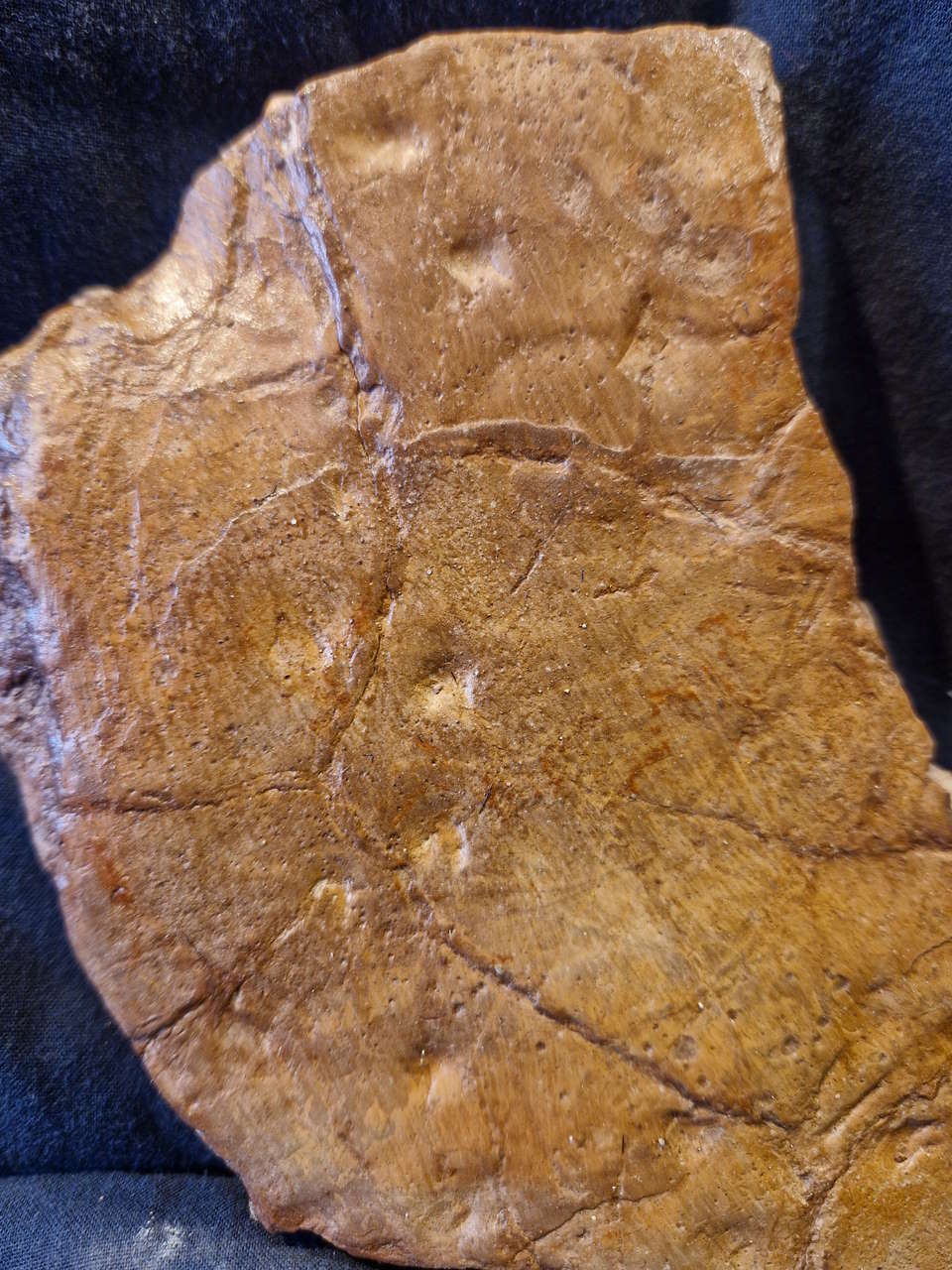
Batrachichnus delicatulus #VNM5061
Amphibian Perfect footprint.
Old collection
L. Permian, 280 million years old
Heuco Formation, New Mexico, 50 miles east of Roswell
Size print: 2 inch / 5 cm
Price: Eur 100.- |
Batrachichnus delicatulus #VNM5062
Amphibian footprints.
Old collection
L. Permian, 280 million years old
Heuco Formation, New Mexico, 50 miles east of Roswell
Size track: 4.2 inch / 10.5 cm
Price: Eur 190.- |
|
|
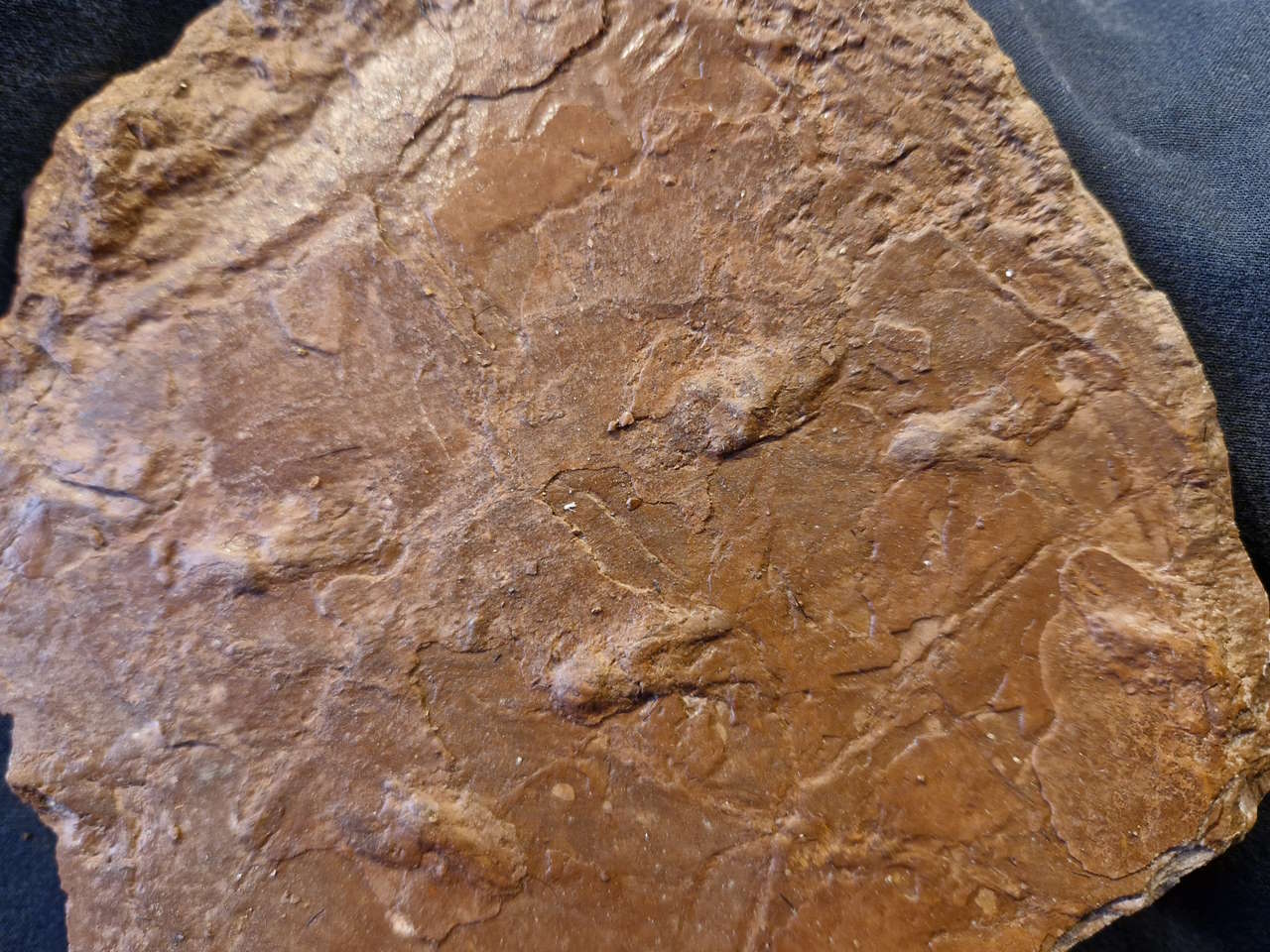
Batrachichnus delicatulus #VNM5063
Amphibian footprints.
Old collection
L. Permian, 280 million years old
Heuco Formation, New Mexico, 50 miles east of Roswell
Size track: 5.2 inch / 13 cm
Price: Euro 190.- |
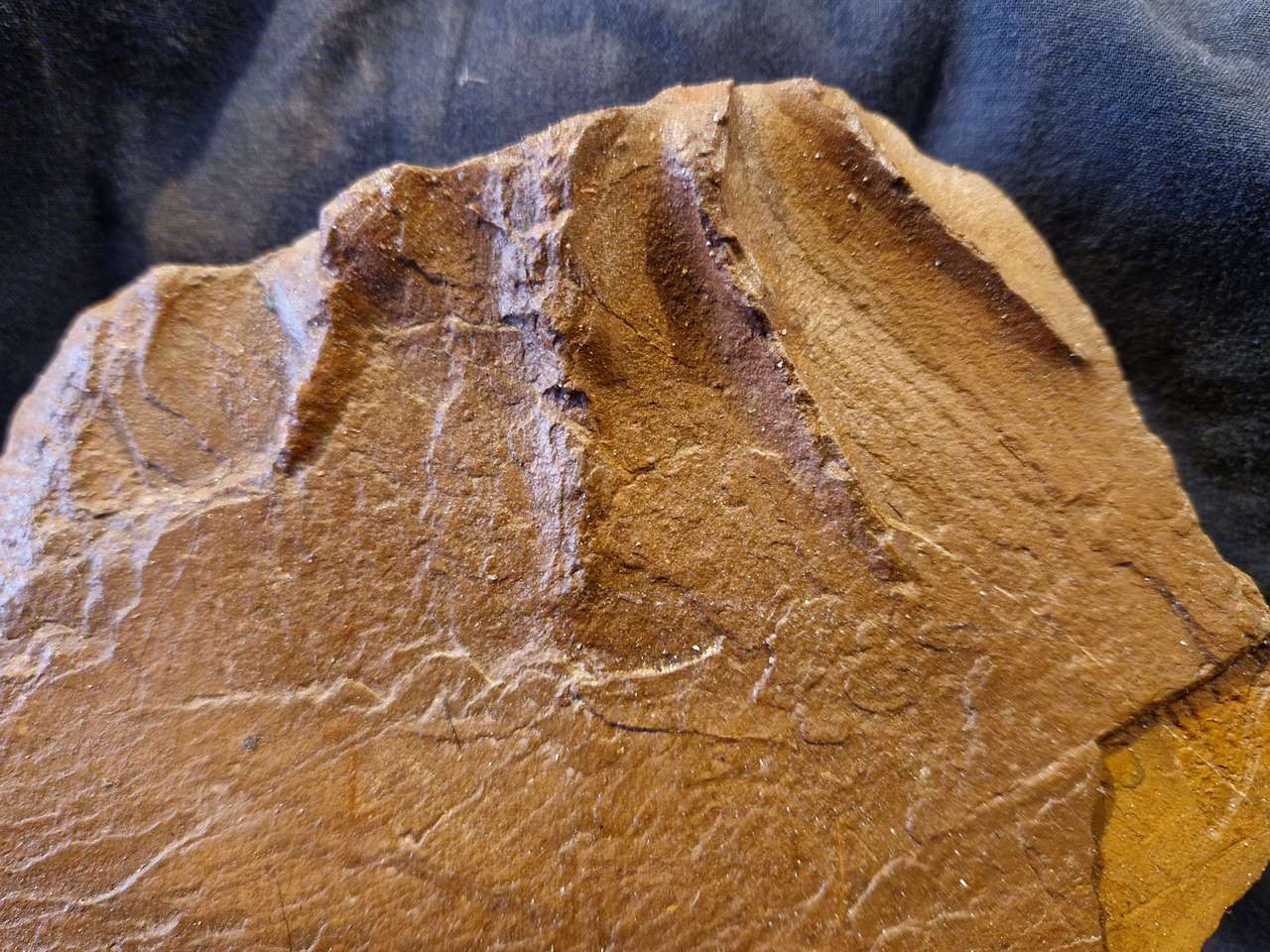
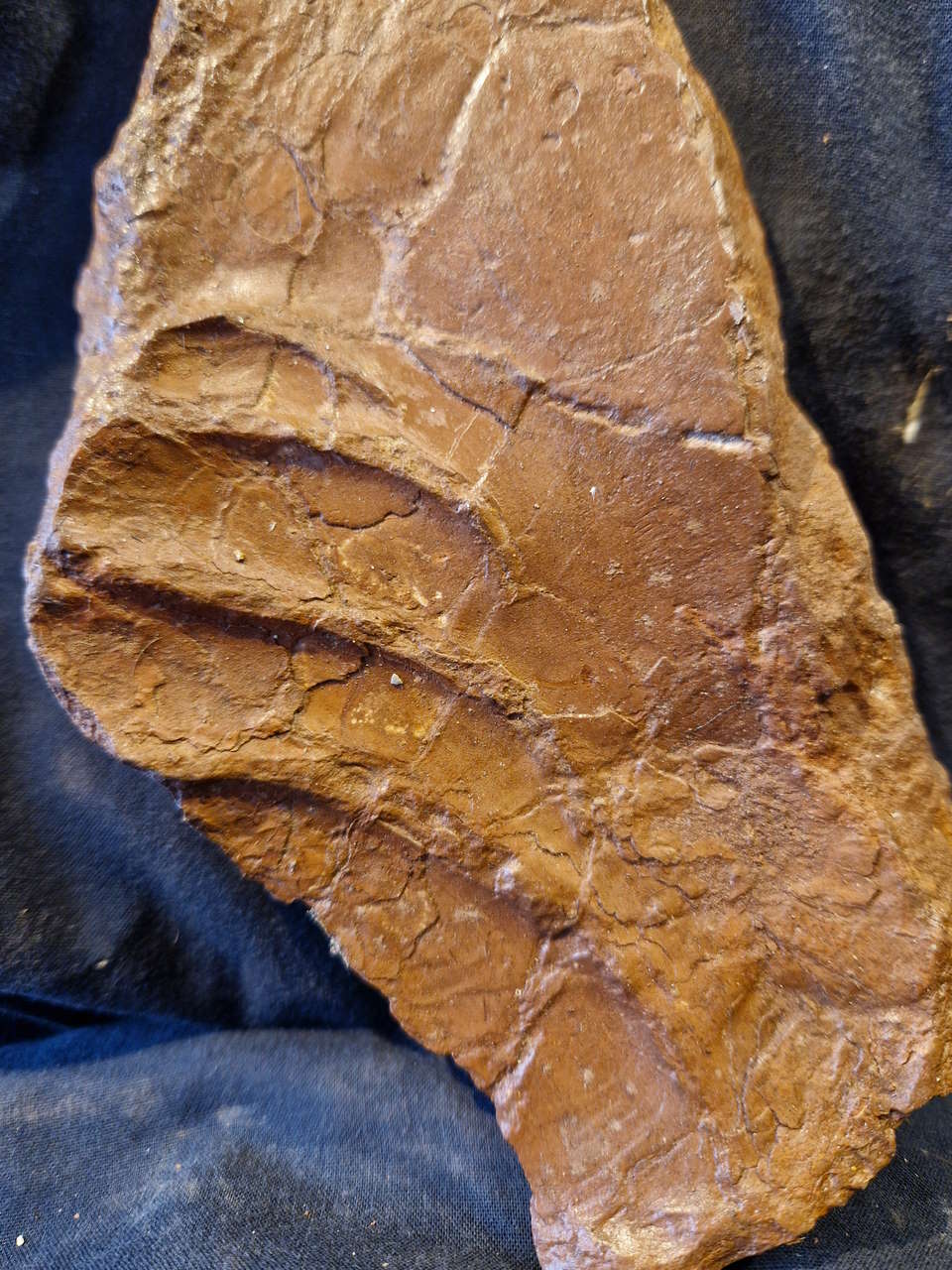
Chelichnus gigas #VNM5064
Amphibian footprint .
Old collection
L. Permian, 280 million years old
Heuco Formation, New Mexico, 50 miles east of Roswell
Size print: 4 by 2.4 inch / 10 by 6 cm
Price: Euro 130.-- |
|
|
Chelichnus gigas #VNM5065
Amphibian footprint .
Old collection
L. Permian, 280 million years old
Heuco Formation, New Mexico, 50 miles east of Roswell
Size print: 2 by 2.8 inch / 5 by 7 cm
Price: Euro 150.-- |
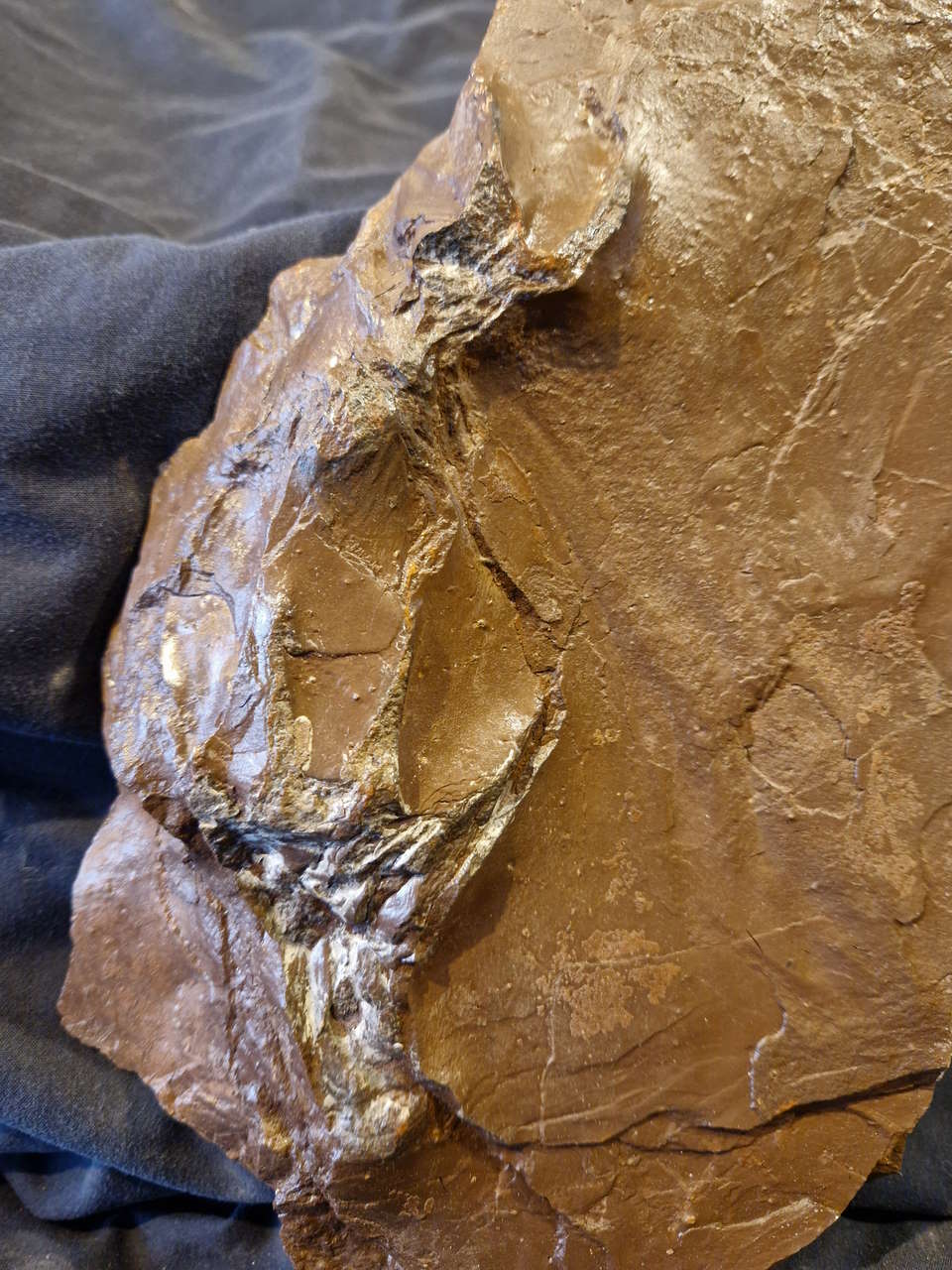
Chelichnus gigas #VNM5066
Amphibian 2 footprints .
Old collection
L. Permian, 280 million years old
Heuco Formation, New Mexico, 50 miles east of Roswell
Size span: 4.6 inch / 11.5 cm
Price: Euro 200.-- |

|
|
Chelichnus gigas #VNM5067
Amphibian 2 footprints
Old collection
L. Permian, 280 million years old
Heuco Formation, New Mexico, 50 miles east of Roswell
Size span: 8.4 inch / 21 cm
Price: Euro 275.-- |
|

|
|
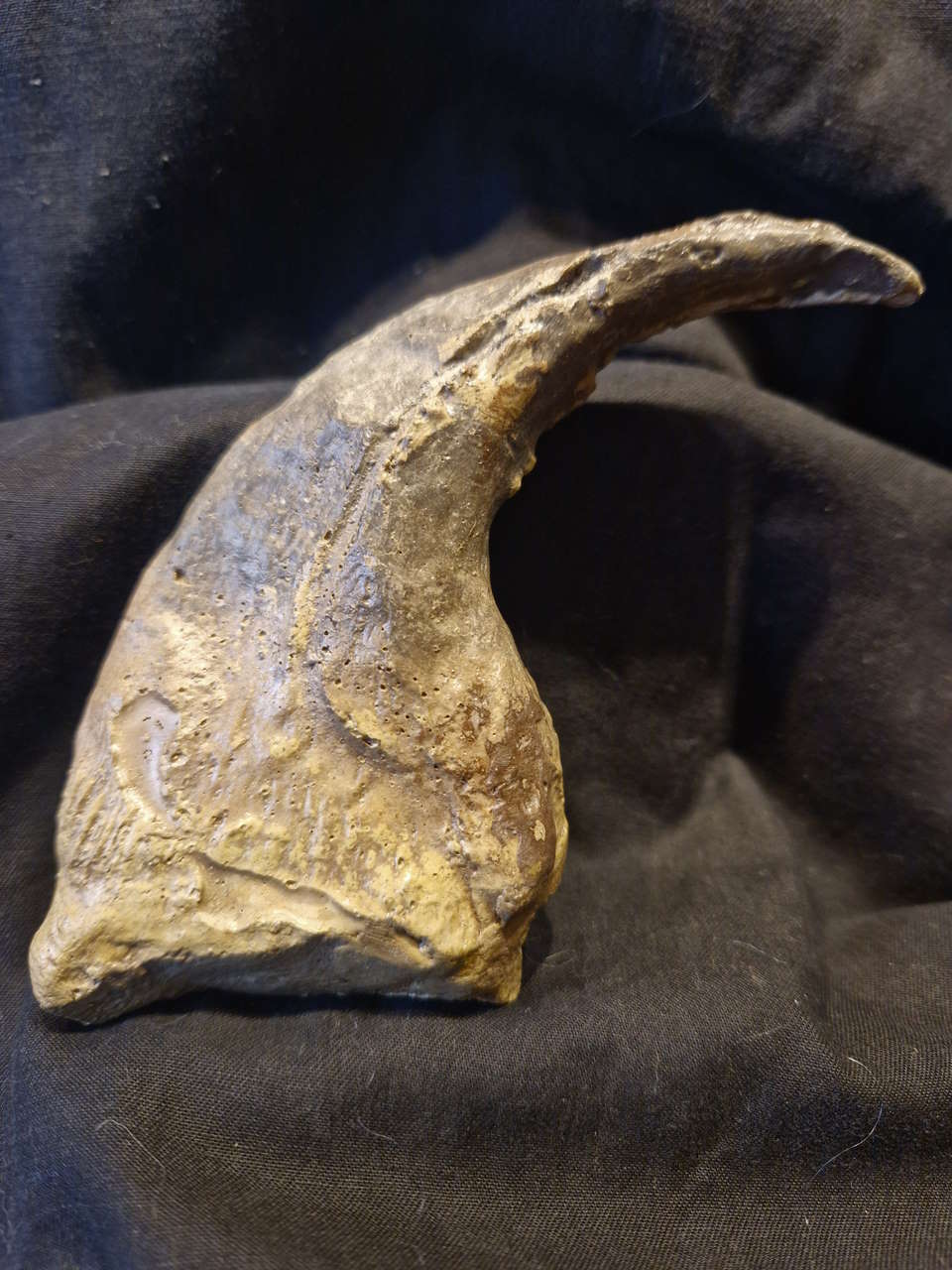
Allosaurus spec. #VAC5031
Very rare theropod Dinosaur claw
With cosmetic restoration
Late Jurassic, Tithonian, 152 Million years old
River Mud deposition!
Near Casper, Morrison Formation, Wyoming, USA
Size span: 5.71 inch / 14.5 cm
Price: Euro ON HOLD for Scientific research
|
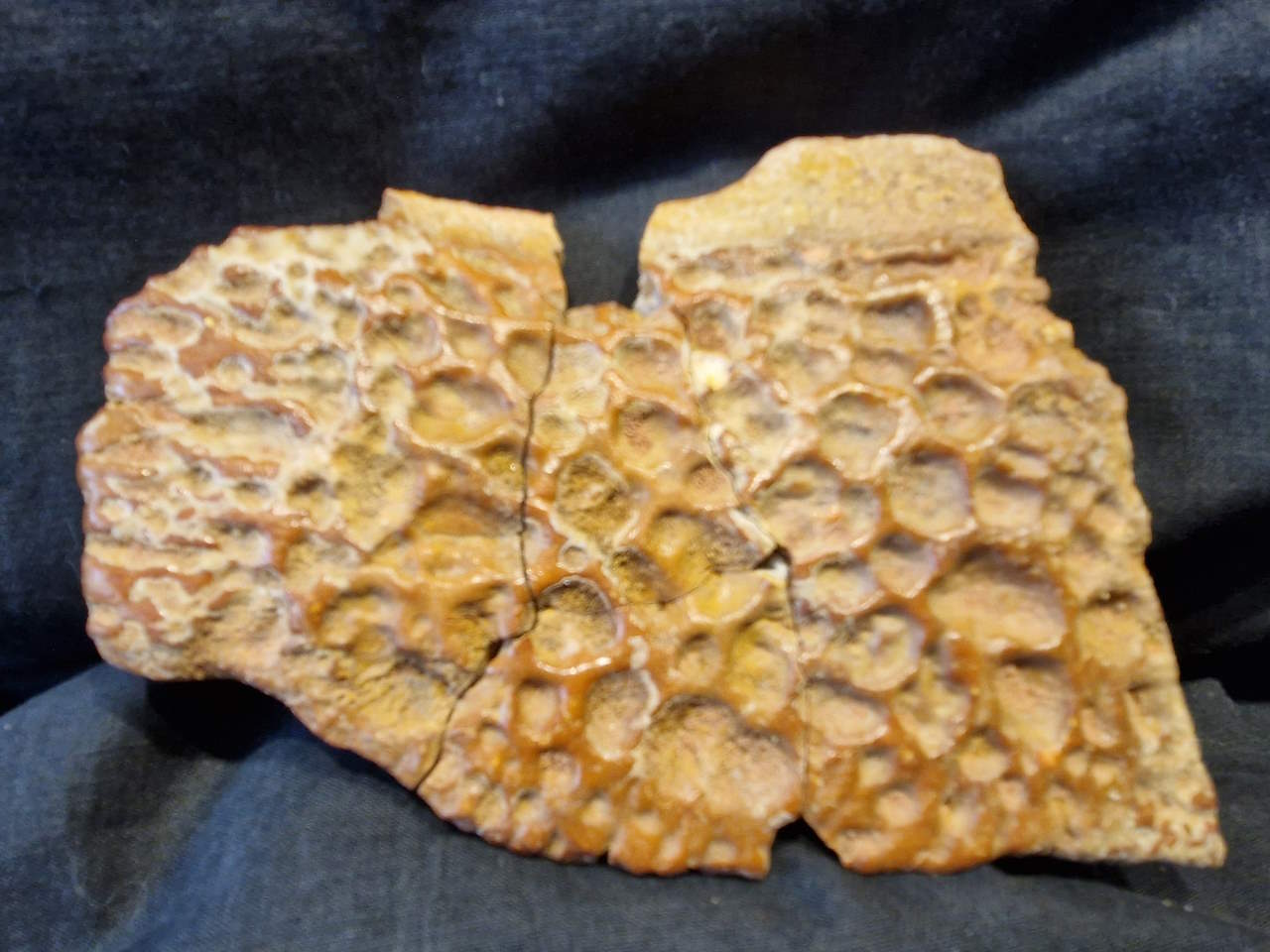
Sarcusuchus imperator #VSI5022
Large armorplate
Tegana Formation (Cenomanian)
Cretaceous 95 million years old
Kem Kem Beds, Morocco
Size: 5 inch / 12.5 cm
Price: Euro 100.-- |
|
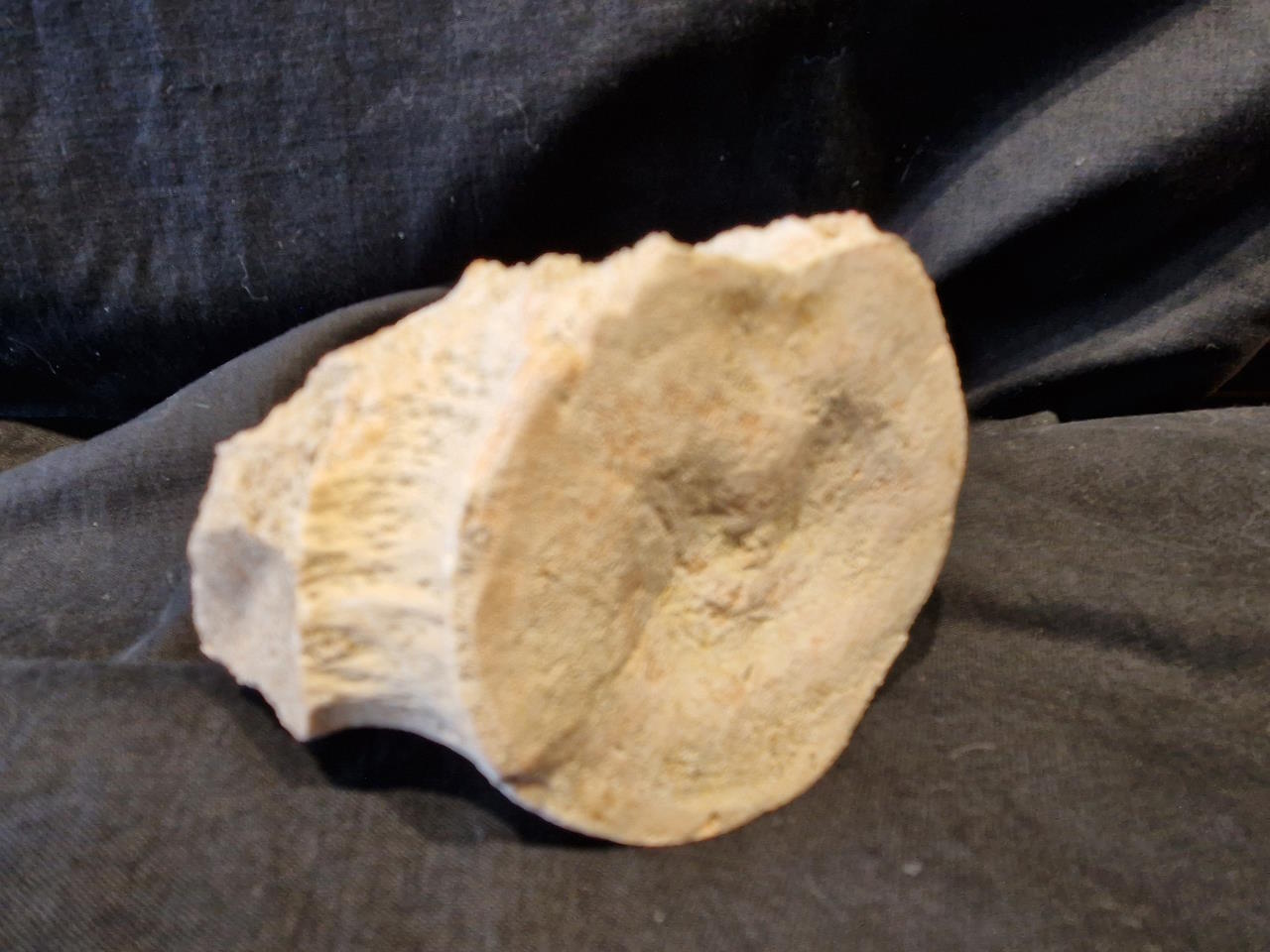
Plesiosaurus sp. #VPM5020
Plesiosaurus vertebra
Maastrichtian, Cretaceous 65.6 million years old
Khouribga, Morocco
Size: 3.6 inch / 9 cm
Price: Euro 40.-- |
|
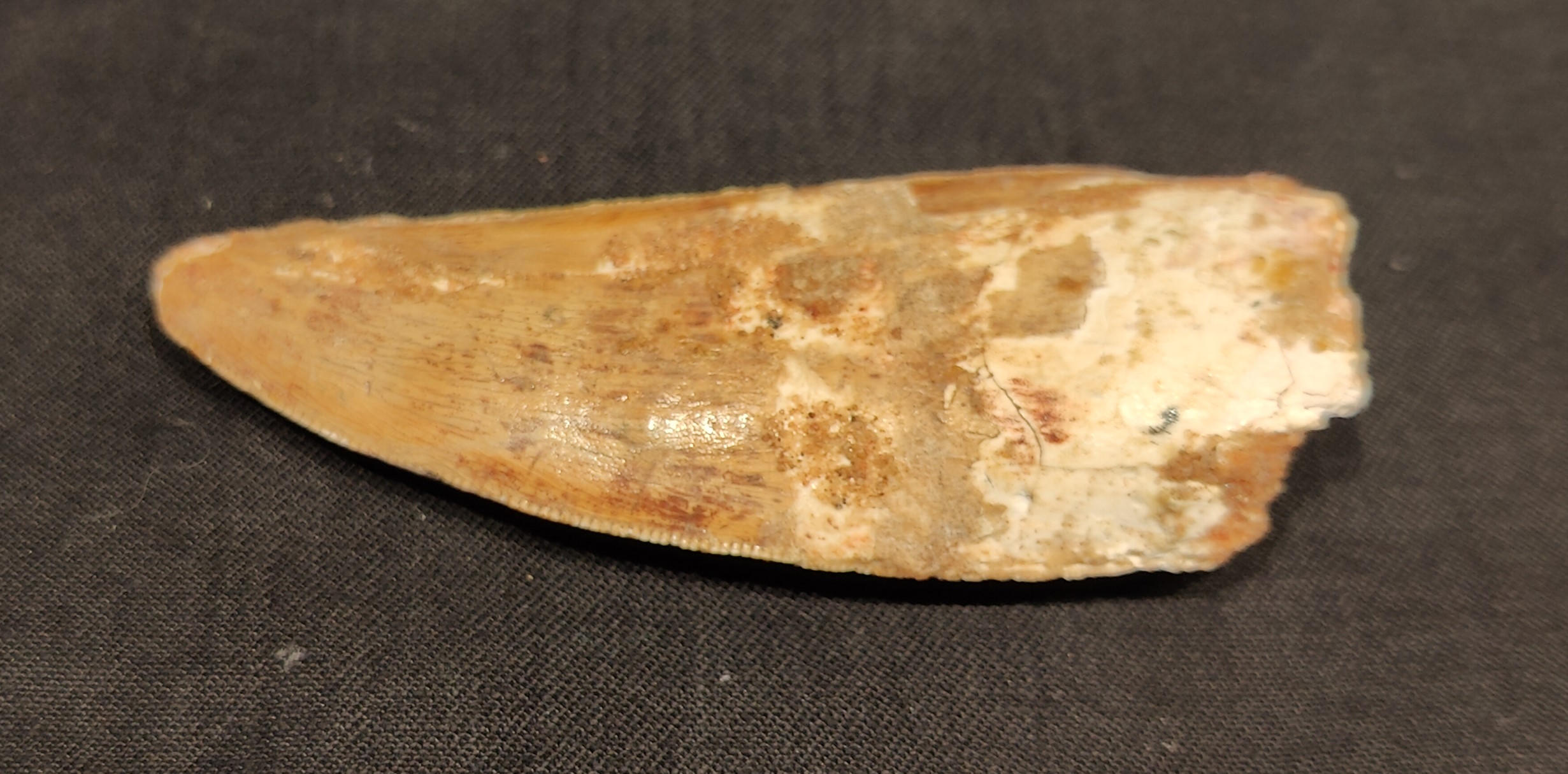
Carcharodontosaurus saharicus #VCS4708
Big theropod dinosaur tooth
Tegana Formation (Cenomanian)
Cretaceous 95 million years old
Kem Kem Beds, Morocco
Size: 2.87 inch / 7.3 cm
Price: Euro 250.-- On Hold
|
 |
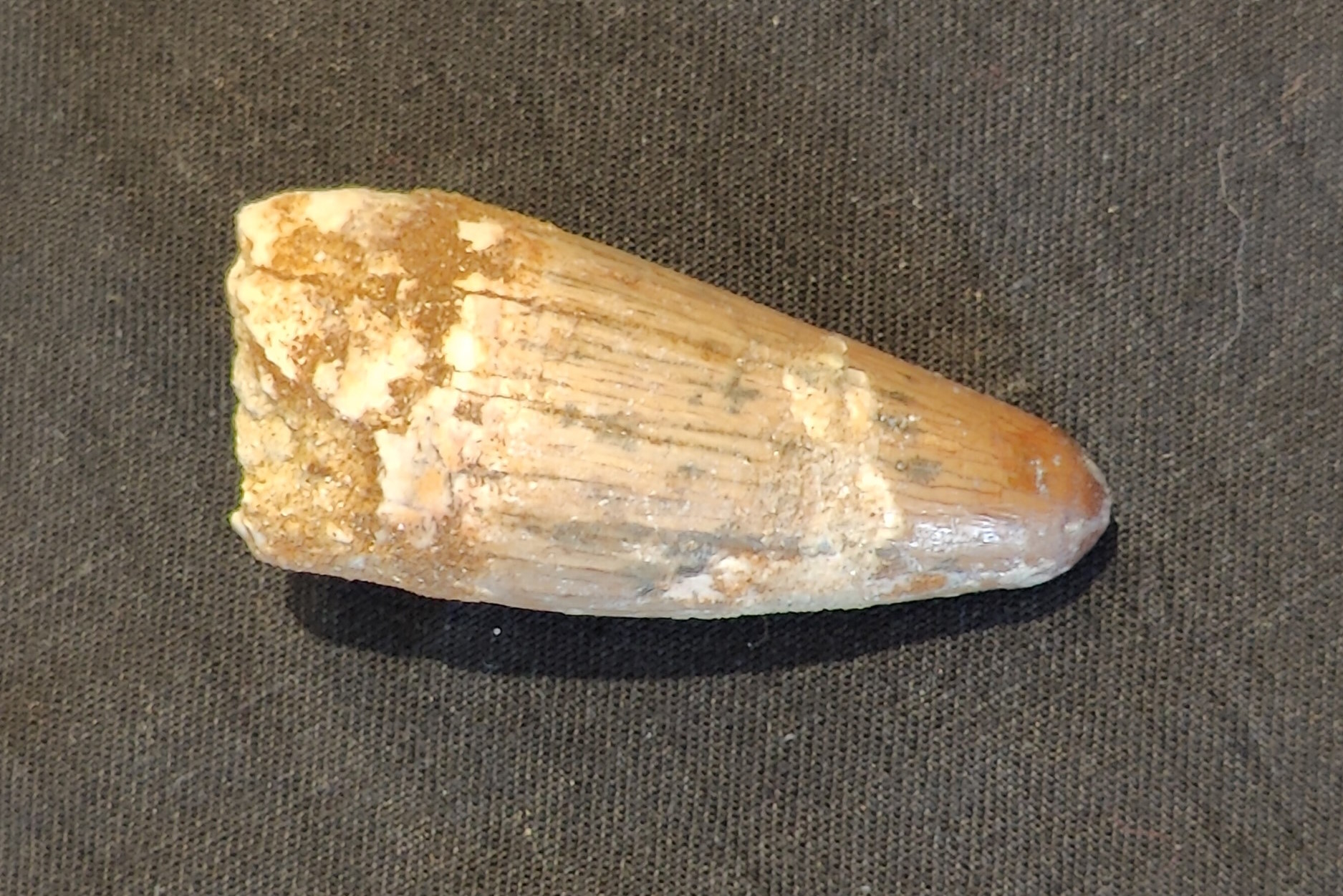
Crocodylus cf. niloticus #VCN4710
African Large Crocodilian Tooth
Tegana Formation (Cenomanian)
Cretaceous, 95 million years old
Kem Kem Beds, Morocco
Size: 1.89 inch / 4.8 cm
Price: Euro 25.--
|
 |
 |
Rebbachisaurus spec. #VRM4700
African Sauropod Vertebra
Tegana Formation (Cenomanian)
Cretaceous, 95 million years old
Kem Kem Beds, Morocco
Size: 4.3 inch / 11 cm
Price: Euro 150.--
|
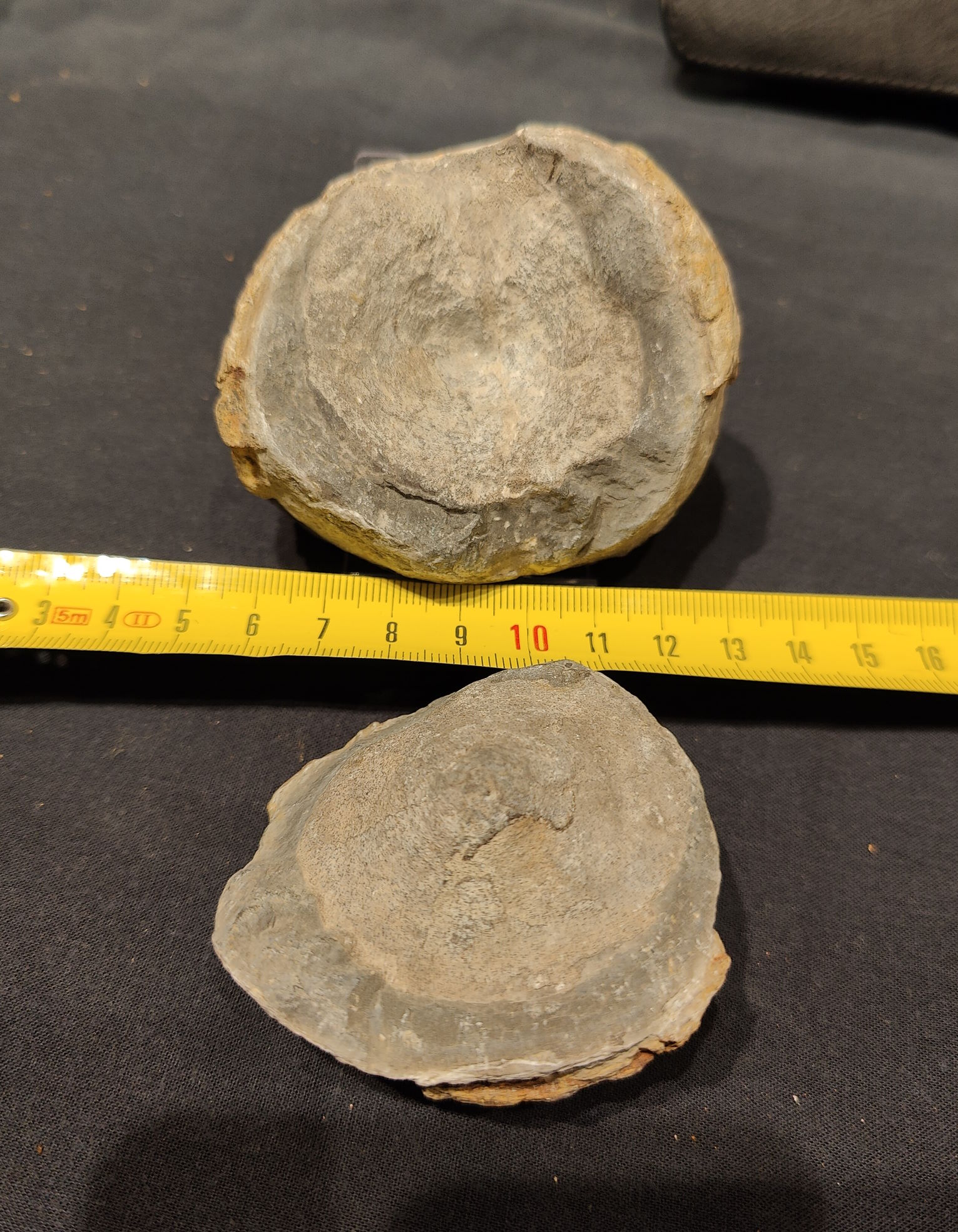
Ichthyosaurus spec. #VIG4701
Pos/neg vertebra geode
Lower Jurassic, 180 million years old
Lyme Regis, Jurassic Coast, Dorset, U.K.
Size: 2.75 inch / 7 cm
Size vertebra: 2 inch / 5 cm
Price: Euro 70.-- |
 |
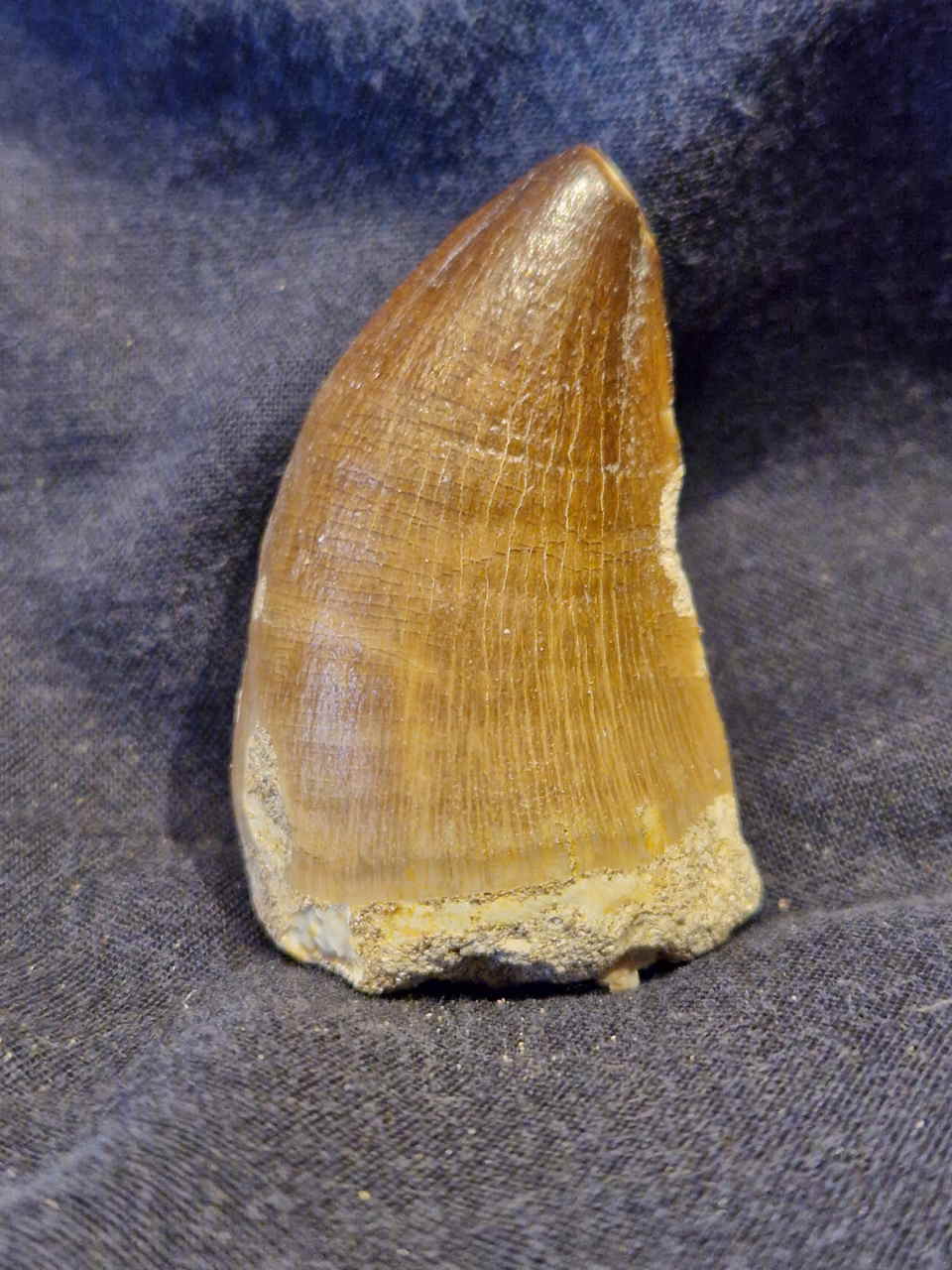
Mosasaurus cf. hoffmanni #VMM4622
Tooth in Matrix
Maastrichtian, Cretaceous 65.6 million years old
Khouribga, Morocco
Size : 1.8 inch / 4.5 cm
Price: Euro 25.-- |
|
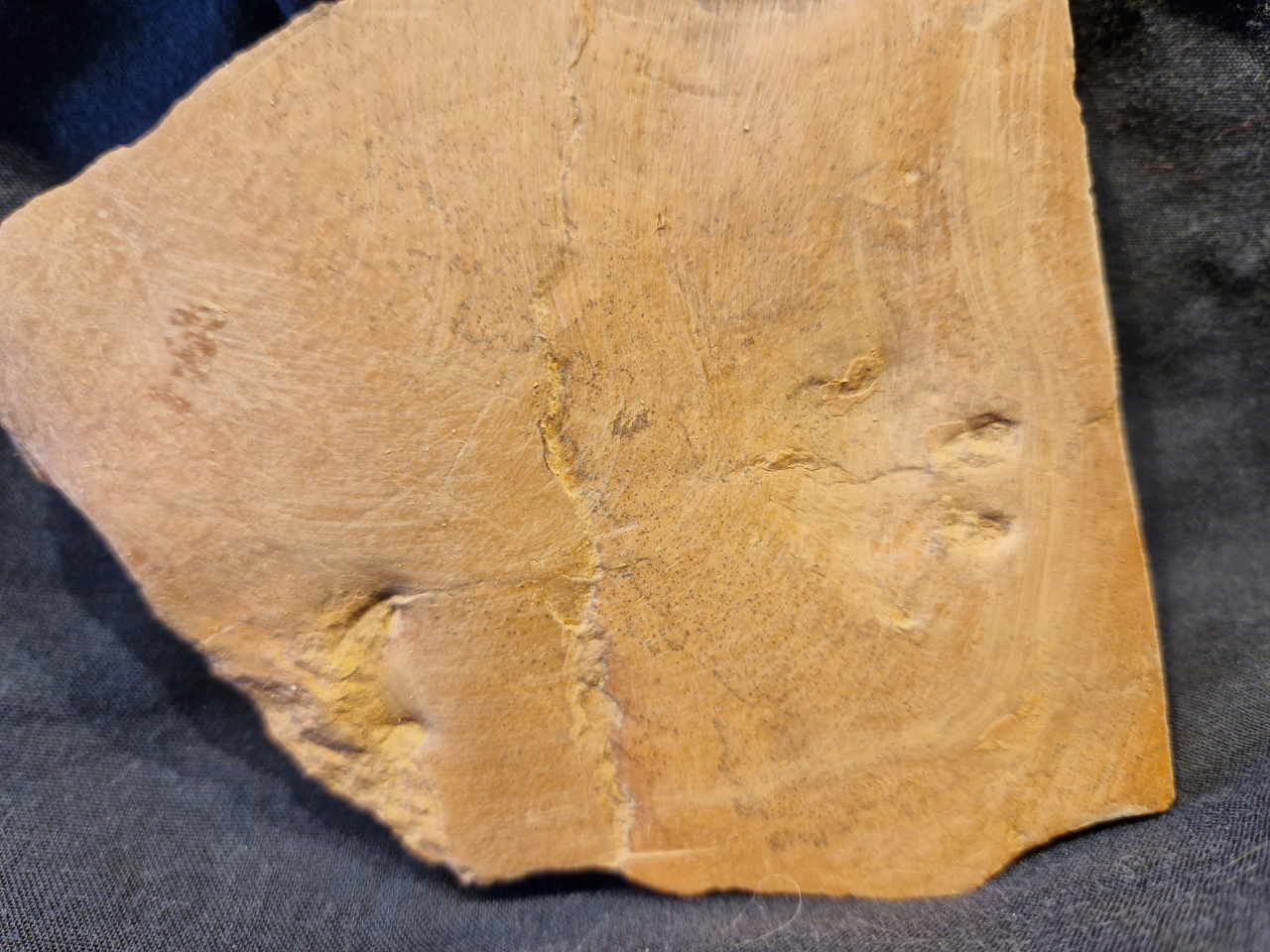
Batrachichnus delicatulus #VPN4607
Amphibian footprints.
Old collection
L. Permian, 280 million years old
Heuco Formation, New Mexico, 50 miles east of Roswell
Size track: 3.4 inch / 8.5 cm
Price: Euro 90.- |
|
|
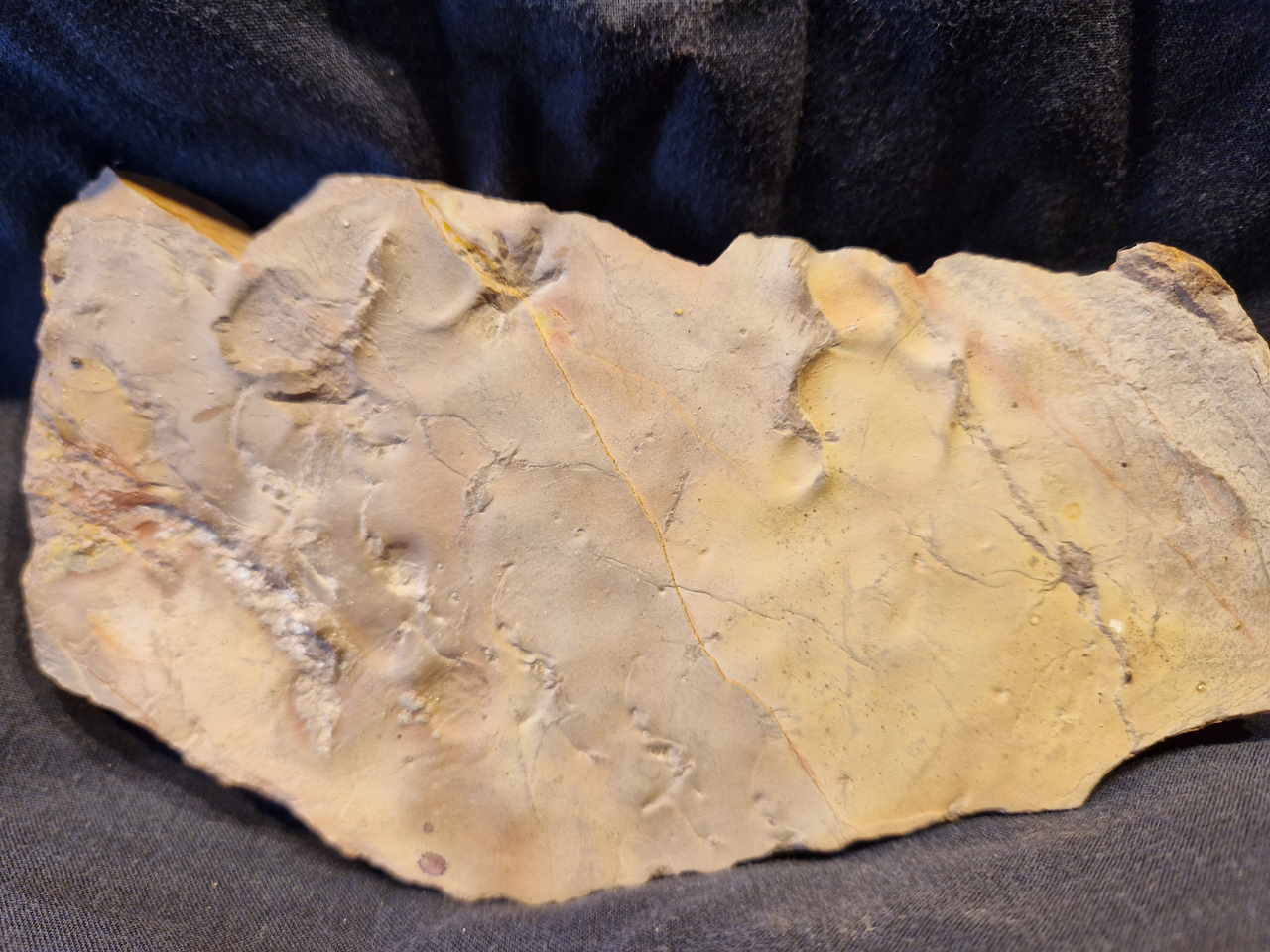
Batrachichnus delicatulus #VPN4608
Amphibian footprints.
Old collection
L. Permian, 280 million years old
Heuco Formation, New Mexico, 50 miles east of Roswell
Size print: 0.4 inch / 1 cm
Price: Euro 85.- |
Batrachichnus delicatulus #VPN4609
Amphibian footprints.
Old collection
L. Permian, 280 million years old
Heuco Formation, New Mexico, 50 miles east of Roswell
Size track: 3 inch / 7.5 cm
Price: Eur 100.- |

|
|
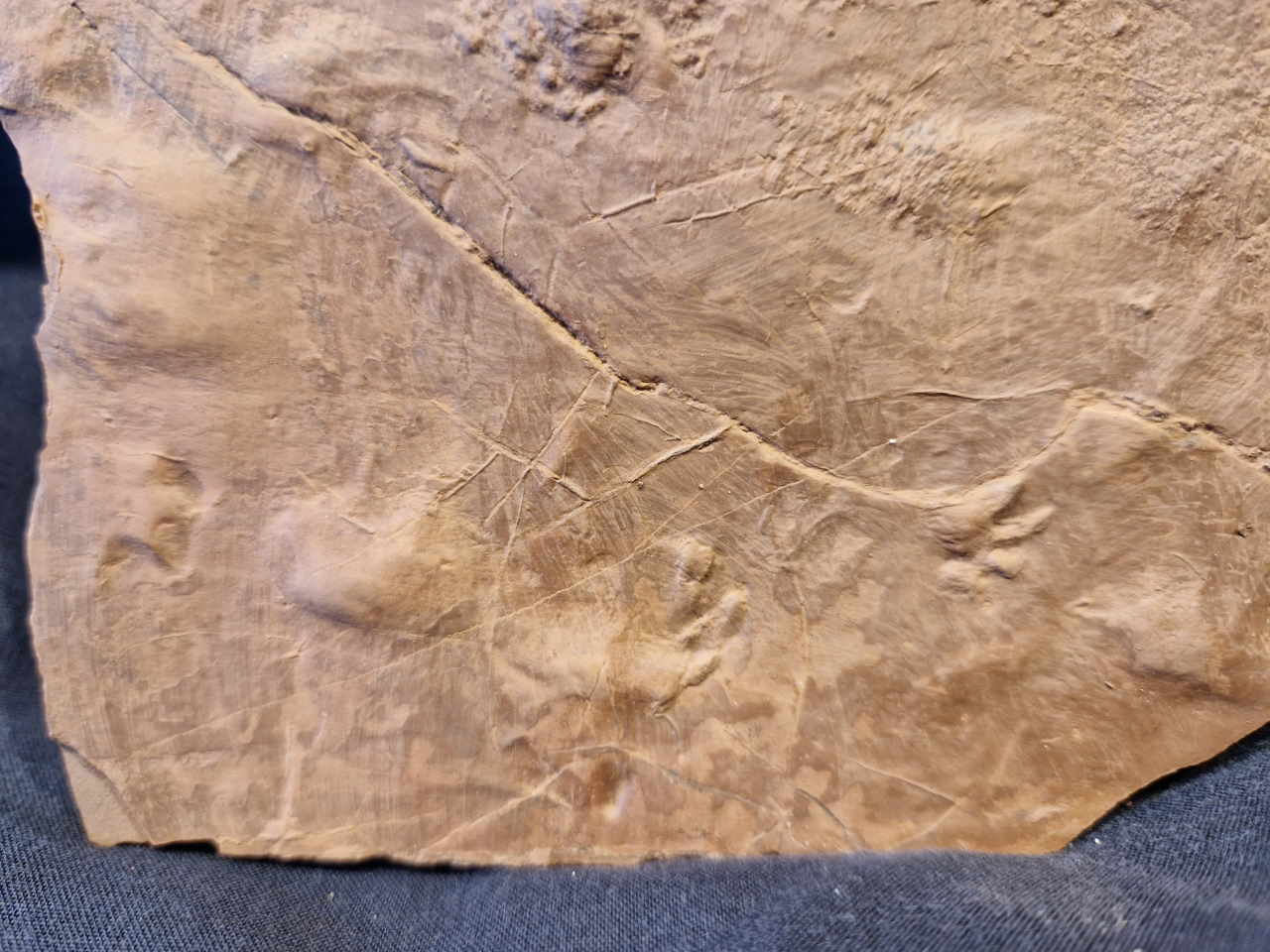
Batrachichnus delicatulus #VPN4610
Amphibian footprints.
Old collection
L. Permian, 280 million years old
Heuco Formation, New Mexico, 50 miles east of Roswell
Size track: 3.6 inch / 9 cm
Price: Eur 95.- |
Batrachichnus delicatulus #VPN4611
Amphibian footprints.
Old collection
L. Permian, 280 million years old
Heuco Formation, New Mexico, 50 miles east of Roswell
Size print: 0.8 inch / 2 cm
Price: Eur 70.- |

|

|
Batrachichnus delicatulus #VPN4612
Amphibian footprints.
Old collection
L. Permian, 280 million years old
Heuco Formation, New Mexico, 50 miles east of Roswell
Size track: 2.6 inch / 6.5 cm
Price: Eur 95.- |
Batrachichnus delicatulus #VPN4613
Amphibian footprints.
Old collection
L. Permian, 280 million years old
Heuco Formation, New Mexico, 50 miles east of Roswell
Size 1 print: 0.4 inch / 1 cm
Price: Eur 95.- |
|

|
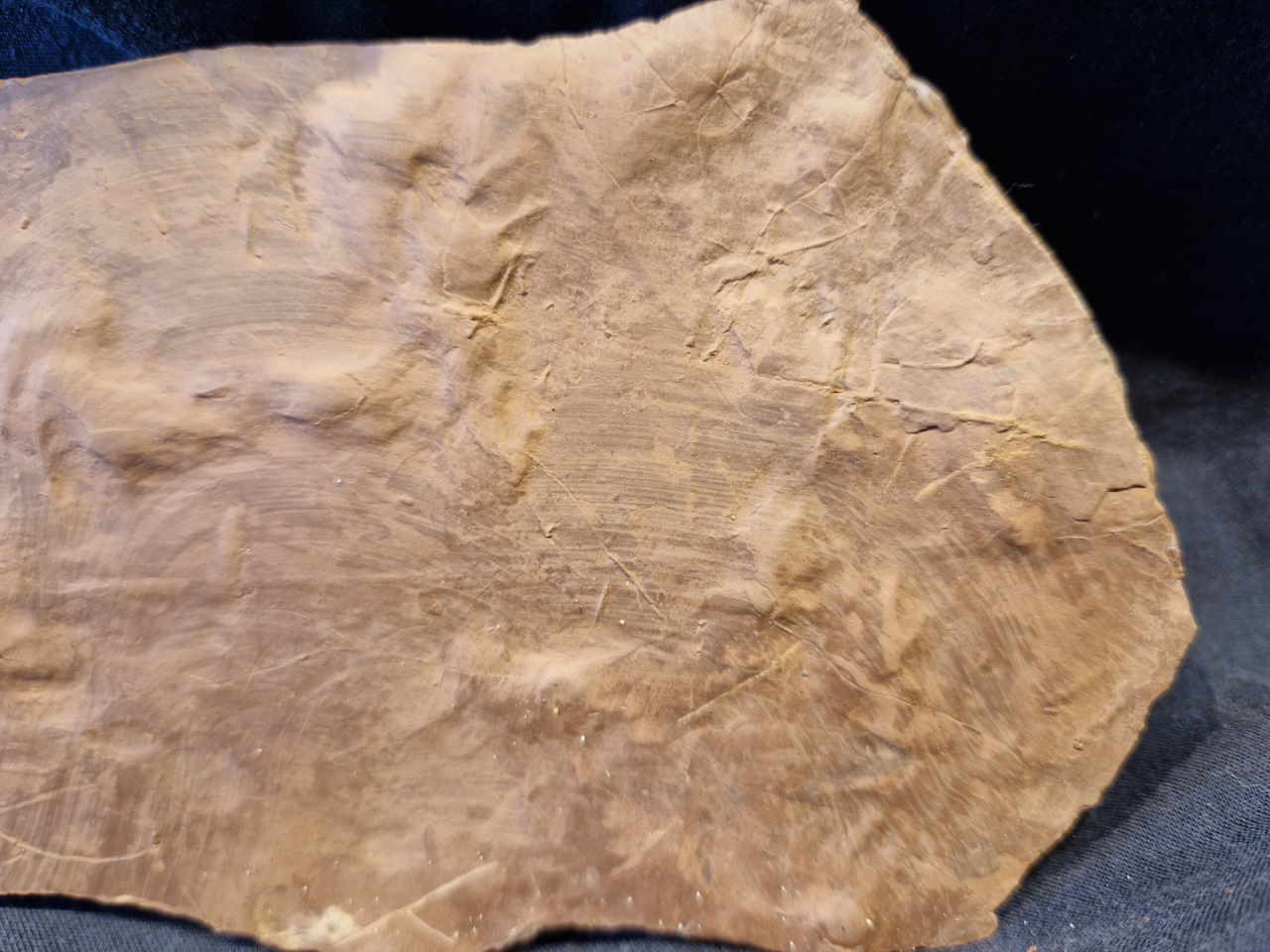
Batrachichnus delicatulus #VPN4614
Amphibian footprints.
Old collection
L. Permian, 280 million years old
Heuco Formation, New Mexico, 50 miles east of Roswell
Size track: 5 inch / 12.5 cm
Price: Euro 135.- |
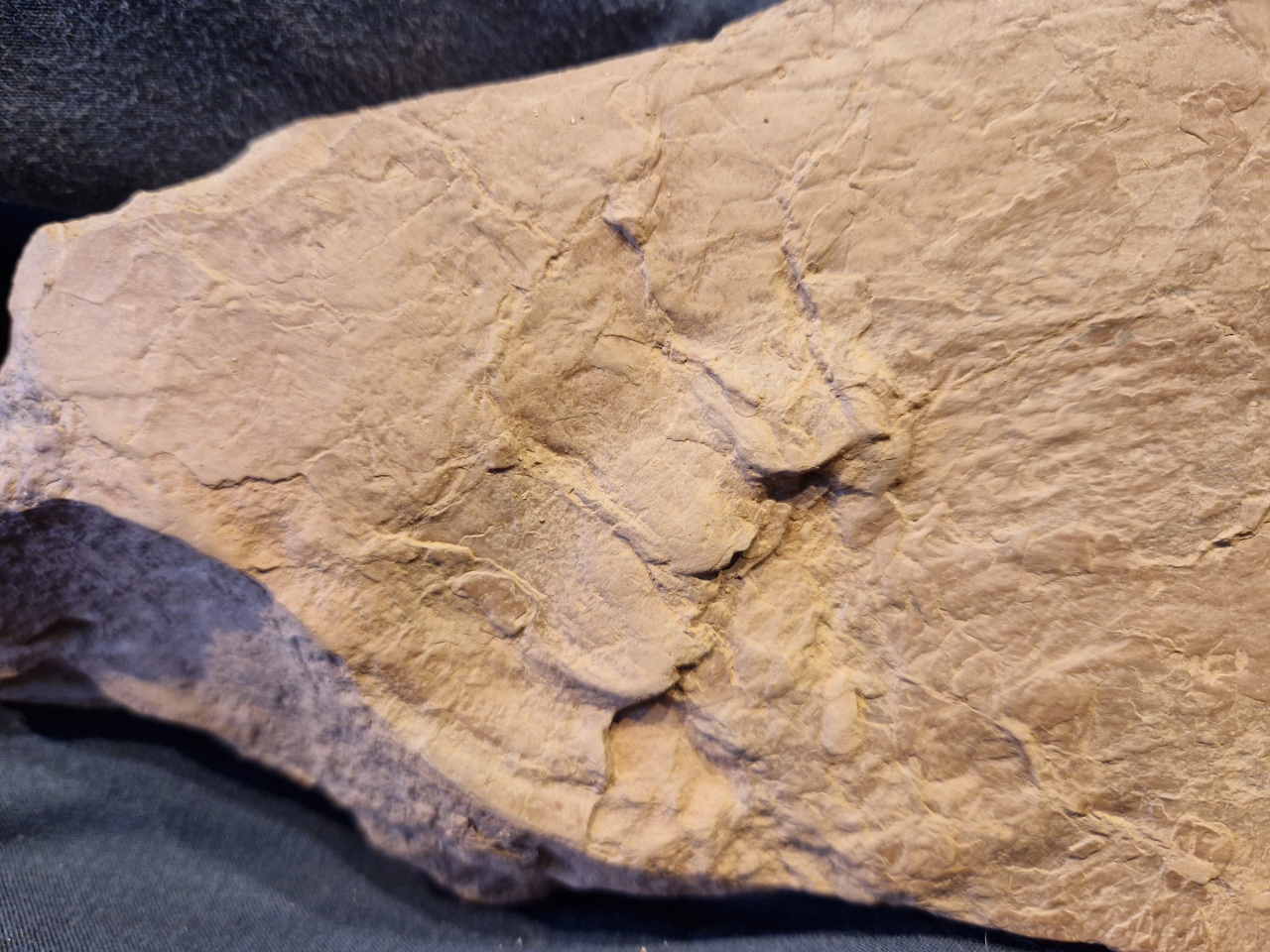
Chelichnus gigas #VPN4615
Amphibian footprint .
Old collection
L. Permian, 280 million years old
Heuco Formation, New Mexico, 50 miles east of Roswell
Size print: 2.6 inch / 6.5 cm wide
Price: Euro 100.--
|
|
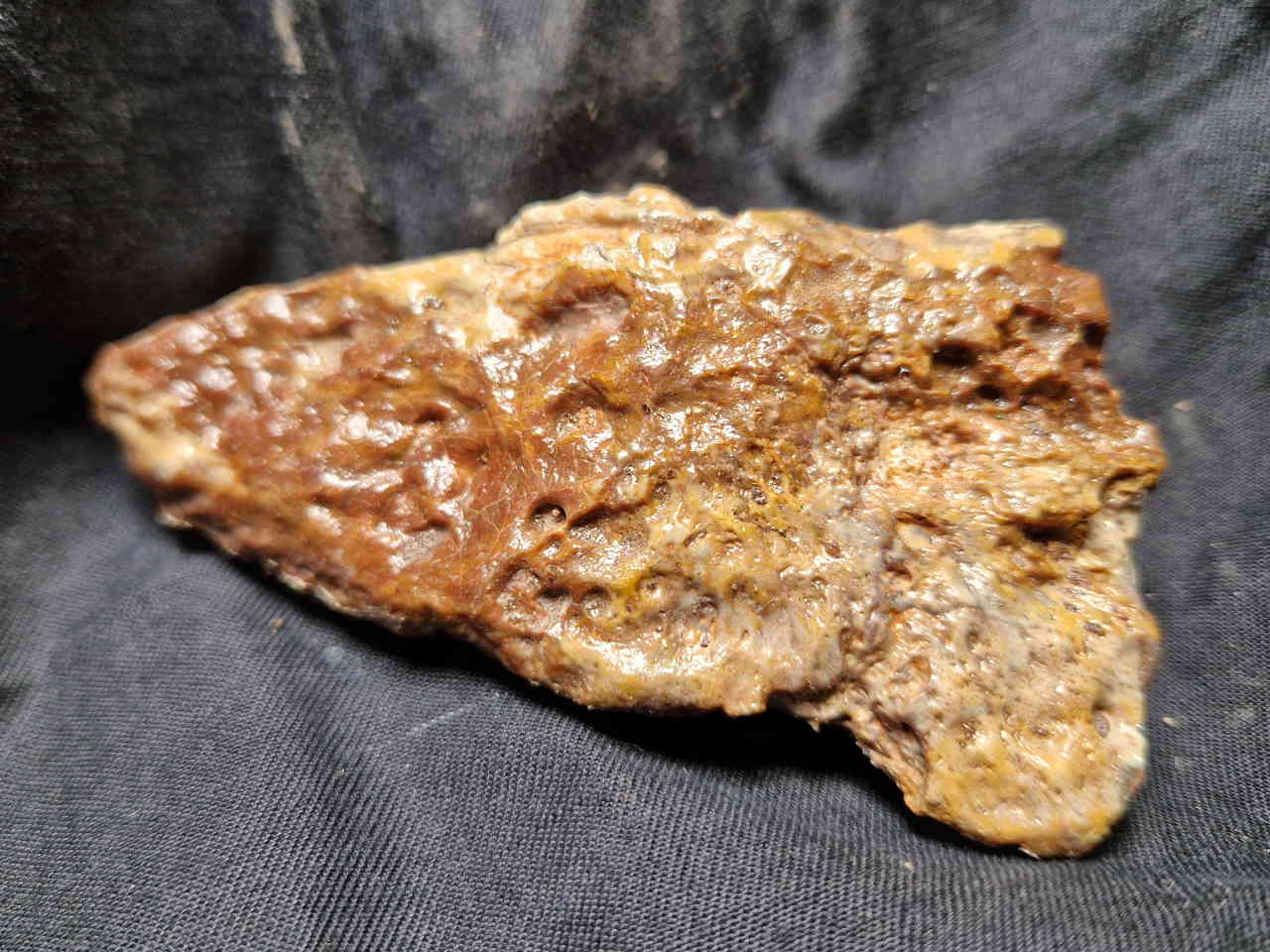
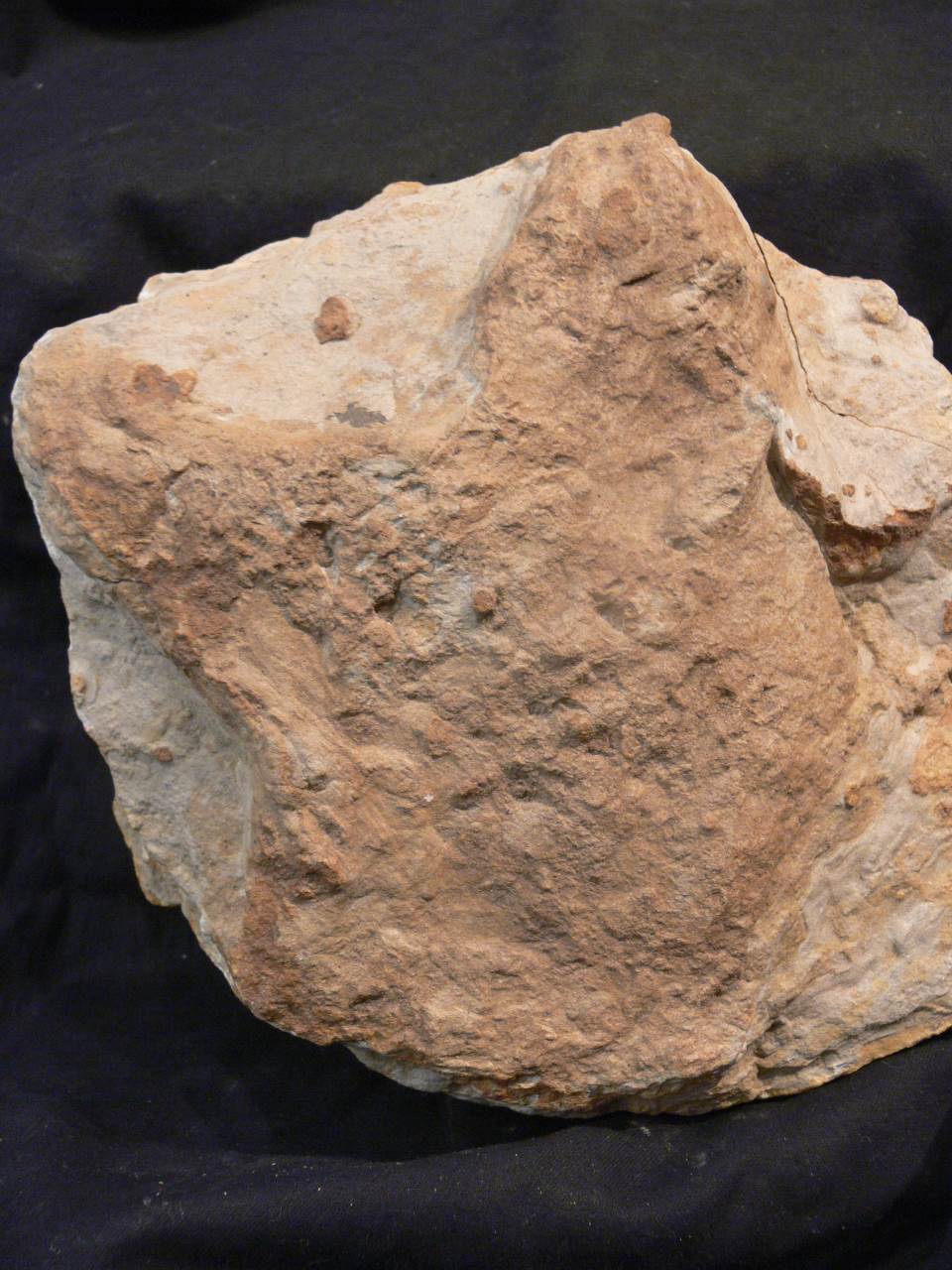
Sarcosuchus imperator #VSI4581
Nice giant Crocodile dermal plate
Tegana Formation (Cenomanian)
Cretaceous 95 million years old
Kem Kem Beds, Morocco
Size : 3.4 inch / 8.5 cm
Price: Euro 45.-- ON HOLD
|
|
 | Irenesauripus sp. #VFP10158
Theropod Dinosaur footprint, Very rare
(Kurkowski 1994) Old Collection
U. Cretaceous, Turonian 90 Million years old
Gaizes Potok, Holy Cross Mountains, Poland
Matrix: 18 by 17 cm
Size footprint span: 6.4 inch / 16 cm
Price: Euro 170.-- |
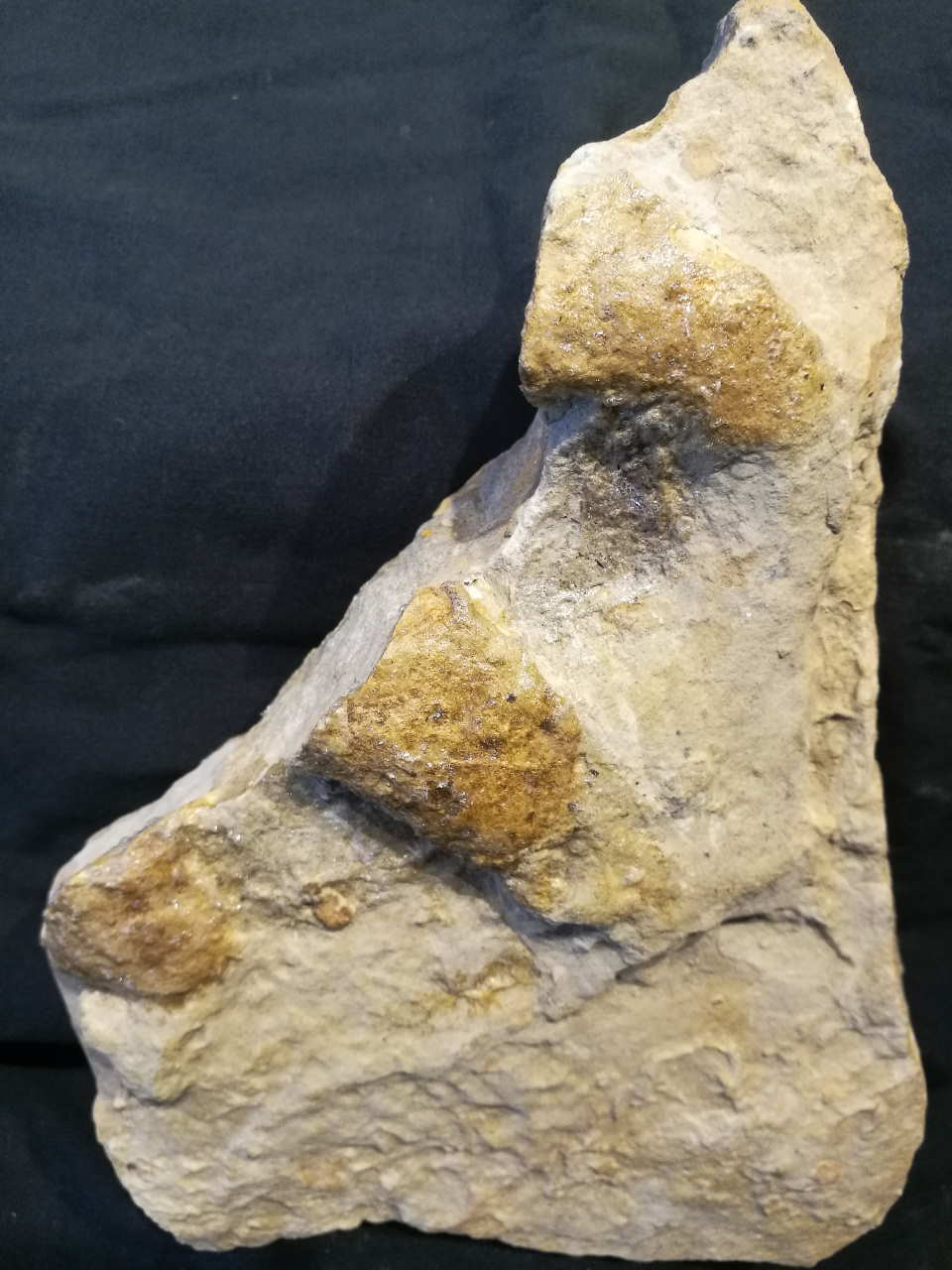
cf. Iguanodon sp. ##VDP4302
Theropod Dinosaur Toeprints, Very rare
Old Collection
L. Cretaceous, Albian 90 Million years old
Gaizes Potok, Holy Cross Mountains, Poland
Matrix: 10 by 7.2 inch / 25 by 18 cm
Price: Euro 100.--
|
|
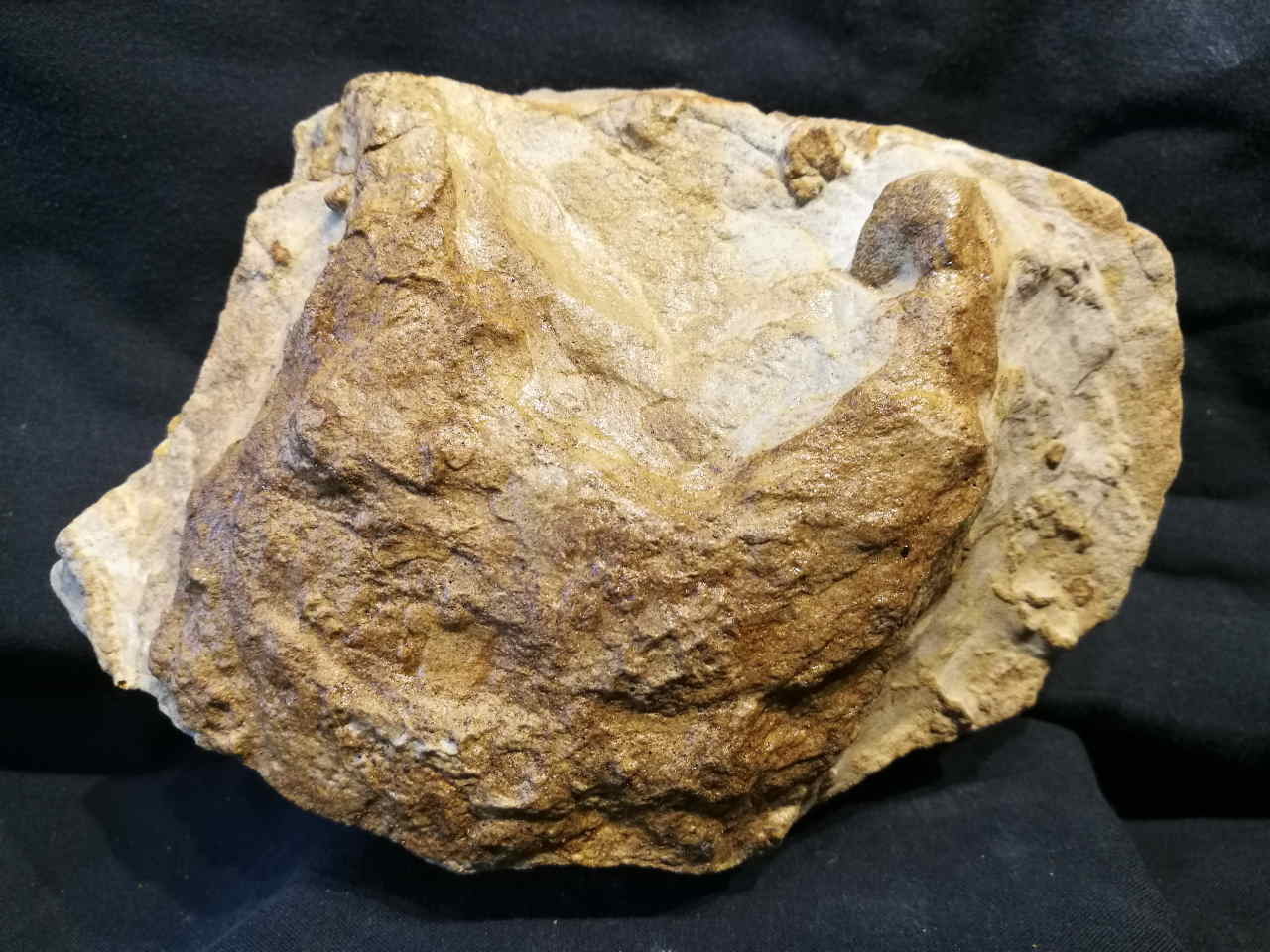
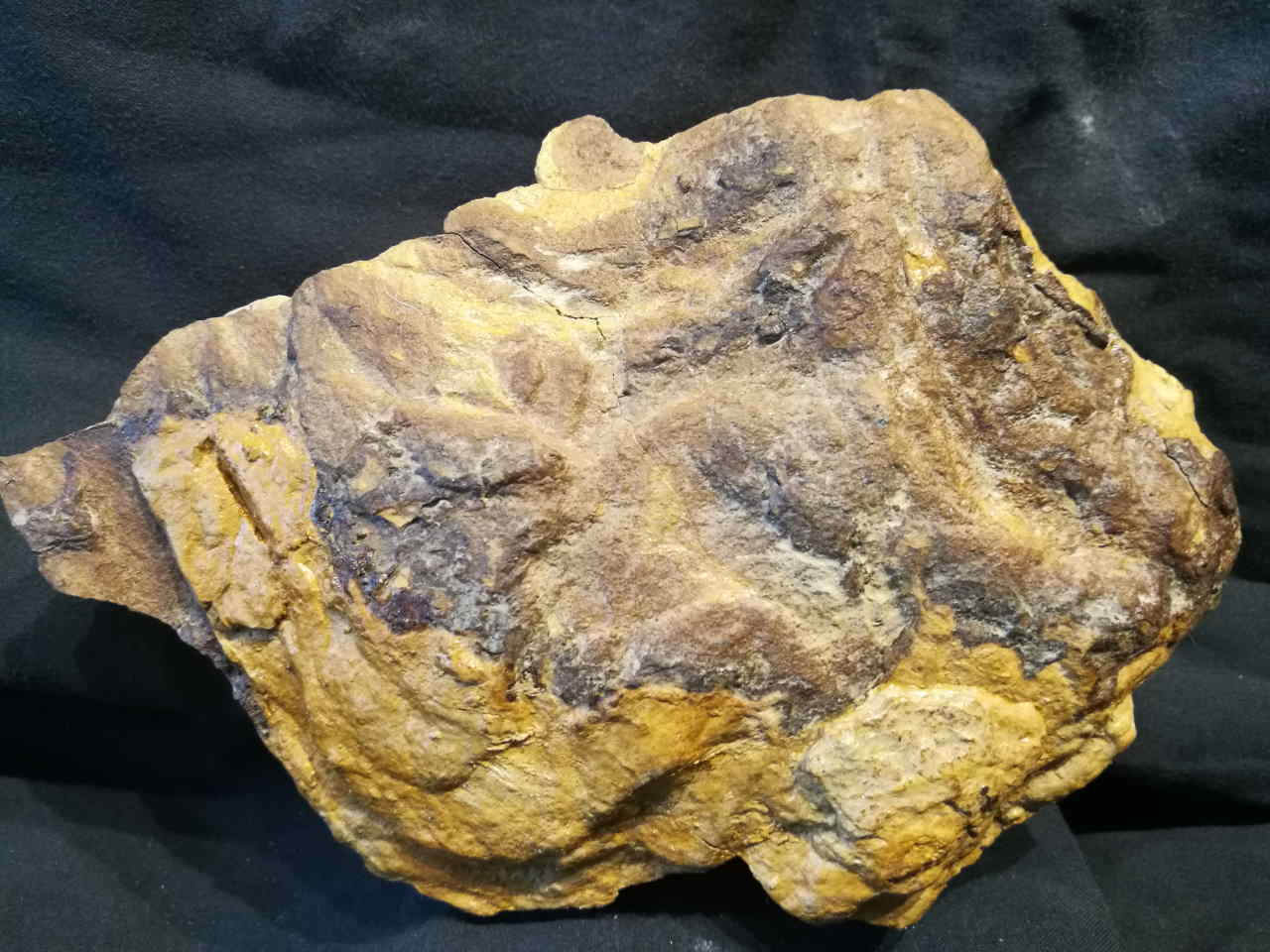
Irenesauripus sp. #VDP4306
Theropod Dinosaur footprint, Very rare
(Kurkowski 1994) Old Collection
U. Cretaceous, Turonian 90 Million years old
Gaizes Potok, Holy Cross Mountains, Poland
Matrix: 6 by 4 inch / 15 by 10 cm
Price: Euro 160.-- |
|
|
Protochirotherium sp. #VDP4307
Basal Archosauriform Dinosaur footprint
(cf. Erythrosuchid) Very rare
Old Collection
L. Triassic, Olenekian 250 Million years old
Holy Cross Mountains, Poland
Matrix: 8.6 by 5.2 inch / 19 by 13 cm
Price: Euro 125.--
|

|
Characichnos sp. #VDP4309
Basal Swimming Archasauriform Dinosaur "slippery" footprints, (cf. Erythrosuchid)
Very rare Old Collection
L. Triassic, Olenekian 250 Million years old
Holy Cross Mountains, Poland
Matrix: 7.2 by 4 inch / 18 by 10 cm
Price: Euro 125.-- |
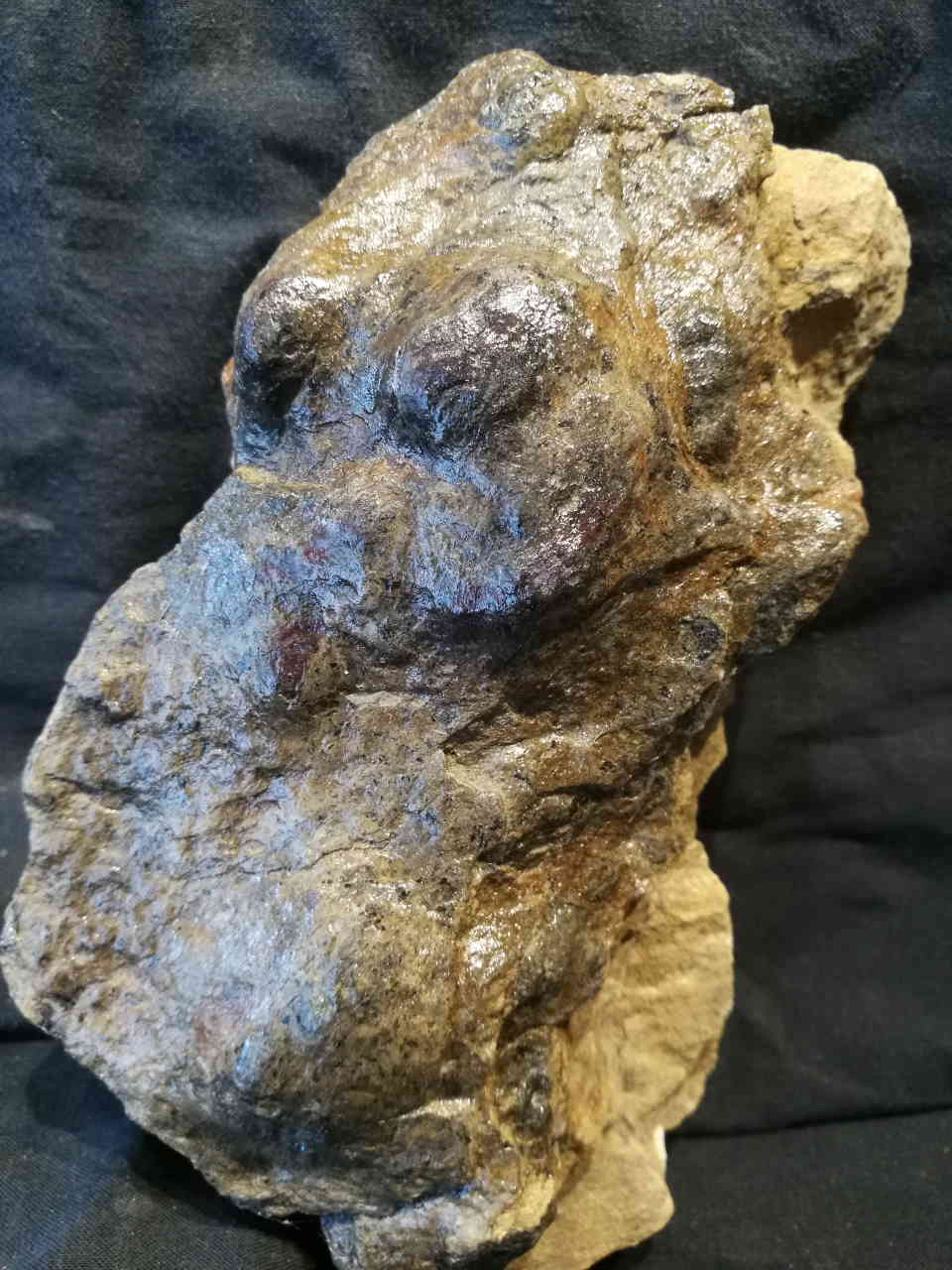
Prorotodactylus sp. #VDP4310
Basal Dinosauromorph Dinosaur footprint,
(cf. Lagerpeton) Very rare Old Collection
L. Triassic, Olenekian 250 Million years old
Holy Cross Mountains, Poland
Matrix: 7.6 by 5.6 inch / 19 by 14 cm
Price: Euro 125.-- |

|
|
cf. Hadrosauropodus sp. #VDP4311
Theropod Dinosaur footprint, Very rare
(Kurkowski 1994) Old Collection
U. Cretaceous, Turonian 90 Million years old
Gaizes Potok, Holy Cross Mountains, Poland
Matrix: 6.8 by 4.4 inch / 17 by 11 cm
Price: Euro 160.-- |
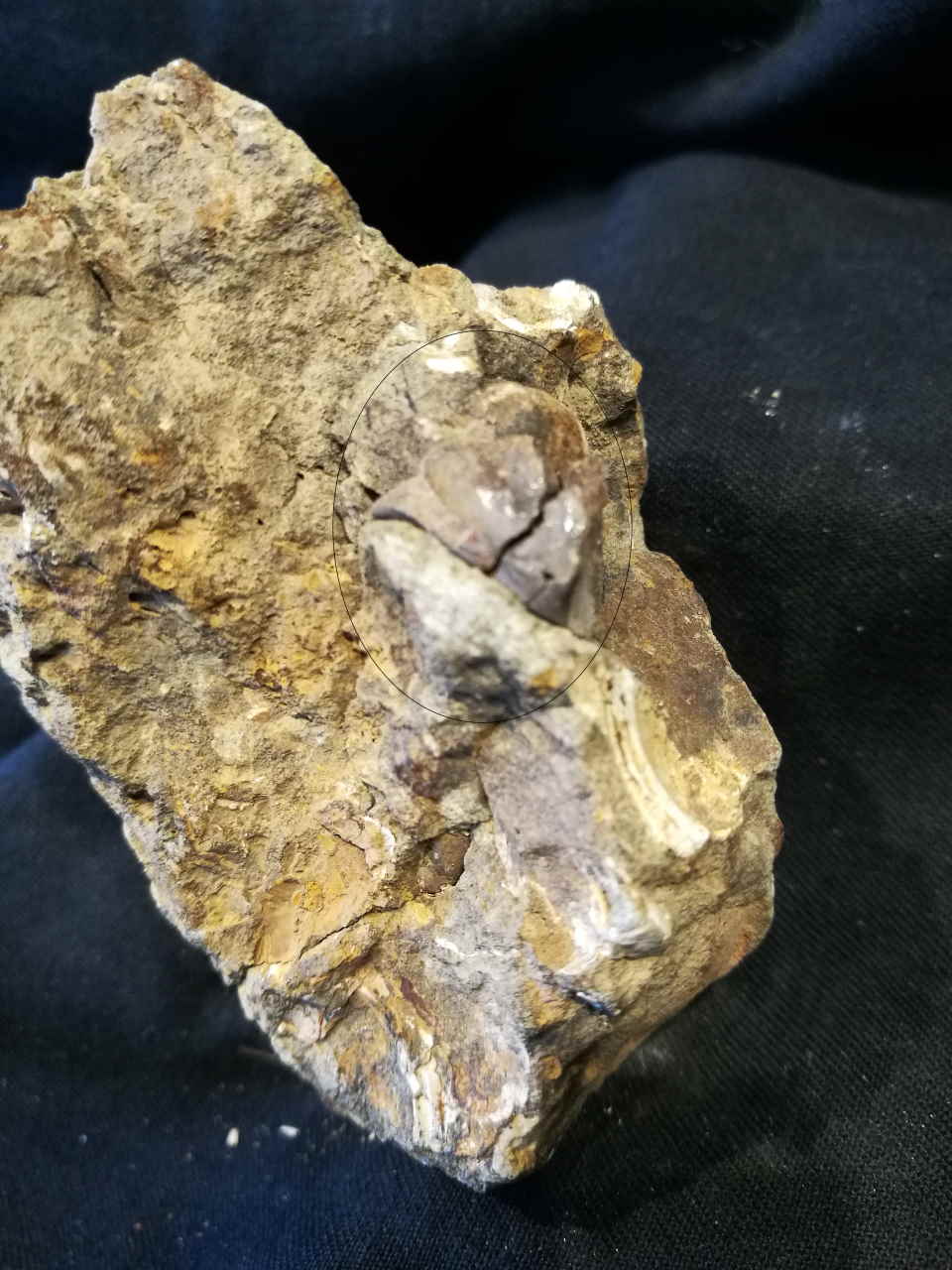
Triceratops sp. #VTW4252
Tooth of this remarkable Dinosaur in Matrix
Cretaceous 120 million years old
Lance Creek, Wyoming, U.S.A.
Size: 0.64 by 1.6 cm
Price: Euro 60.--
|
|
|
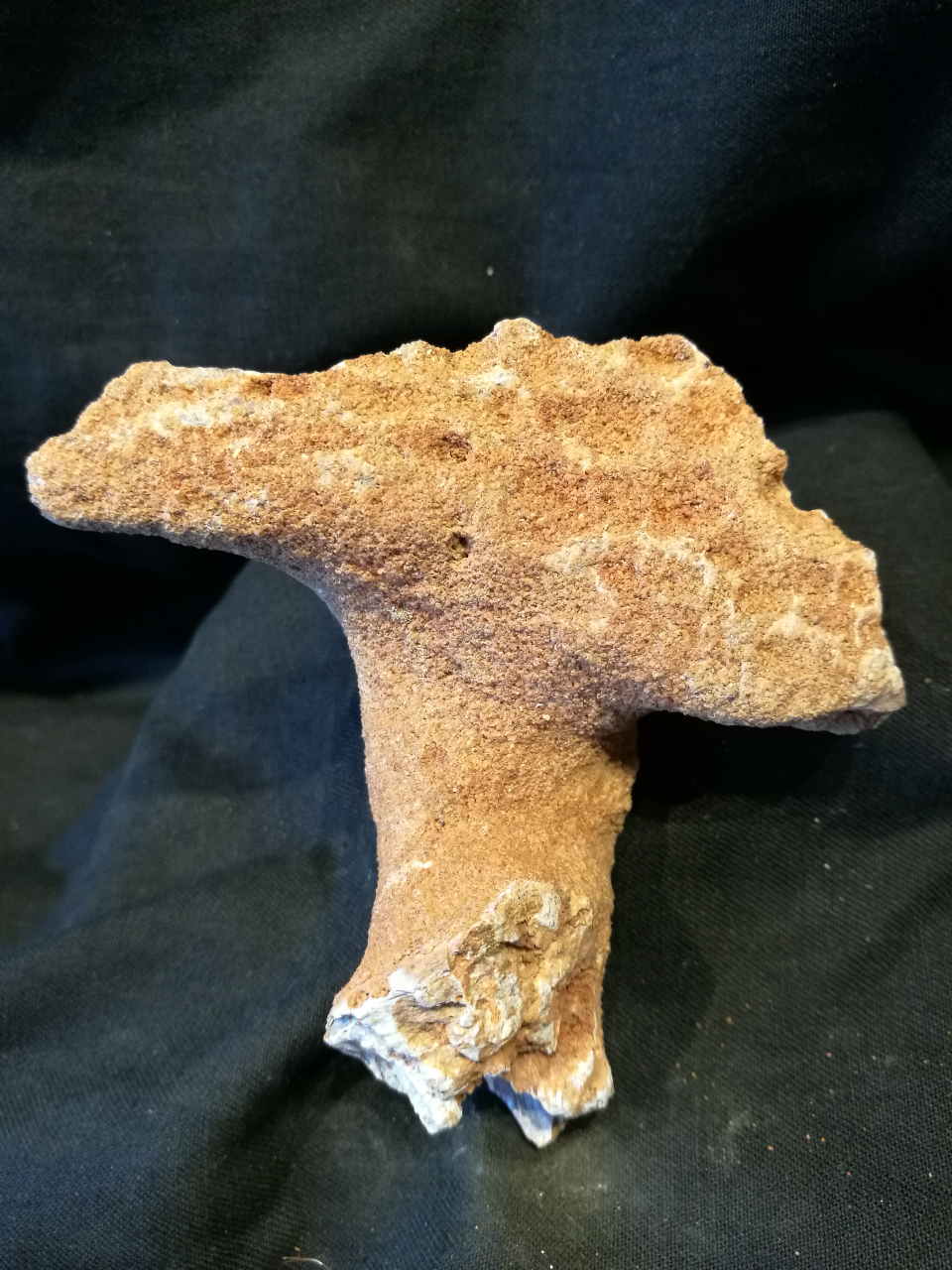
Crocodylus sp #VCM4255
Rare crocodilian scute with bone!
Late Cretaceous 66 million years old
Khouribga, Morocco
Size: 3 inch / 7.5 cm
Price: Euro 100.--
|
Batrachichnus delicatulus #VVM4256
Amphibian footprints.
Old collection
L. Permian, 280 million years old
Heuco Formation, New Mexico
Size matrix: 7.2 by 4.4 inch / 18 by 11 cm
Price: Euro 150.--
|

|
|
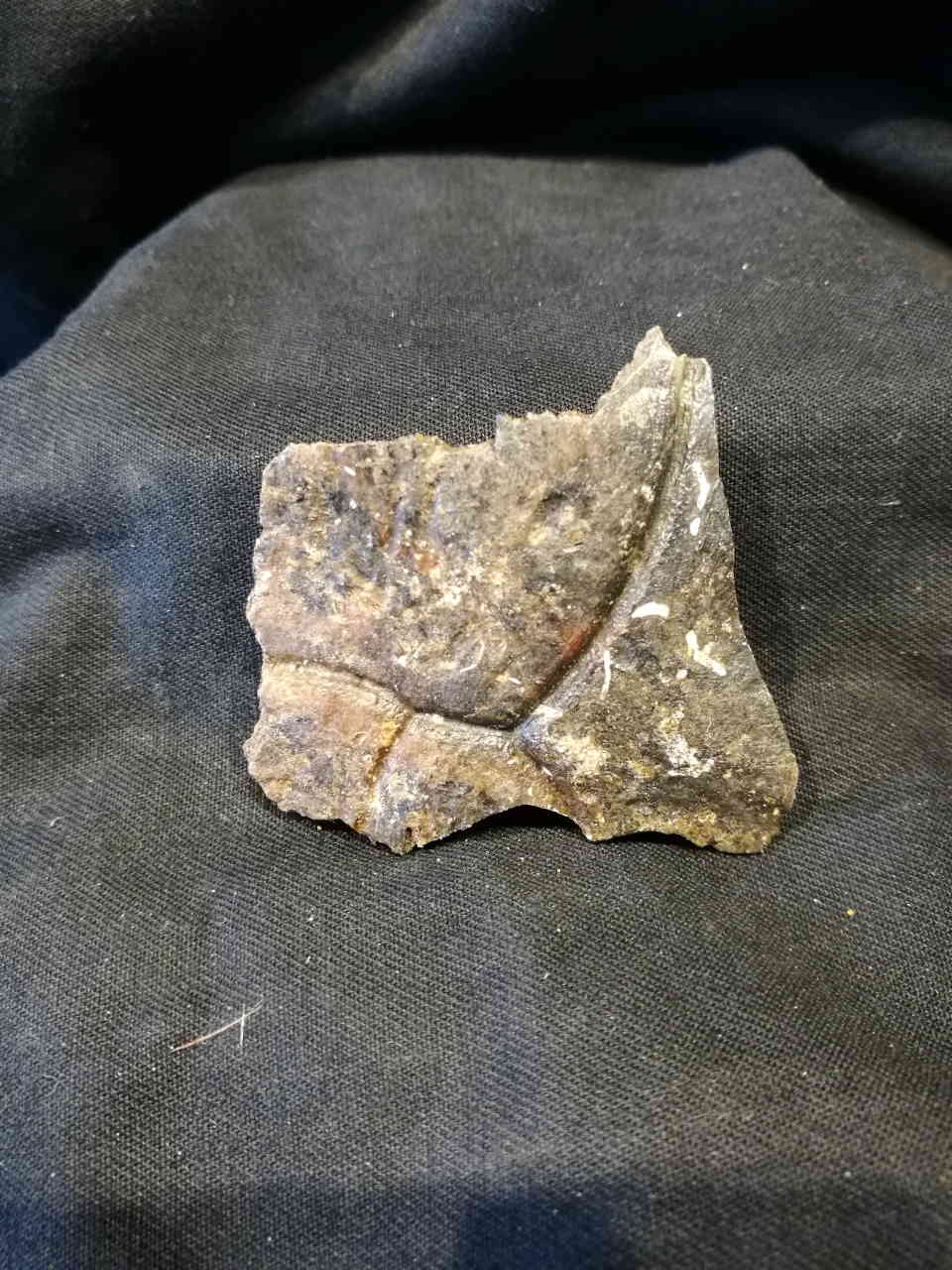
Emydura sp. #VEA4249
Turtle shell
Old collection! NO Restoration.
Pleistocene 50.000 years old
King creek, Darling Downs, SE Queensland,
Australia
Size : 1.88 inch / 4.7 cm
Price: Euro 50.-- |
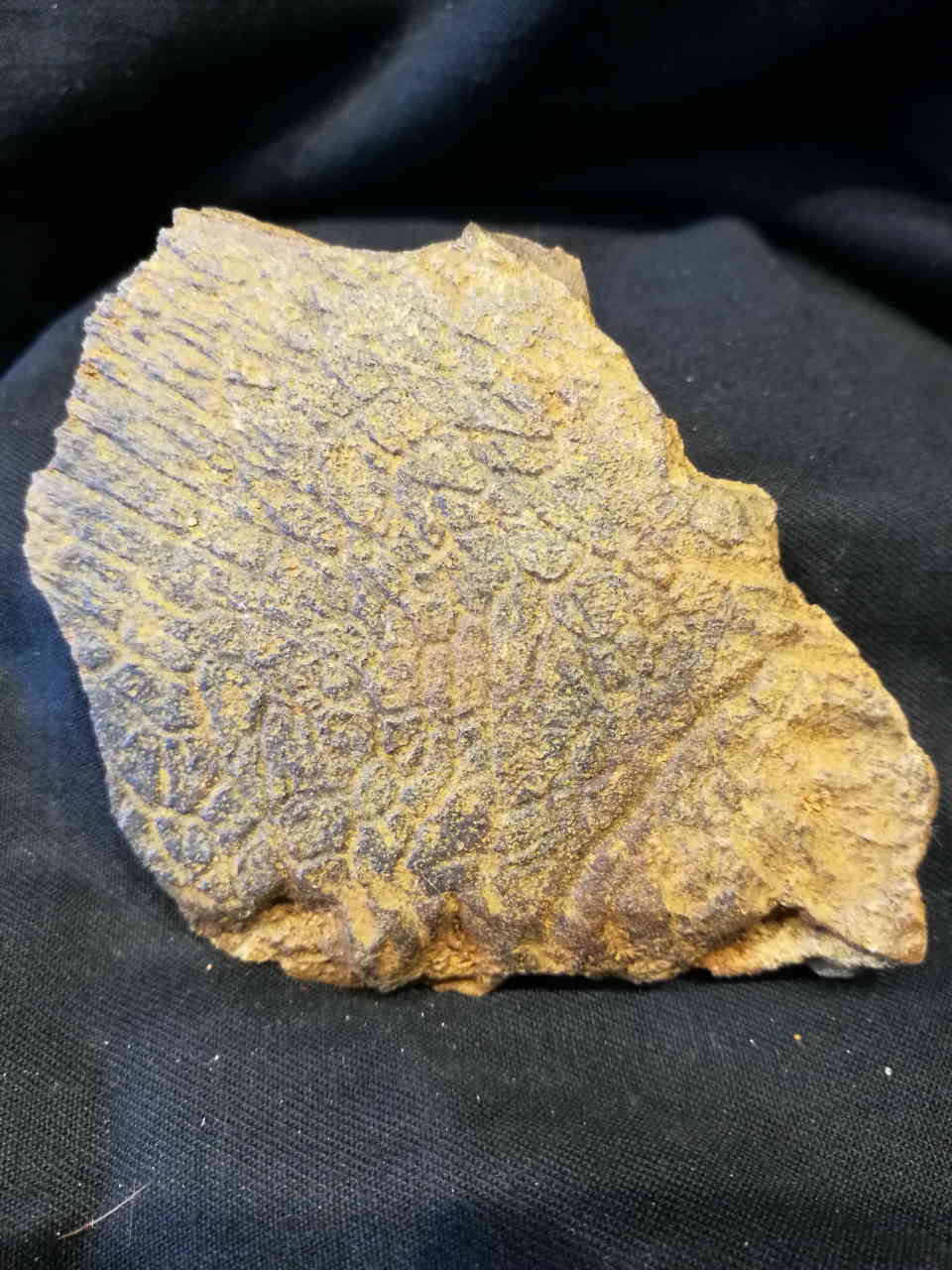
Emydura sp. #VEA4250
Turtle shell
Old collection! NO Restoration.
Pleistocene 50.000 years old
King creek, Darling Downs, SE Queensland,
Australia
Size : 3.2 inch / 8 cm
Price: Euro 60.-- |
|
|
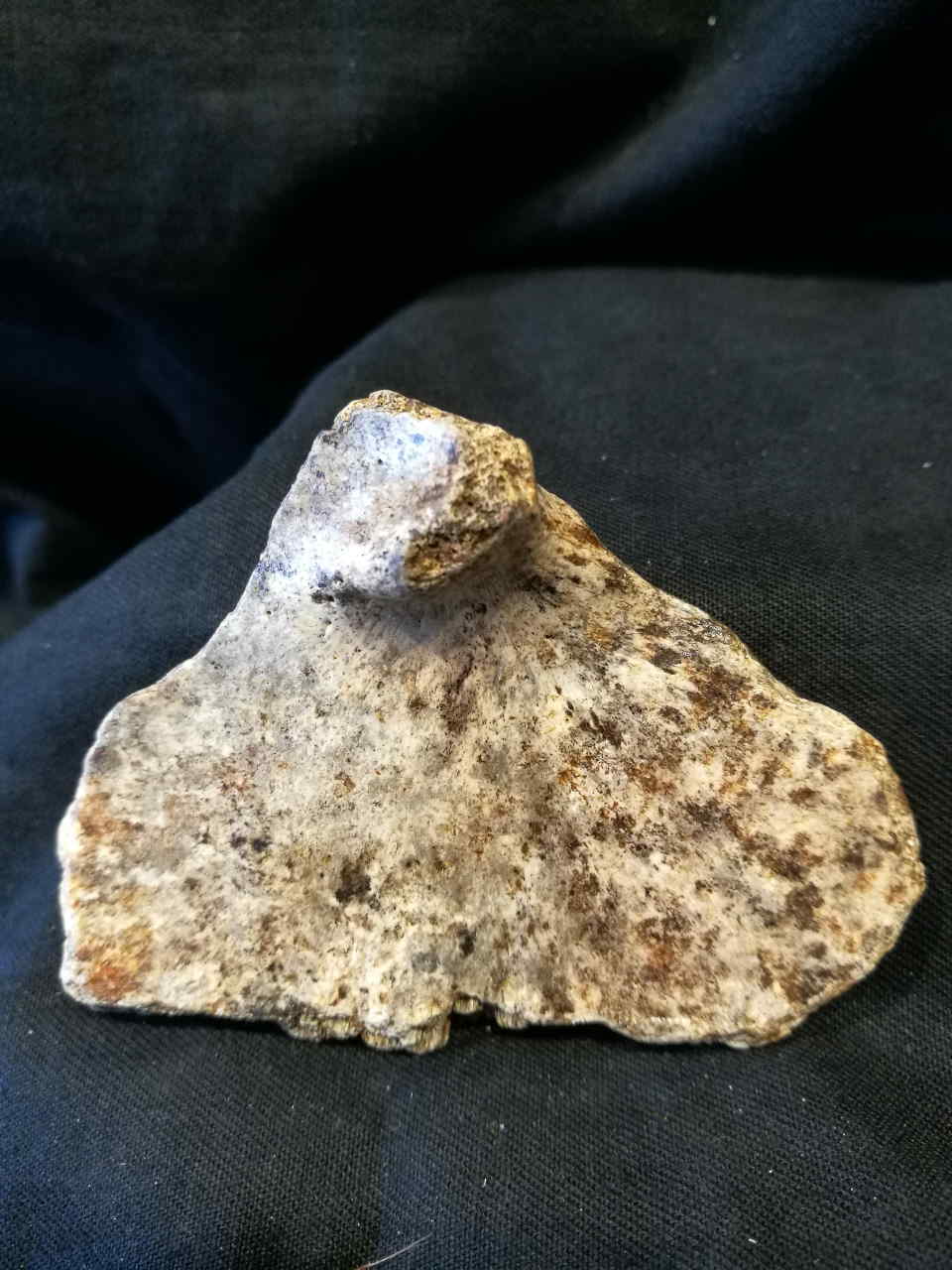
Emydura sp. #VEA4251
Turtle shell
Old collection! NO Restoration.
Pleistocene 50.000 years old
King creek, Darling Downs, SE Queensland,
Australia
Size : 2.8 inch / 7 cm
Price: Euro 50.-- |
|
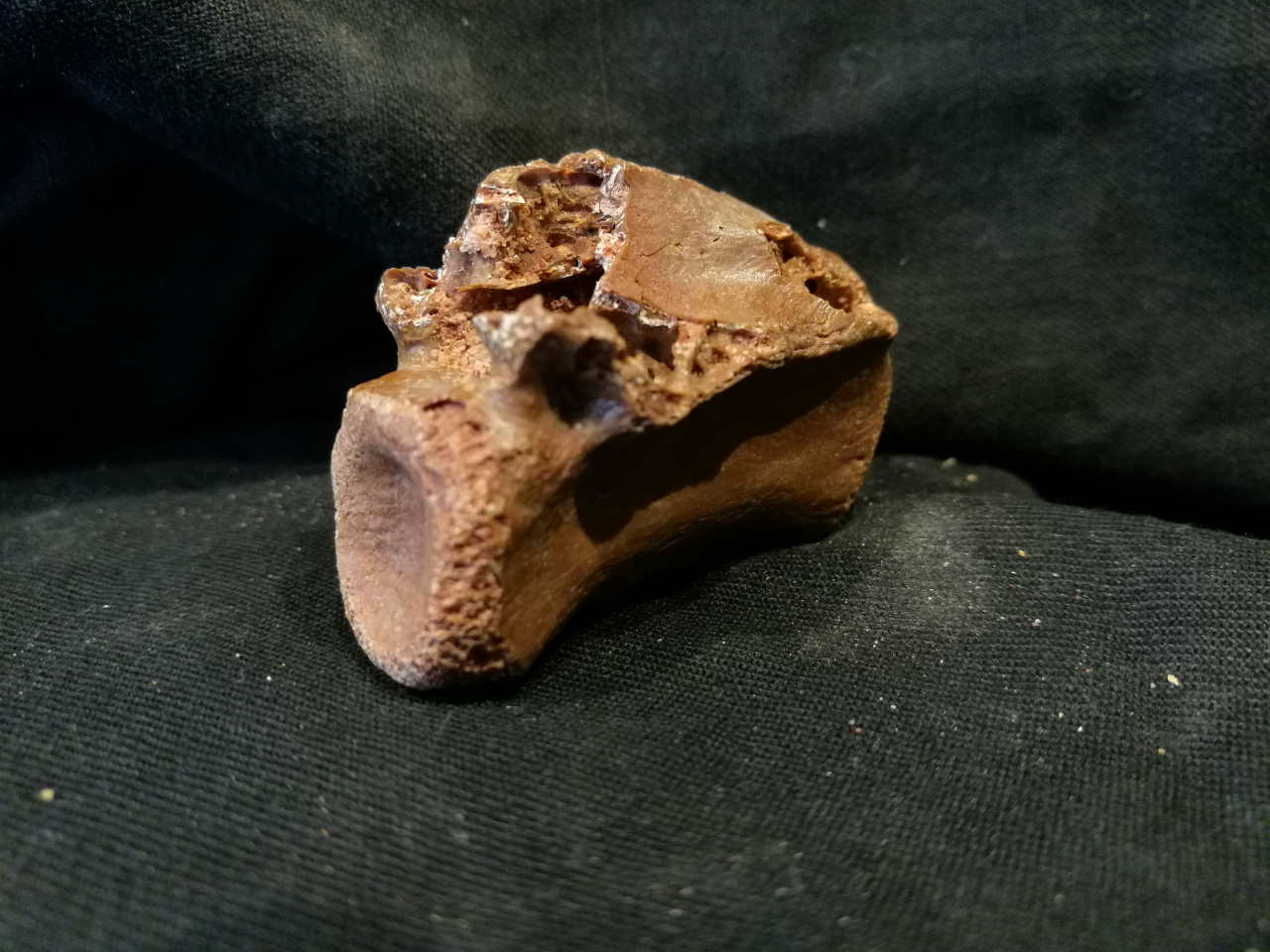
Deltadromeus cf. agilis #VDM4222
African Raptor/Ceratosaur nice vertebra,
No restoration
Tegana Formation (Cenomanian)
Cretaceous 95 million years old
Kem Kem Beds, Morocco
Size: 1.4 inch / 3.5 cm
Price: Euro 80.-- |
|
|
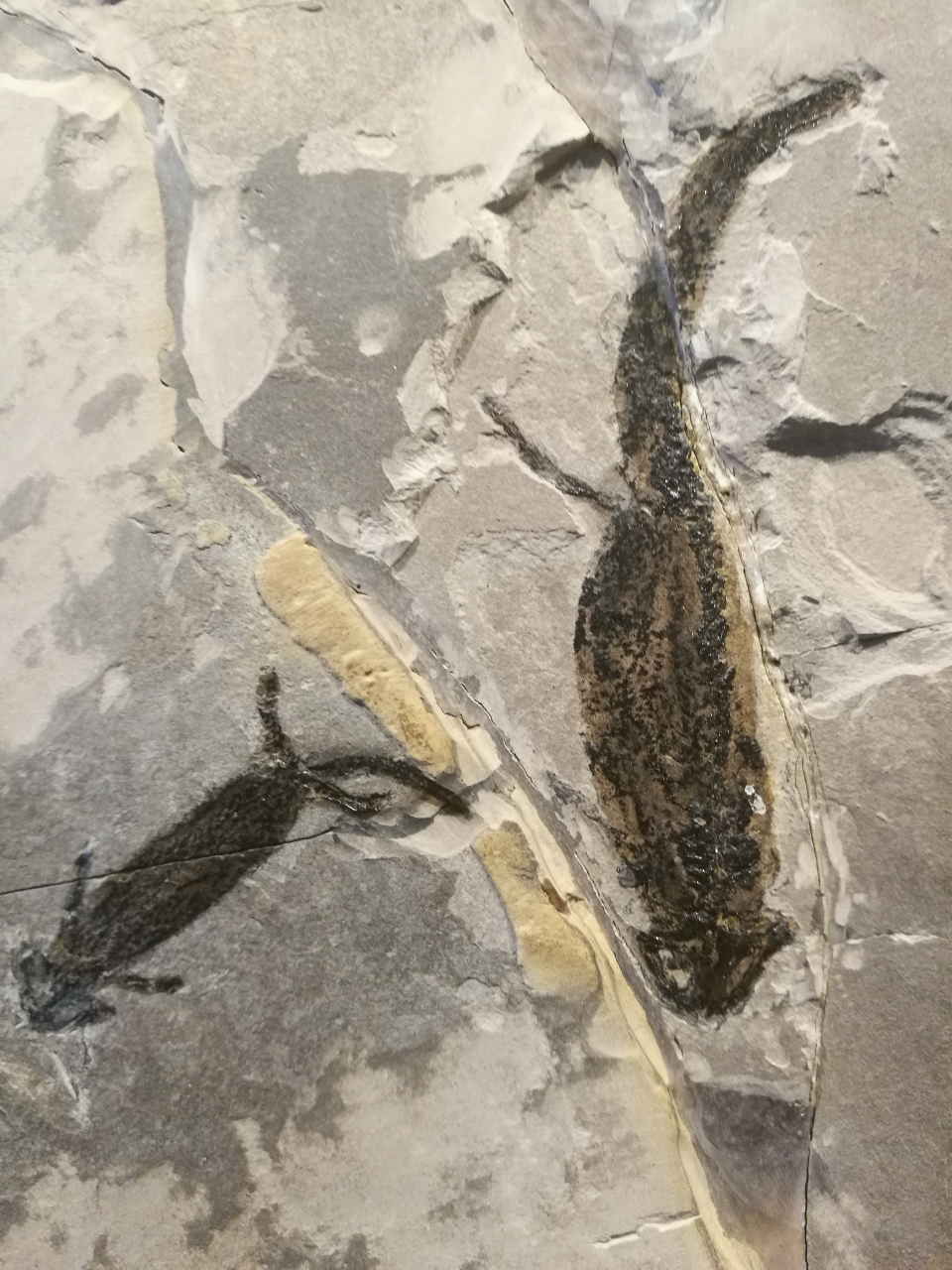
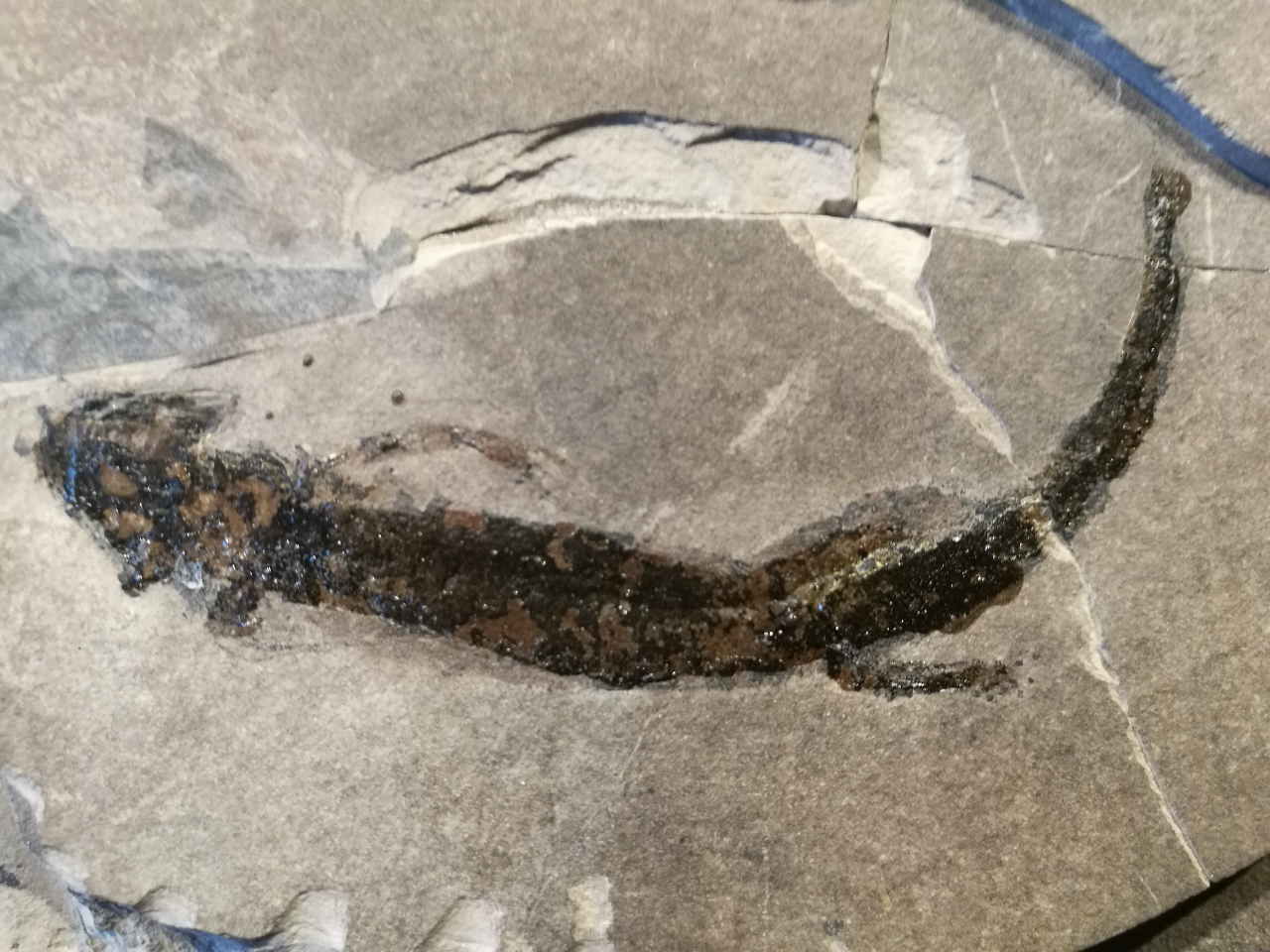
Melanerpeton humbergense #VDP4145
4 Nice Branchisaurid Amphibian
Old Collection, Altfund
Permian, Rotliegend, 285 million years old
Odernheim, Pfalz, Germany
Size biggest span: 4 inch / 10 cm
Size plate: 15 by 14.5 inch / 38 by 37 cm
Price: |
|
|
|
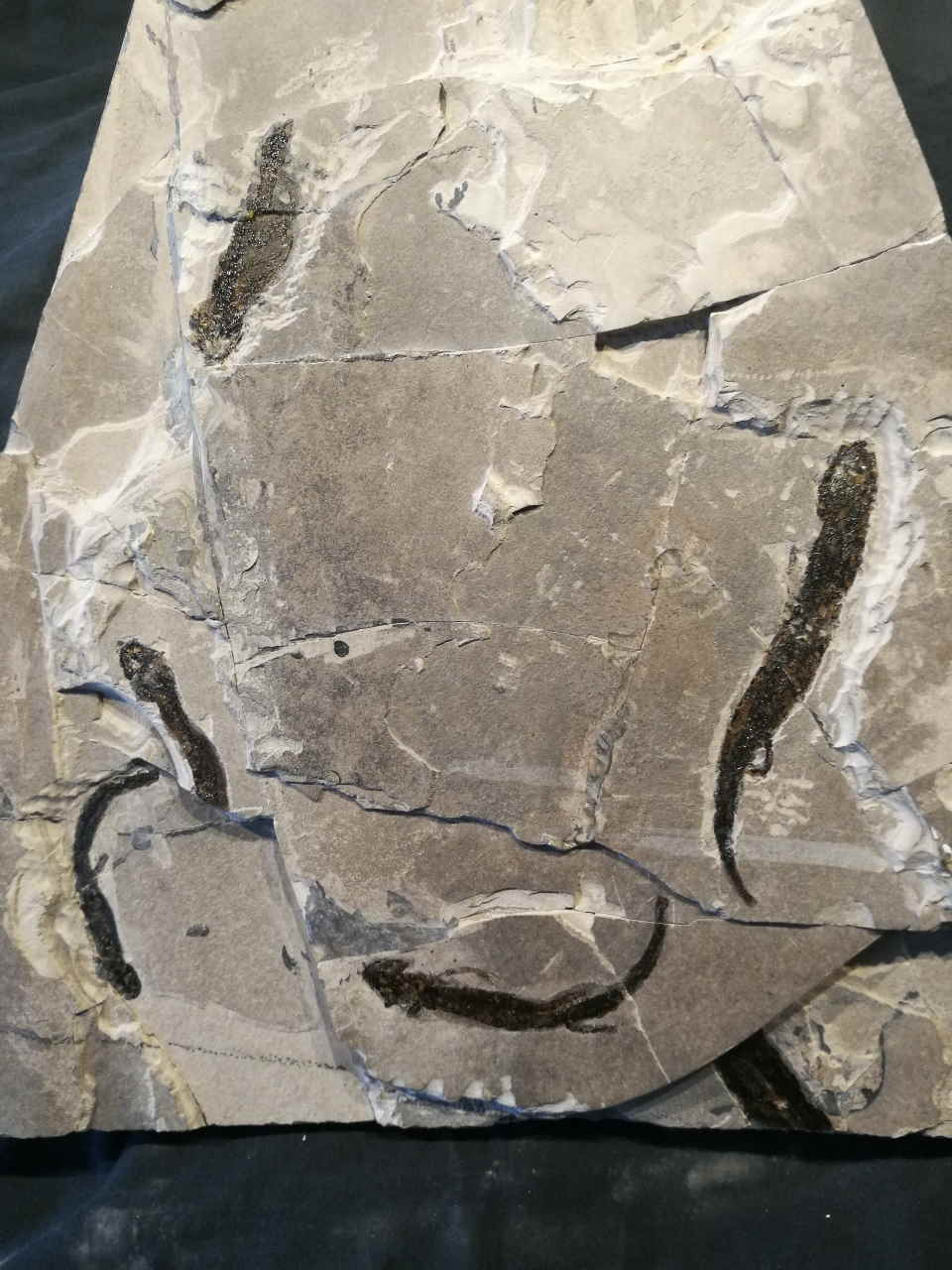
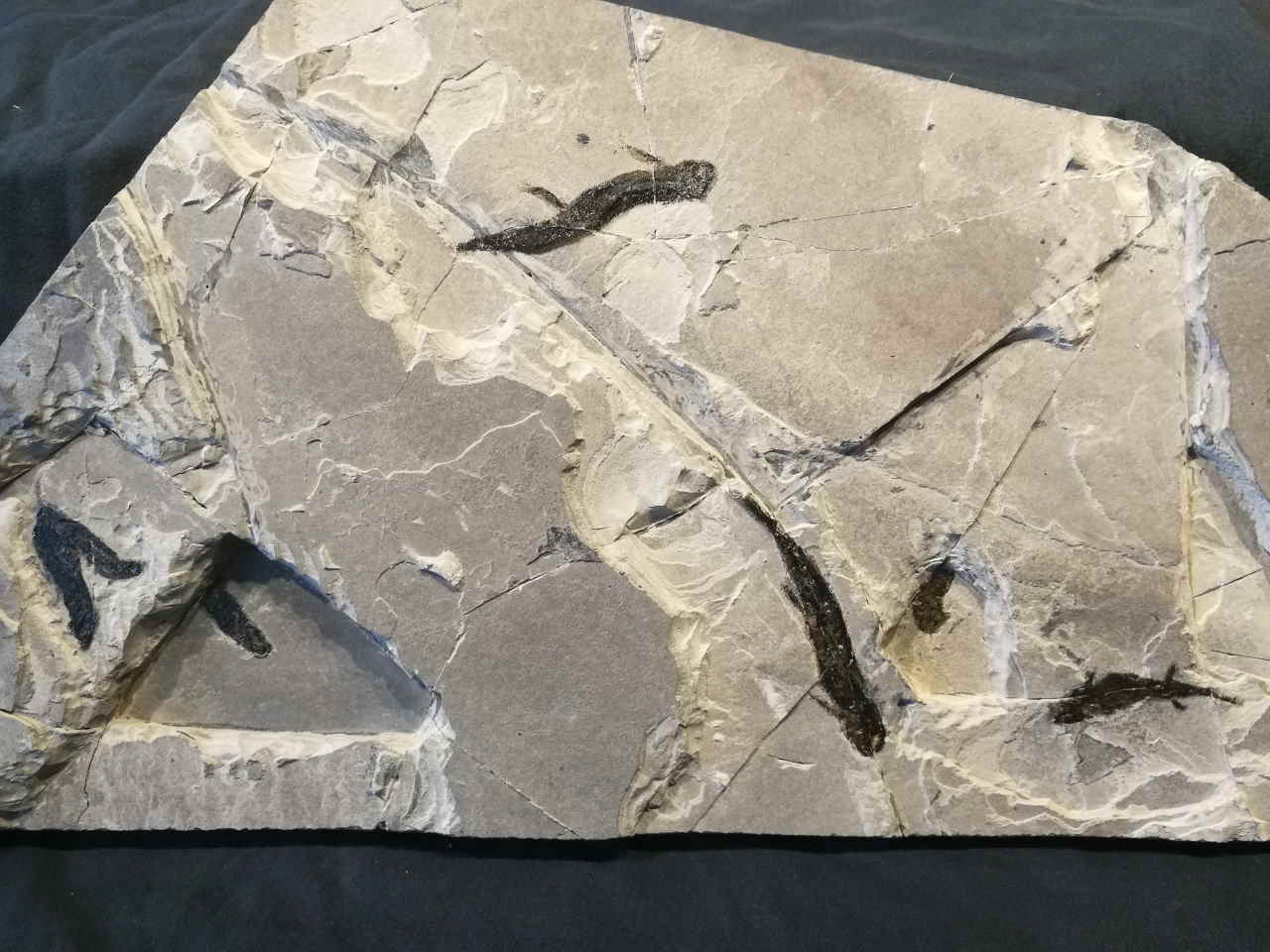
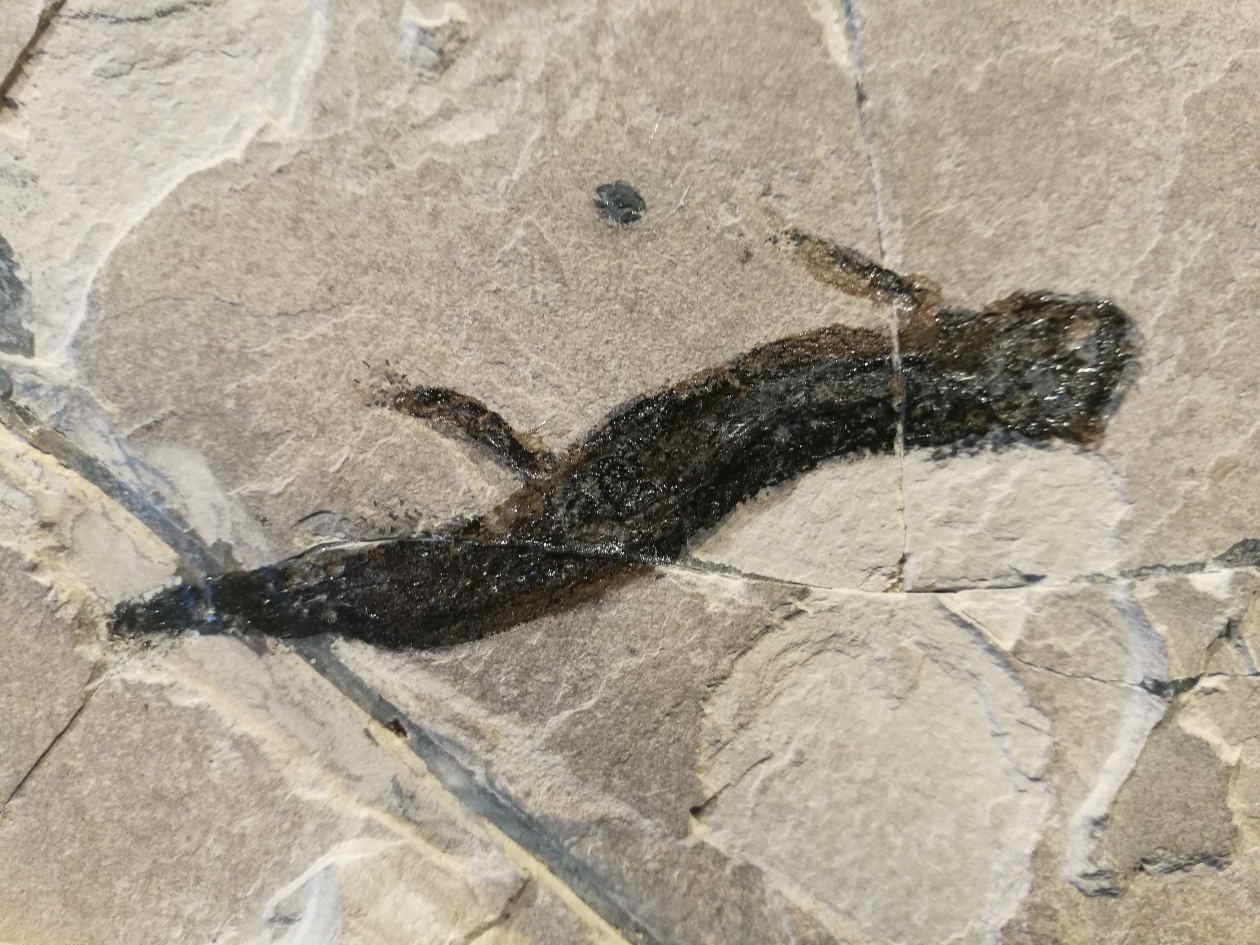
Melanerpeton humbergense #VDP4147
6 Nice Branchisaurid Amphibian
Old Collection, Altfund
Permian, Rotliegend, 285 million years old
Odernheim, Pfalz, Germany
Size biggest span: 4.4 inch / 11 cm
Size plate: 15.3 by 13.8 inch / 39 by 35 cm
Price: |
|
|
|
|
Melanerpeton humbergense #VDP4148
6 Nice Branchisaurid Amphibian
Old Collection, Altfund
Permian, Rotliegend, 285 million years old
Odernheim, Pfalz, Germany
Size biggest span: 3.6 inch / 9 cm
Size plate: 22 by 9.8 inch / 56 by 25 cm
Price: |
3 Carnivore Dinosaur coprolites #VCP10259
Probably Coelophysid Rare Old Collection
L. Jurassic, Hettangian 200 Million years old
Holy Cross Mountains, Poland
Size biggest: 1.16 inch / 2.9 cm long
Price: Euro 30.-- | 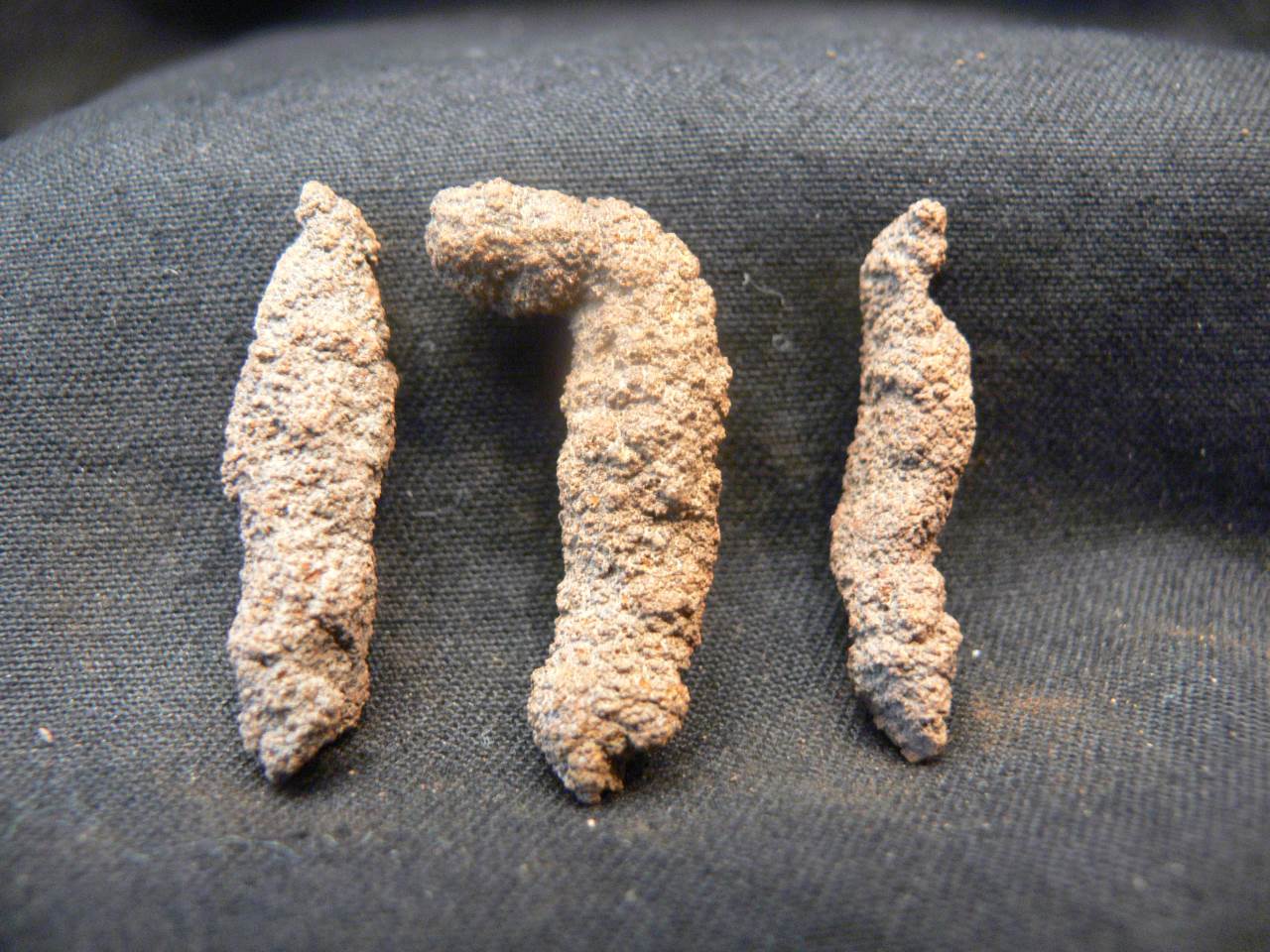 |
 | Trionyx sp. #VHD2017
Turtle Carpache, Old Collection
M. Miocene, 11 million years old
Mecsek Mountain, Pecs,
Danitz-Puszta, Hungary
Size : 2.24 inch / 5.6 cm
Price: Euro 50.-- |
Trionyx sp. #VHD2018
Turtle Carpache, Old Collection
M. Miocene, 11 million years old
Mecsek Mountain, Pecs,
Danitz-Puszta, Hungary
Size : 2 inch / 5 cm
Price: Euro 40.-- | 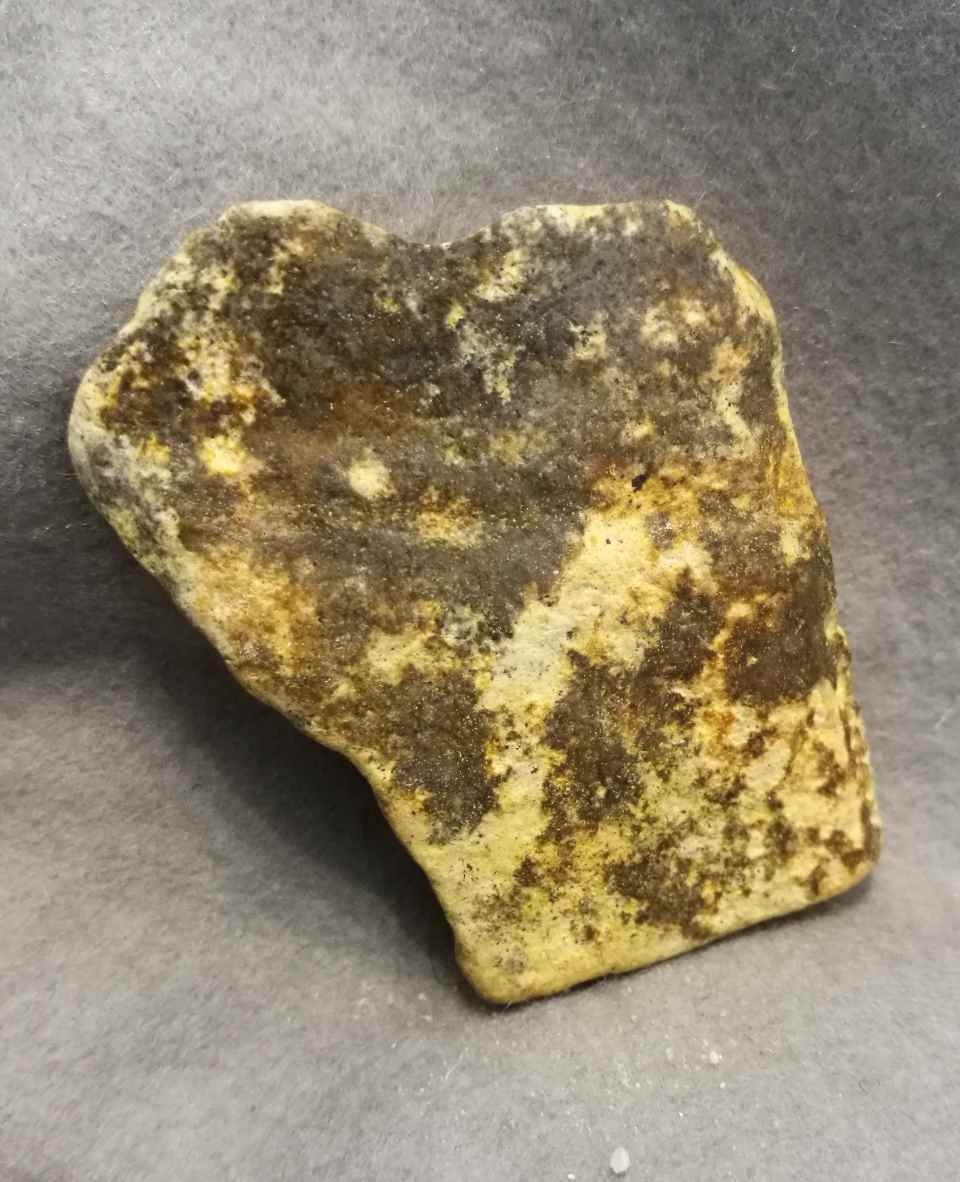 |
Trionyx sp. #VHD2020
Turtle Carpache, Old Collection
M. Miocene, 11 million years old
Mecsek Mountain, Pecs,
Danitz-Puszta, Hungary
Size : 1.8 inch / 4.5 cm
Price: Euro 35.-- | 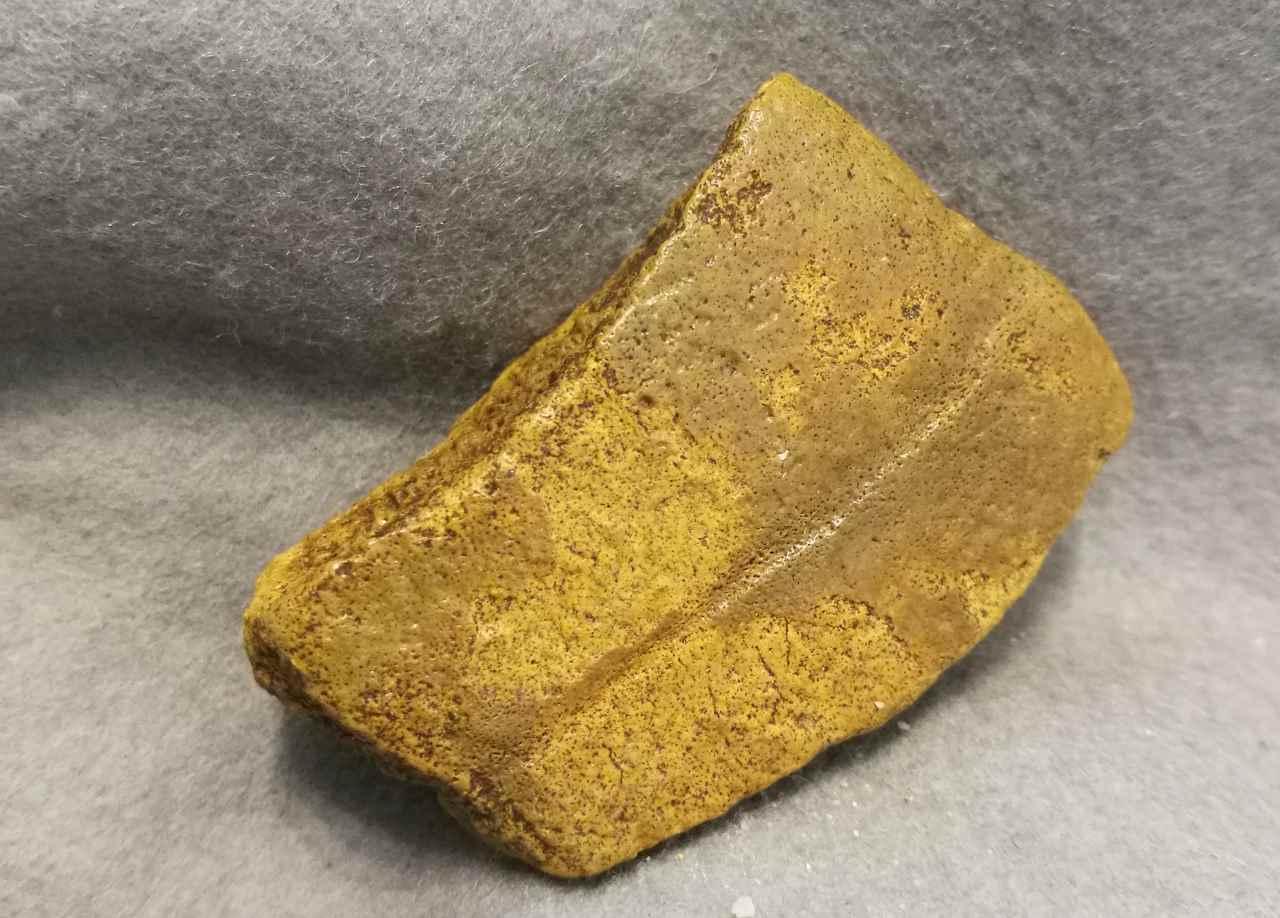 |
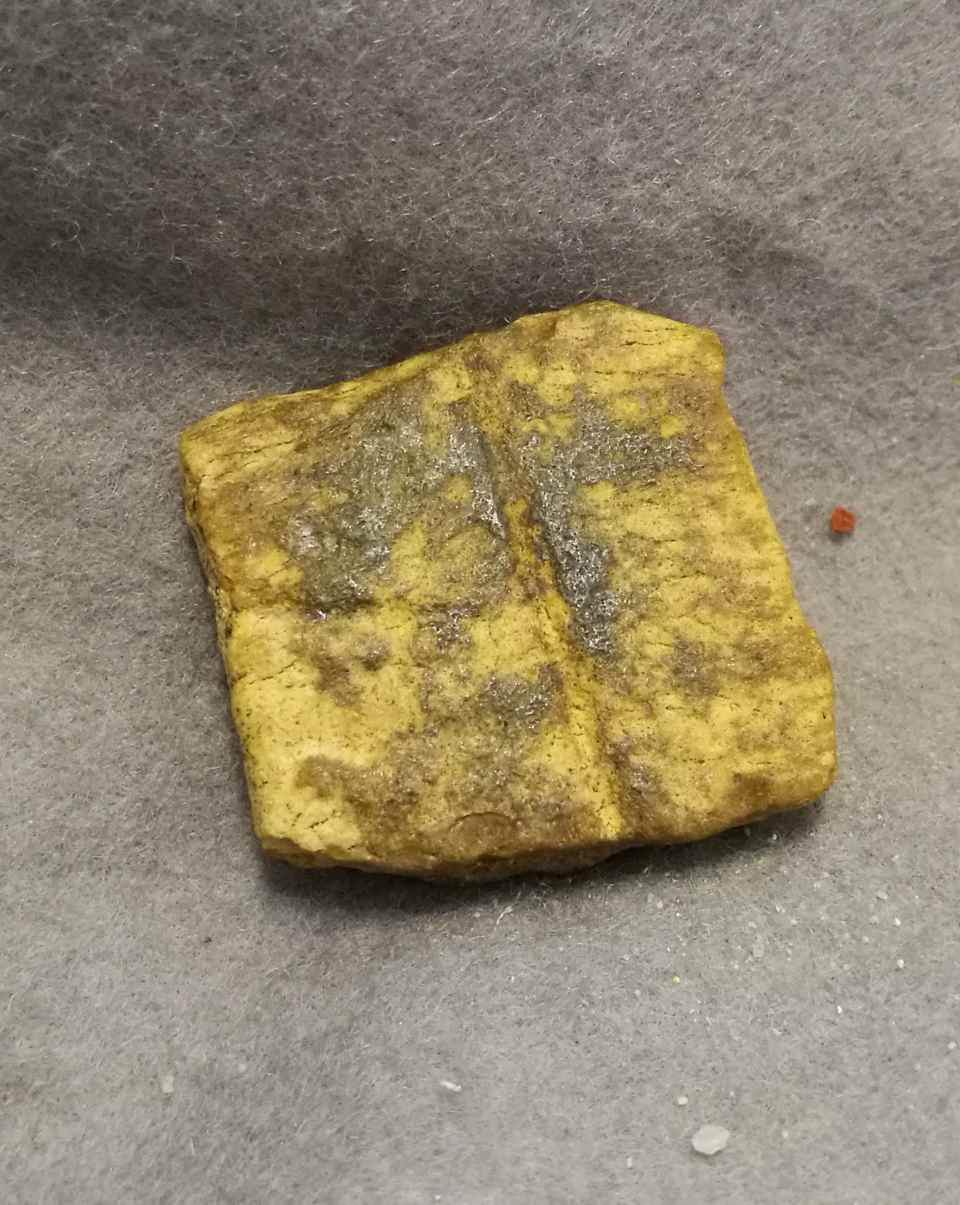 | Trionyx sp. #VHD2021
Turtle Carpache, Old Collection
M. Miocene, 11 million years old
Mecsek Mountain, Pecs,
Danitz-Puszta, Hungary
Size : 1 inch / 2.5 cm
Price: Euro 30.-- |
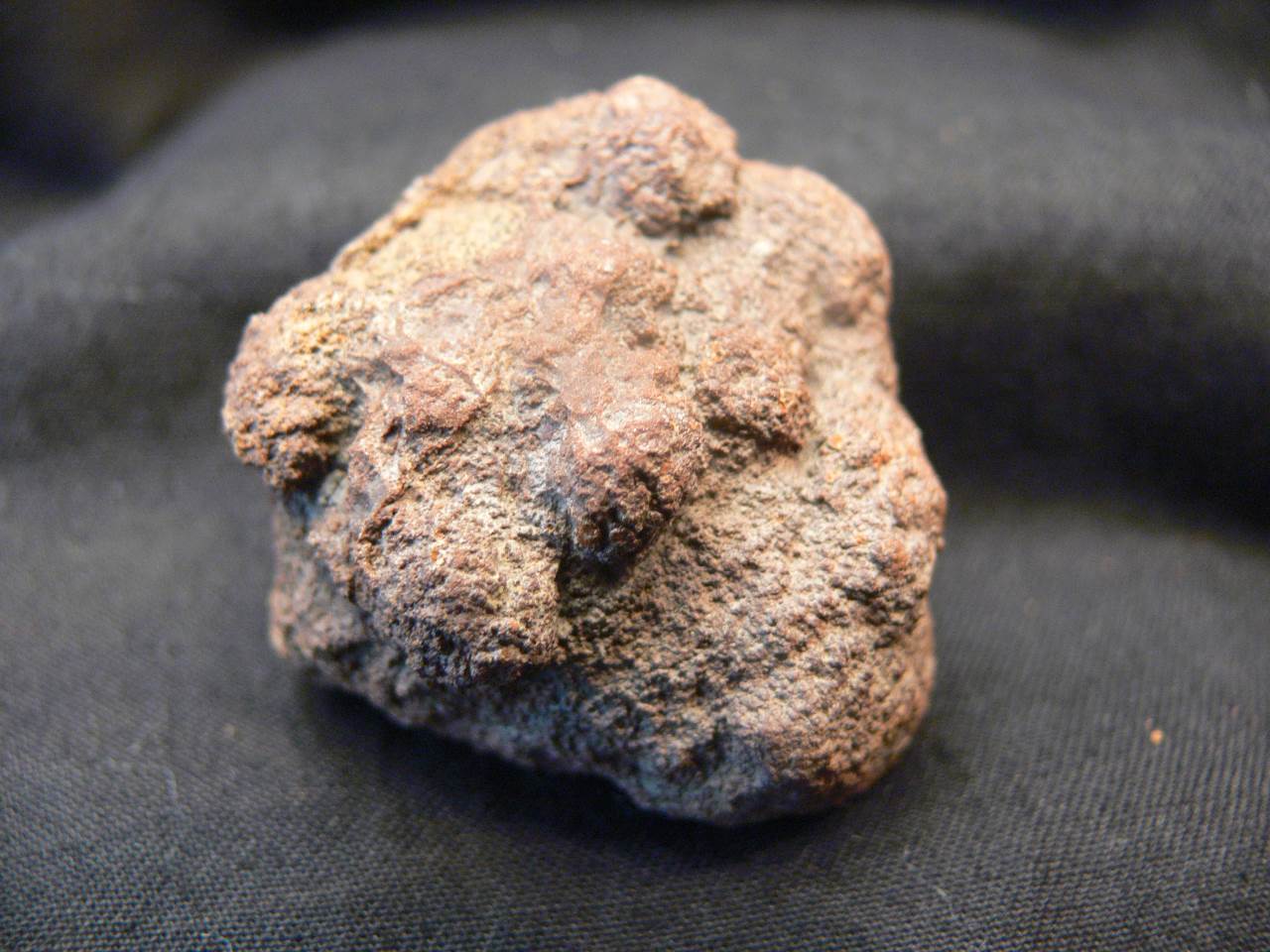 | Herbivore Dinosaur coprolite #VDP10251
Probably Scelidosaurid Rare Old Collection
L. Jurassic, Hettangian 200 Million years old
Holy Cross Mountains, Poland
Size span: 1.68 inch / 4.2 cm
Price: Euro 40.-- |
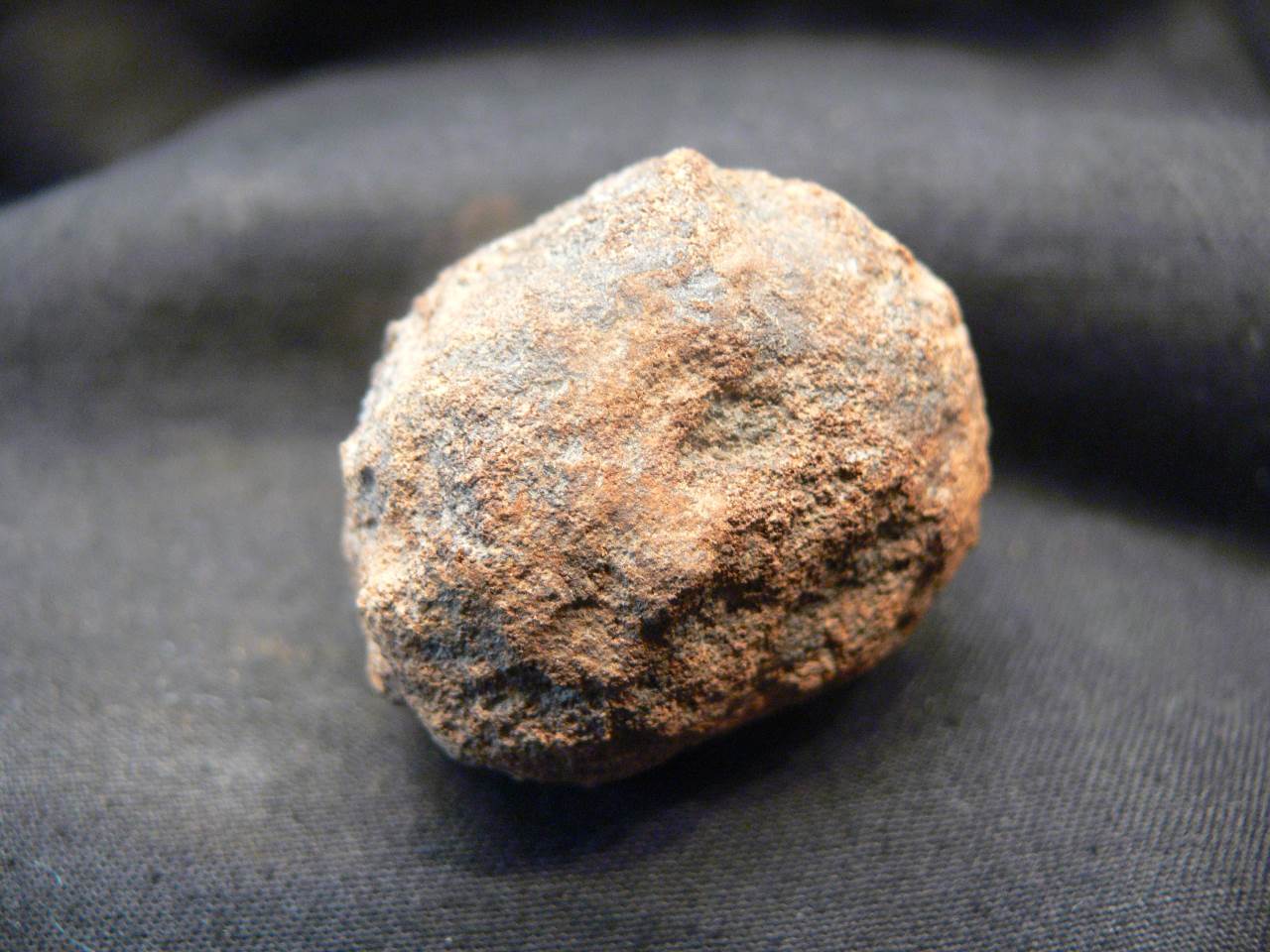
Herbivore Dinosaur coprolite #VDP10252
Probably Scelidosaurid Rare Old Collection
L. Jurassic, Hettangian 200 Million years old
Holy Cross Mountains, Poland
Size span: 2.4 inch / 6 cm
Price: Euro 45.-- | 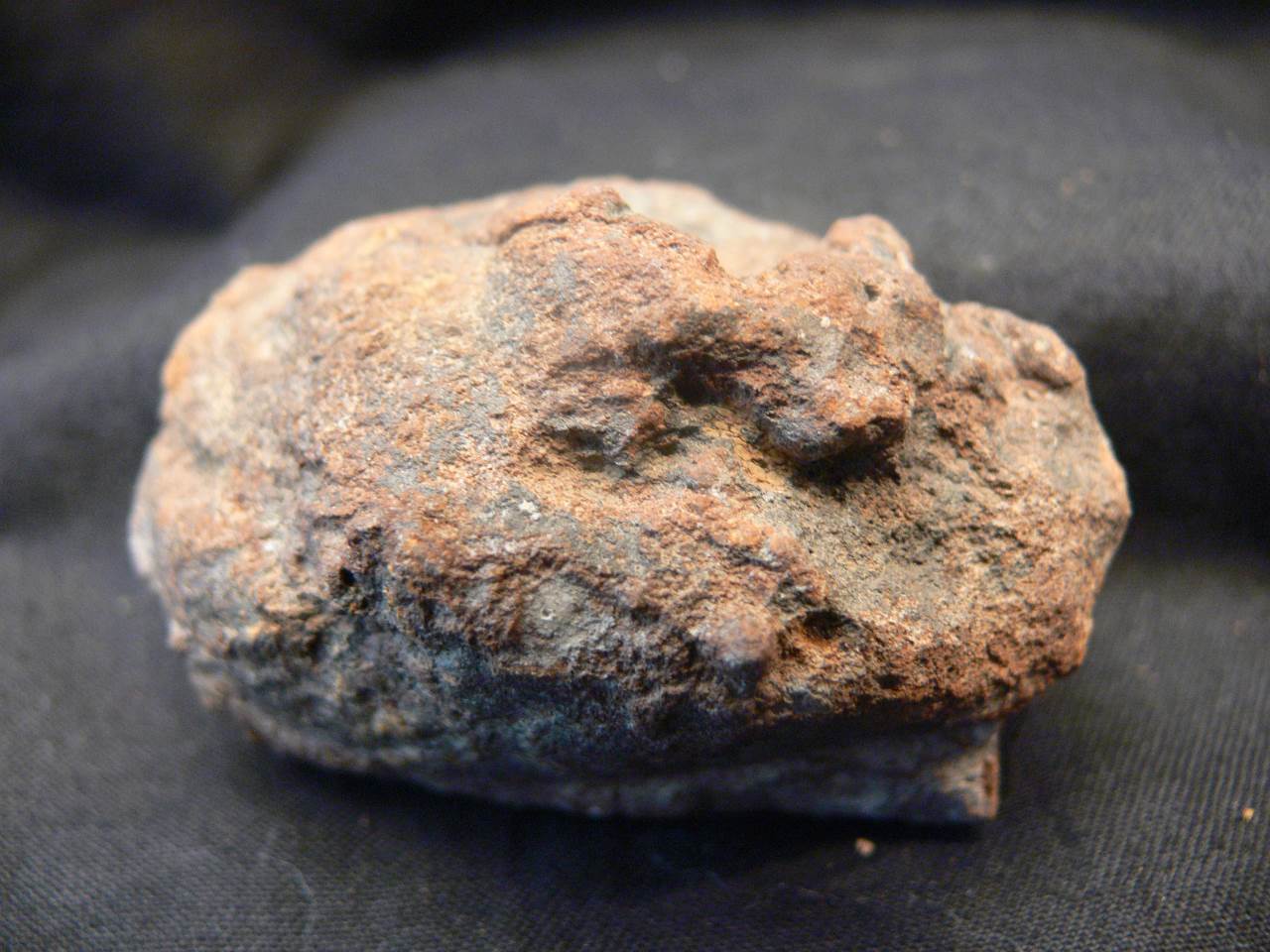 |
 | Herbivore Dinosaur coprolite #VDP10253
Probably Scelidosaurid Rare Old Collection
L. Jurassic, Hettangian 200 Million years old
Holy Cross Mountains, Poland
Size span: 1.72 inch / 4.3 cm
Price: Euro 40.-- |
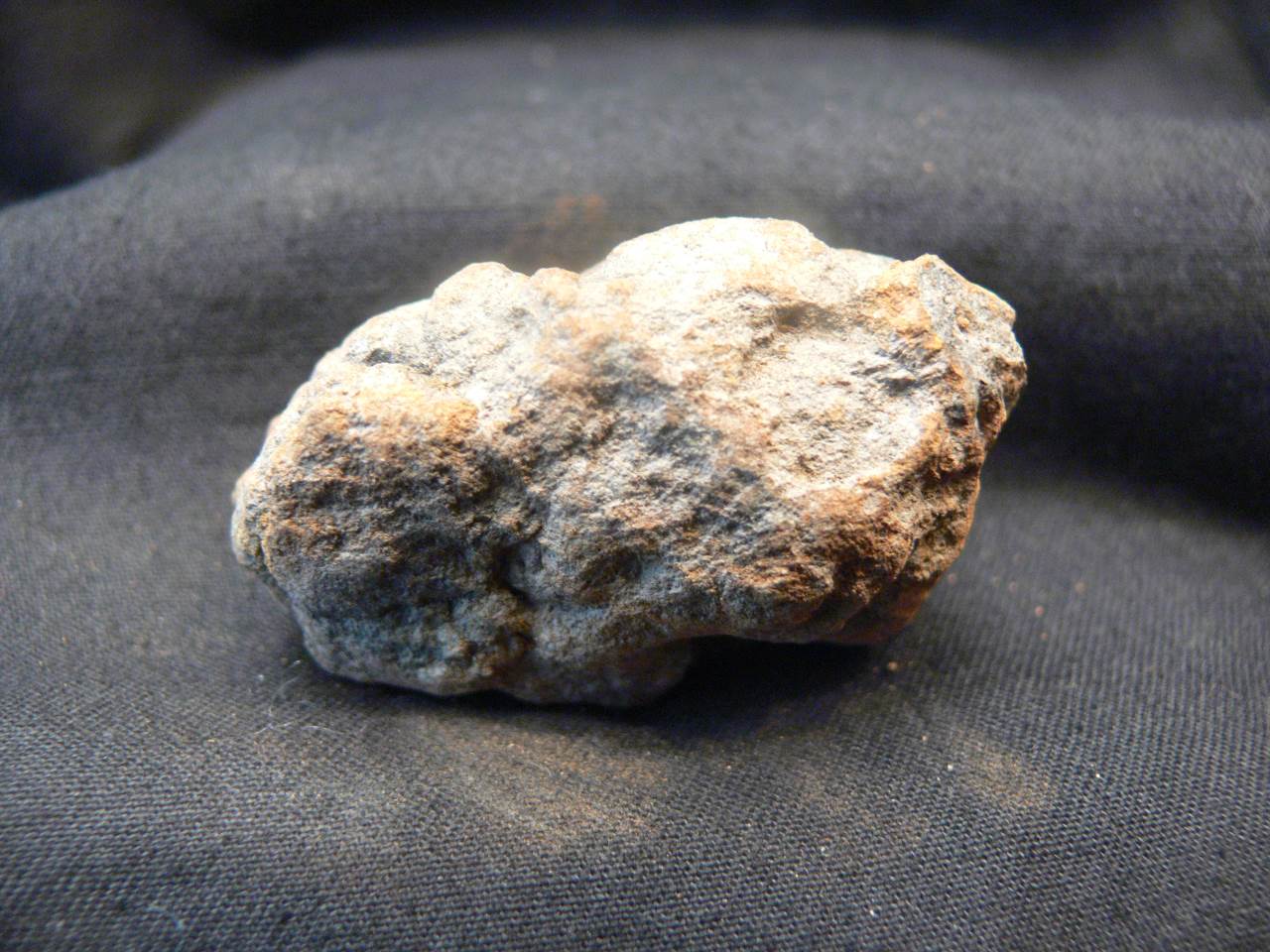
Herbivore Dinosaur coprolite #VDP10254
Probably Scelidosaurid Rare Old Collection
L. Jurassic, Hettangian 200 Million years old
Holy Cross Mountains, Poland
Size span: 1.8 inch / 4.5 cm
Price: Euro 40.-- | 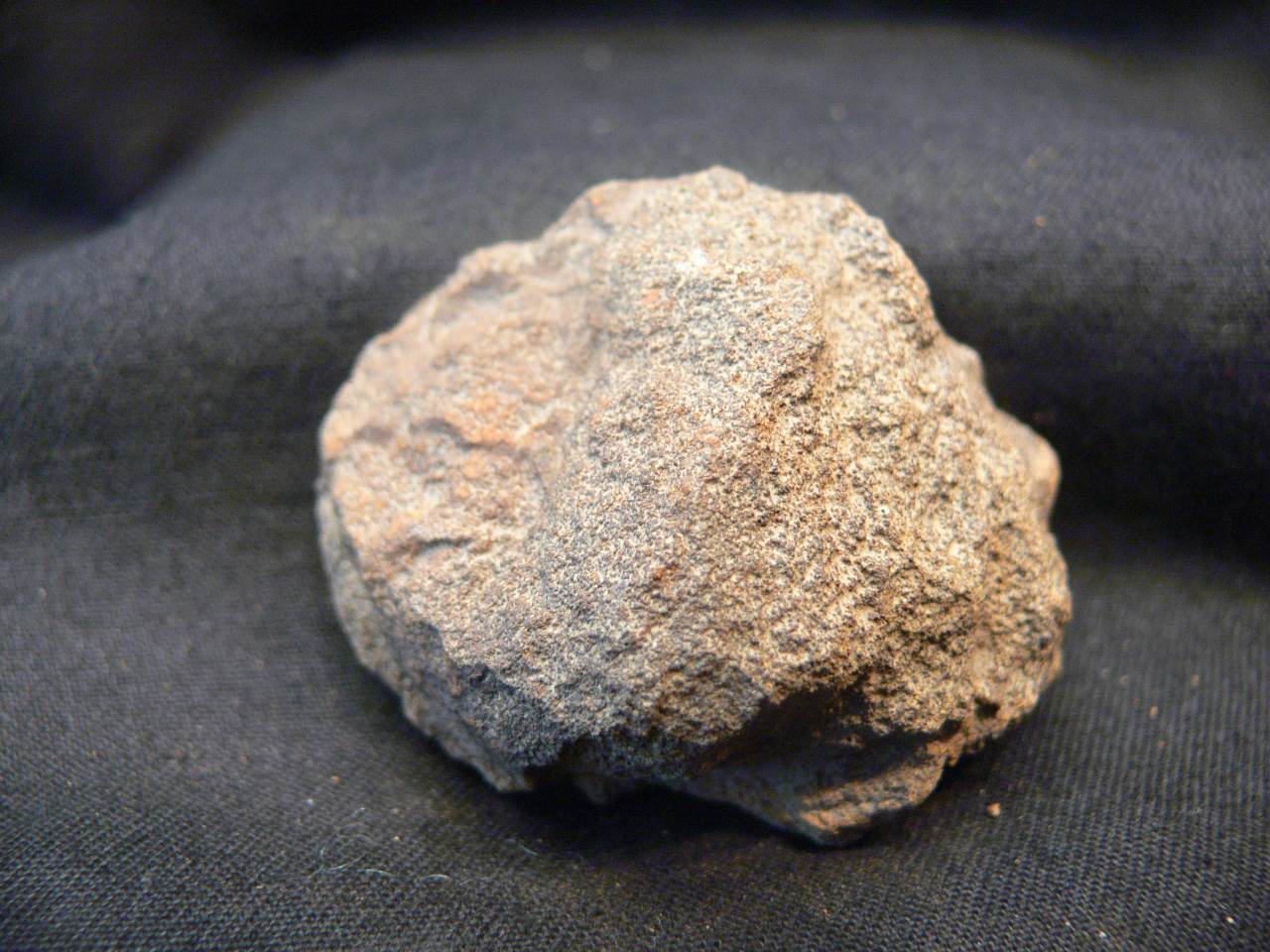 |
 | Herbivore Dinosaur coprolite #VDP10255
Probably Scelidosaurid Rare Old Collection
L. Jurassic, Hettangian 200 Million years old
Holy Cross Mountains, Poland
Size span: 1.92 inch / 4.8 cm
Price: Euro 40.-- |
Herbivore Dinosaur coprolite #VDP10256
Probably Scelidosaurid Rare Old Collection
L. Jurassic, Hettangian 200 Million years old
Holy Cross Mountains, Poland
Size span: 1.6 inch / 4 cm
Price: Euro 40.-- | 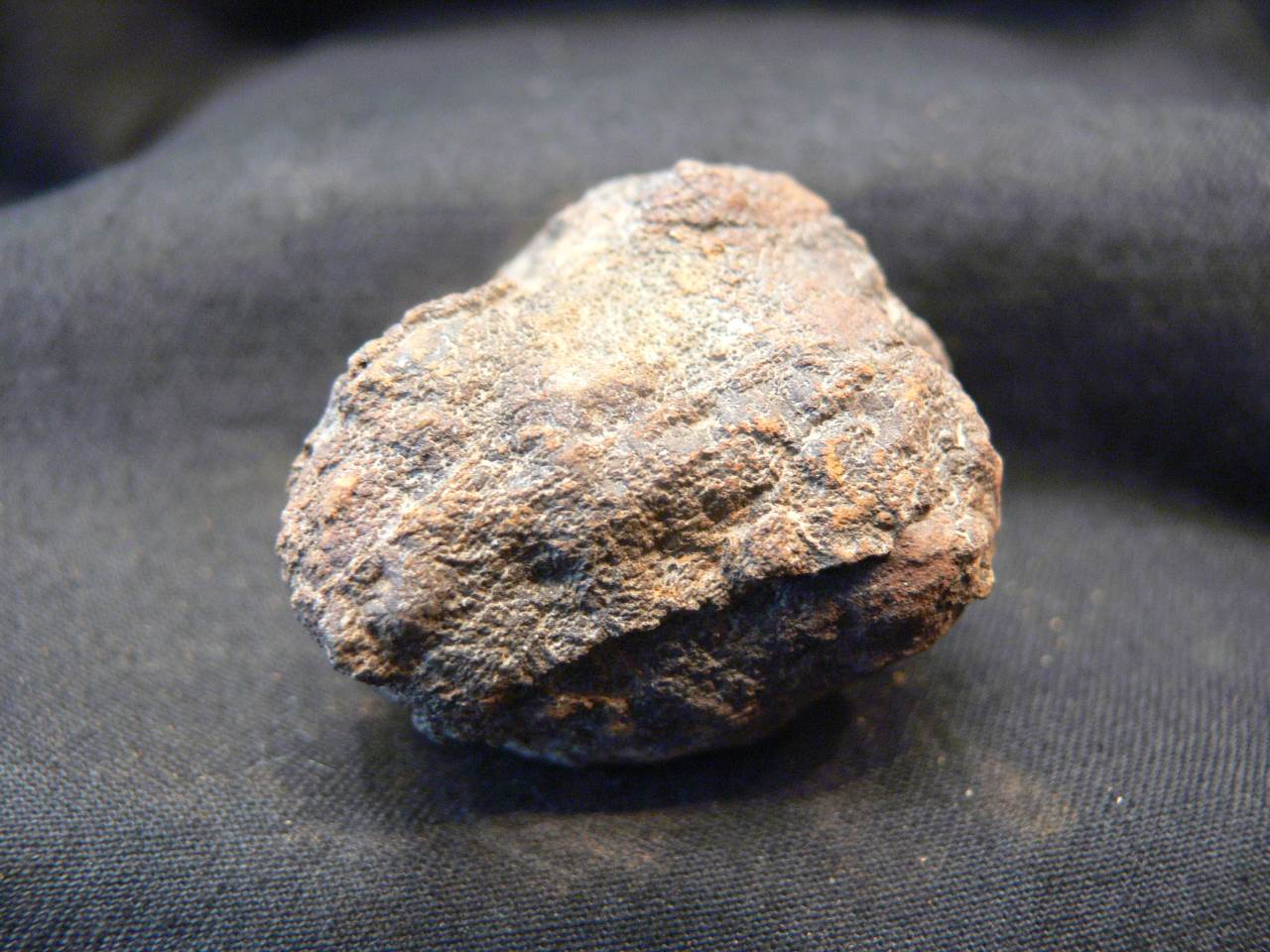 |
3 Herbivore Dinosaur coprolite #VCP10258
Probably Scelidosaurid Rare Old Collection
L. Jurassic, Hettangian 200 Million years old
Holy Cross Mountains, Poland
Size biggest: 0.96 inch / 2.4 cm
Price: Euro 45.-- | 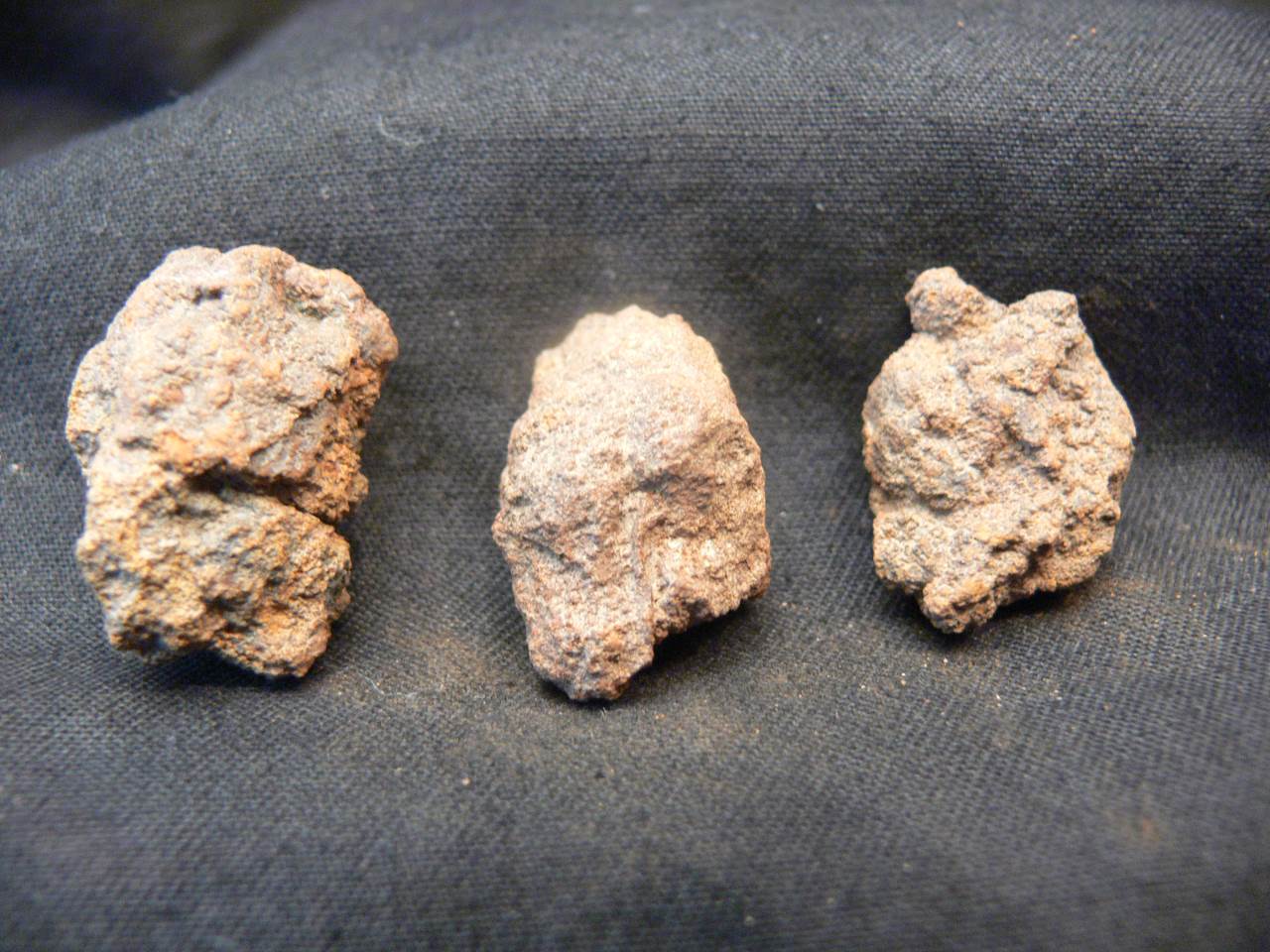 |
Herbivore Dinosaur coprolite #VCP10153
Probably Scelidosaurid Rare Old Collection
L. Jurassic, Hettangian 200 Million years old
Holy Cross Mountains, Poland
Size span: 1.8 inch / 4.5 cm
Price: Euro 35.-- | 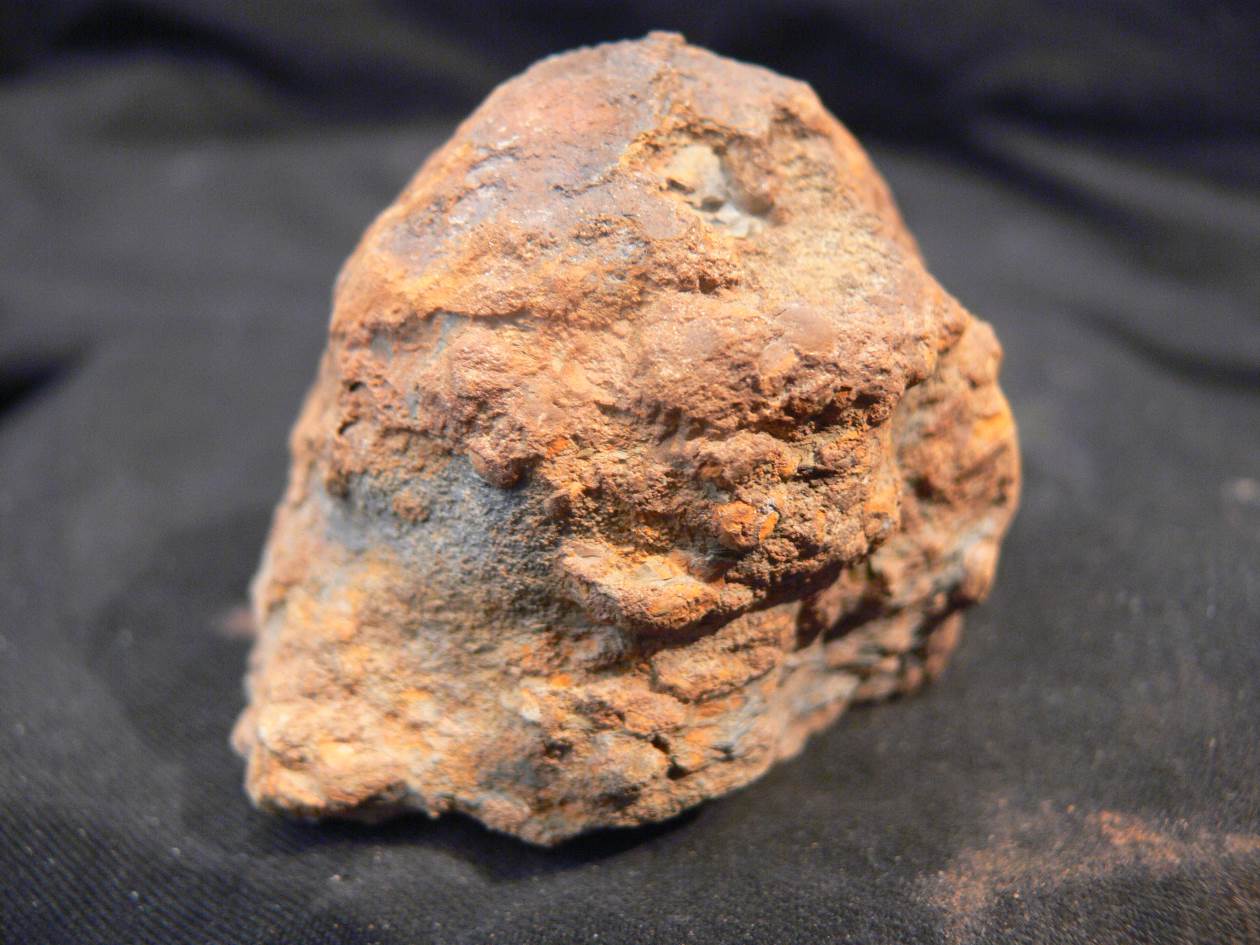 |
Crocodylus cf. niloticus #SI5613
African Large Crocodilian Tooth,
Tegana Formation (Cenomanian)
Cretaceous 95 million years old
Kem Kem Beds, Morocco
Size: 0.64 inch / 1.6cm
Price: Euro 10.-- | 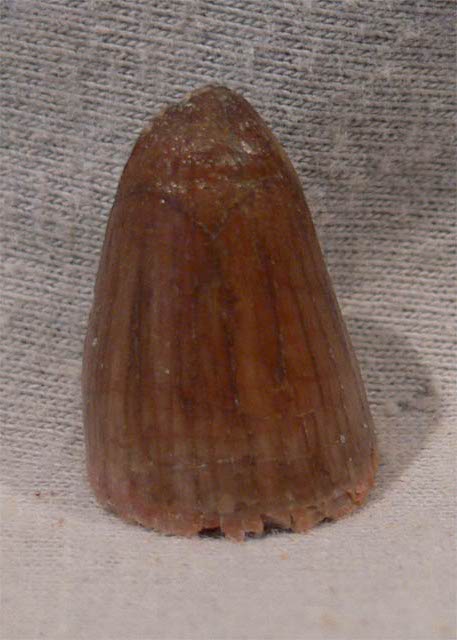 |
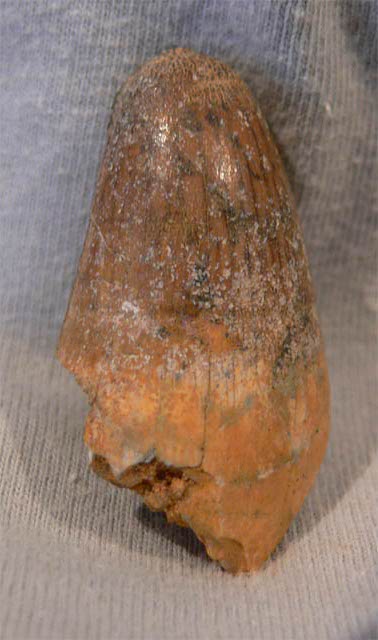 | Crocodylus cf. niloticus #SI5132
African Large Crocodilian nice Tooth,
Tegana Formation (Cenomanian)
Cretaceous 95 million years old
Kem Kem Beds, Morocco
Size: 1.4 inch / 3.5cm
Price: Euro 15.-- |
 | Crocodylus cf. niloticus #VCN8475
African Large Crocodilian Tooth,
Tegana Formation (Cenomanian)
Cretaceous 95 million years old
Kem Kem Beds, Morocco
Size: 1.6 inch / 4 cm
Price: Euro 15.-- |
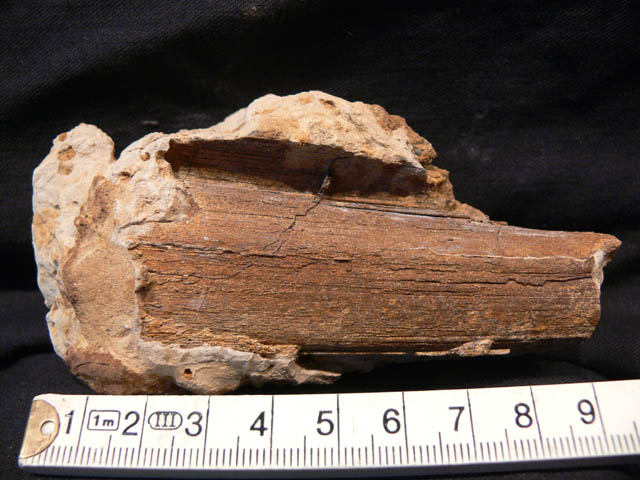 | Labyrinthodont spec. #VLB6809
Rare Partial bone from famous locality
Blobs shale, M. Triassic, 237 million years old
Erskine Ranges, Western Australia
Size : 3.4 inch / 7.5 cm
Price: Euro 80.-- |
| SOLDS BELOW | SOLDS BELOW |
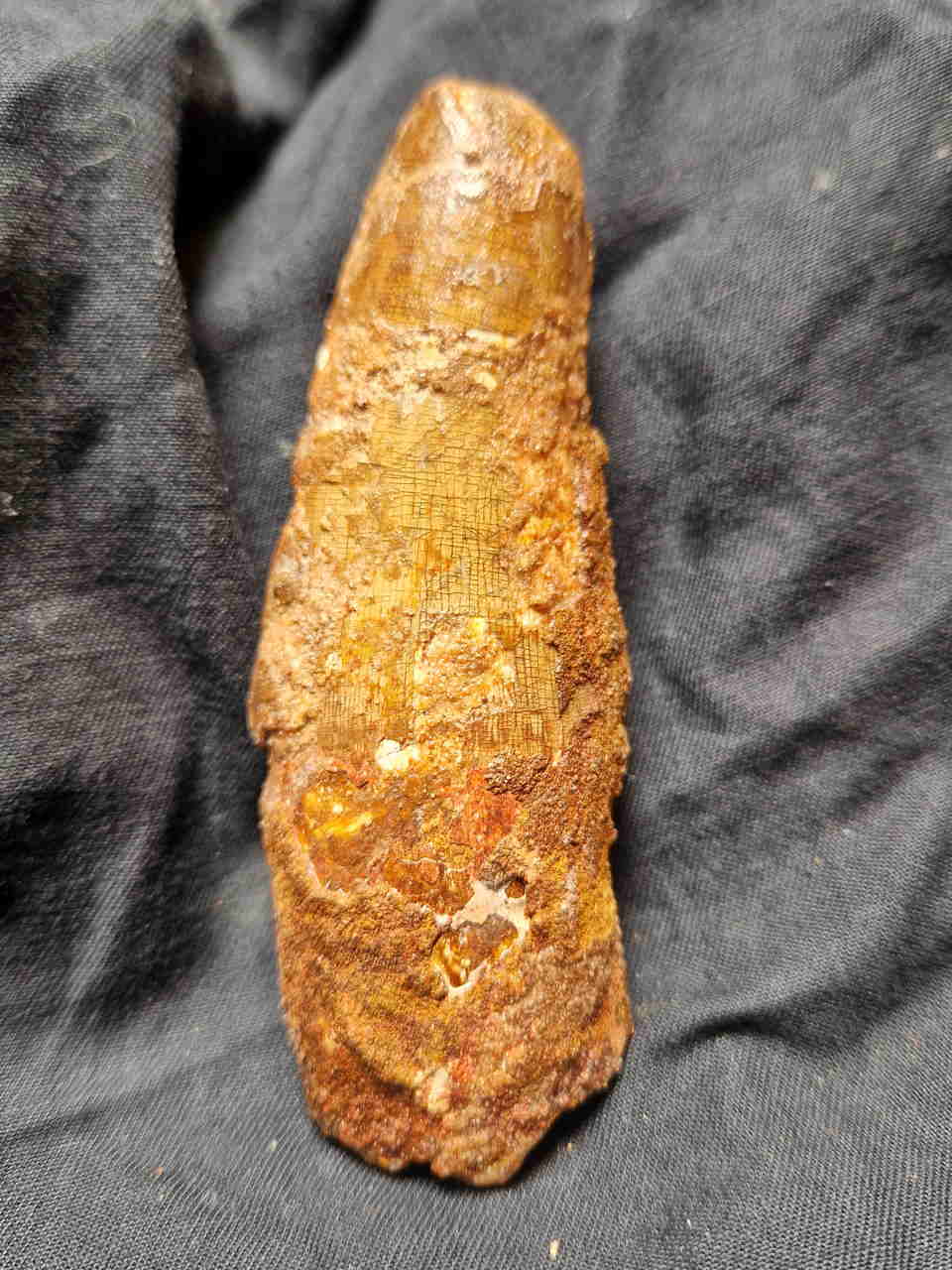
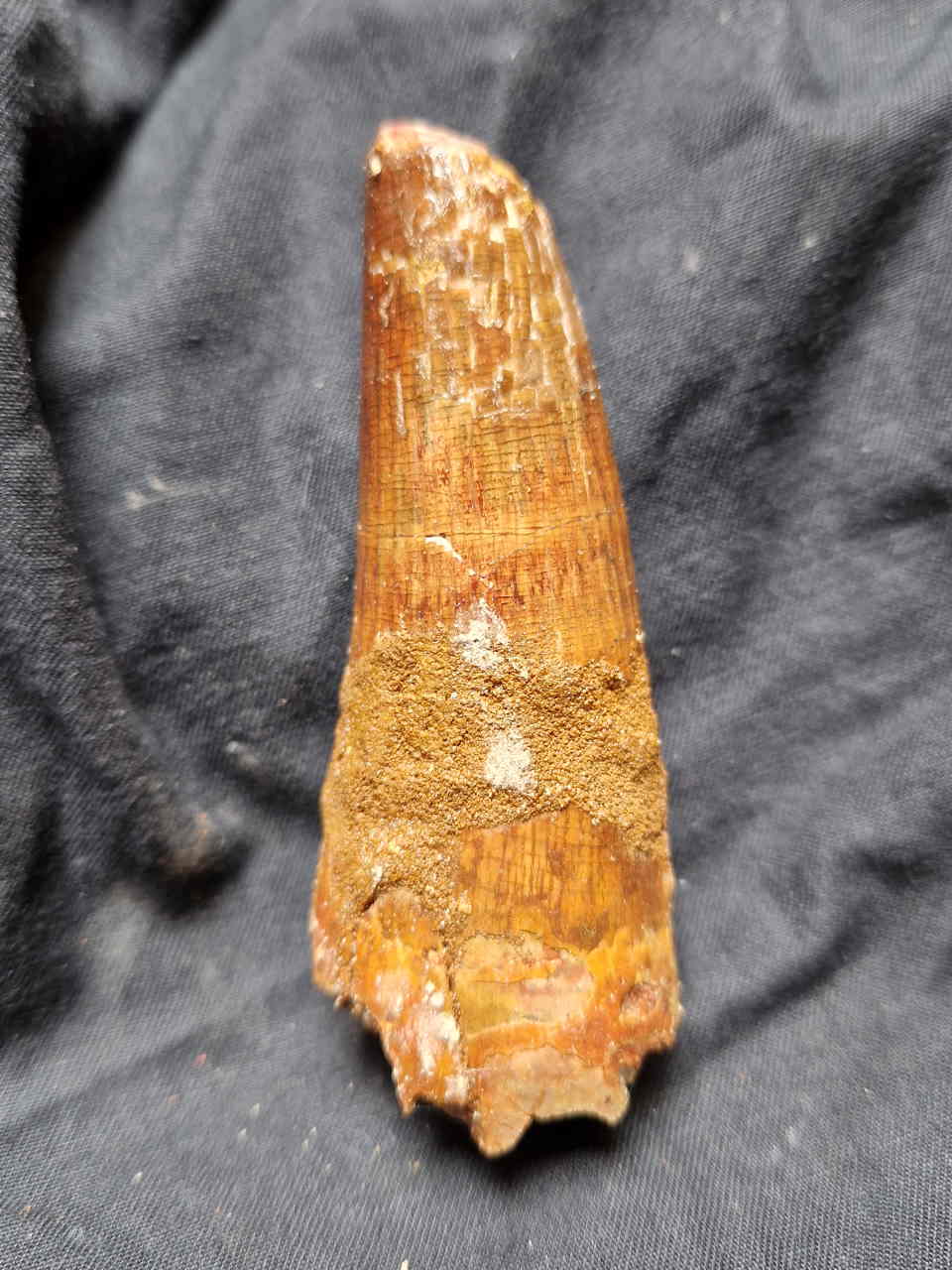
Spinosaurus spec. #VSA4574
Rare African Spinosaurus tooth,
Tegana Formation (Cenomanian)
Cretaceous 95 million years old
Kem Kem Beds, Morocco
Size: 3.88 inch / 9.7 cm
Price: |
|
|
Spinosaurus spec. #VSA4575
Rare African Spinosaurus tooth,
Tegana Formation (Cenomanian)
Cretaceous 95 million years old
Kem Kem Beds, Morocco
Size: 3.48 inch / 8.7 cm
Price: |
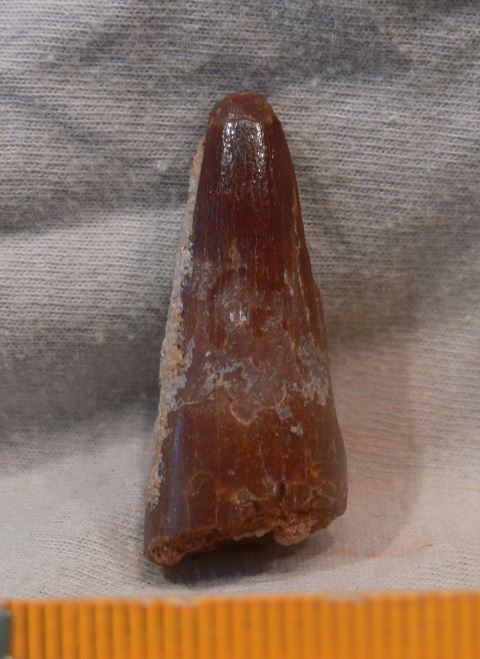 | Spinosaurus spec. #VSA9189
African Spinosaurus tooth,
Tegana Formation (Cenomanian)
Cretaceous 95 million years old
Kem Kem Beds, Morocco
Size: 1.4 inch / 3.5 cm
Price: |
Crocodylus cf. niloticus #VCN8474
African Large Crocodilian nice Tooth,
Tegana Formation (Cenomanian)
Cretaceous 95 million years old
Kem Kem Beds, Morocco
Size: 1.2 inch / 3 cm
Price: |  |
 |
Spinosaurus spec. #VSS5086
African Spinosaurus tooth,
Tegana Formation (Cenomanian)
Cretaceous 95 million years old
Kem Kem Beds, Morocco
Size: 2.76 inch / 7 cm
Price: |
|
|
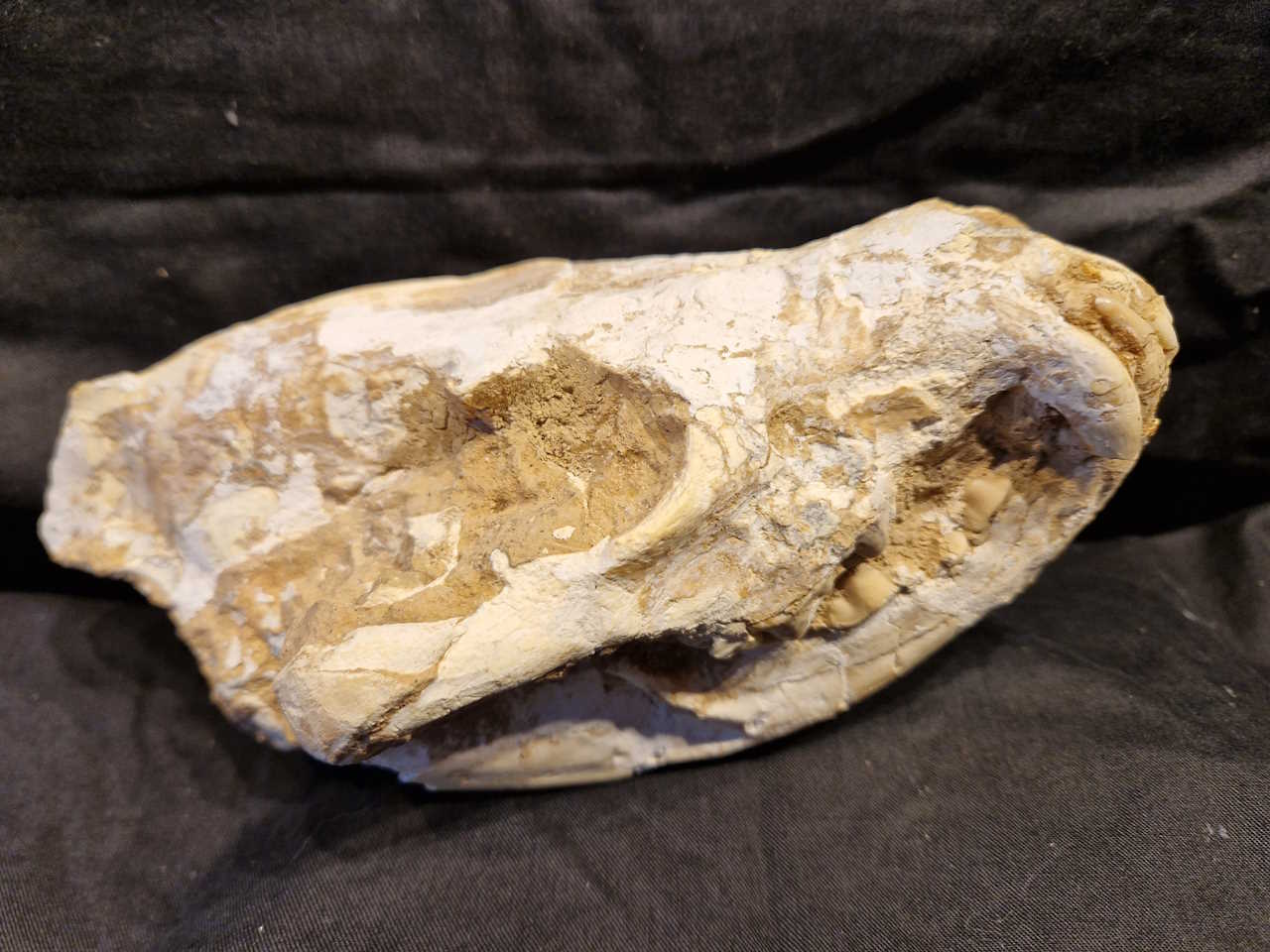
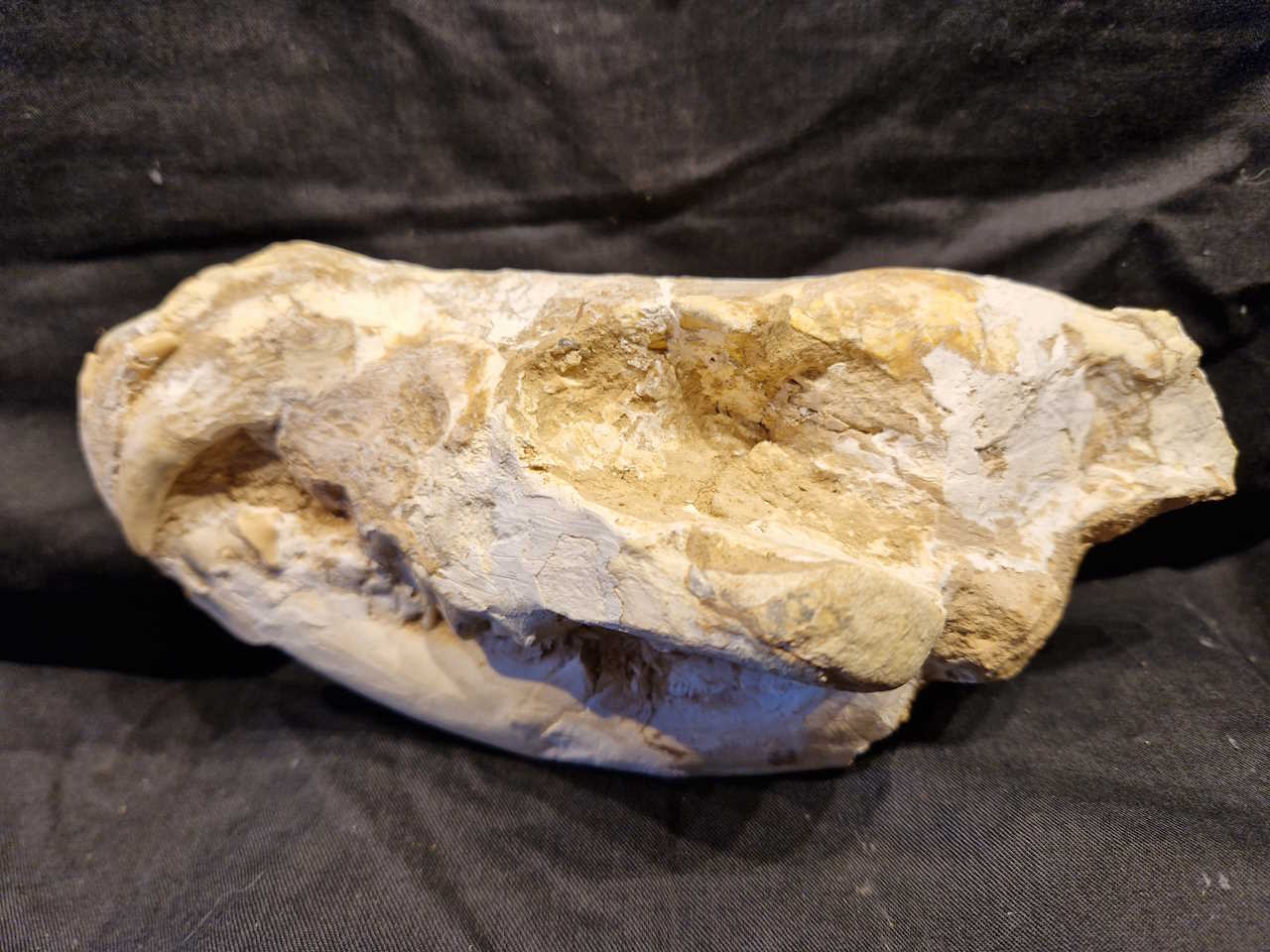
Ictitherium wongi #CCC5101
Very Nice early Hyena from Gansu formation
Old collection, some small restorations
Miocene 5.5 million years old
Hezheng, Gansu, China
Size span: 8.2 inch / 21 cm
Price:
|

|
|
|
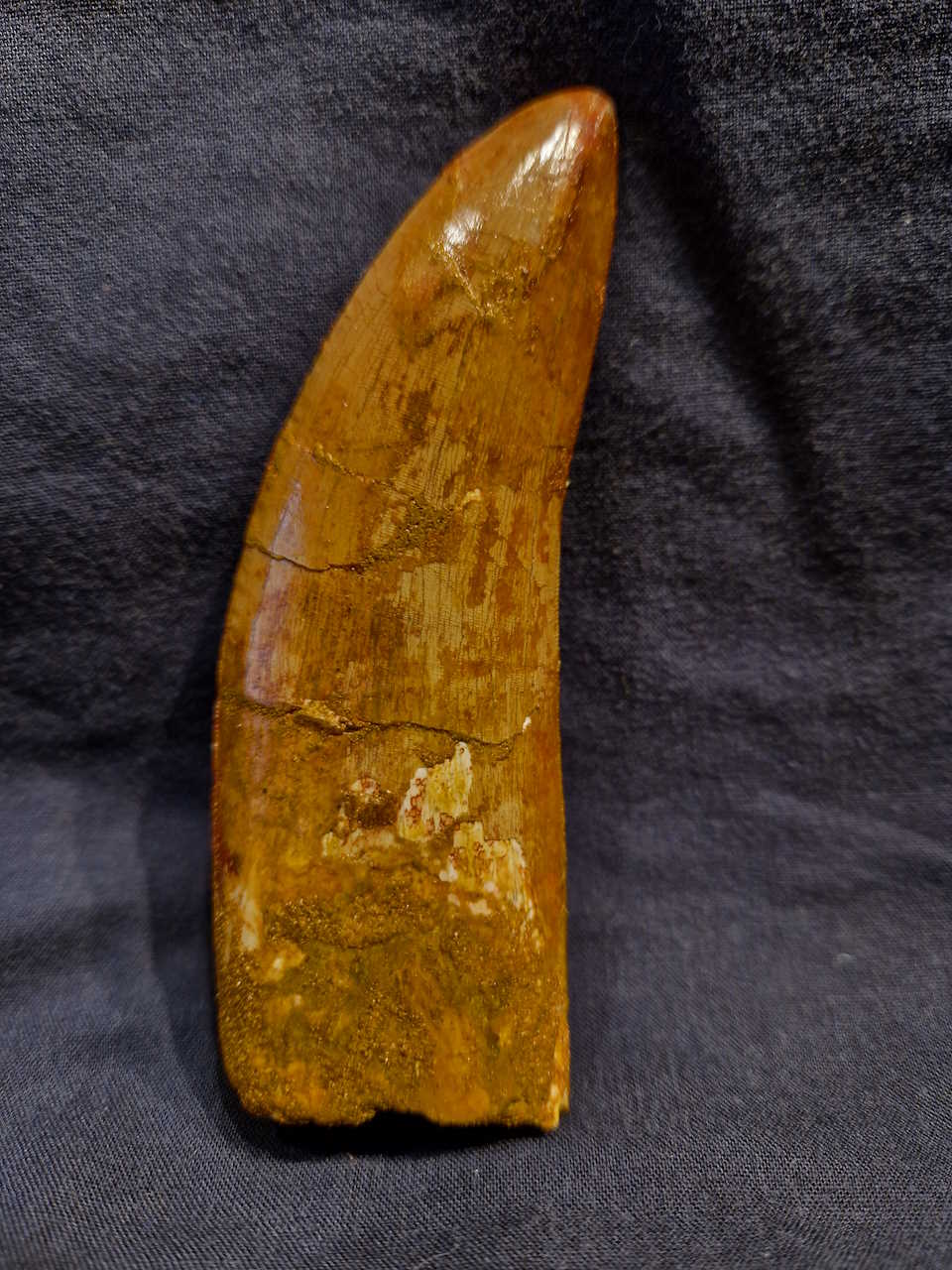
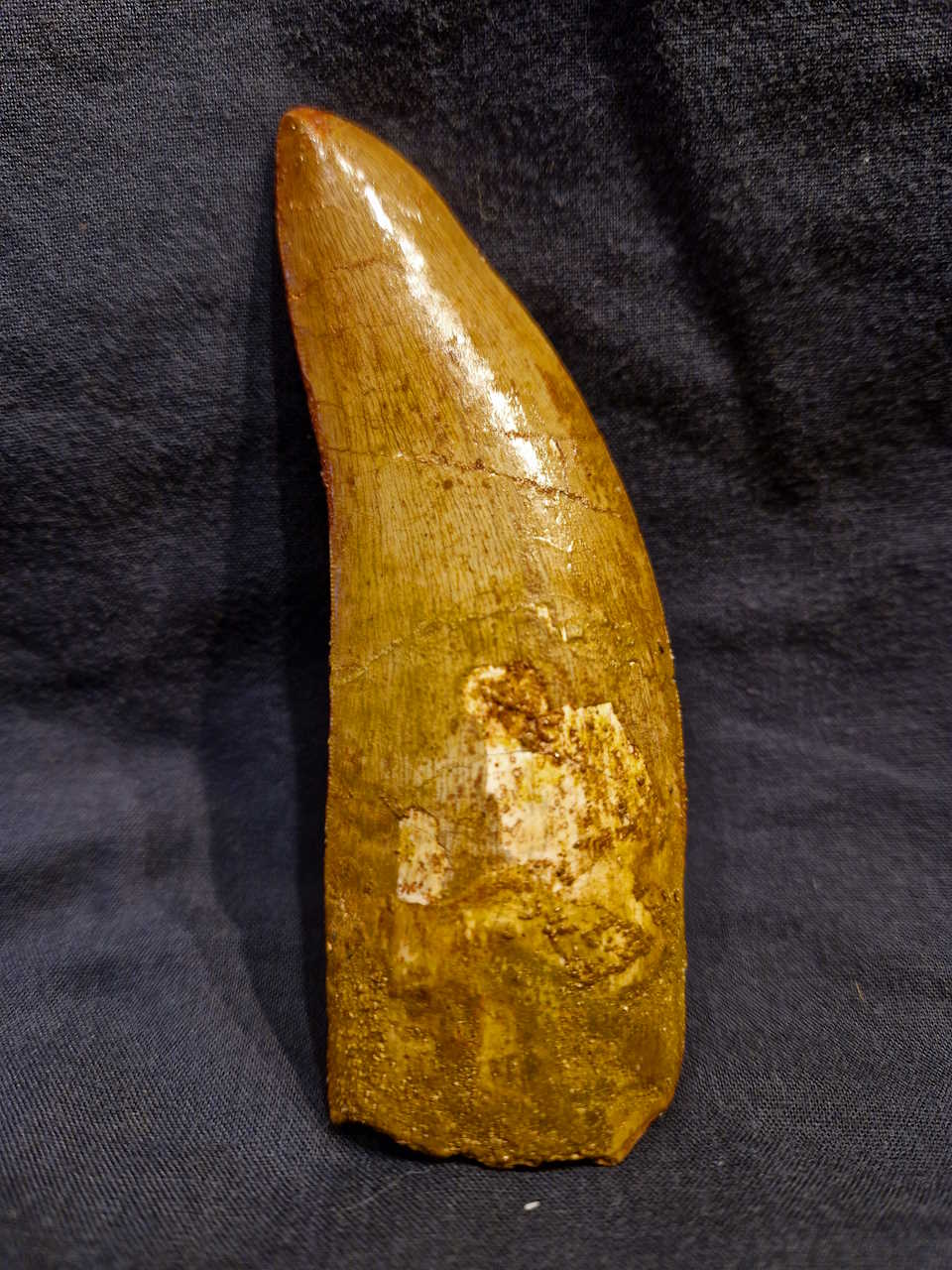
Carcharodontosaurus #VCS5071
Huge theropod dinosaur tooth
Cretaceous, Cenomanian, 95 million years old
Tegana Formation, Kem Kem Beds, Morocco
Size (straight): 4.2 inch / 10.7 cm
Size (along curve): 4.7 inch / 12 cm
Price: |
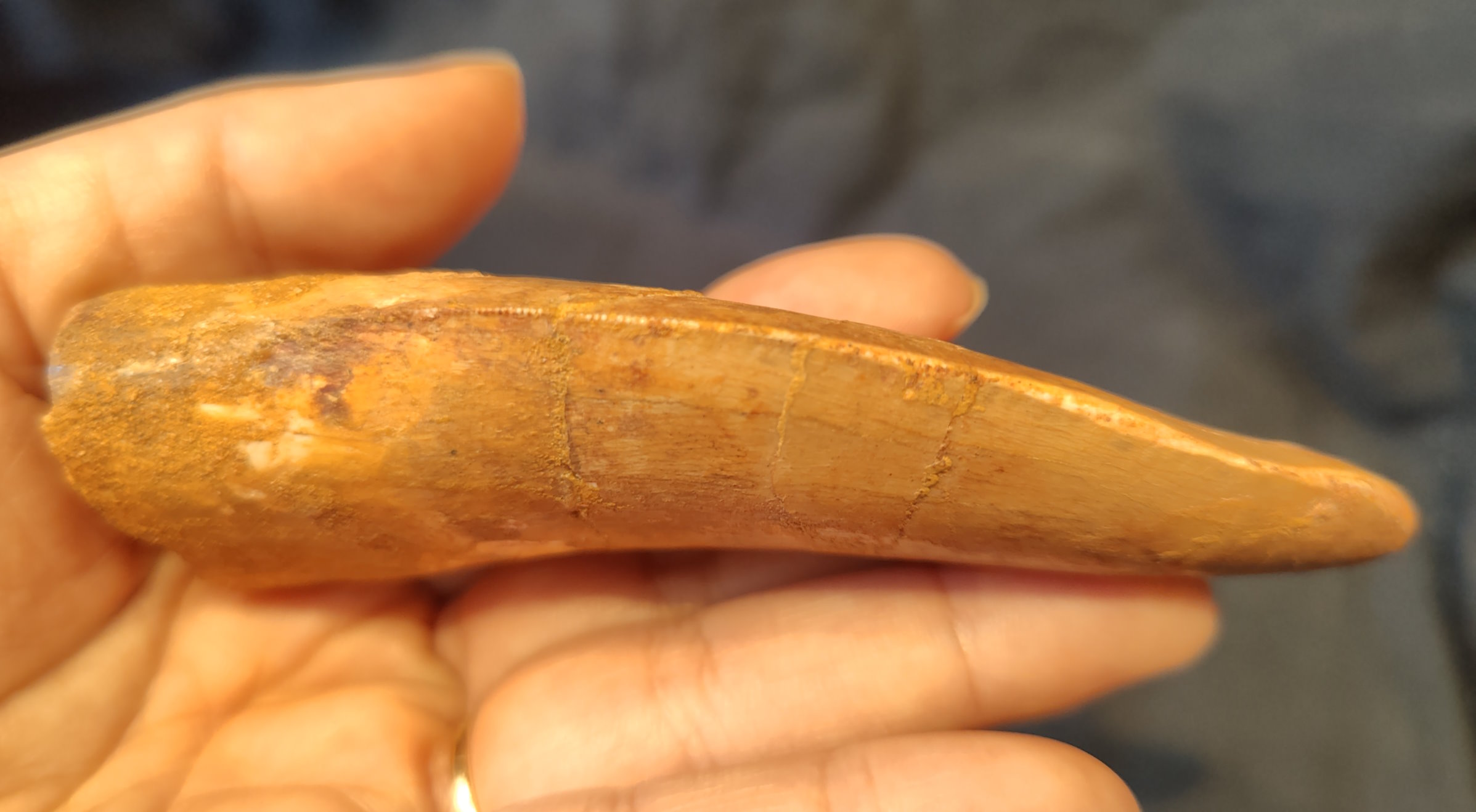 |
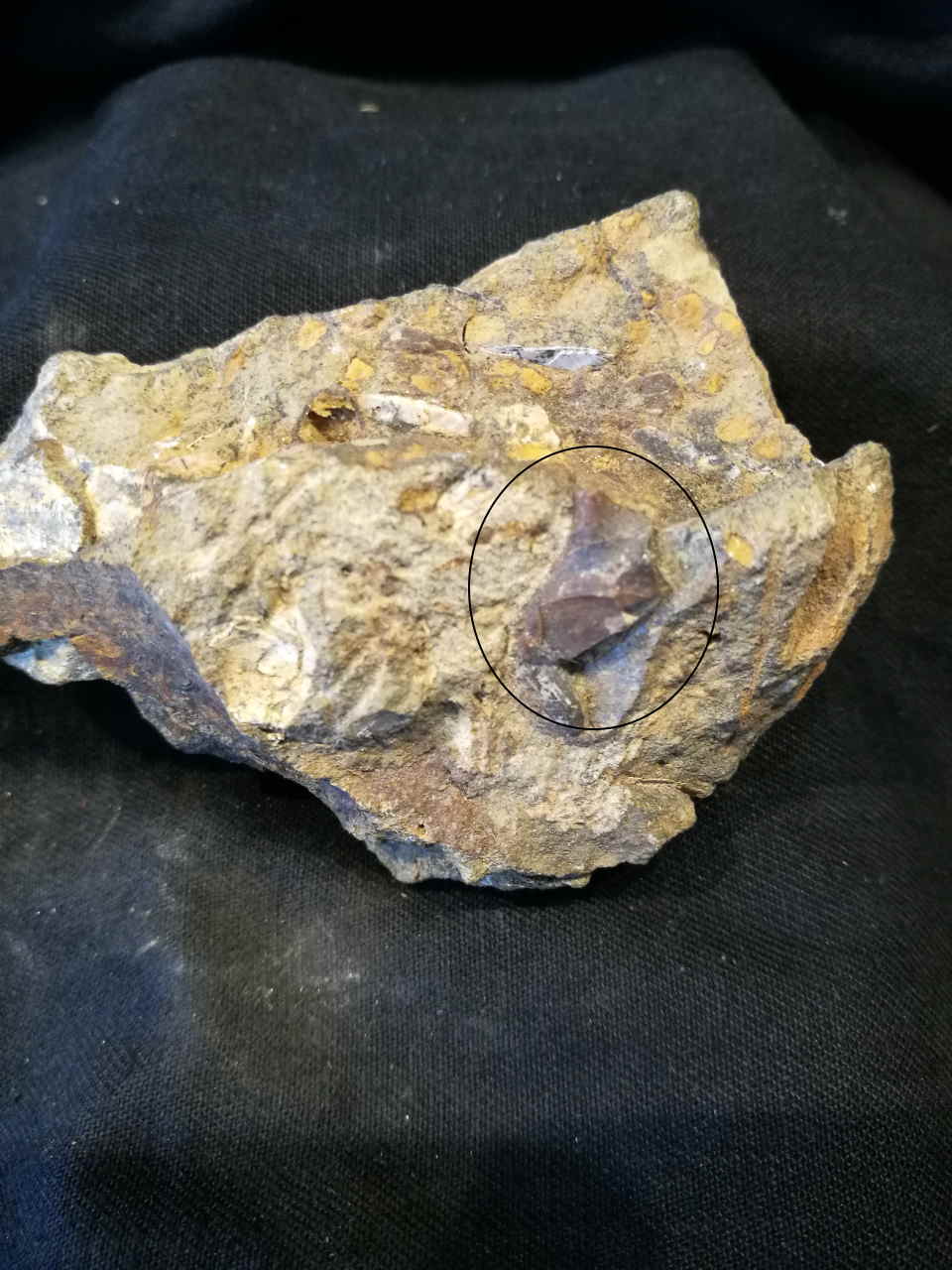
Triceratops sp. #VTW4254
Tooth of this remarkable Dinosaur in Matrix
Cretaceous 120 million years old
Lance Creek, Wyoming, U.S.A.
Size: 0.6 by 1.5 cm
Price:
|
|
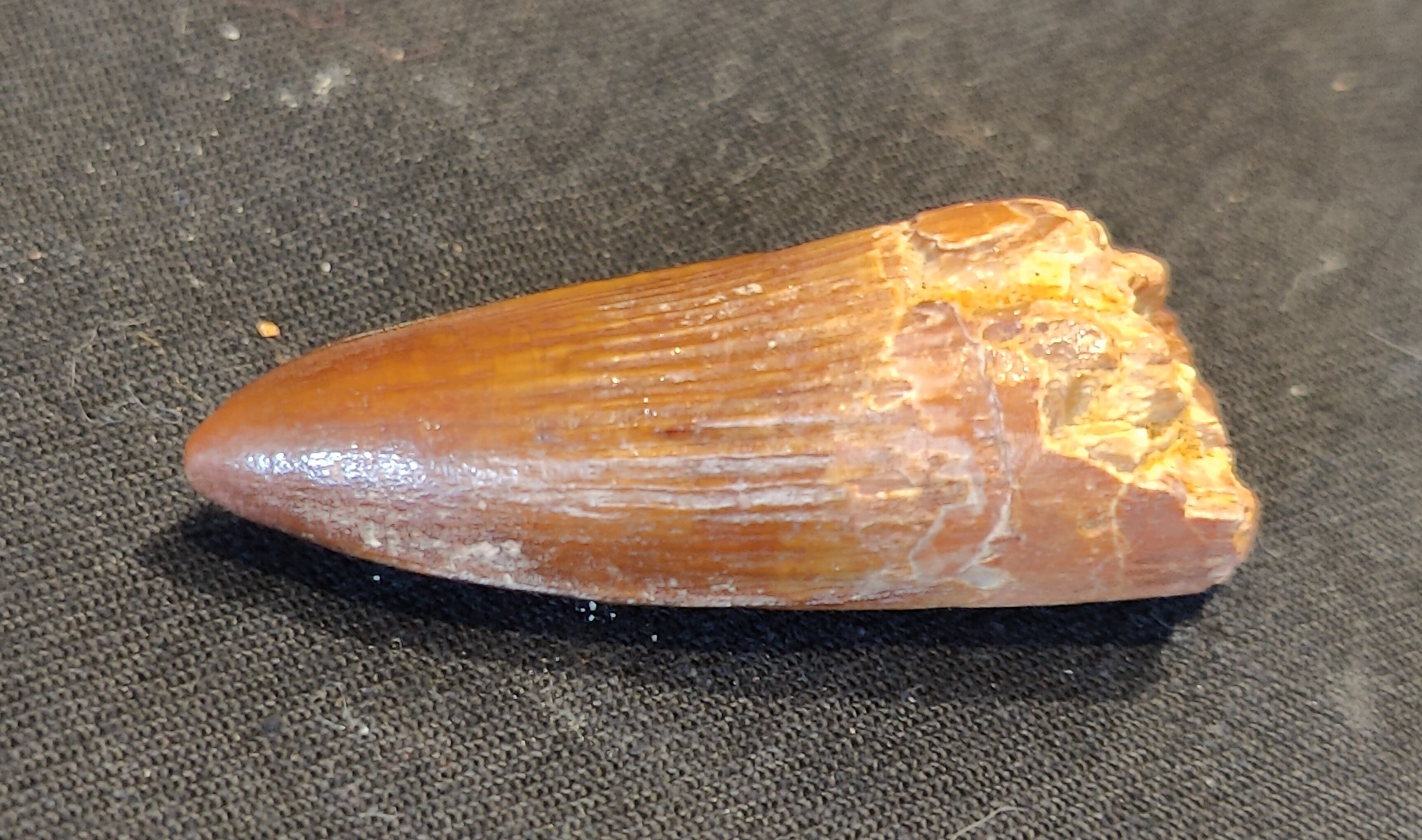 |
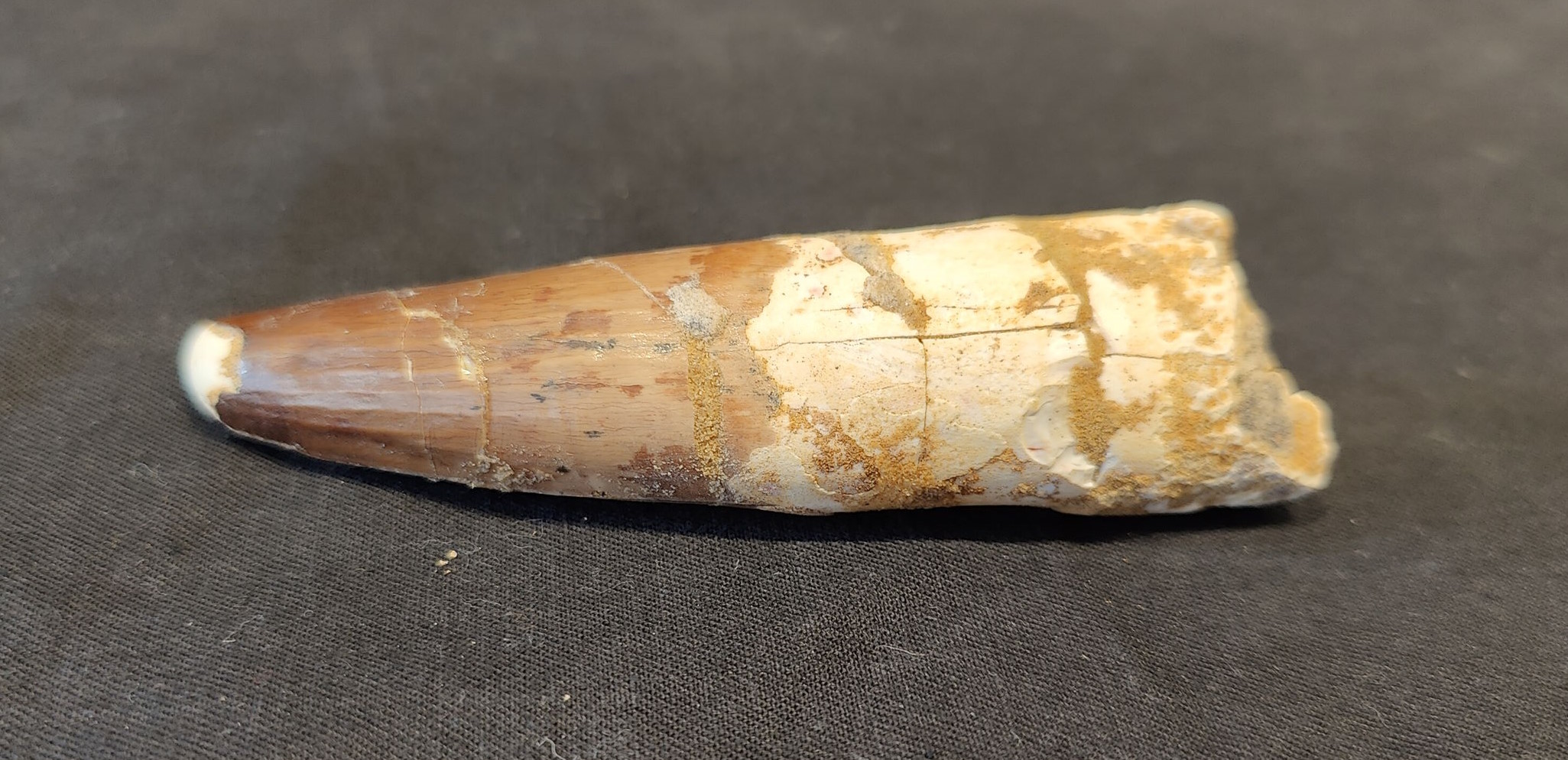
Spinosaurus sp. #VSP4711
Spinosaur tooth
Tegana Formation (Cenomanian)
Cretaceous 95 million years old
Kem Kem Beds, Morocco
Size: 1.57 inch / 4 cm
Price: |
 |
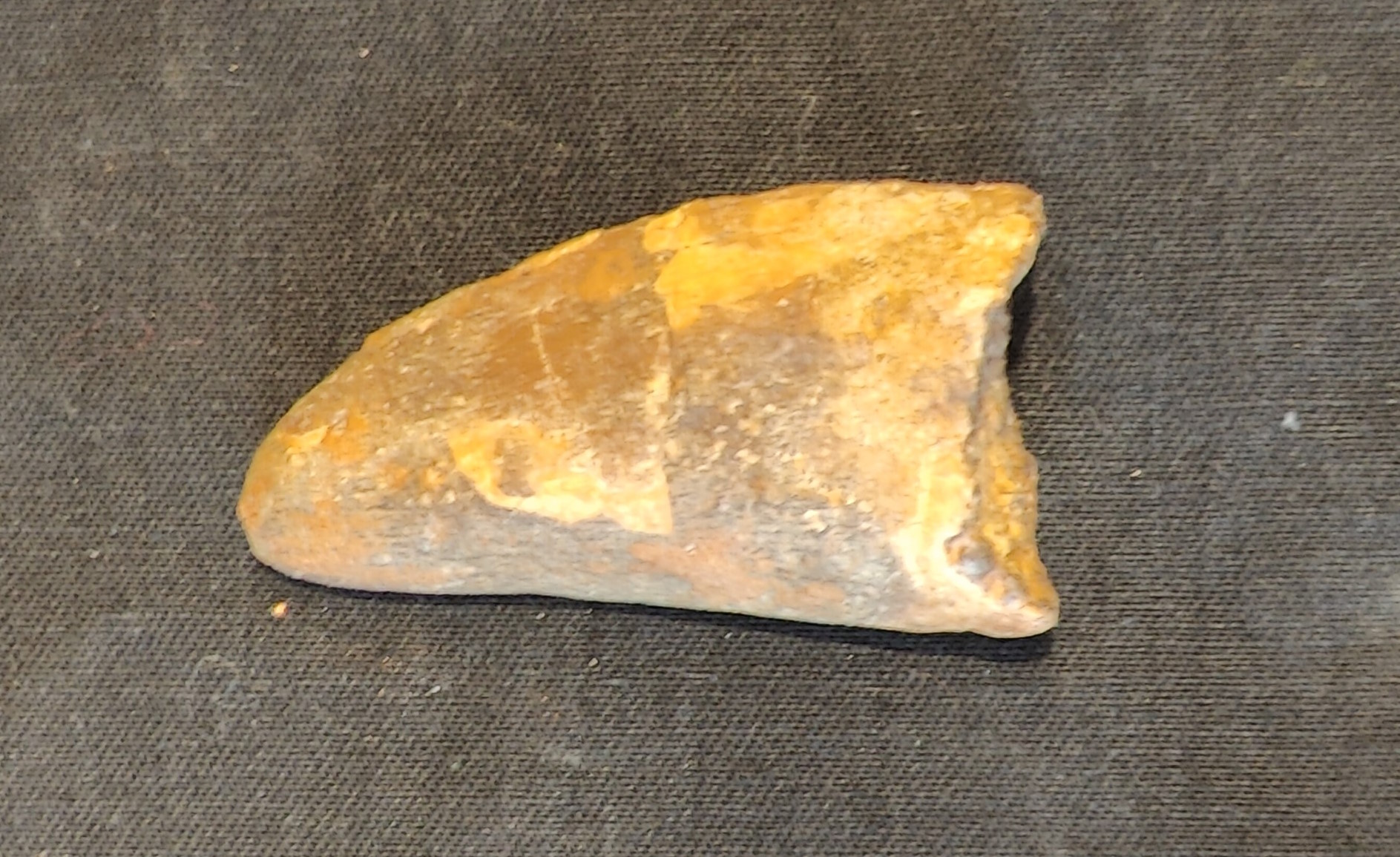
Spinosaurus sp. #VSP4705
Large spinosaur tooth
Tegana Formation (Cenomanian)
Cretaceous 95 million years old
Kem Kem Beds, Morocco
Size: 3.94 inch / 10 cm
Price:
|
 |
Carcharodontosaurus saharicus #VCS4709
Theropod dinosaur tooth
Tegana Formation (Cenomanian)
Cretaceous 95 million years old
Kem Kem Beds, Morocco
Size: 2.05 inch / 5.2 cm
Price:
|
|
|
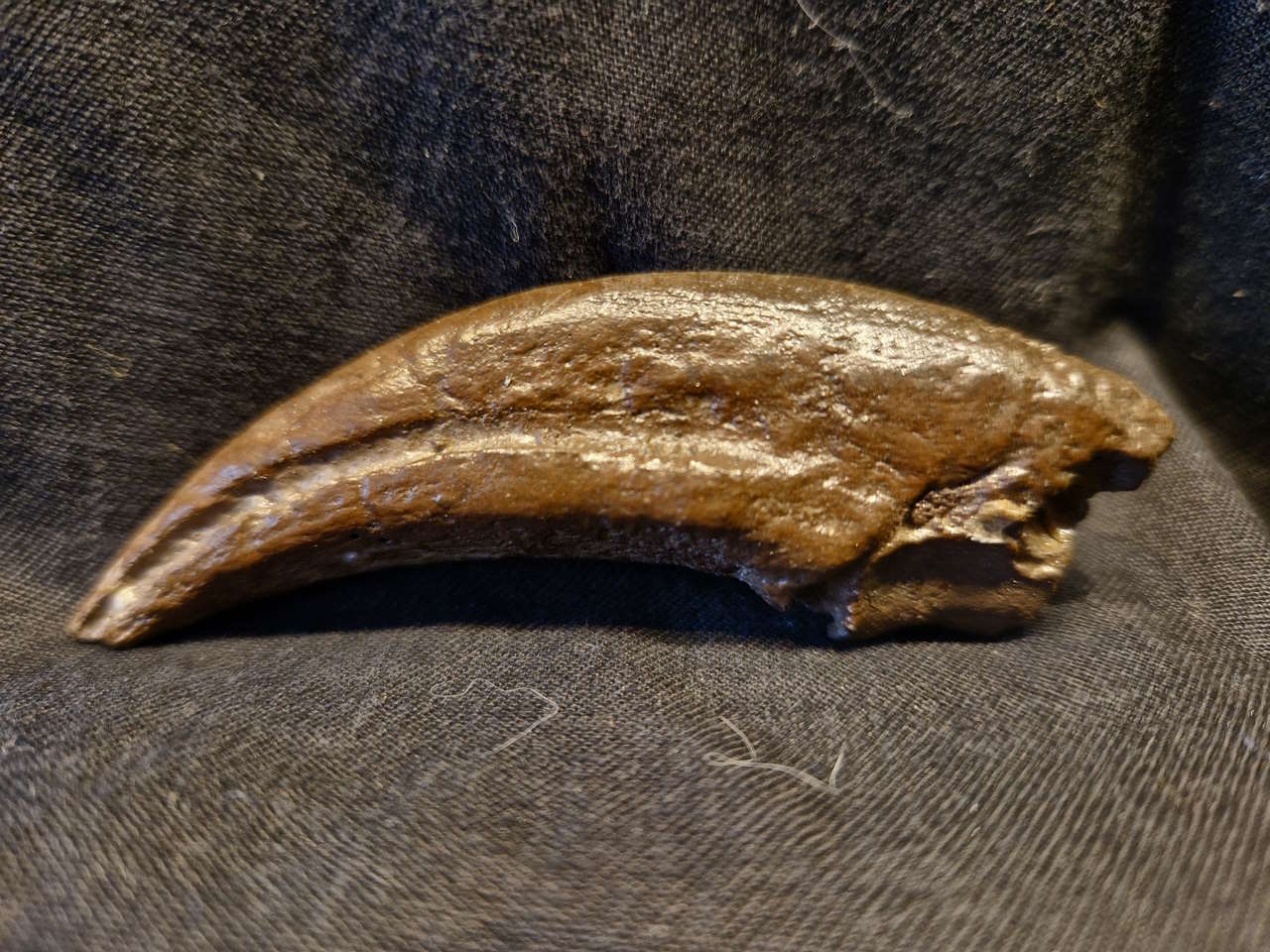
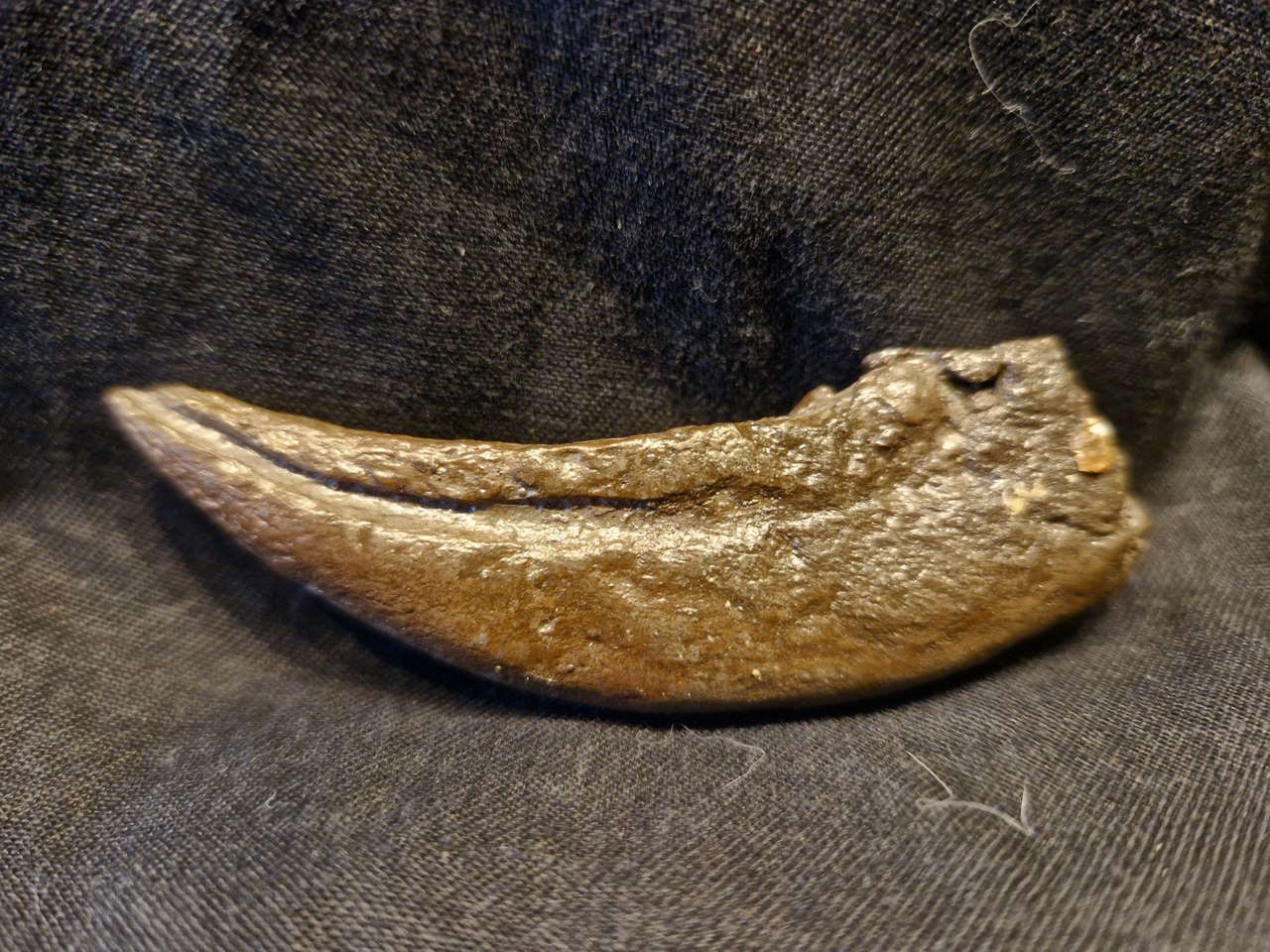
Ornithomimus spec. #VAC5032
Extreme rare theropod dinosaur claw
No restoration
Late Jurassic, Tithonian, 152 Million years old
River Mud deposition!
Near Casper, Morrison Formation, Wyoming, USA
Size span: 2.87 inch / 7.3 cm
Price: |
|
 |
 |
 |
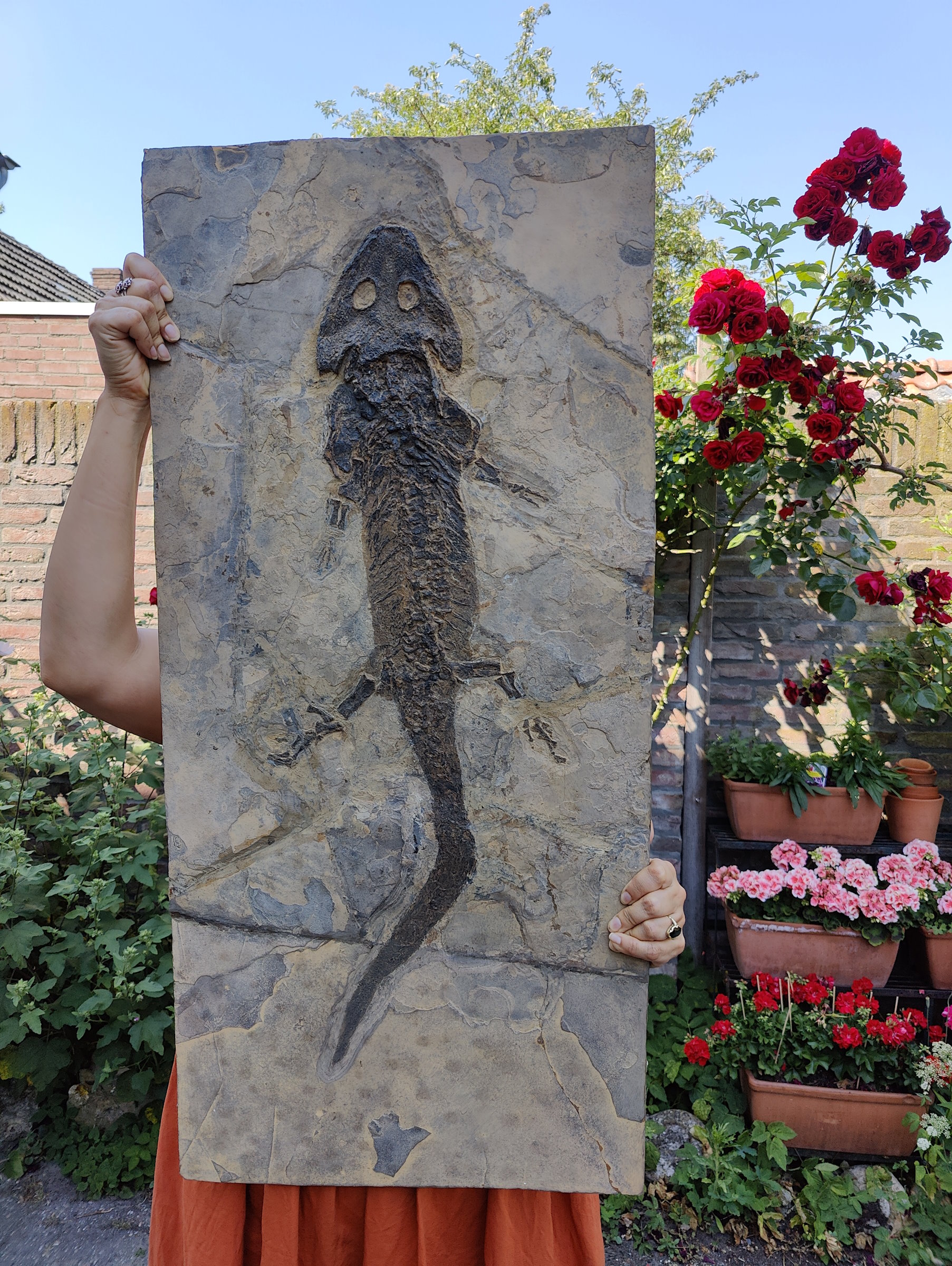
Sclerocephalus haeuseri #VSH5070
Big amphibian on plate, restoration on tail
Sclero = hard, cephalus = head
from old collection
Lower Permian, 295 million years old
Niederkirchen, Rheinland-Pfalz, Germany
Size plate: 35,4 by 16.7 inch / 90 by 42.5 cm
Size fossil: 28.3 inch / 72 cm
Price:
|
Plesiosaurus sp. #VPS4706
Plesiosaurus tooth
Maastrichtian, Cretaceous 65.6 million years old
Khouribga, Morocco
Size: 2.76 inch / 7 cm
Price:
|
 |
|
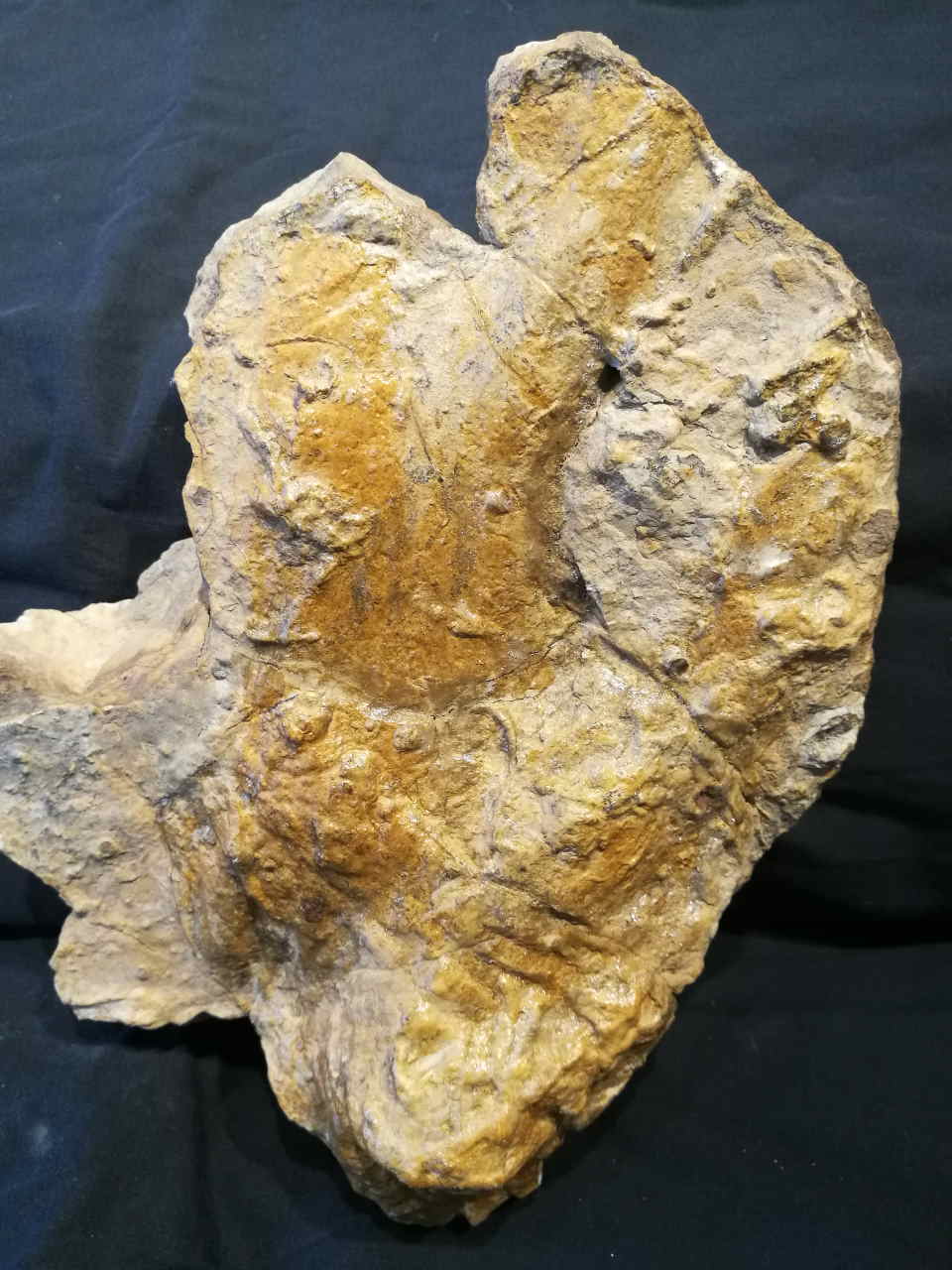
cf. Iguanodon sp. ##VDP4301
Theropod Dinosaur footprint, Very rare
Old Collection
L. Cretaceous, Albian 90 Million years old
Gaizes Potok, Holy Cross Mountains, Poland
Matrix: 12 by 8.8 inch / 30 by 22 cm
Price:
|
Emydura sp. #VEA4248
Turtle shell
Old collection! NO Restoration.
Pleistocene 50.000 years old
King creek, Darling Downs, SE Queensland,
Australia
Size : 2.2 inch / 5.5 cm
Price: |

|
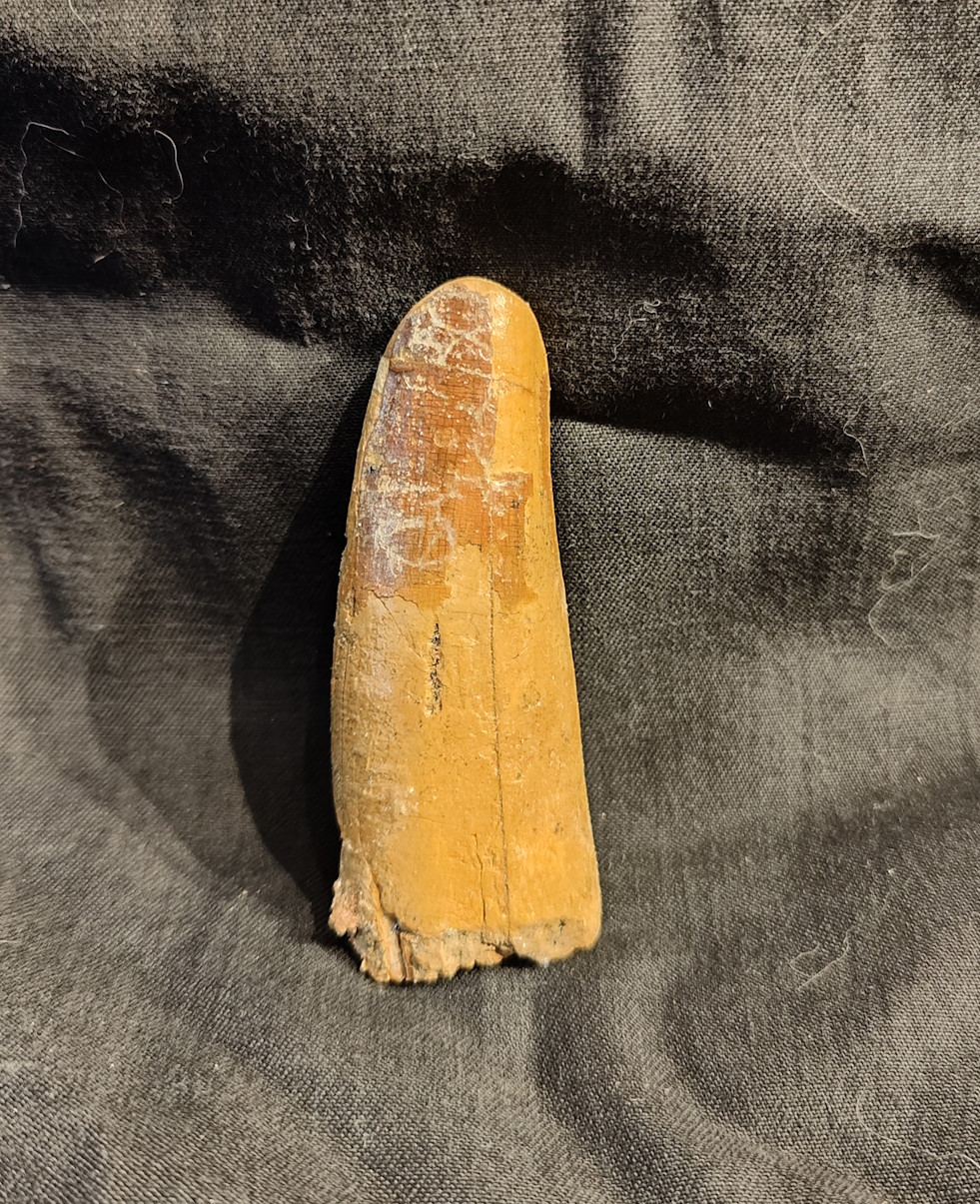 |
Spinosaurus spec. #VSS5080
Rare African Spinosaurus tooth,
Tegana Formation (Cenomanian)
Cretaceous 95 million years old
Kem Kem Beds, Morocco
Size: 2.9 inch / 7.4 cm
Price: |
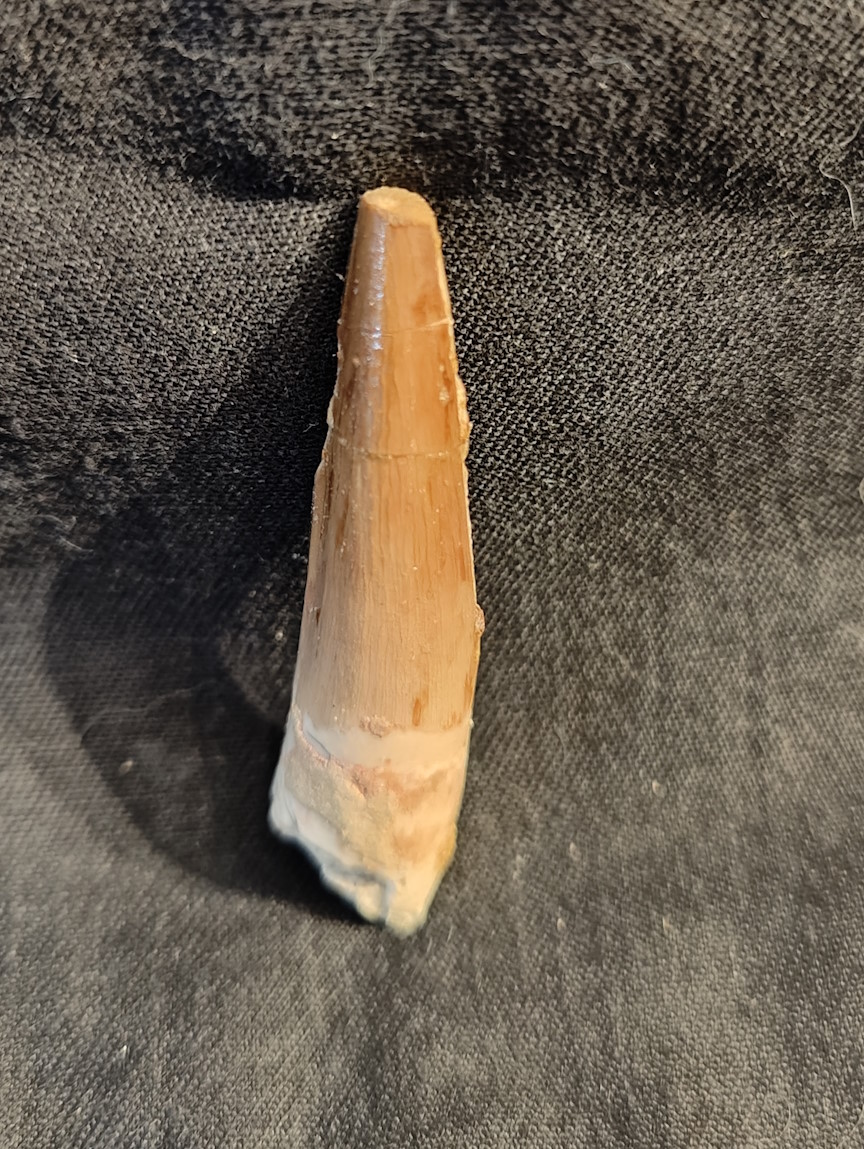
Spinosaurus spec. #VSS5083
Rare African Spinosaurus tooth,
Tegana Formation (Cenomanian)
Cretaceous 95 million years old
Kem Kem Beds, Morocco
Size: 1.97 inch / 5 cm
Price: |
|
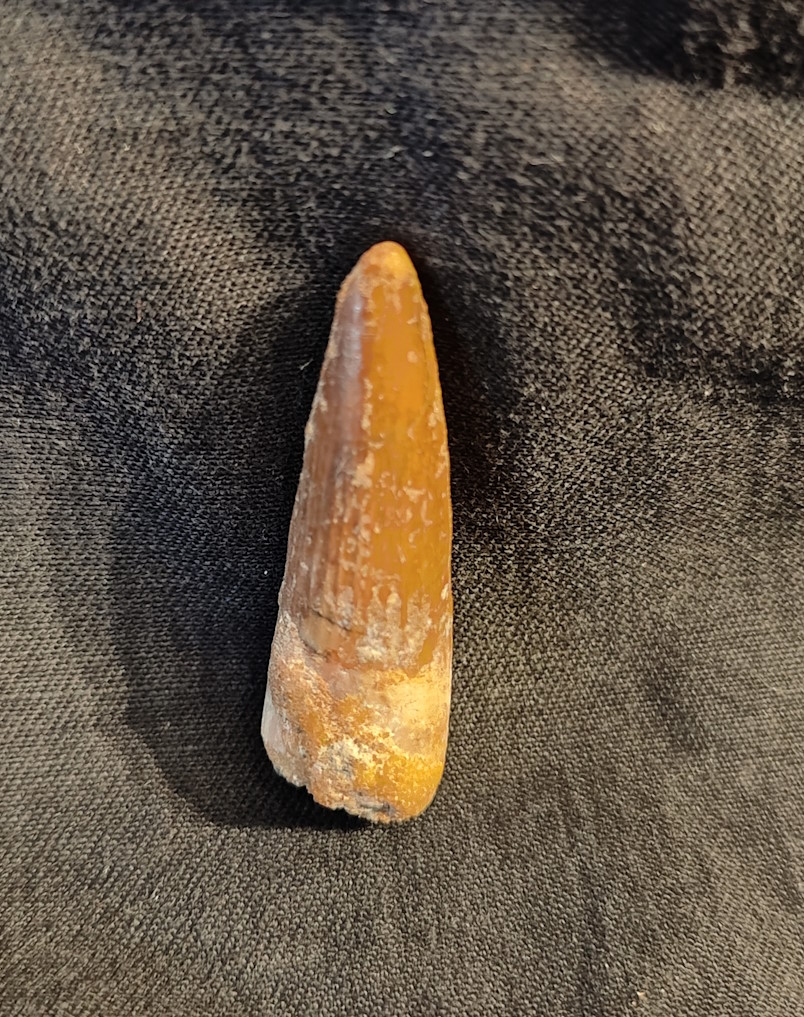 |
Spinosaurus spec. #VSS5084
Rare African Spinosaurus tooth,
Tegana Formation (Cenomanian)
Cretaceous 95 million years old
Kem Kem Beds, Morocco
Size: 1.57 inch / 4 cm
Price: |
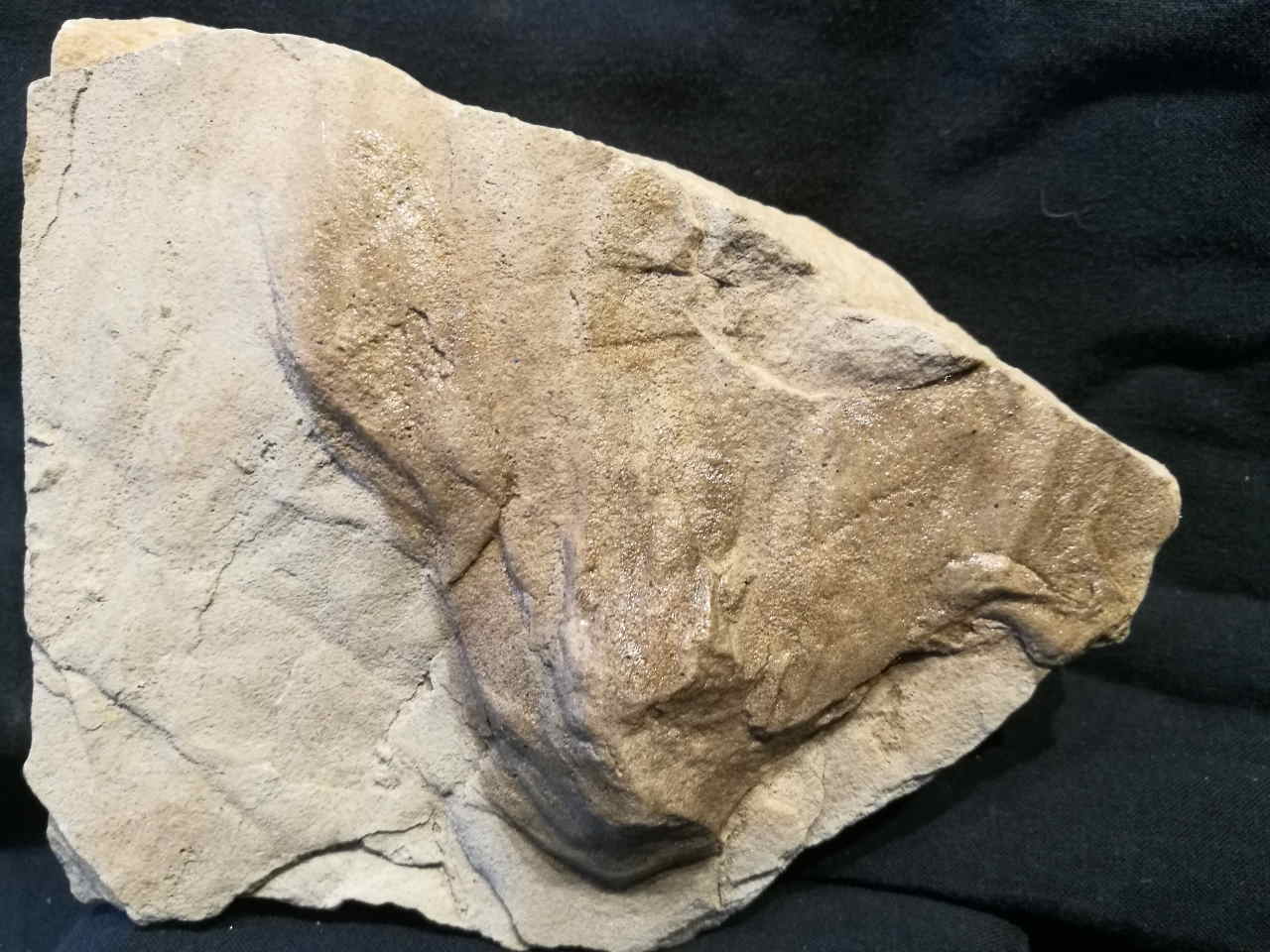
Characichnos sp. #VDP4304
Basal Swimming Archasauriform Dinosaur "slippery" footprints, (cf. Erythrosuchid)
Very rare Old Collection
L. Triassic, Olenekian 250 Million years old
Holy Cross Mountains, Poland
Matrix: 5.6 by 4.4 inch / 14 by 11 cm
Price:
|
|
|
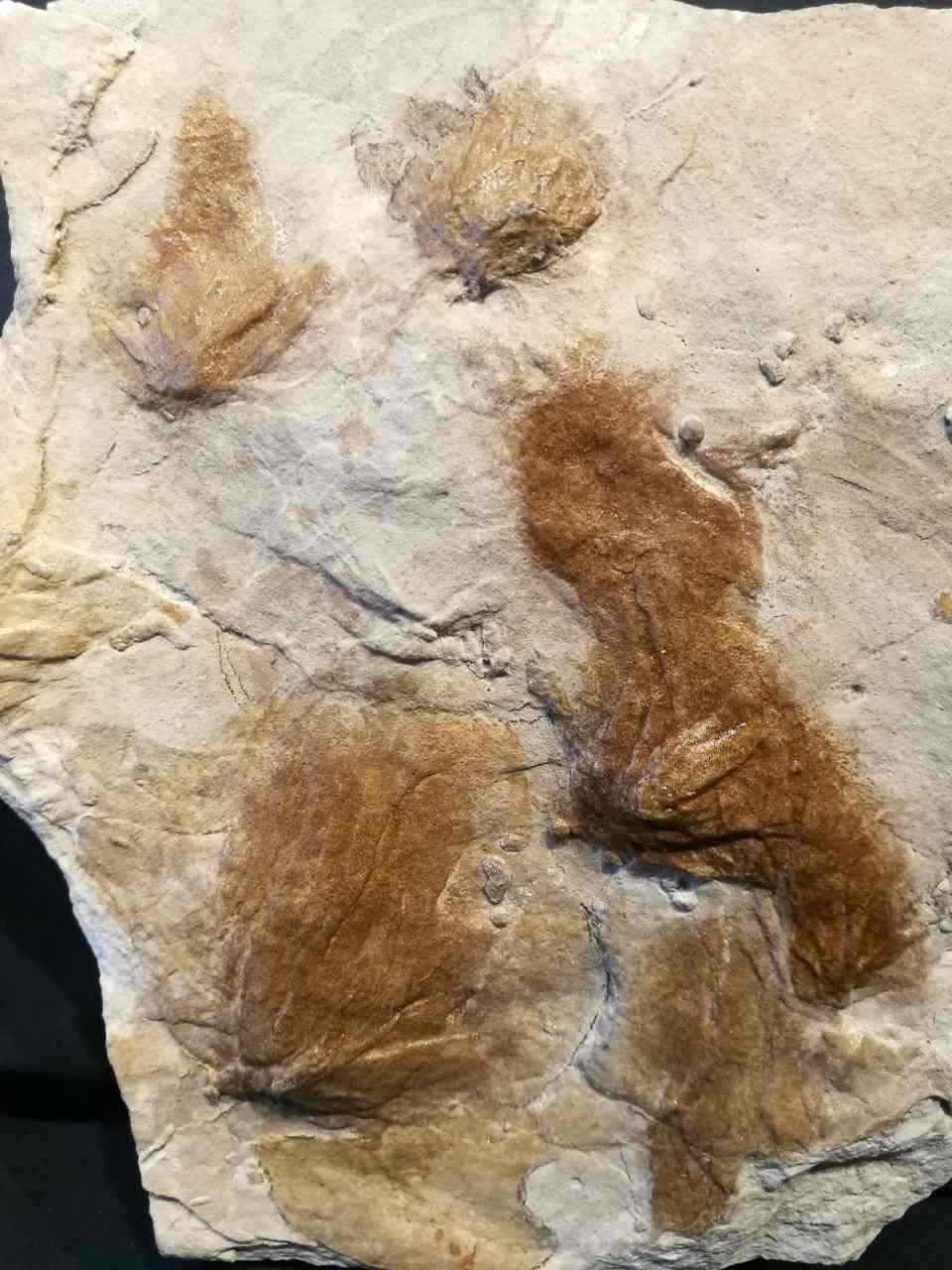
Prorotodactylus sp. #VDP4305
Basal Dinosauromorph Dinosaur footprint,
(cf. Lagerpeton) Very rare Old Collection
L. Triassic, Olenekian 250 Million years old
Holy Cross Mountains, Poland
Matrix: 10 by 44 inch / 25 by 11 cm
Price: Euro
|
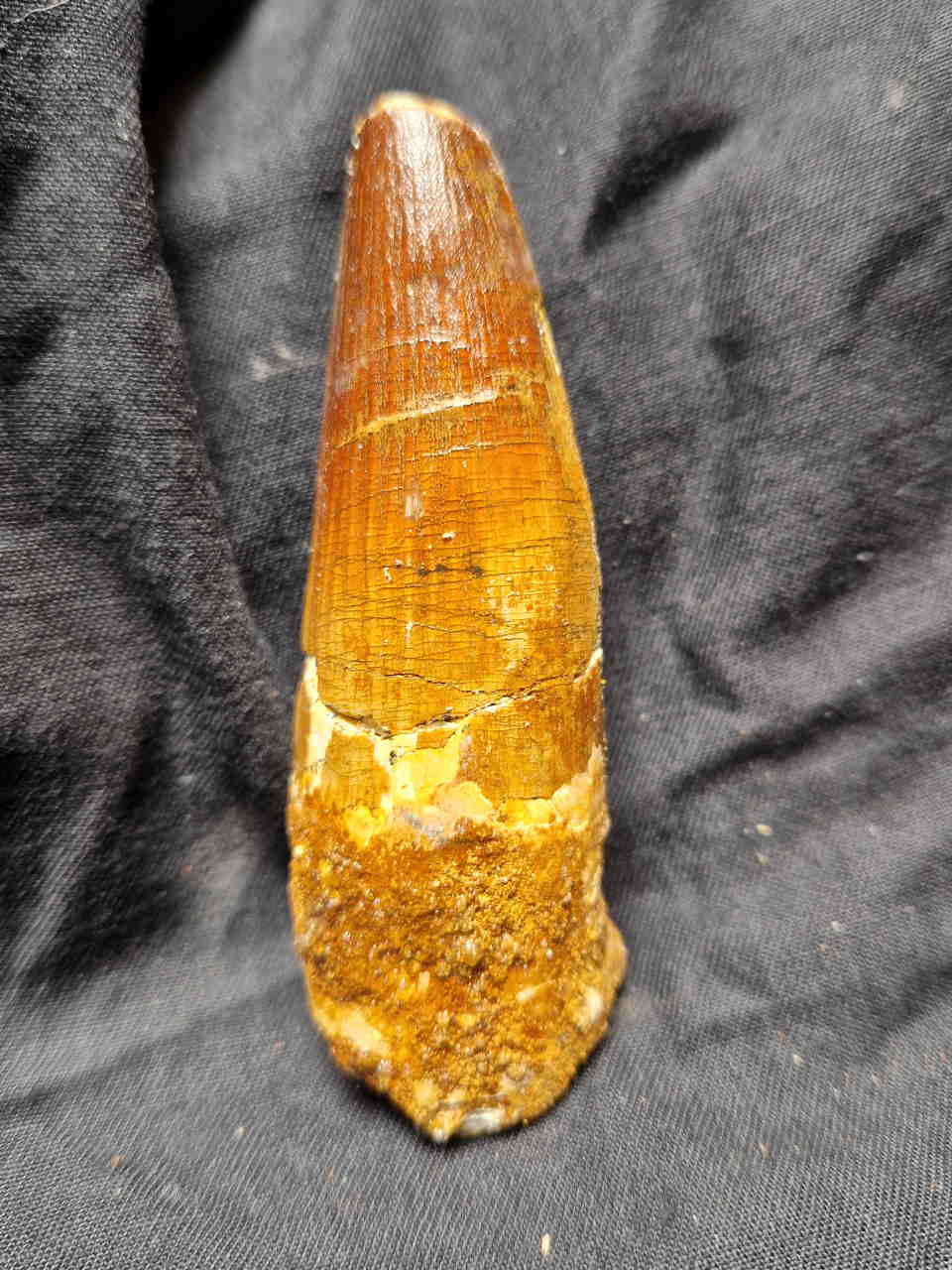
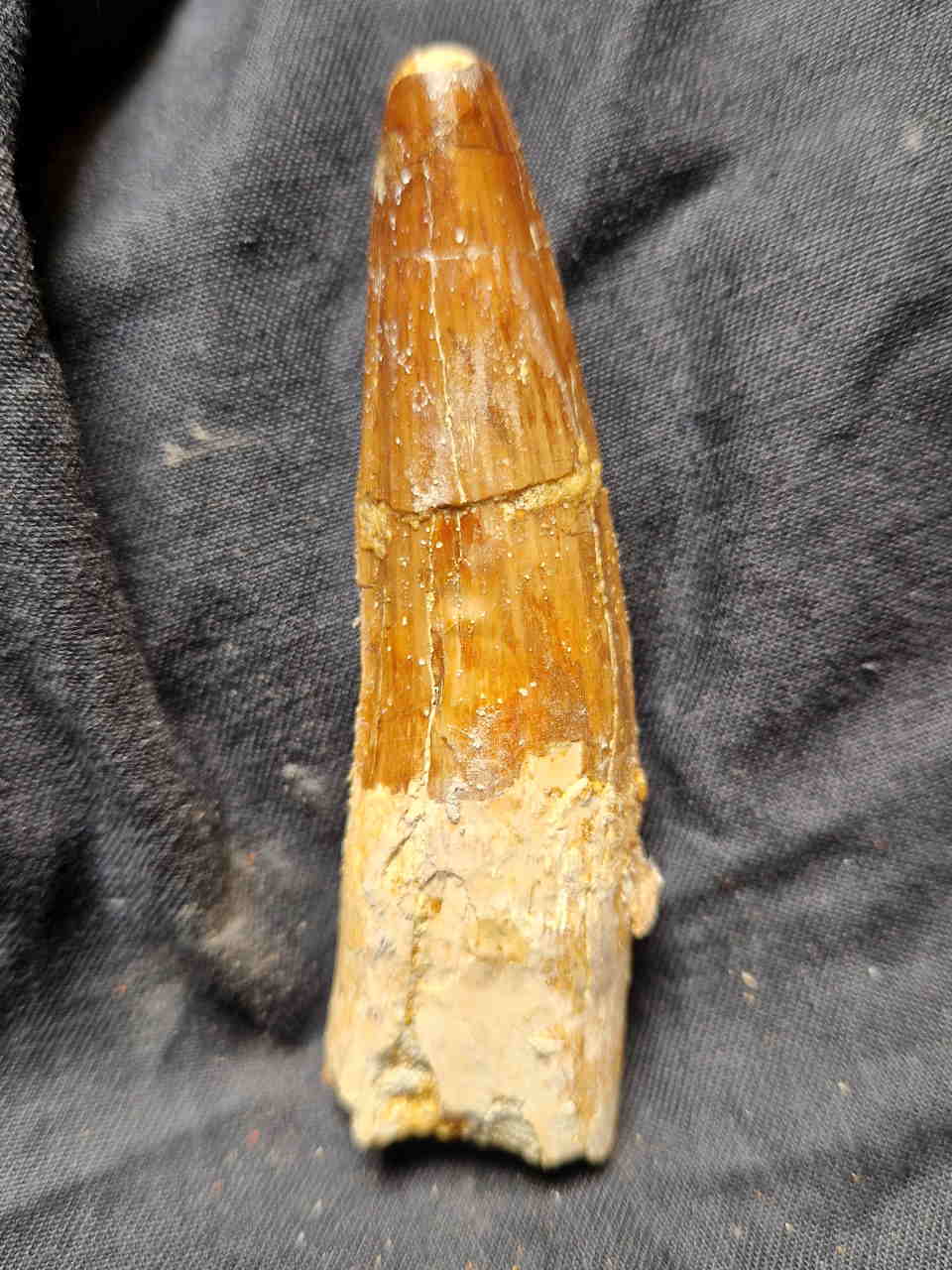
Spinosaurus spec. #VSA4576
Rare African Spinosaurus tooth,
Tegana Formation (Cenomanian)
Cretaceous, 95 million years old
Kem Kem Beds, Morocco
Size: 3.2 inch / 8 cm
Price: |
|
|
Spinosaurus spec. #VSA4577
Rare African Spinosaurus tooth,
Tegana Formation (Cenomanian)
Cretaceous 95 million years old
Kem Kem Beds, Morocco
Size: 3.24 inch / 8.1 cm
Price: |
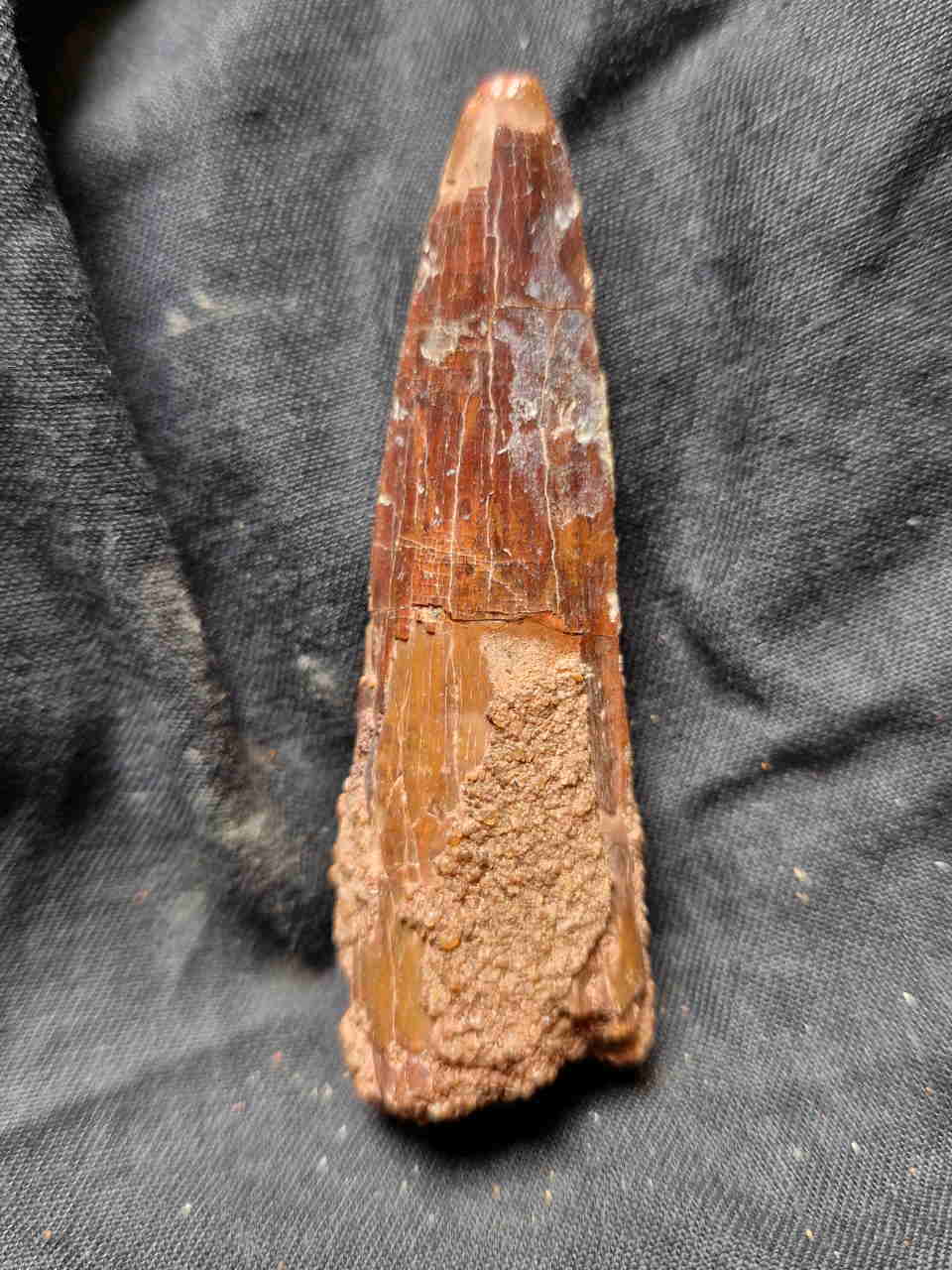
Spinosaurus spec. #VSA4586
Rare African Spinosaurus tooth,
Tegana Formation (Cenomanian)
Cretaceous 95 million years old
Kem Kem Beds, Morocco
Size: 2.72 inch / 6.8 cm
Price: Euro
|
|
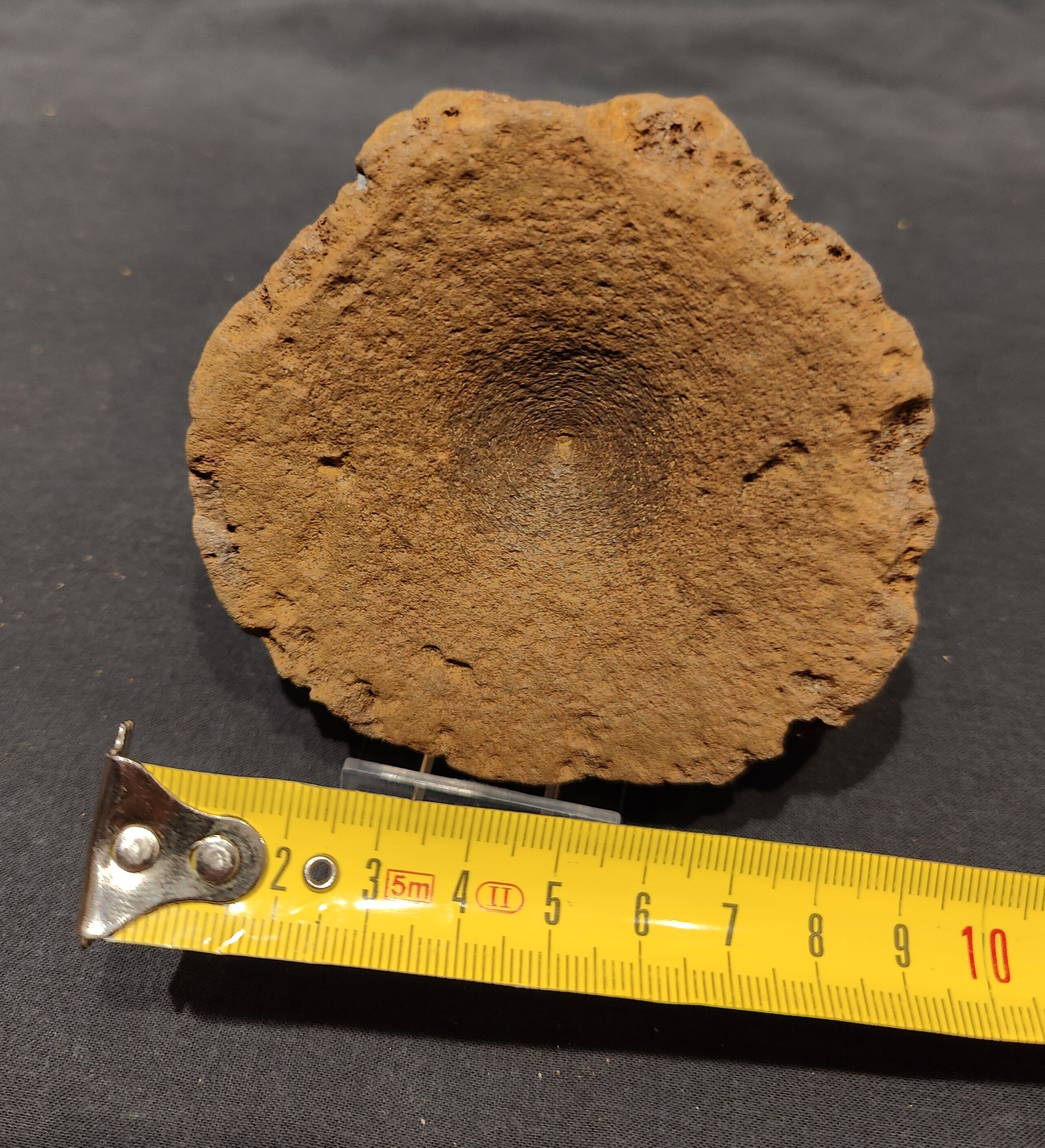
Siroccopteryx moroccensis #VMV4572
African Pterosaur nice Tooth,
Tegana Formation (Cenomanian)
Cretaceous 95 million years old
Kem Kem Beds, Morocco
Size: 1.28 inch / 3.2 cm
Price: |

|
 |
Plesiosaurus sp. Vertebra #VPV4702
Lower Jurassic, 180 million years old
Charmouth, Jurassic Coast, Dorset, U.K.
Size: 4 by 1.2 inch / 10 by 3 cm
Price: Euro
|
 |
Mosasaurus cf. hoffmanni #VMM4621
Tooth in Matrix
Maastrichtian, Cretaceous 65.6 million years old
Khouribga, Morocco
Size : 1.8 inch / 4.5 cm
Price: Euro |
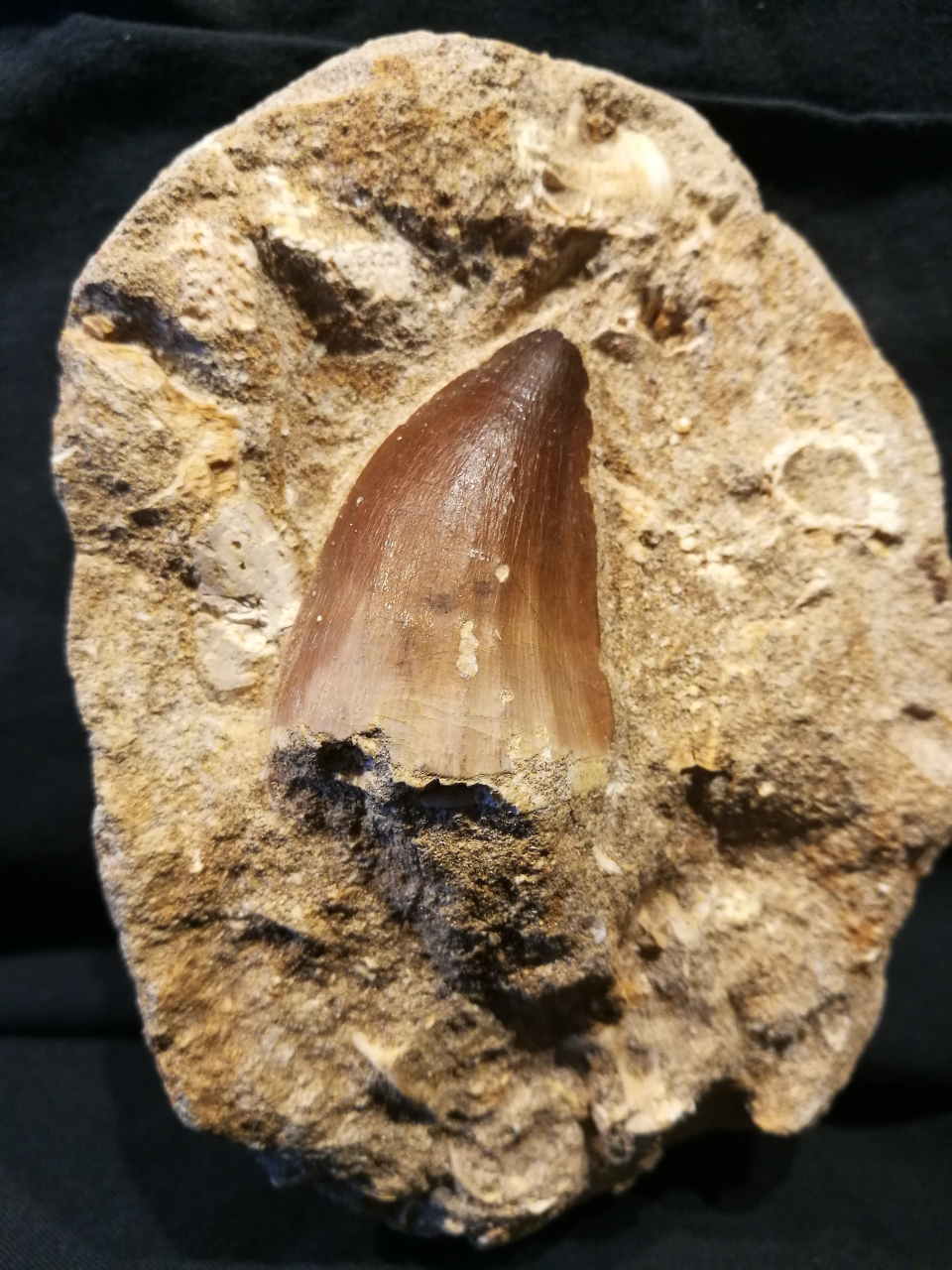
Mosasaurus cf. hoffmanni #VMH4179
Tooth in Matrix
Maastrichtian, Cretaceous, 65.6 million years old
Khouribga, Morocco
Size : 1.84 inch / 4.6 cm
Price: |  |
|
Mosasaurus cf. hoffmanni #VMH4178
Tooth in Matrix
Maastrichtian, Cretaceous 65.6 million years old
Khouribga, Morocco
Size : 1.68 inch / 4.2 cm
Price: Euro |

|
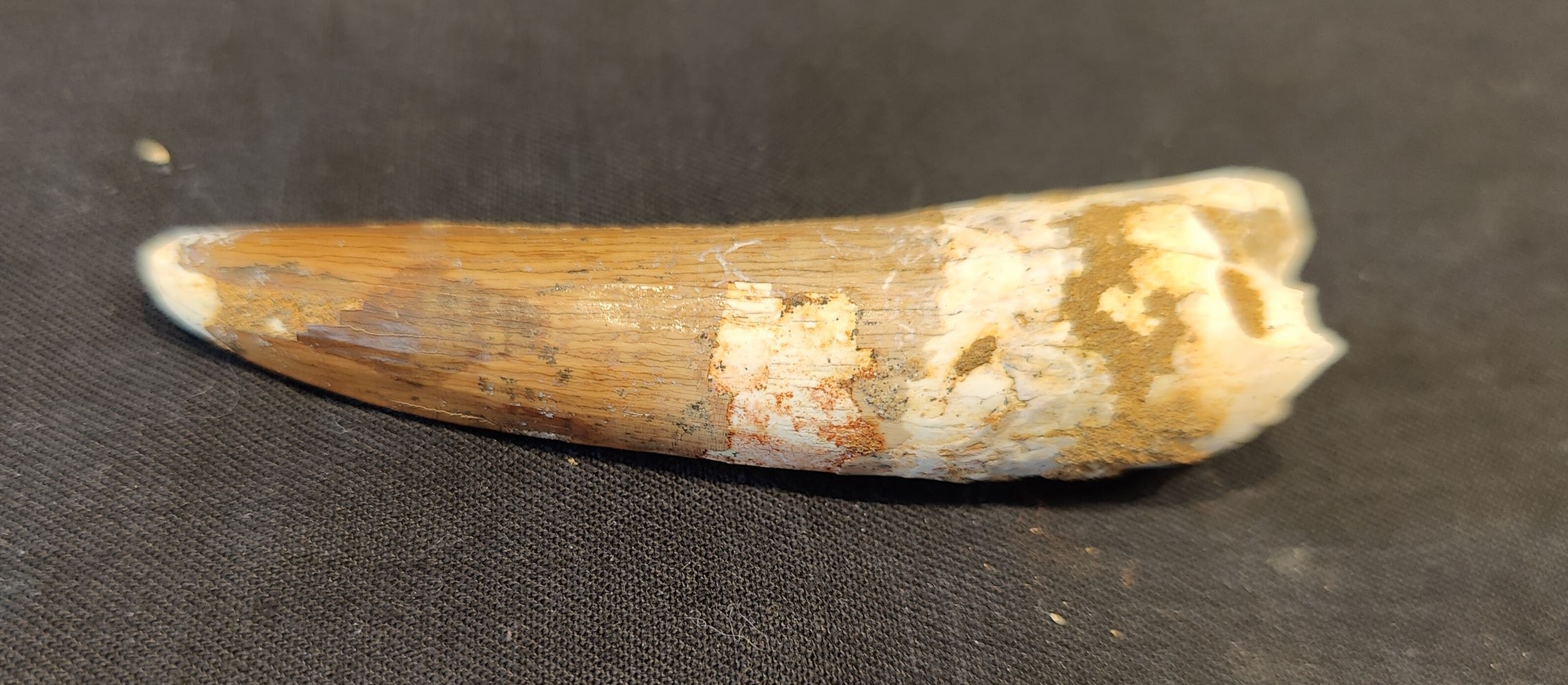
Mosasaurus cf. hoffmanni #VMM4623
Tooth in Matrix
Maastrichtian, Cretaceous 65.6 million years old
Khouribga, Morocco
Size : 1.6 inch / 4 cm
Price:
|
 |
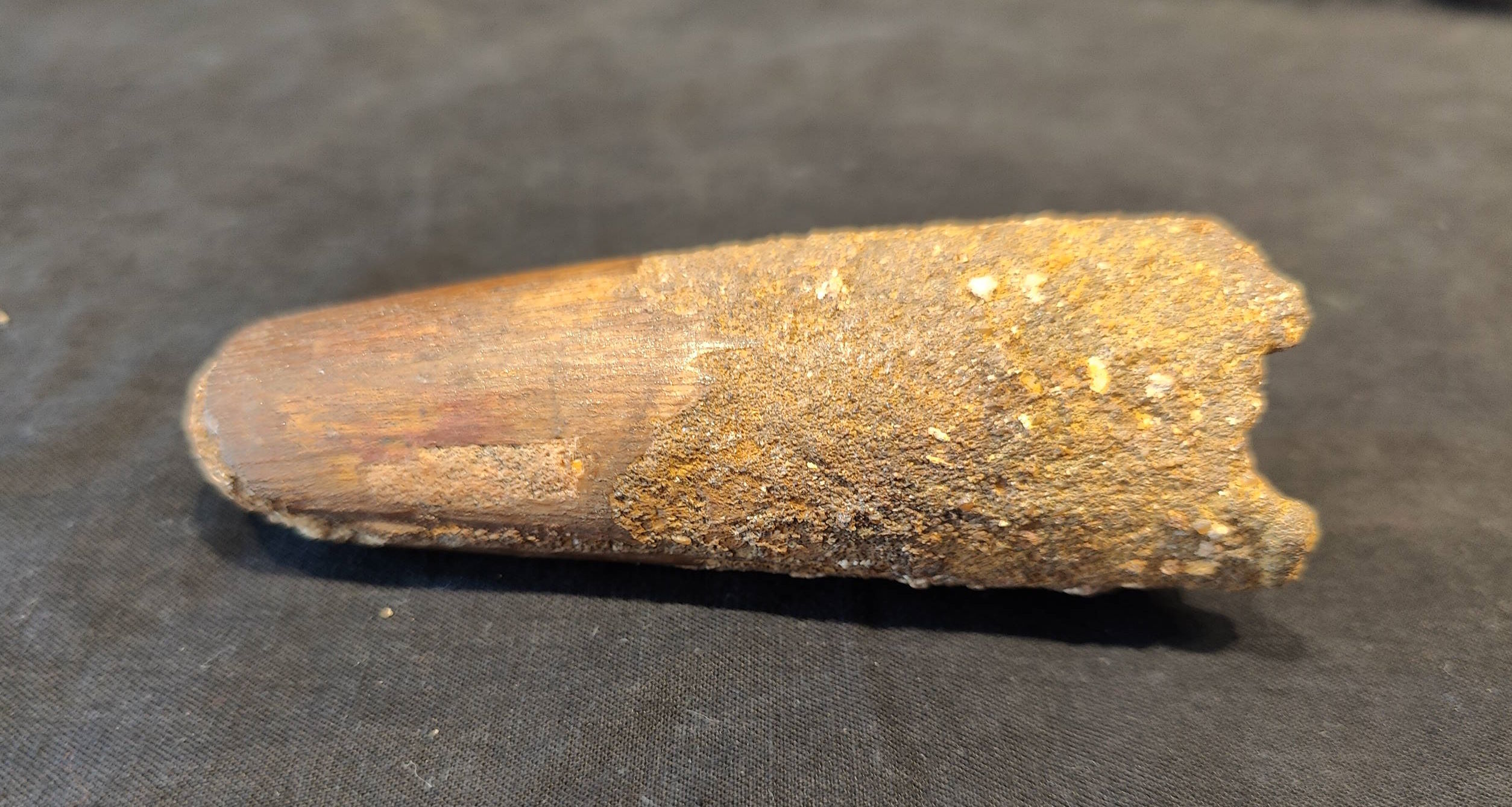
Spinosaurus sp. #VSP4707
Spinosaur tooth
Tegana Formation (Cenomanian)
Cretaceous 95 million years old
Kem Kem Beds, Morocco
Size: 3.15 inch / 8 cm
Price: Euro
|
 |
Spinosaurus sp. #VSP4703
Huge spinosaur tooth
Tegana Formation (Cenomanian)
Cretaceous 95 million years old
Kem Kem Beds, Morocco
Size: 4.53 inch / 11.5 cm
Price: Euro
|
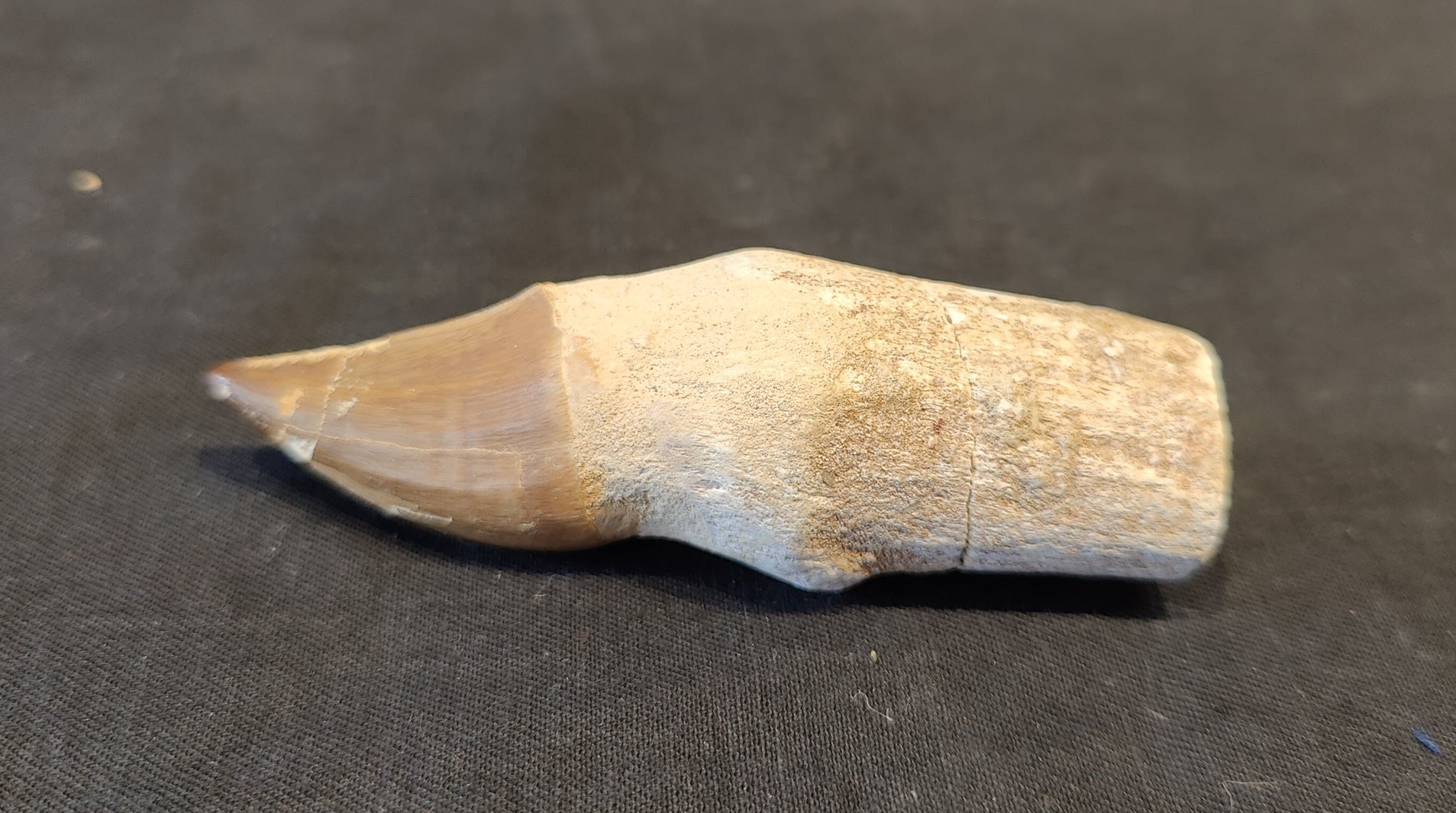
Mosasaurus sp. #VMS4704
Mososaur tooth with root, restored
Maastrichtian, Cretaceous 65.6 million years old
Khouribga, Morocco
Size: 3.15 inch / 8 cm
Price: Euro
|
 |
|
|
|
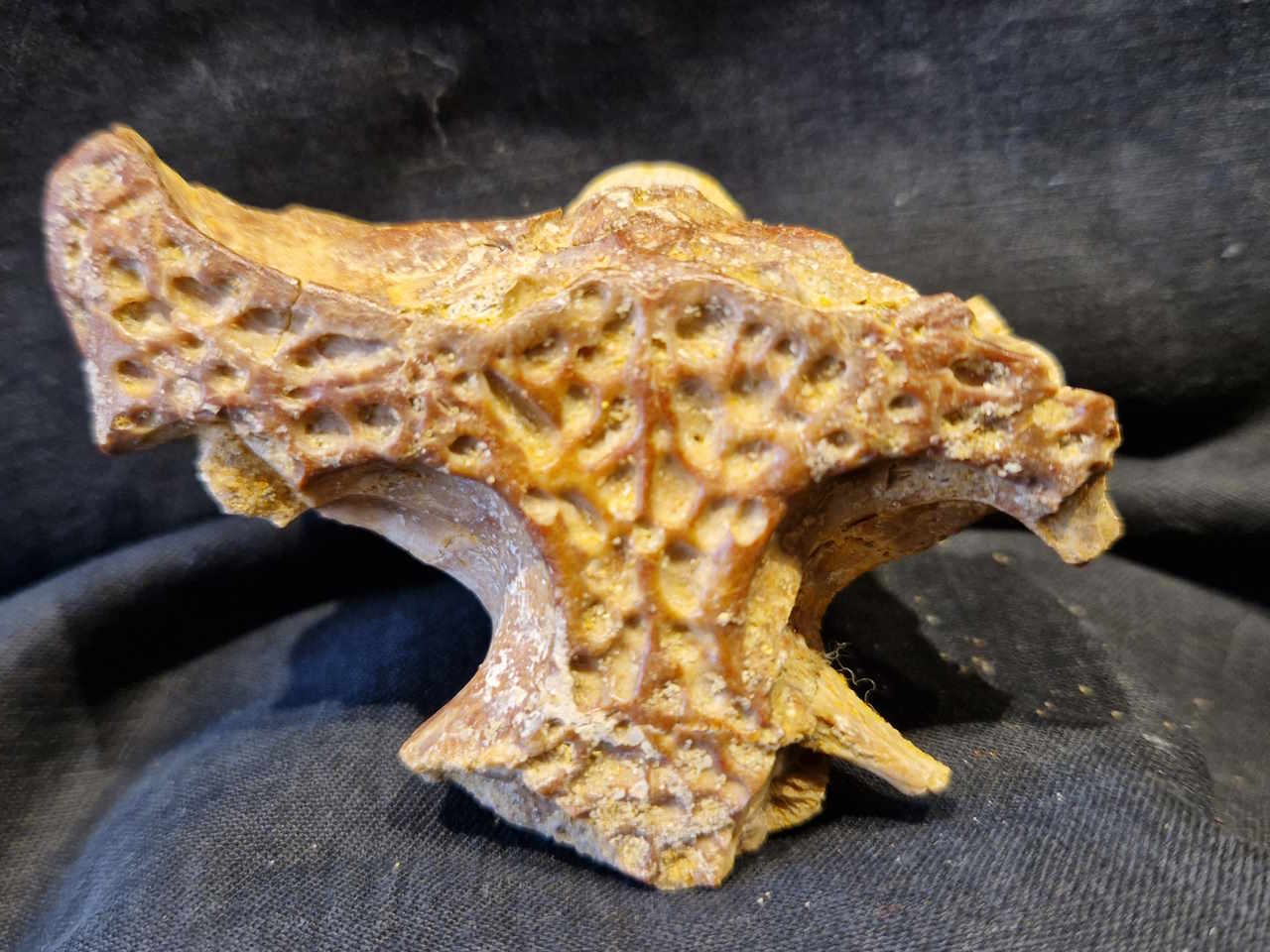
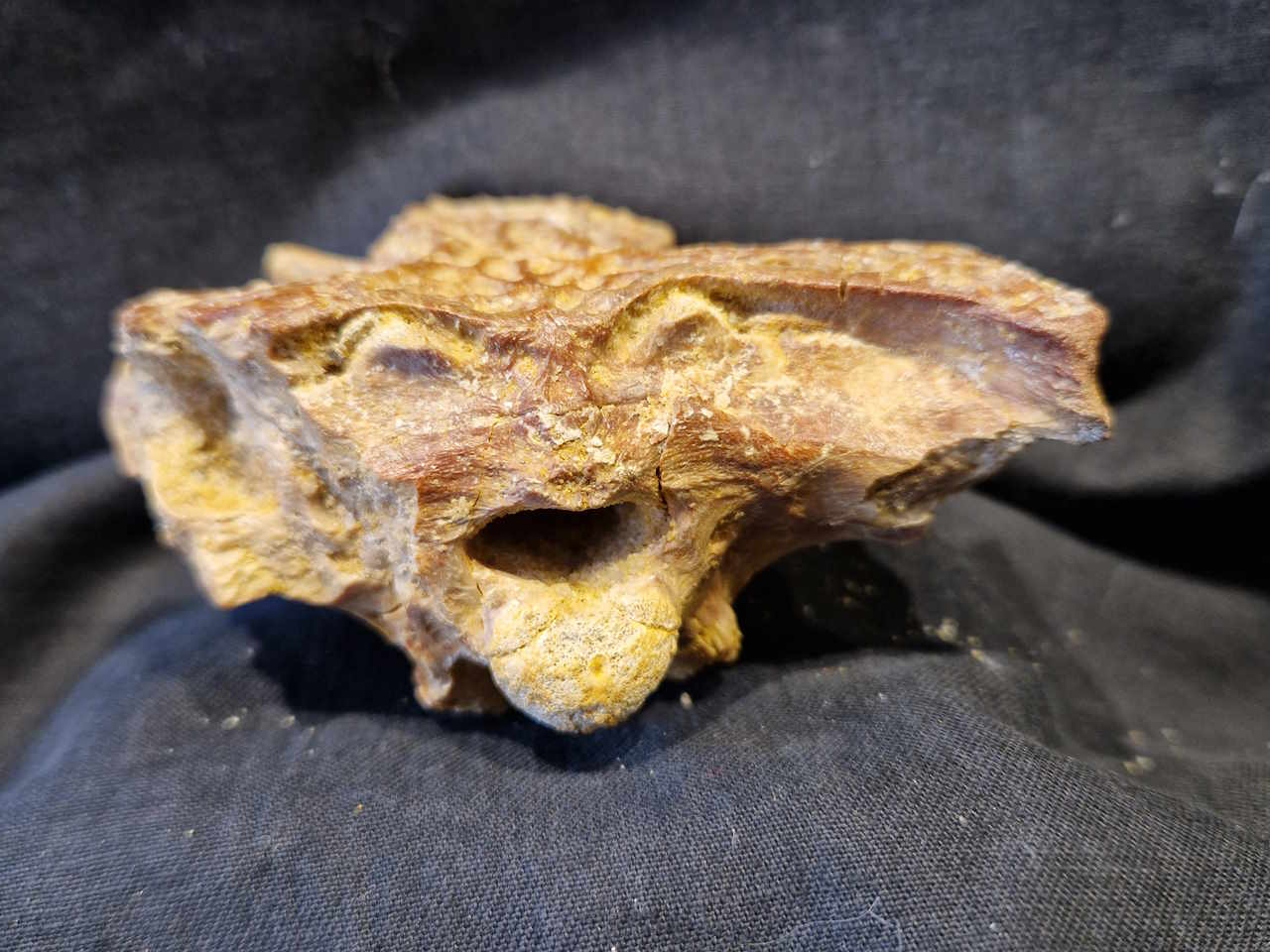
Unknown sp. #VUM5023
Rare vertebra with armorplating
Tegana Formation (Cenomanian)
Cretaceous 95 million years old
Kem Kem Beds, Morocco
Size wide: 3 inch / 7.5 cm
Price: |
|
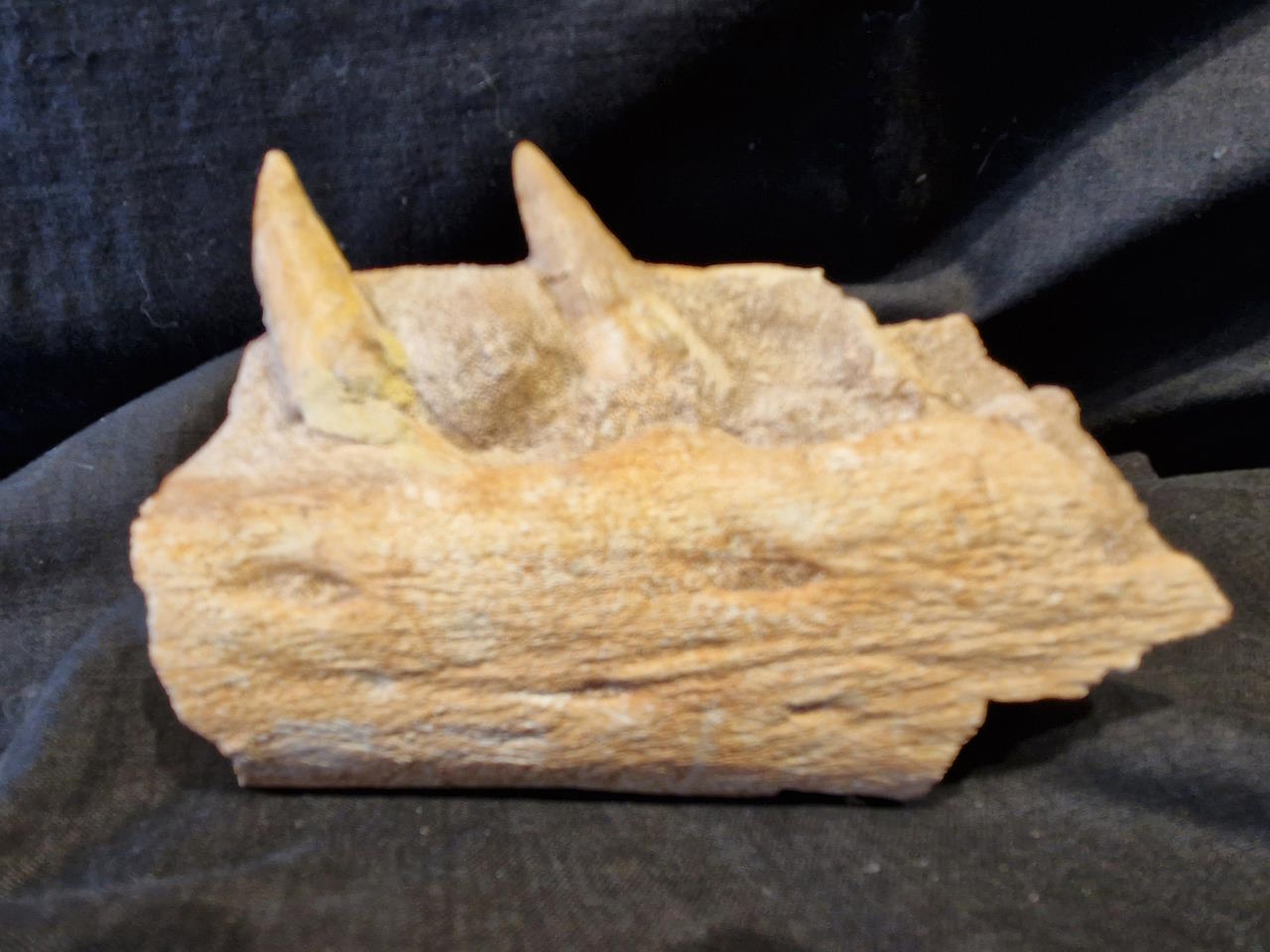
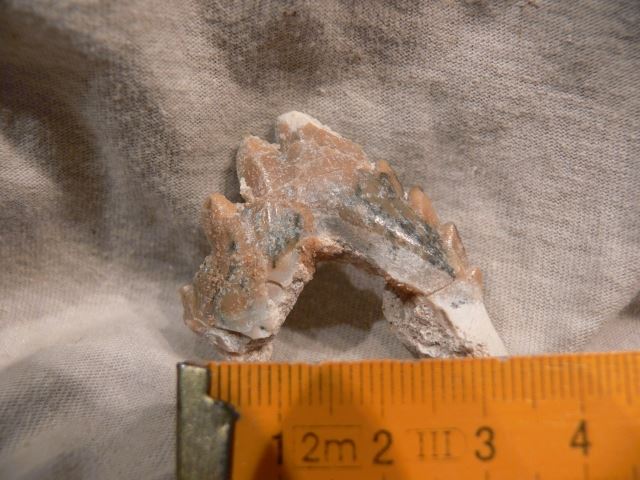
Platecarpus ptychodon #VSM5021
Mosasaurus species jaw piece
Tegana Formation (Cenomanian)
Cretaceous 95 million years old
Kem Kem Beds, Morocco
Size: 4 inch / 10 cm
Price: Euro |
Zyghoriza sp.#SWM9310
Rare, Carniverous Basilosaurus whale tooth (Molar).
No restoration,some repair.
Eocene 38 Million years old
Dakhla, Western Sahara, Morocco
Size : 1.36 inch / 3.4 cm
Price: |
 |
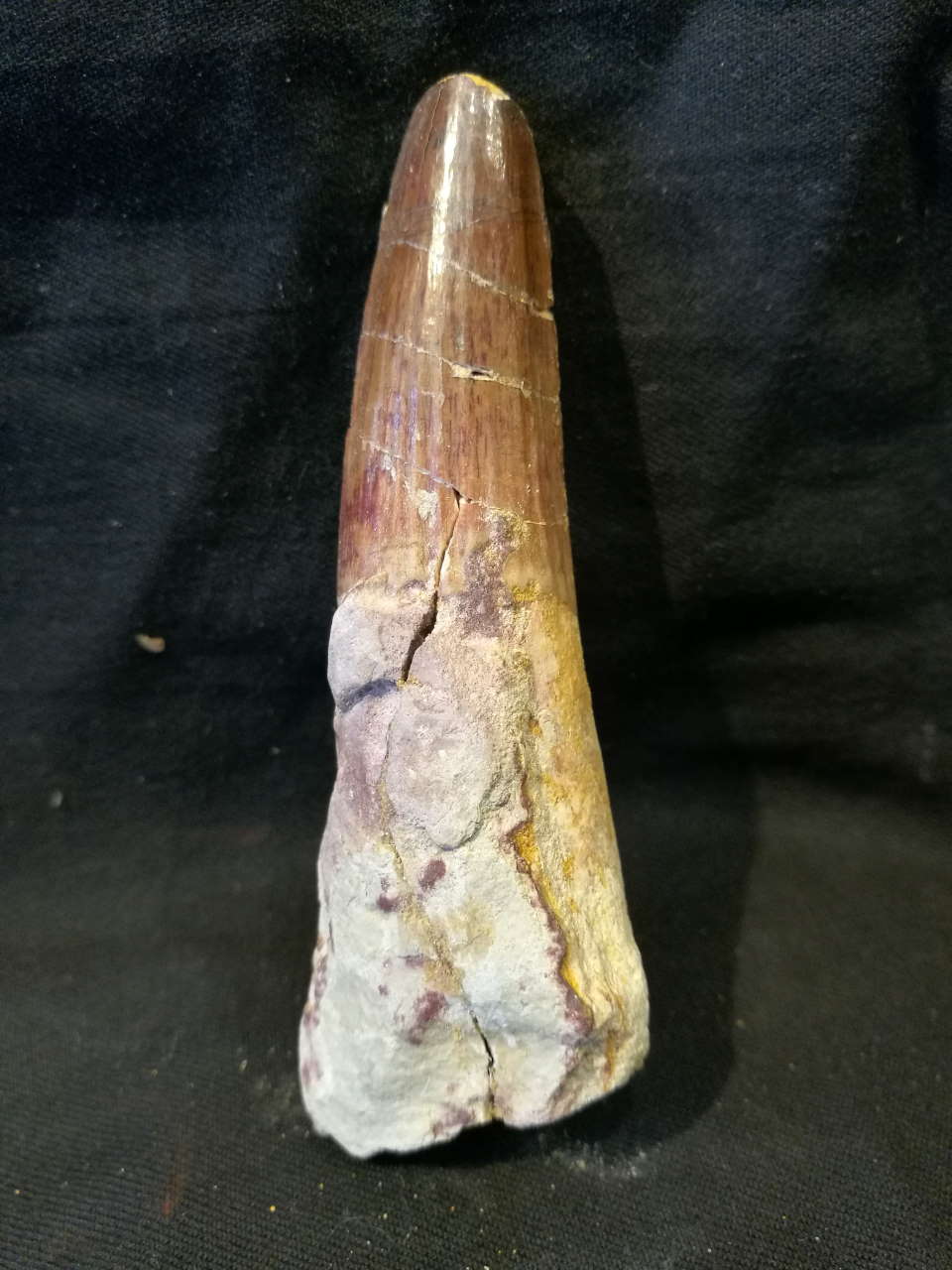
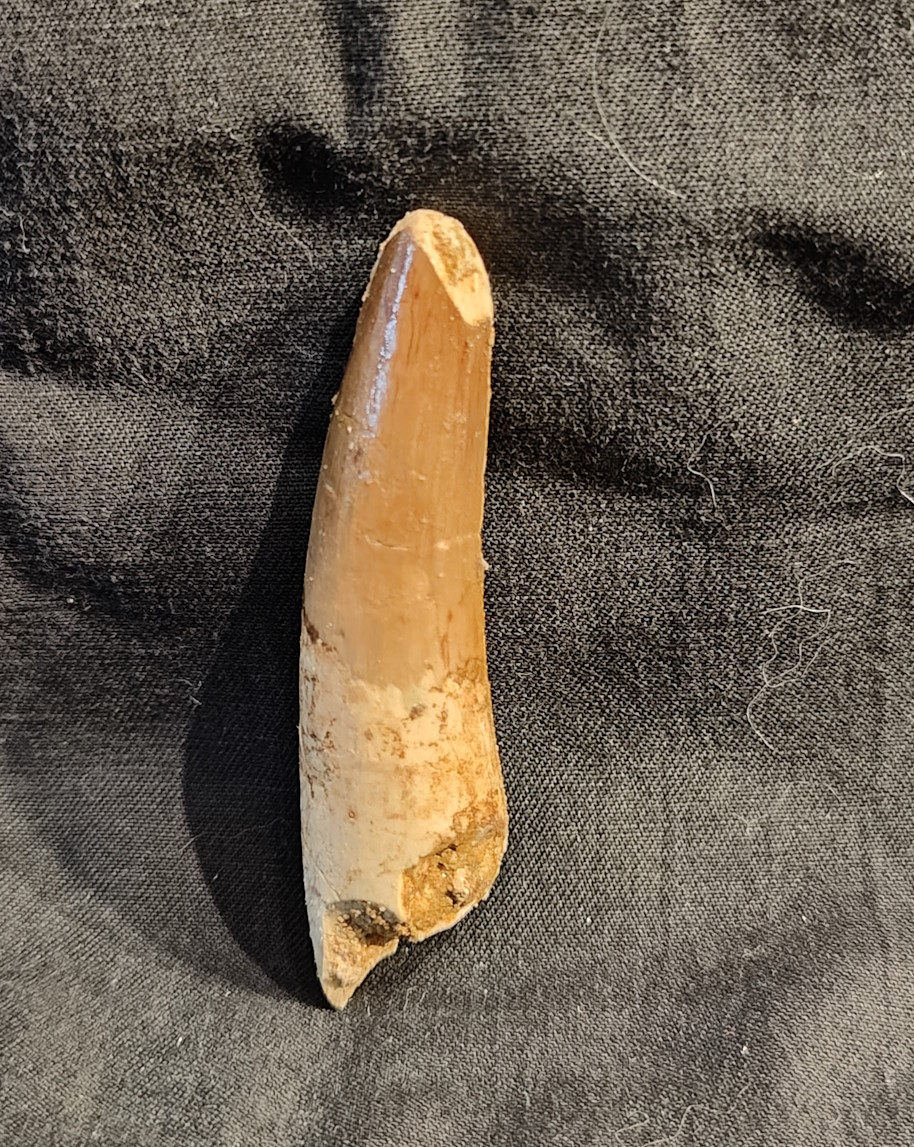
Spinosaurus spec. #VSM4103
Rare African Spinosaurus tooth,
Tegana Formation (Cenomanian)
Cretaceous 95 million years old
Kem Kem Beds, Morocco
Size: 3.2 inch / 8 cm
Price: Euro |
|
 |
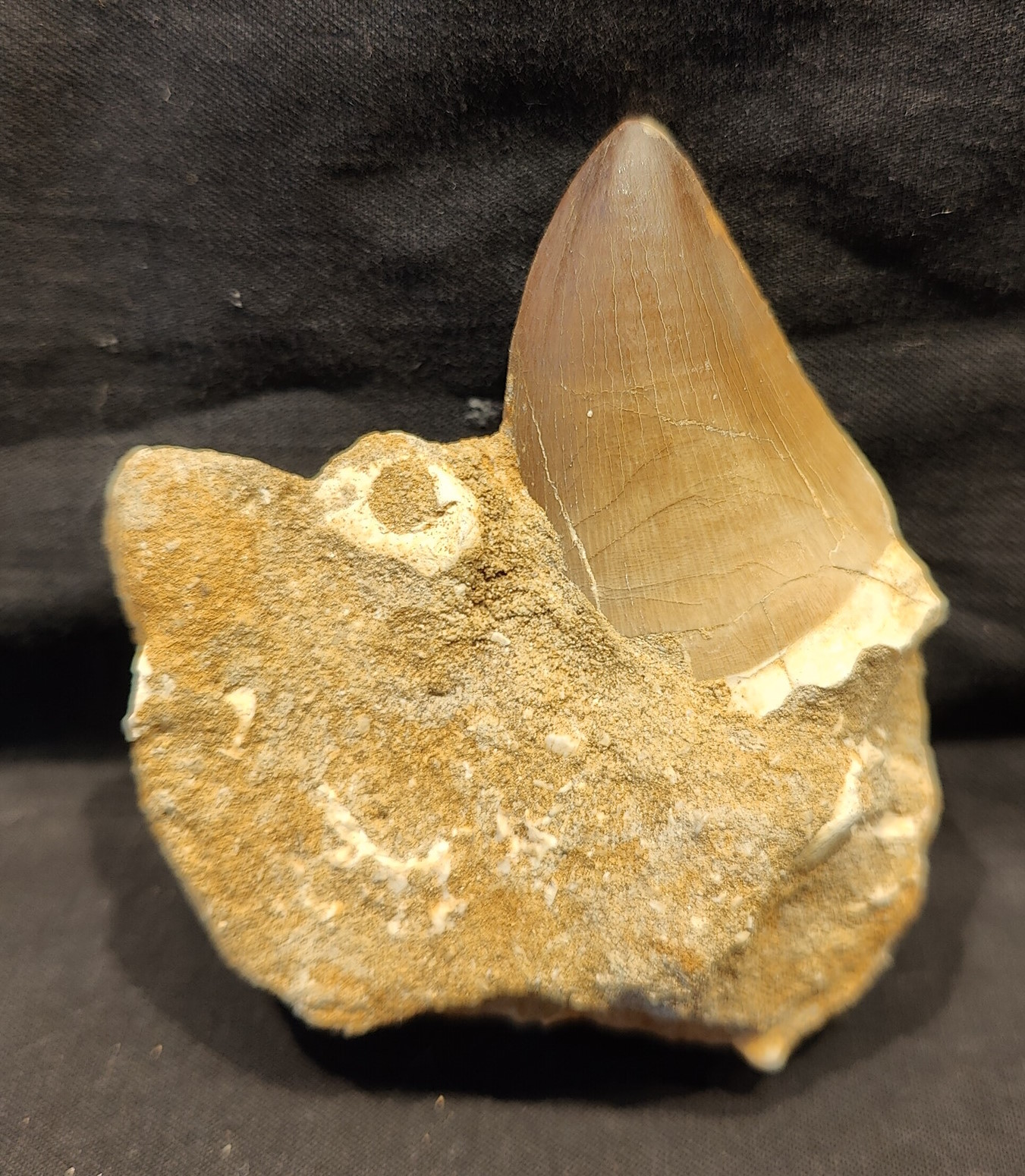
Spinosaurus spec. #VSS5082
Rare African Spinosaurus tooth,
Tegana Formation (Cenomanian)
Cretaceous 95 million years old
Kem Kem Beds, Morocco
Size: 2.76 inch / 7 cm
Price: Euro |
 |
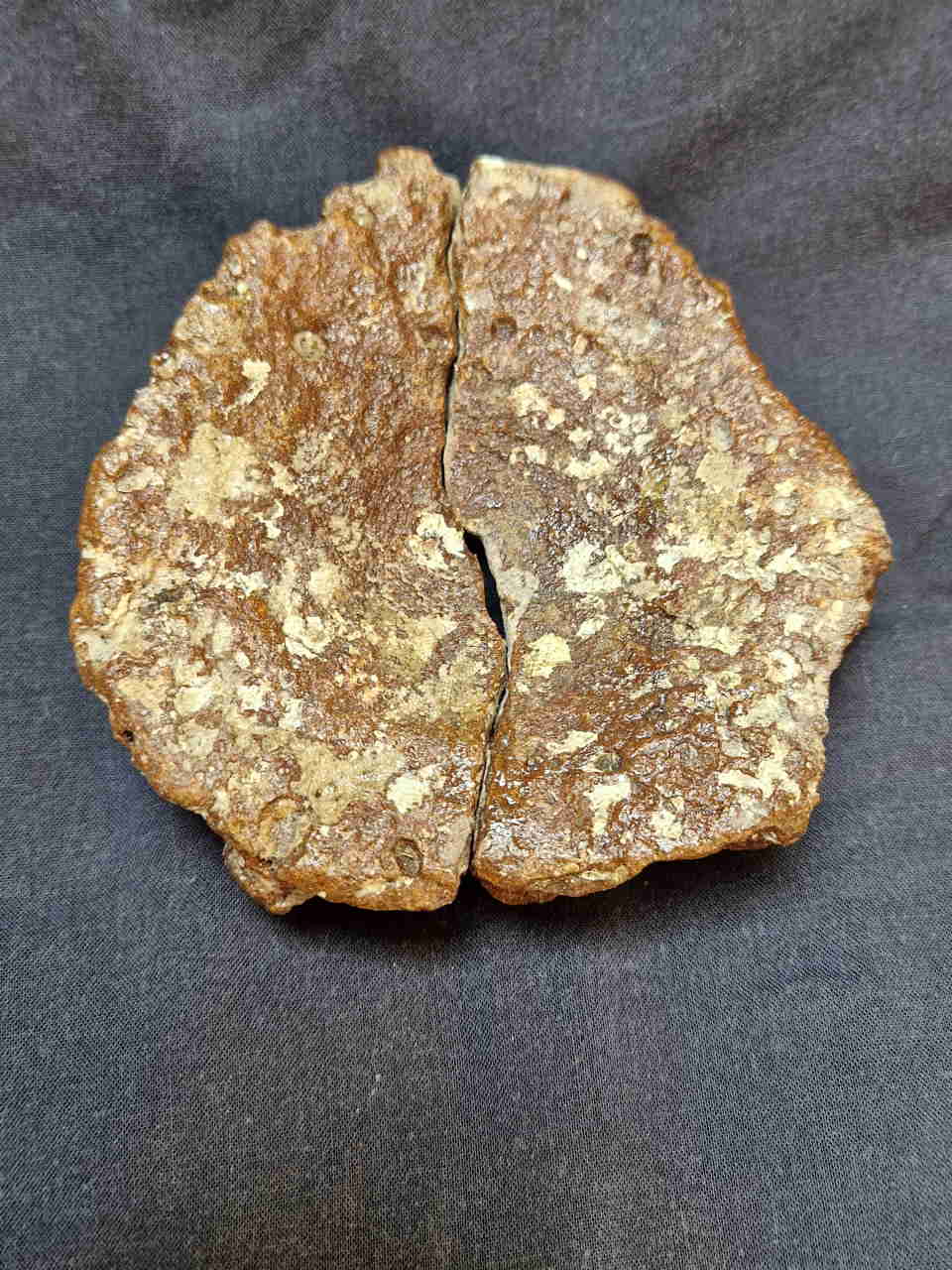
Mosasaurus cf. hoffmanni #VMH4720
Tooth in Matrix
Maastrichtian, Cretaceous 65.6 million years old
Khouribga, Morocco
Size : 2.17 inch / 5.5 cm
Price: |
|
Ichthyosaurus vertebra #VIV4590
Lower Jurassic 180 million years old
Lyme Regis, Jurassic Coast, Dorset U.K.
Size: 4 inch / 10 cm
Price: |
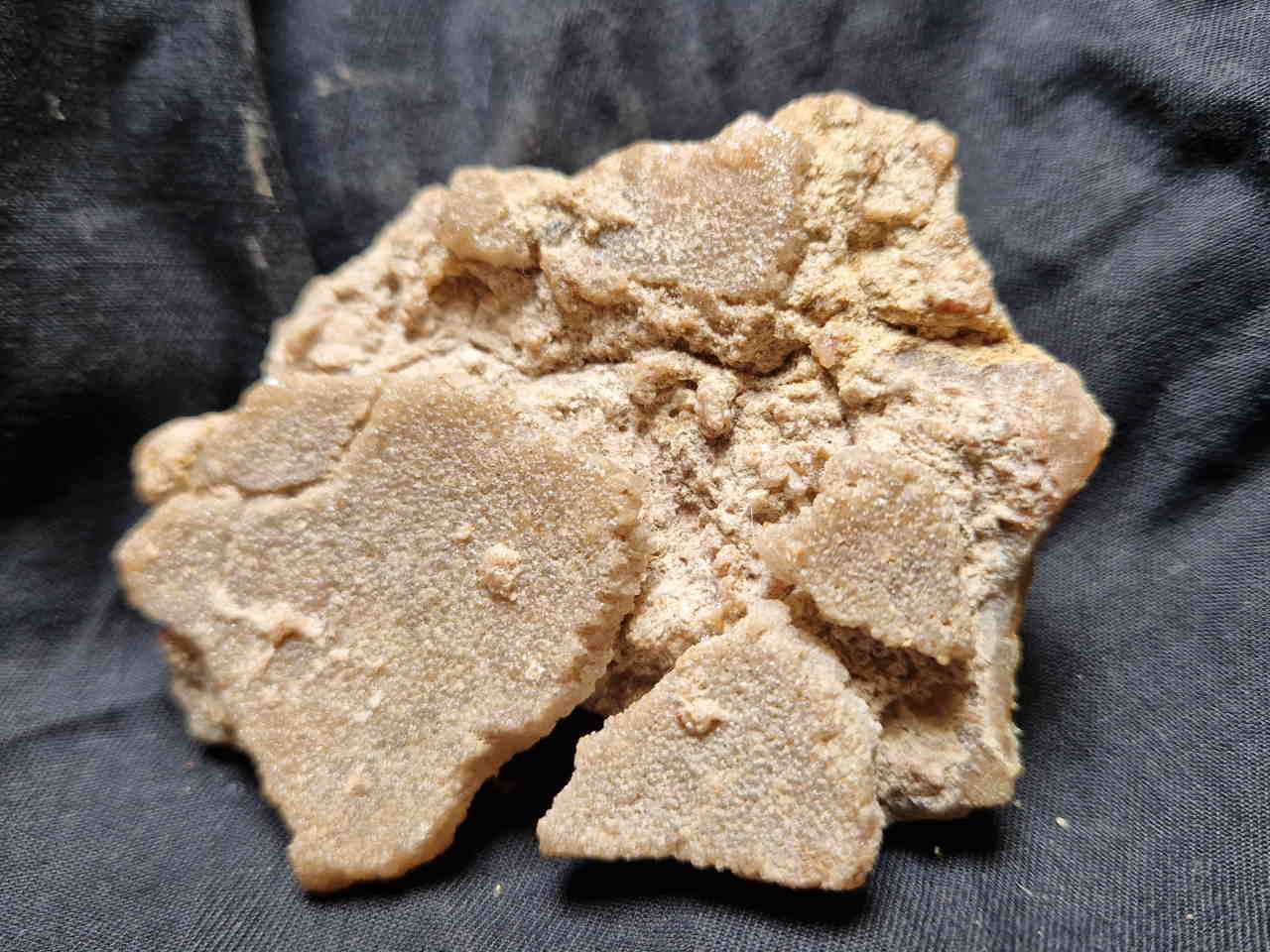
Saltasaurus cf. loricatus #VSU4579
Saurapod egg-shell
Maastrichtian, Cretaceous 70 million years old
S General Roca, Prov. Rio Negro, Argentina
Size: 3.4 inch / 8.5 cm Span.
Price: Euro |
|

|
Sarcosuchus imperator #VSI4582
Nice giant Crocodile skull piece
Tegana Formation (Cenomanian)
Cretaceous 95 million years old
Kem Kem Beds, Morocco
Size : 4.04 inch / 10.1 cm
Price: Euro
|
Emydura sp. #VEA4257
Turtle shell
Old collection! NO Restoration.
Pleistocene 50.000 years old
King creek, Darling Downs, SE Queensland,
Australia
Size : 2.2 inch / 5.5 cm
Price: Euro |

|
|
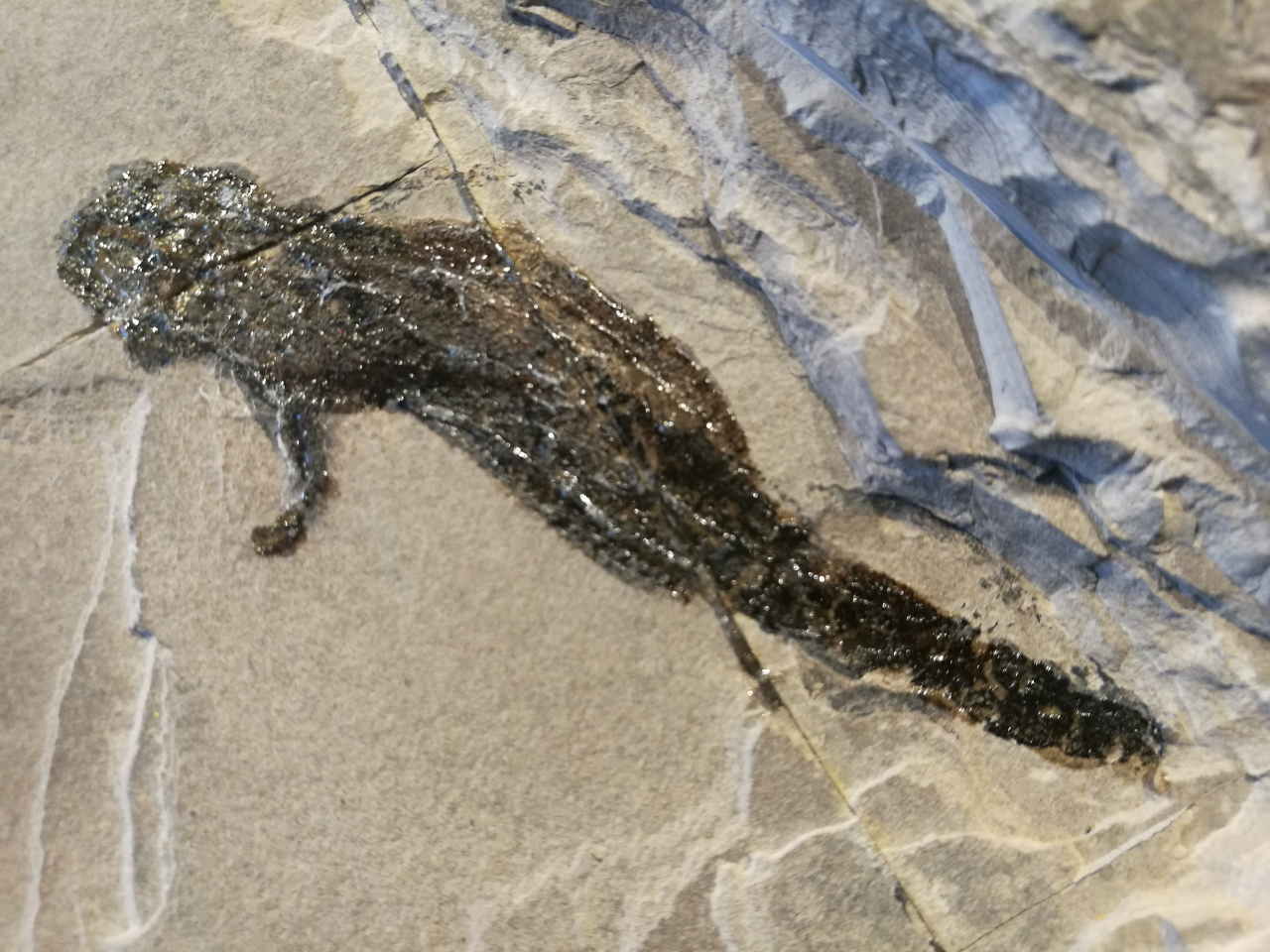
Melanerpeton humbergense #VDP4142
Nice Branchisaurid Amphibian
Old Collection, Altfund
Permian, Rotliegend, 285 million years old
Odernheim, Pfalz, Germany
Size biggest span: 2.8 inch / 7 cm
Size plate: 11.4 by 4.4 inch / 29 by 11 cm
Price: Euro |
Siroccopteryx moroccensis #SM5611
African Pterosaur nice Tooth,
Tegana Formation (Cenomanian)
Cretaceous 95 million years old
Kem Kem Beds, Morocco
Size: 0.8 inch / 2 cm
Price: | 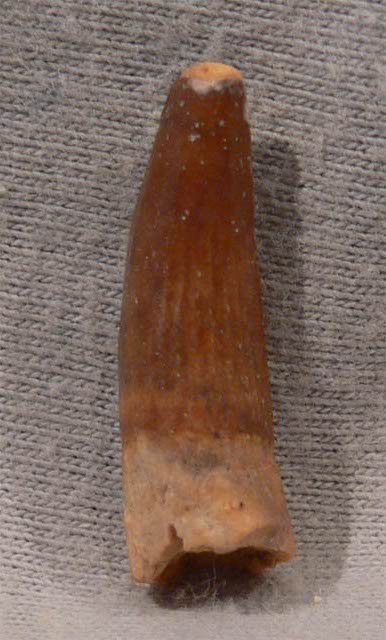 |
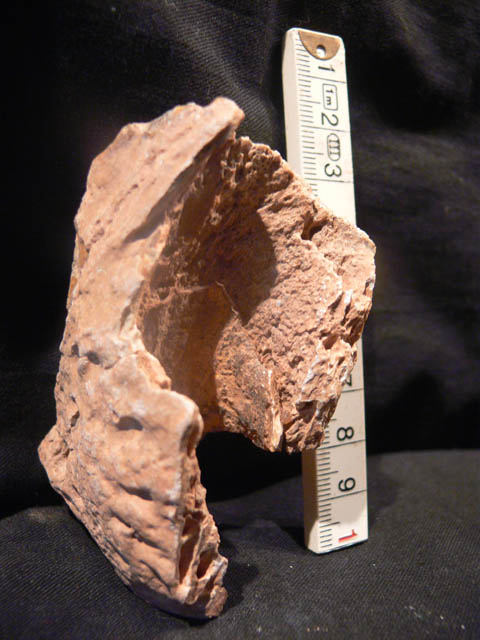 | Sarcosuchus imperator #VSI7095
Nice Crocodile jaw piece
Tegana Formation (Cenomanian)
Cretaceous 95 million years old
Kem Kem Beds, Morocco
Size span: 3.2 inch / 8 cm
Price: Euro |
Mosasaurus cf. hoffmanni #VMH4082
Tooth in Matrix
Maastrichtian, Cretaceous 65.6 million years old
Khouribga, Morocco
Size : 1.8 inch / 4.5 cm
Price: Euro | 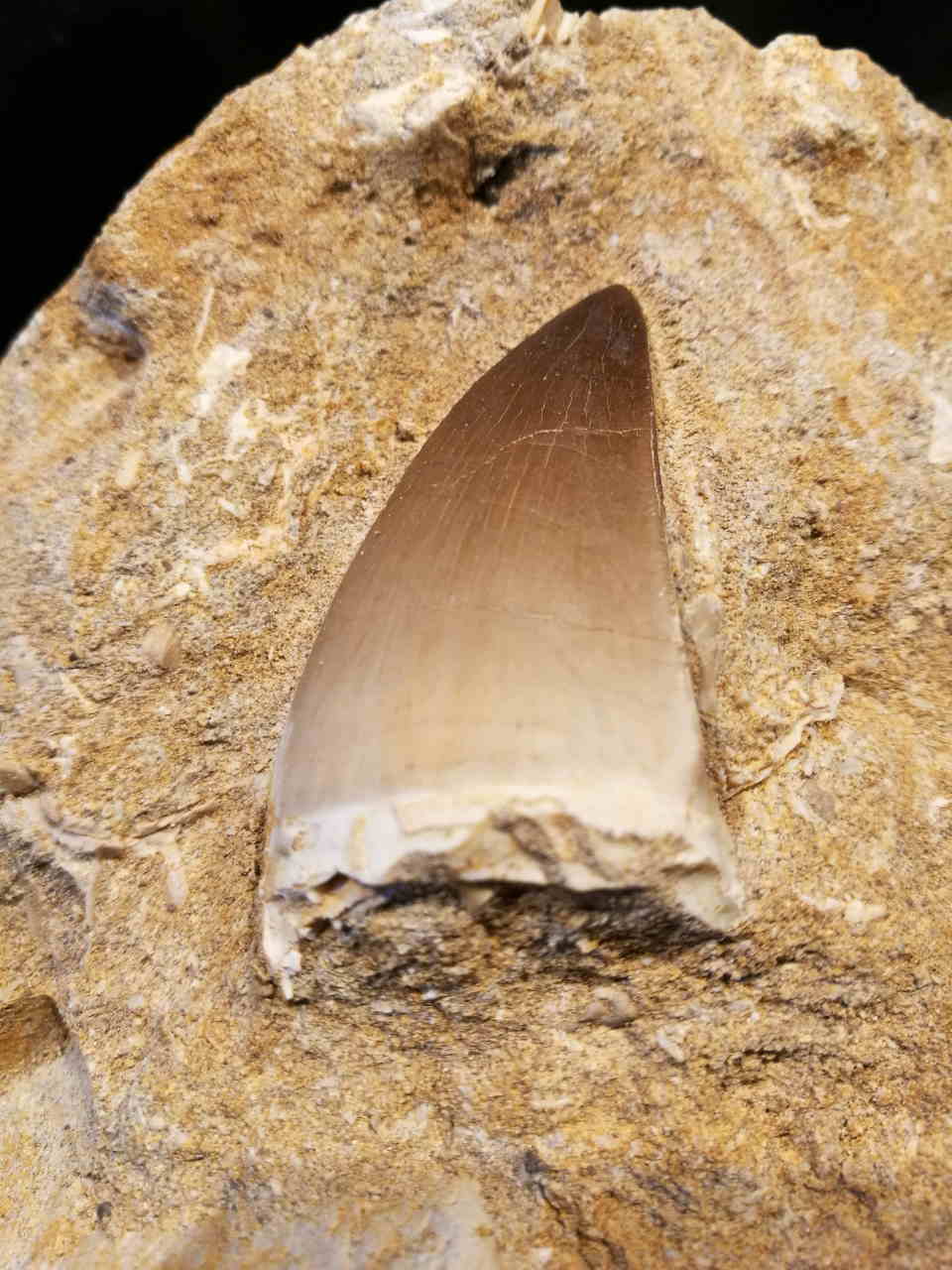 |
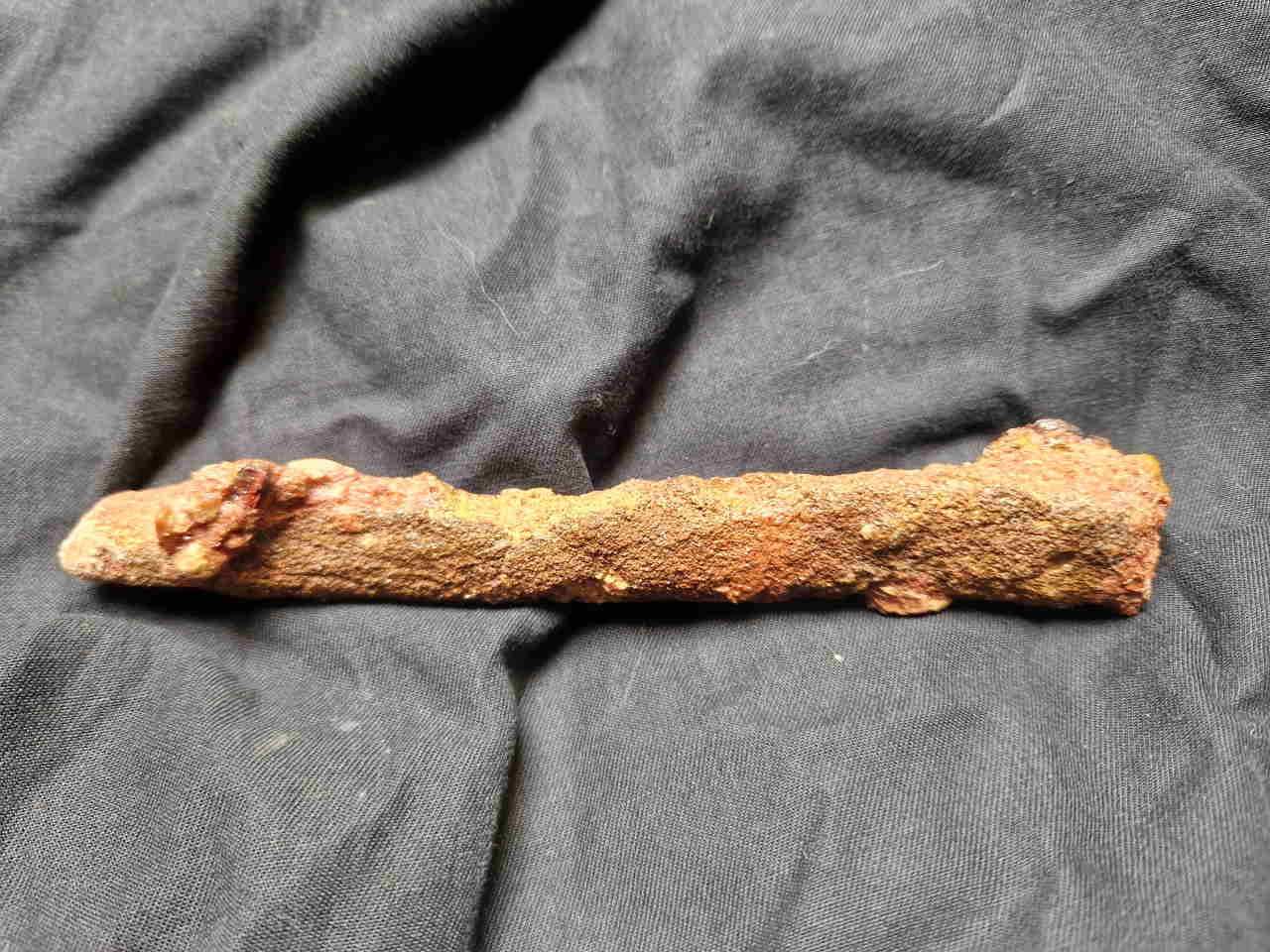
Siroccopteryx moroccensis #VMV4570
African Pterosaur partial jaw with tooth sockets
Tegana Formation (Cenomanian)
Cretaceous 95 million years old
Kem Kem Beds, Morocco
Size: 6.32 inch / 15.8 cm
Price: |
|
|
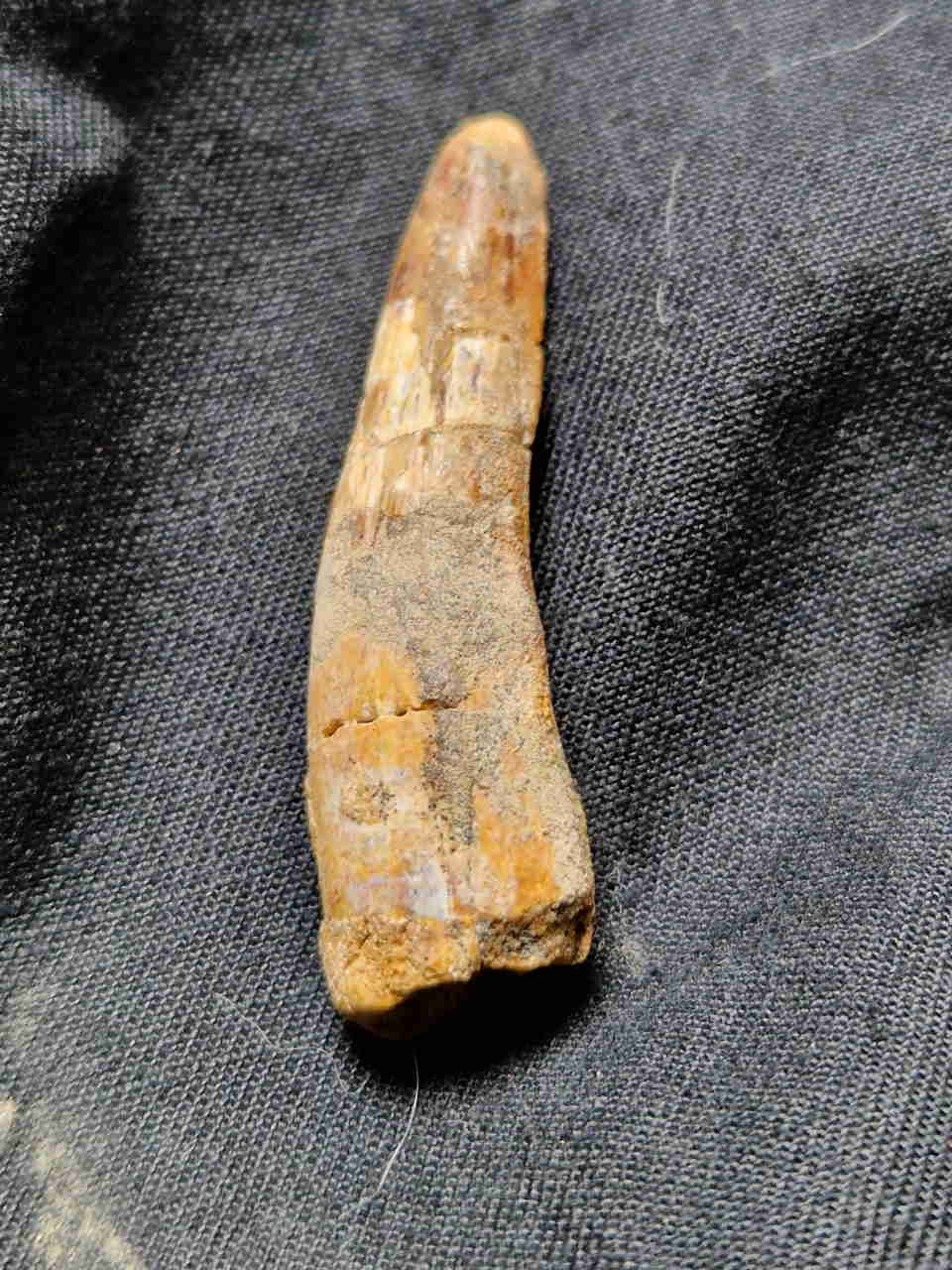
Siroccopteryx moroccensis #VMV4571
African Pterosaur nice Tooth,
Tegana Formation (Cenomanian)
Cretaceous 95 million years old
Kem Kem Beds, Morocco
Size: 1.64 inch / 4.1 cm
Price: |
|
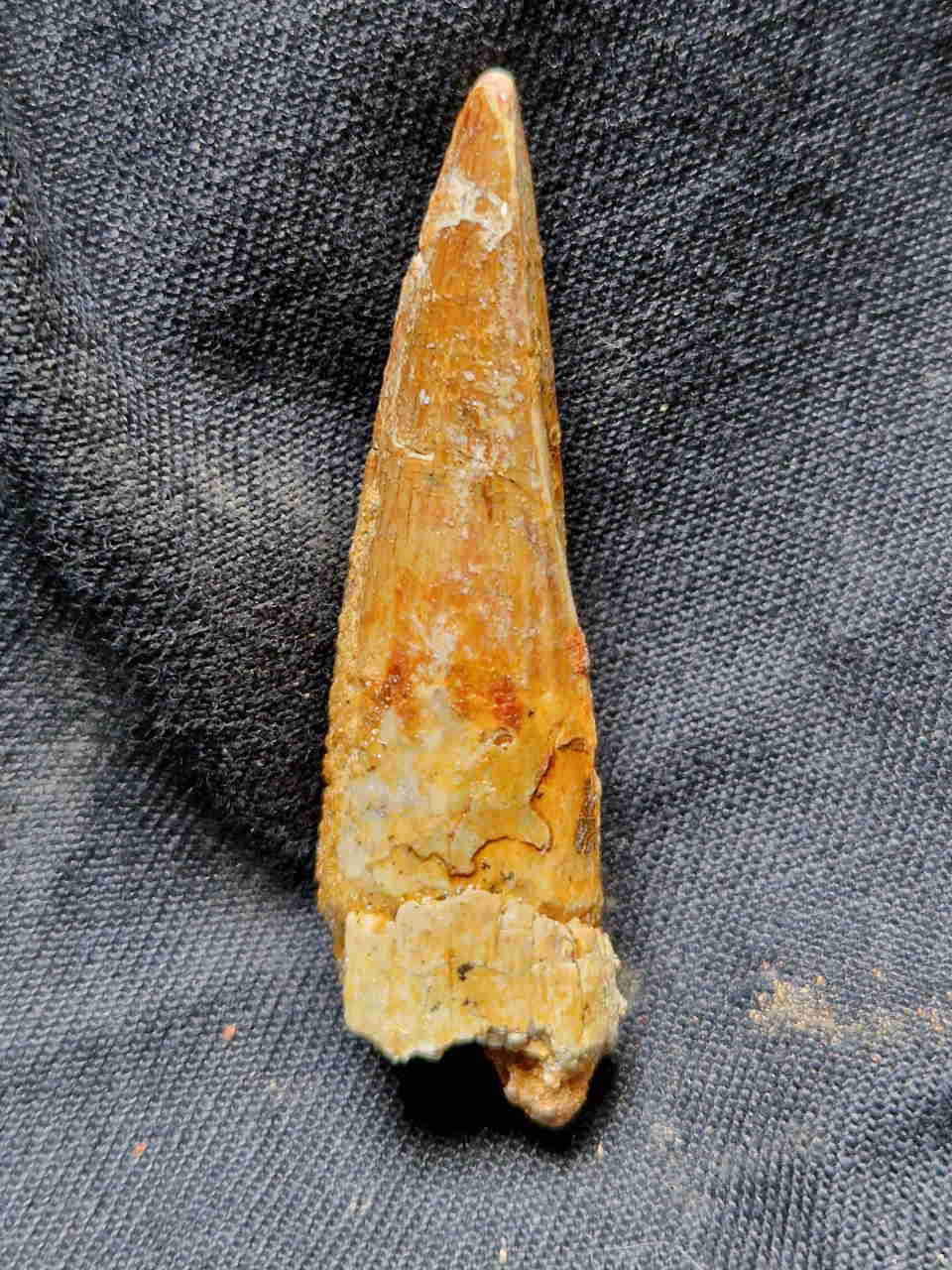
Siroccopteryx moroccensis #VMV4573
African Pterosaur nice Tooth,
Tegana Formation (Cenomanian)
Cretaceous 95 million years old
Kem Kem Beds, Morocco
Size: 1.6 inch / 4 cm
Price: |
|
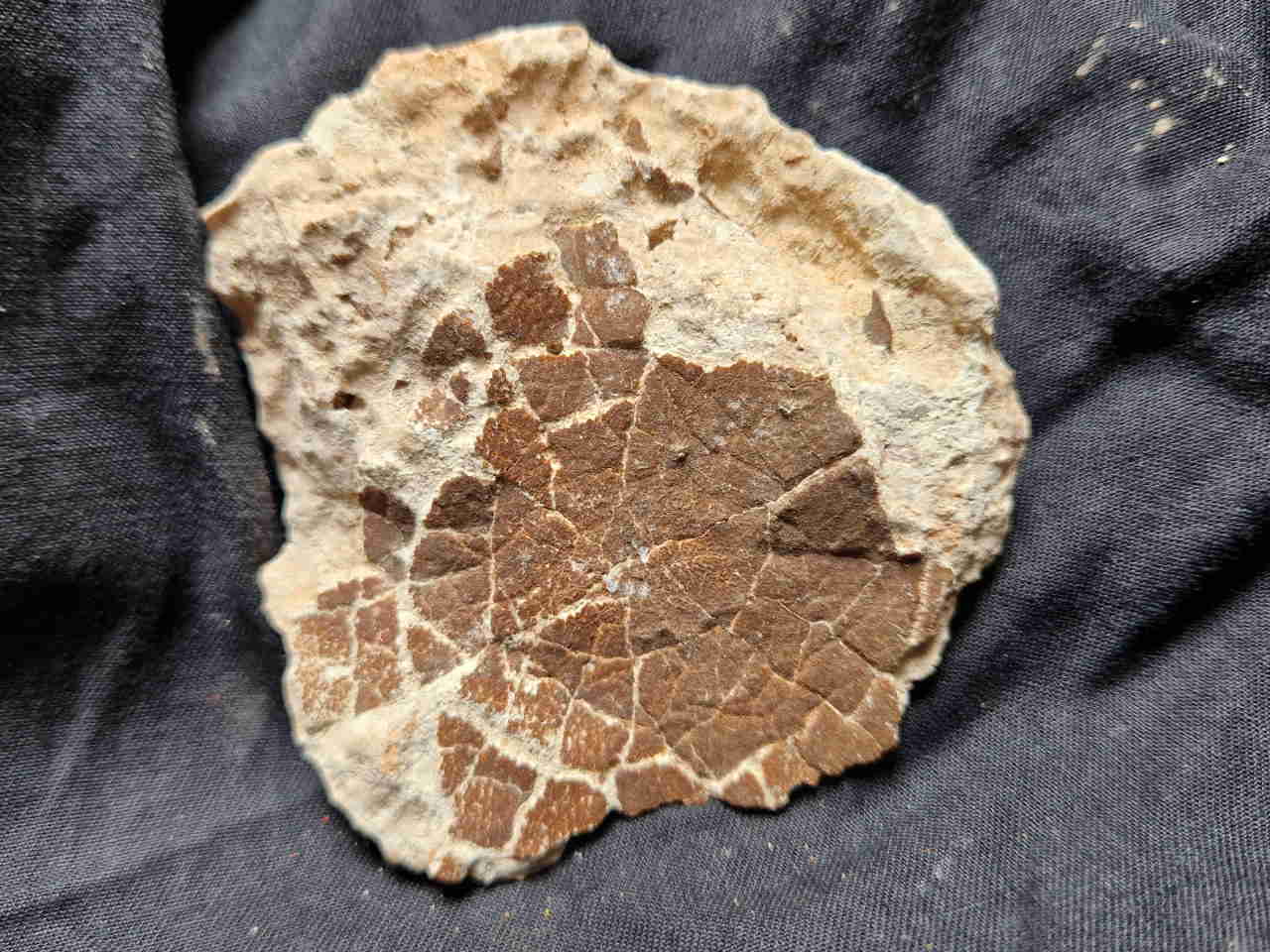
Titanosaurus spec. #VSU4578
Saurapod egg-shell
Maastrichtian, Cretaceous 70 million years old
S General Roca, Prov. Rio Negro, Argentina
Size: 3.2 inch / 8 cm
Price: |
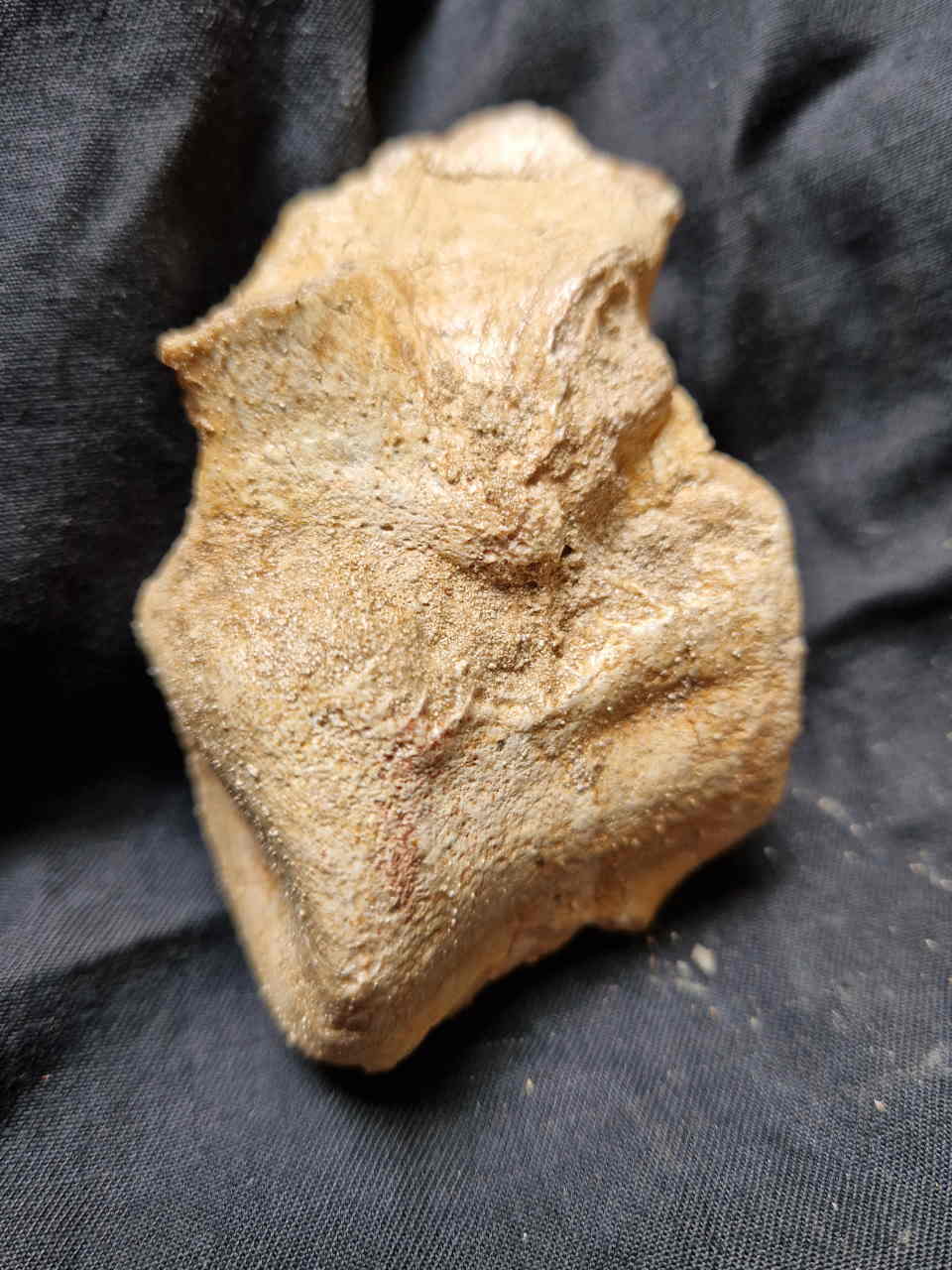
Plesiosaurus spec, #VMH4583
Vertebra
Maastrichtian, Cretaceous 65.6 million years old
Khouribga, Morocco
Size : 3 inch / 7.5 cm
Price: |
|

|
Mosasaurus spec. #VMH4584
Vertebra
Maastrichtian, Cretaceous 65.6 million years old
Khouribga, Morocco
Size : 2.6 inch / 6.5 cm
Price:
|
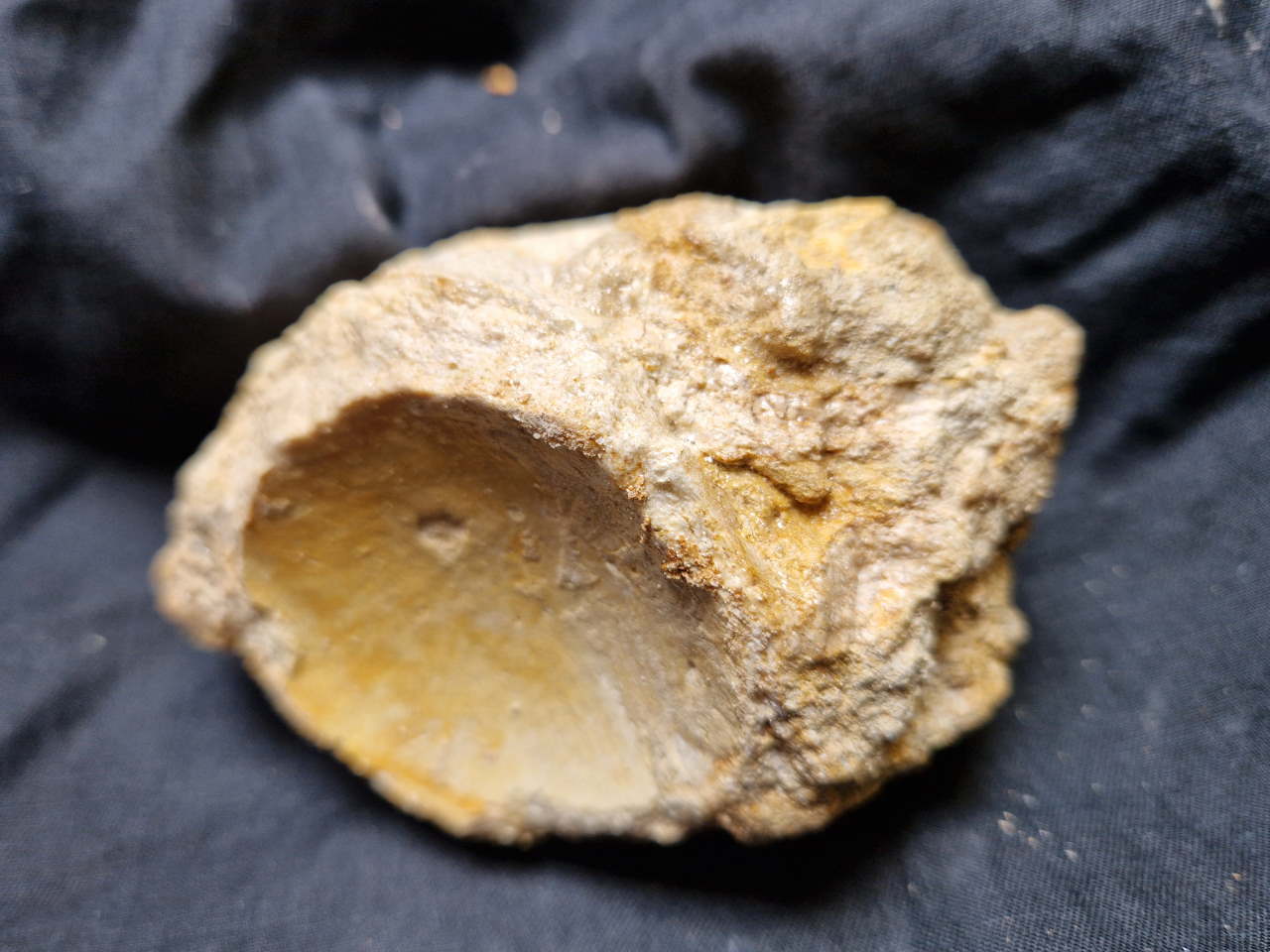
Mosasaurus spec. #VMH4585
Vertebra
Maastrichtian, Cretaceous 65.6 million years old
Khouribga, Morocco
Size : 4 inch / 10 cm
Price: |
|
cf. Iguanodon sp. #VIP10159
Theropod Dinosaur footprint, Extreme rare, possible frontleg or juvenile.
Old Collection
L. Cretaceous, Albian 90 Million years old
Gaizes Potok, Holy Cross Mountains, Poland
Matrix: 18 by 12 cm
Size footprint wide: 4.8 inch / 12 cm
Price: | 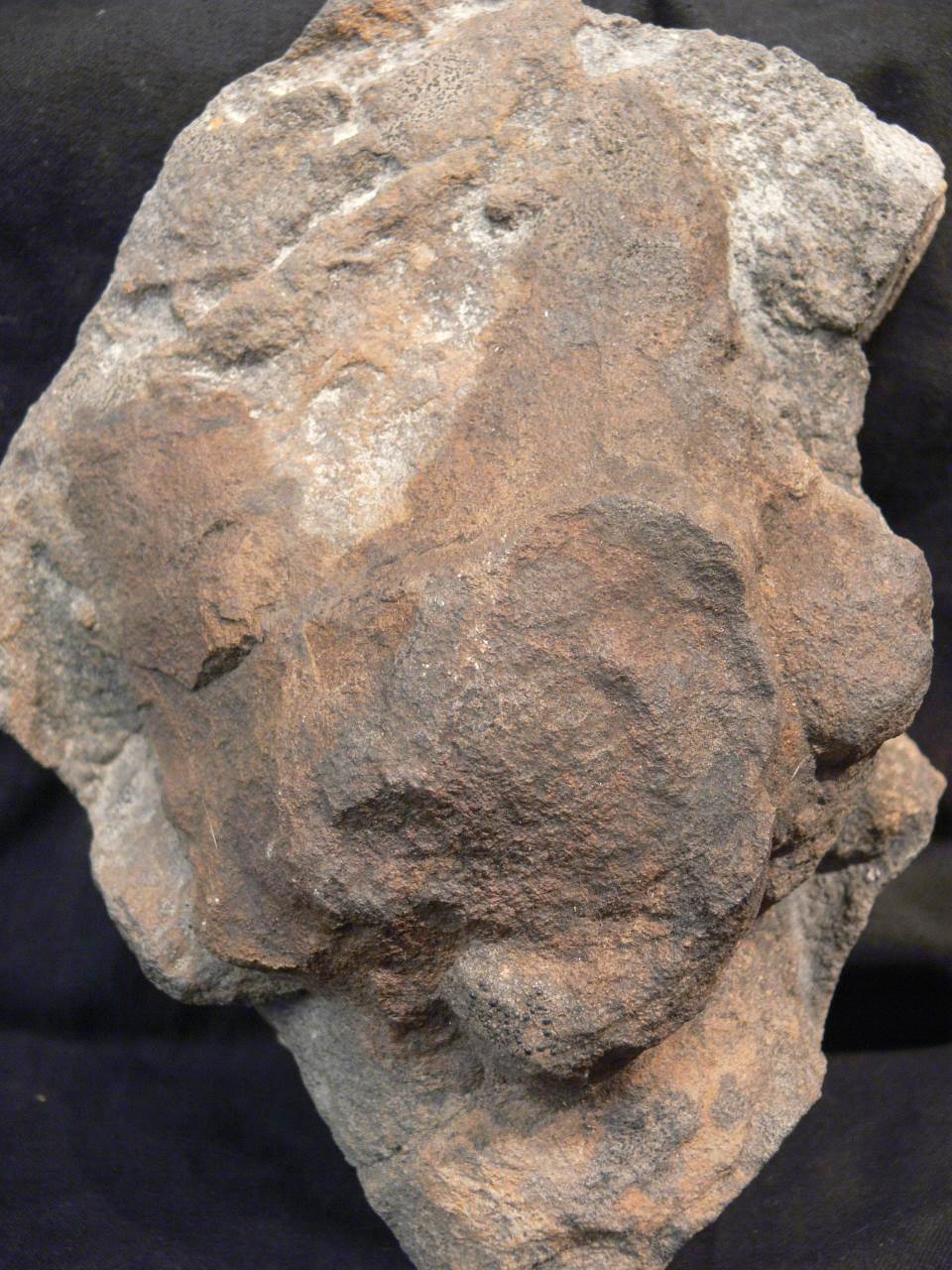
|
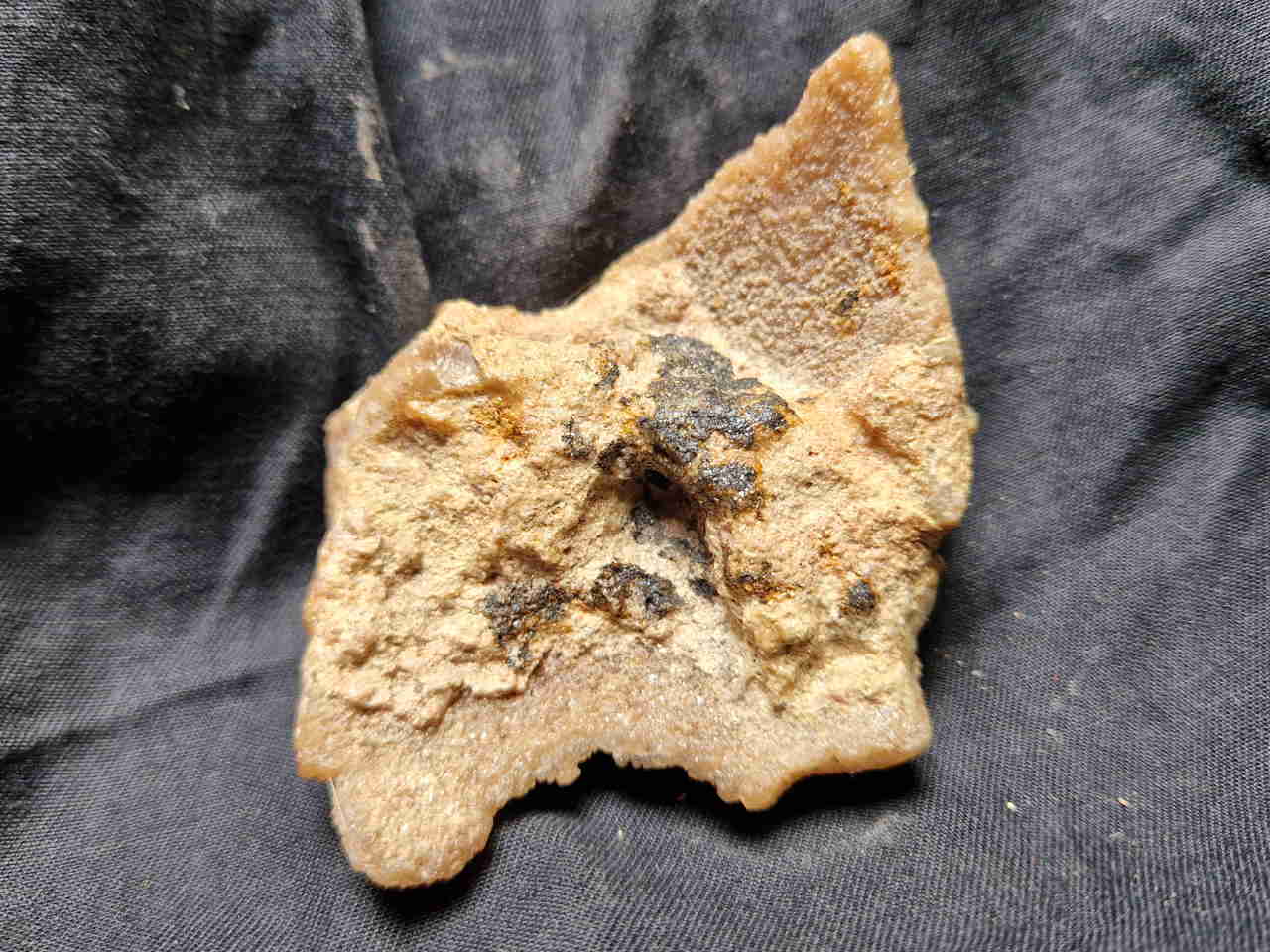
|
Saltasaurus cf. loricatus #VSU4580
Saurapod egg-shell
Maastrichtian, Cretaceous 70 million years old
S General Roca, Prov. Rio Negro, Argentina
Size : 3.24 inch/ 8.1 cm Span.
Price:
|
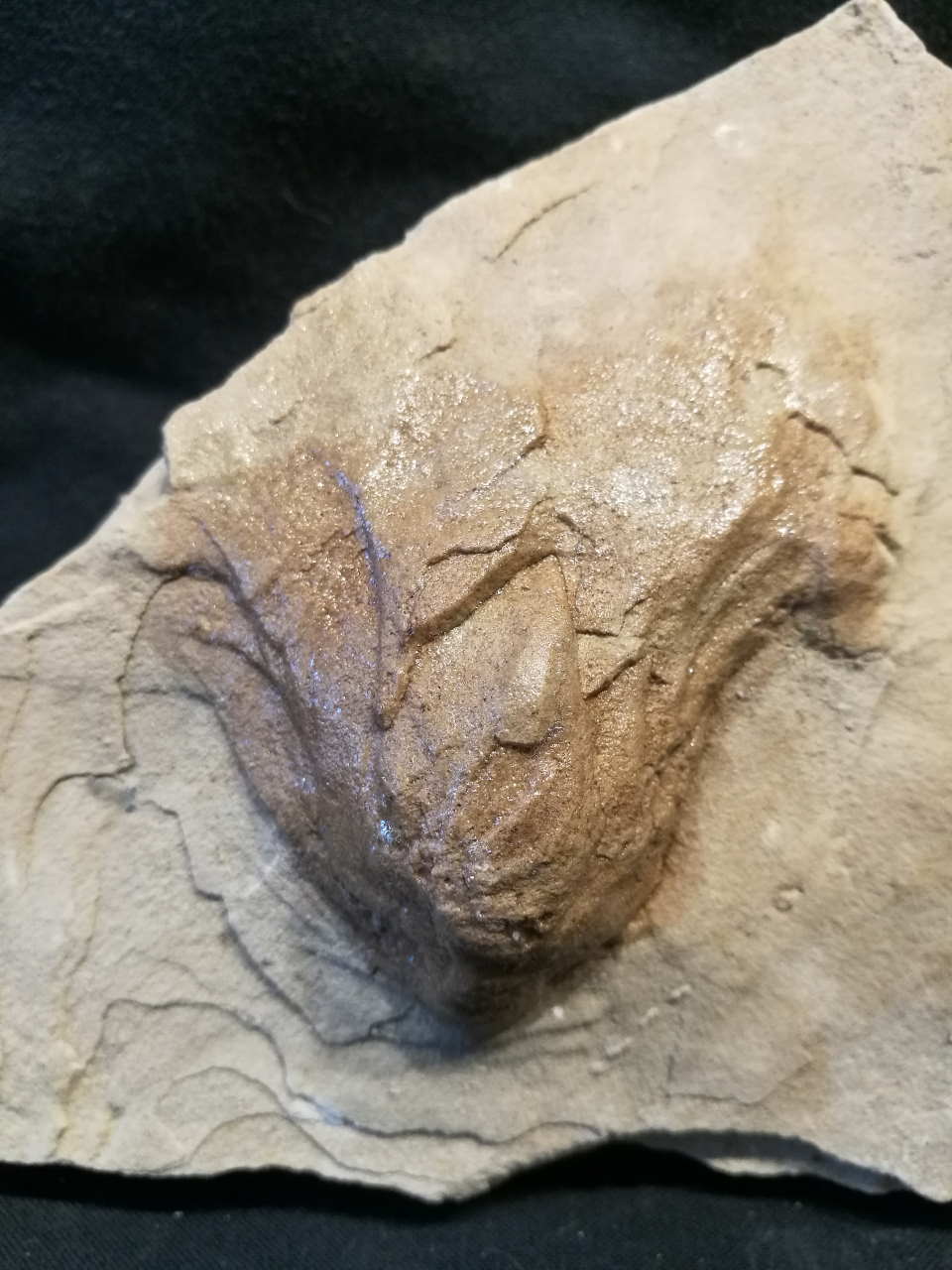
Characichnos sp. #VDP4308
Basal Swimming Archasauriform Dinosaur "slippery" footprints, (cf. Erythrosuchid)
Very rare Old Collection
L. Triassic, Olenekian 250 Million years old
Holy Cross Mountains, Poland
Matrix: 6.4 by 4.4 inch / 16 by 11 cm
Price: |
|
Melanerpeton humbergense #VDP4143
2 Nice Branchisaurid Amphibian
Old Collection, Altfund
Permian, Rotliegend, 285 million years old
Odernheim, Pfalz, Germany
Size biggest span: 2.8 inch / 7 cm
Size plate: 11 by 11.8 inch / 28 by 30 cm
Price: |

|
|
|
Melanerpeton humbergense #VDP4146
4 Nice Branchisaurid Amphibian
Old Collection, Altfund
Permian, Rotliegend, 285 million years old
Odernheim, Pfalz, Germany
Size biggest span: 3.4 inch / 9.5 cm
Size plate: 16.1 by 9.4 inch / 41 by 24 cm
Price: |
|
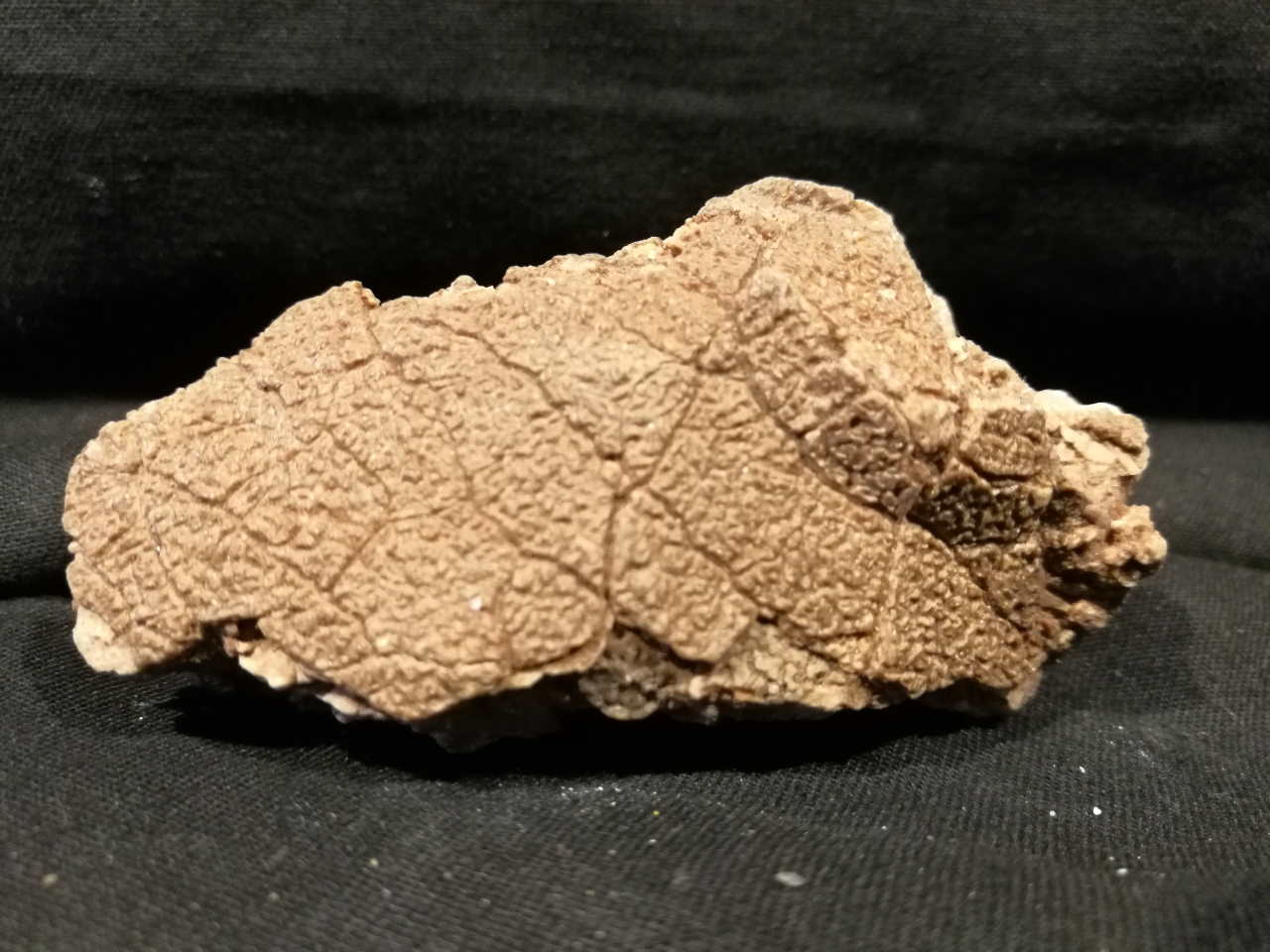
Titanosaurus spec. #VED4126
Saurapod egg-shell
Maastrichtian, Cretaceous 70 million years old
S General Roca, Prov. Rio Negro, Argentina
Size: 2.2 inch / 6.5 cm
Price: |
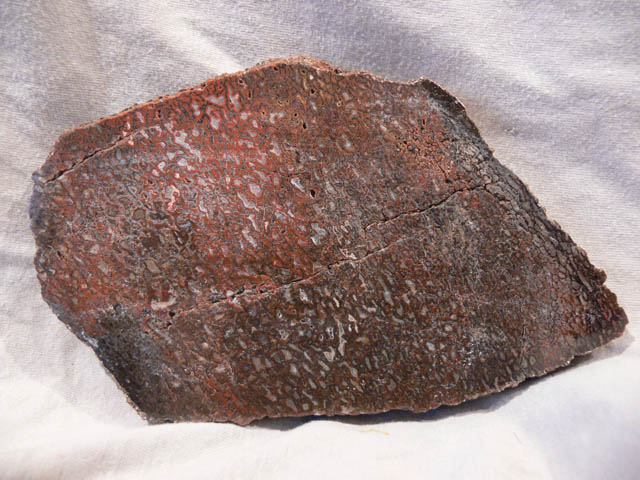 | Cut & Polished dinosaur bone #DU5602
Aptien, Cretaceous 120 million years old
Nevada, U.S.A.
Size: 14 by 18 cm
Price: |
Cut & Polished dinosaur bone #DU5603
Aptien, Cretaceous 120 million years old
Nevada, U.S.A.
Size: 18 by 9 cm
Price: |  |
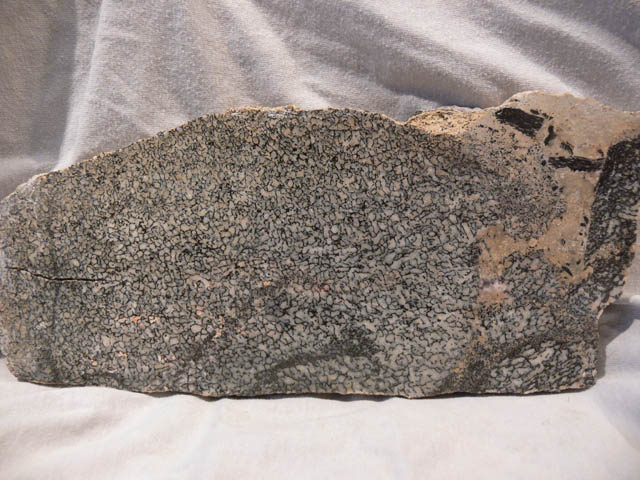 | Cut & Polished dinosaur bone #DU5604
Aptien, Cretaceous 120 million years old
Nevada, U.S.A.
Size: 21 by 9 cm
Price: |
| Phosphatosaurus spec. #VSI7096
Nice Crocodile Jaw piece
Tegana Formation (Cenomanian)
Cretaceous 95 million years old
Kem Kem Beds, Morocco
Size: 4.8 inch / 12 cm
Price: | 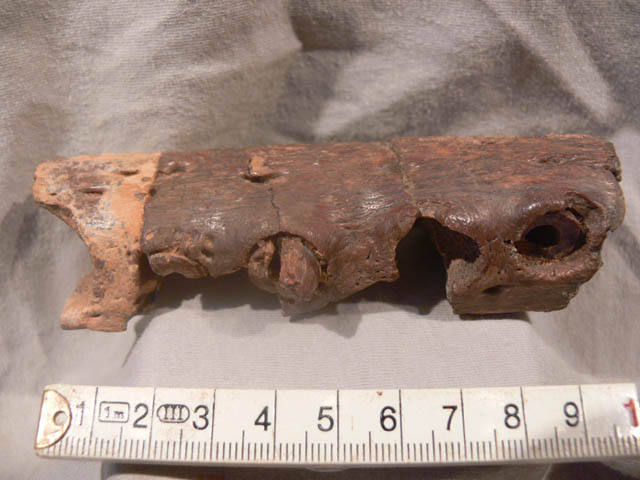
|
Siroccopteryx moroccensis #VSM8476
African Pterosaur nice Tooth,
Tegana Formation (Cenomanian)
Cretaceous 95 million years old
Kem Kem Beds, Morocco
Size: 1 inch / 2.5 cm
Price: | 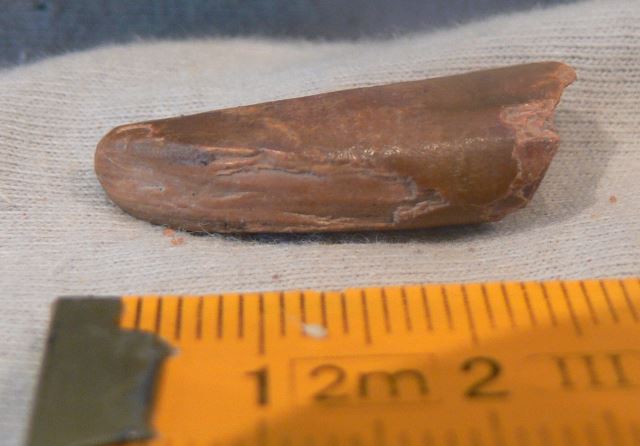 |
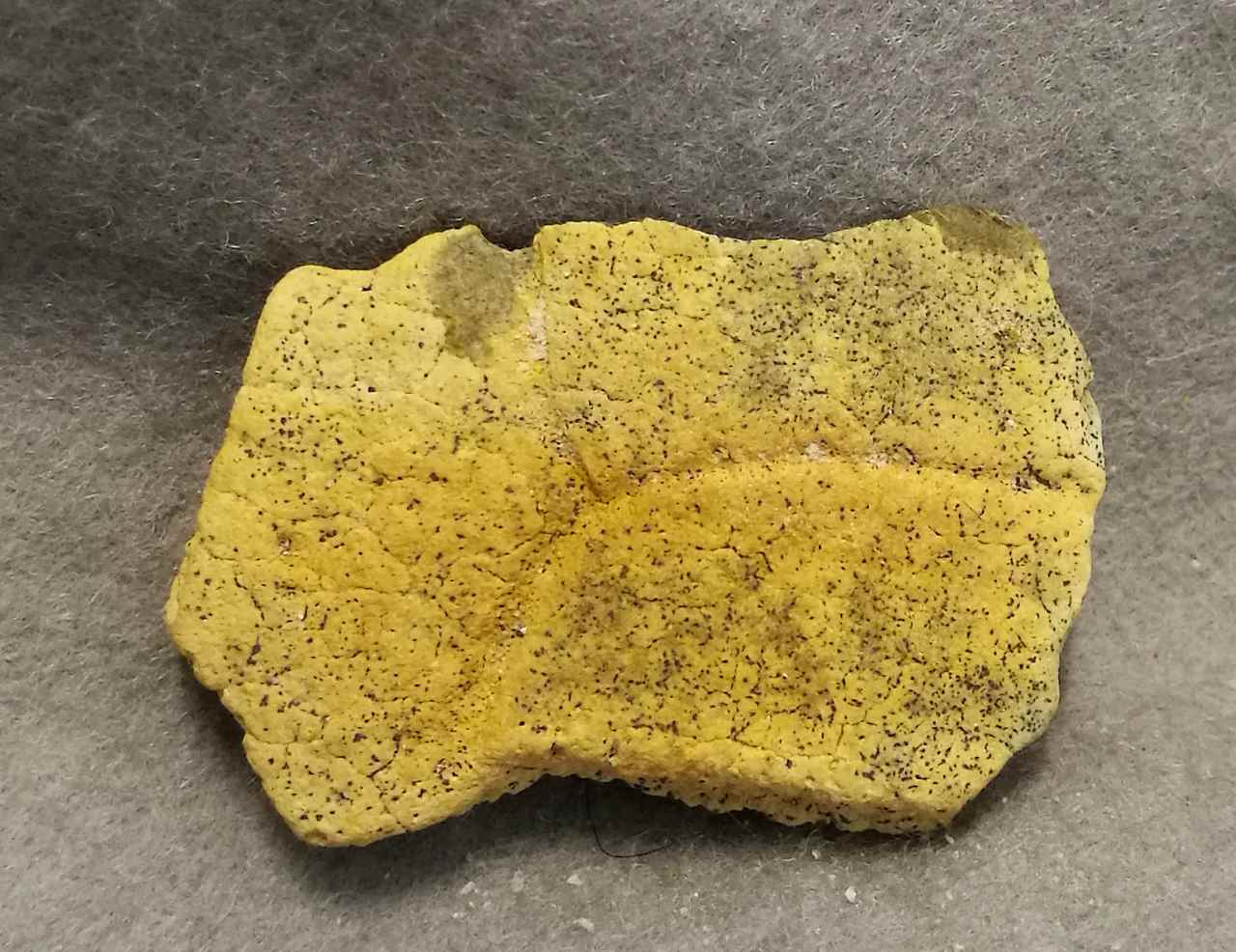 | Trionyx sp. #VHD2019
Turtle Carpache, Old Collection
M. Miocene, 11 million years old
Mecsek Mountain, Pecs,
Danitz-Puszta, Hungary
Size : 1.36 inch / 3.4 cm
Price: |
Mosasaurus cf. hoffmanni #VMH4080
Tooth in Matrix
Maastrichtian, Cretaceous 65.6 million years old
Khouribga, Morocco
Size : 1.8 inch / 6 cm
Price: | 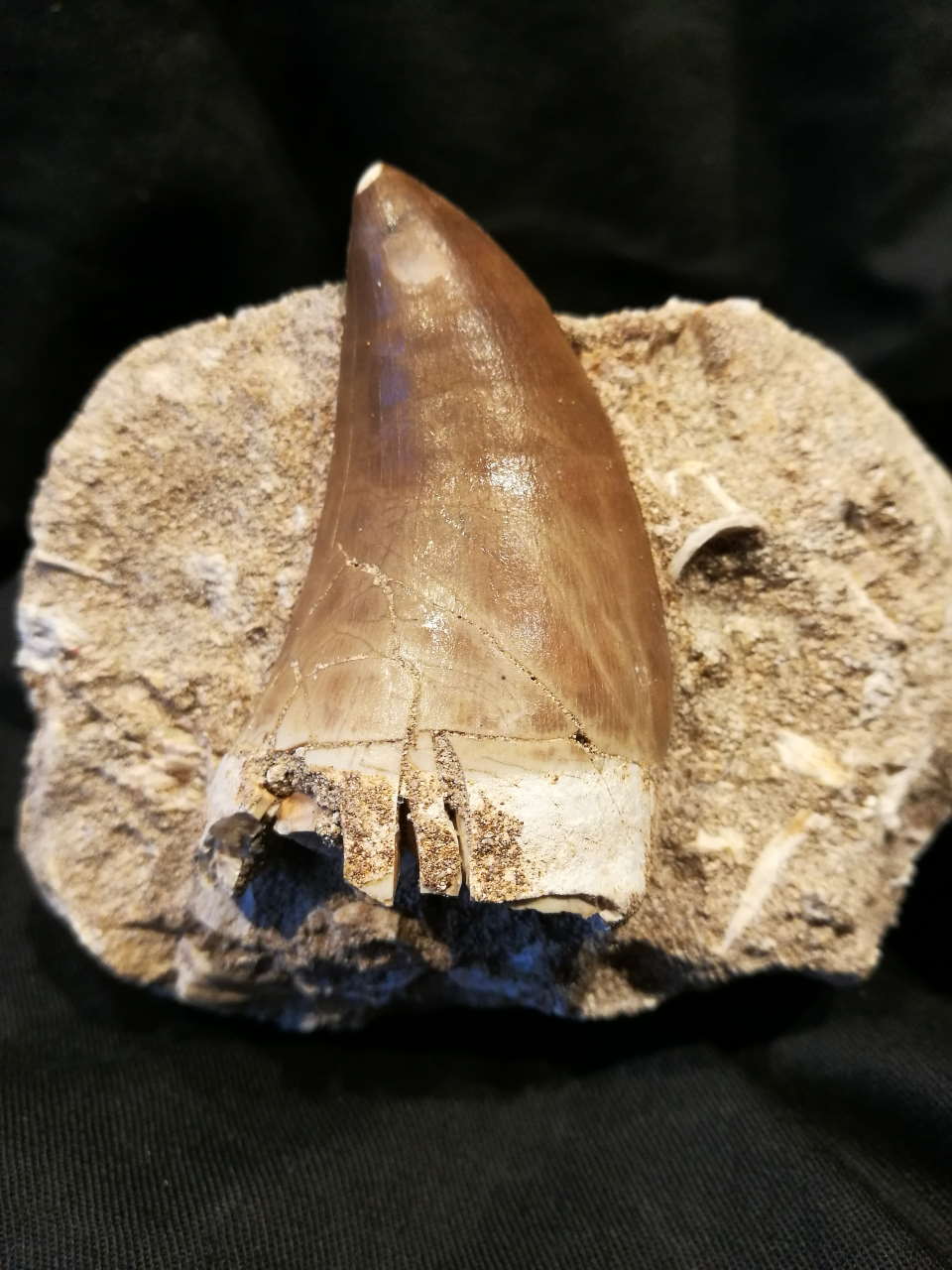 |
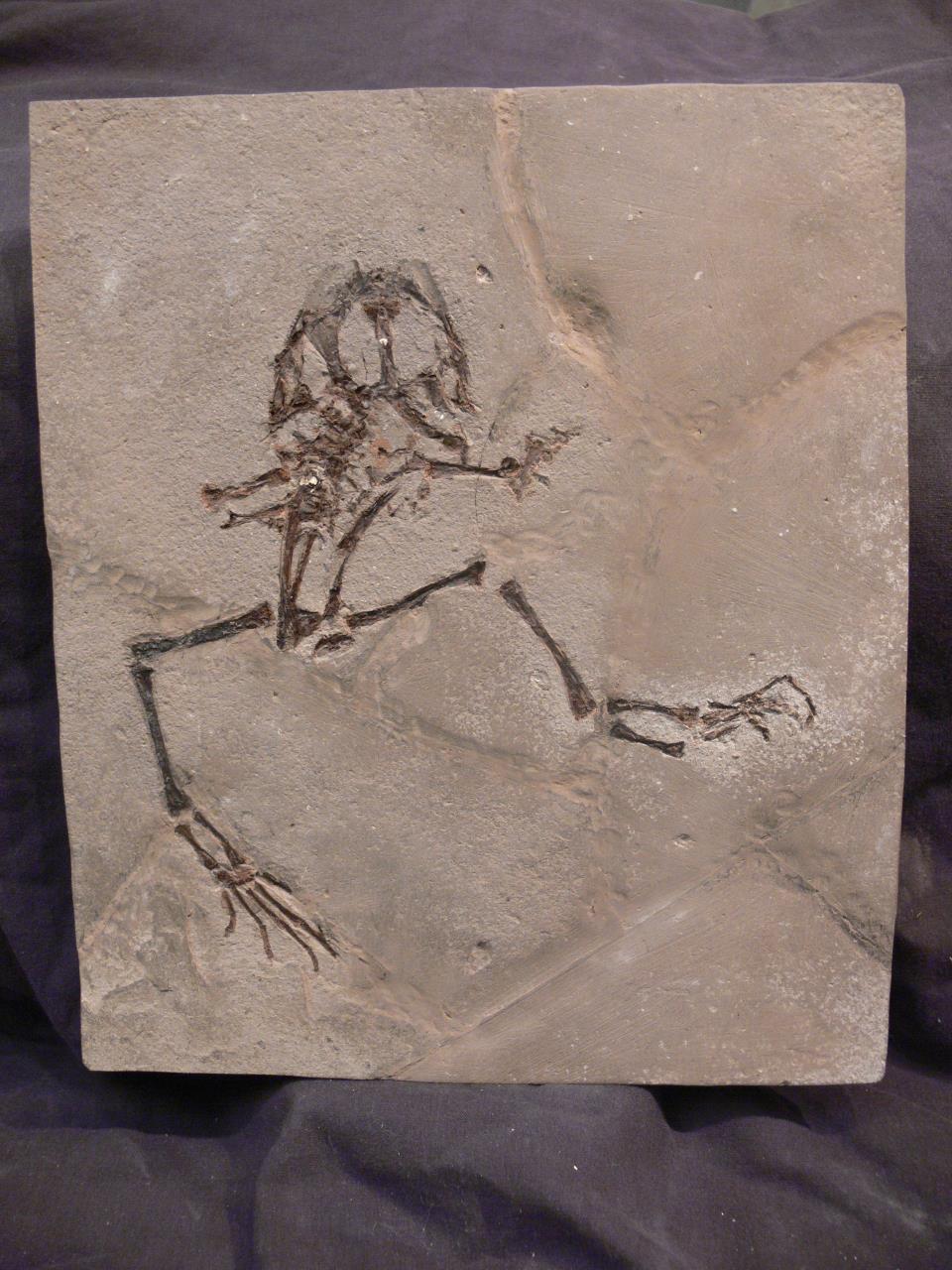 | 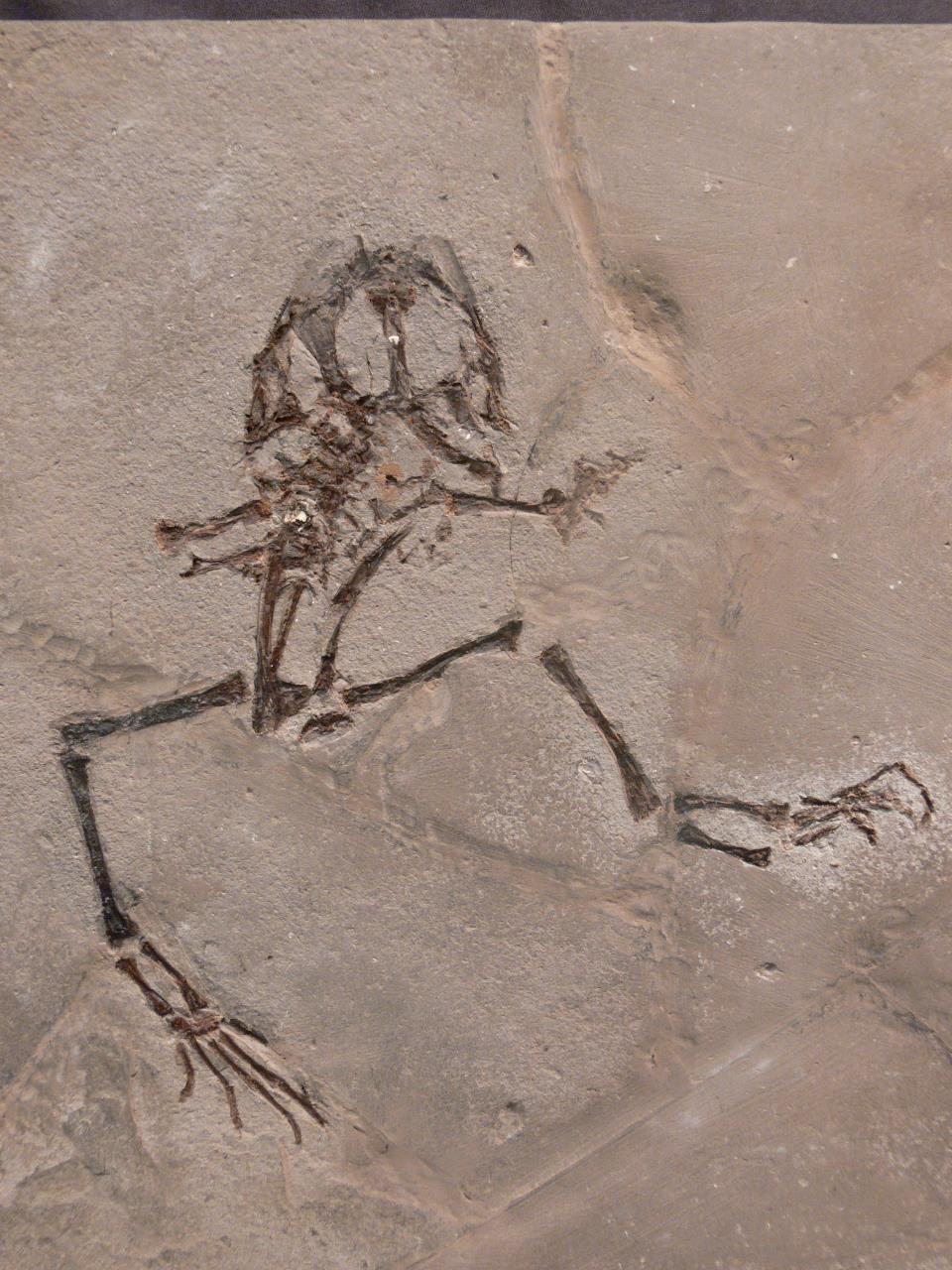 |
| Latonia cf. seyfriedi #VFO10110
Ultra Rare fossil Frog, Old Collection
Discoglossidae
U. Miocene, 13 million years old
Sweetwater chalk, Ohningen layers
Ohningen - Hegau, Germany
Matrix: 23.5 by 20 cm
Size span: 6.6 inch / 16.5 cm
Price: |
Unknown sp. #VCD9916
1 Dinosaur egg OLD COLLECTION
Campanian U. Cretaceous 75 million years old
Kaoguo formation
Xixia basin, Henan Province, China
Size span: 4 inch / 10 cm
Price: Euro | 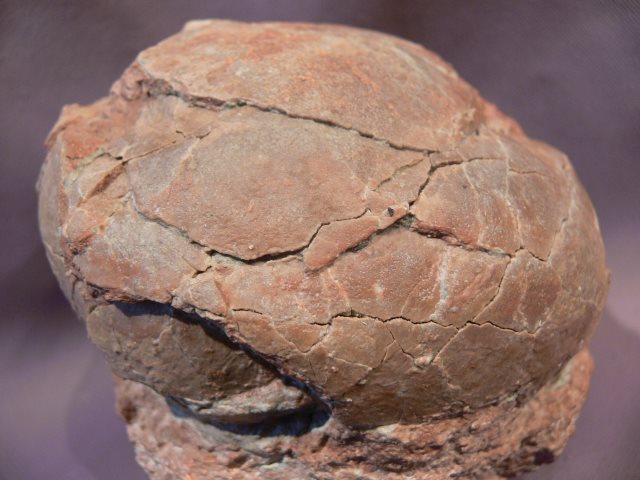 |
|
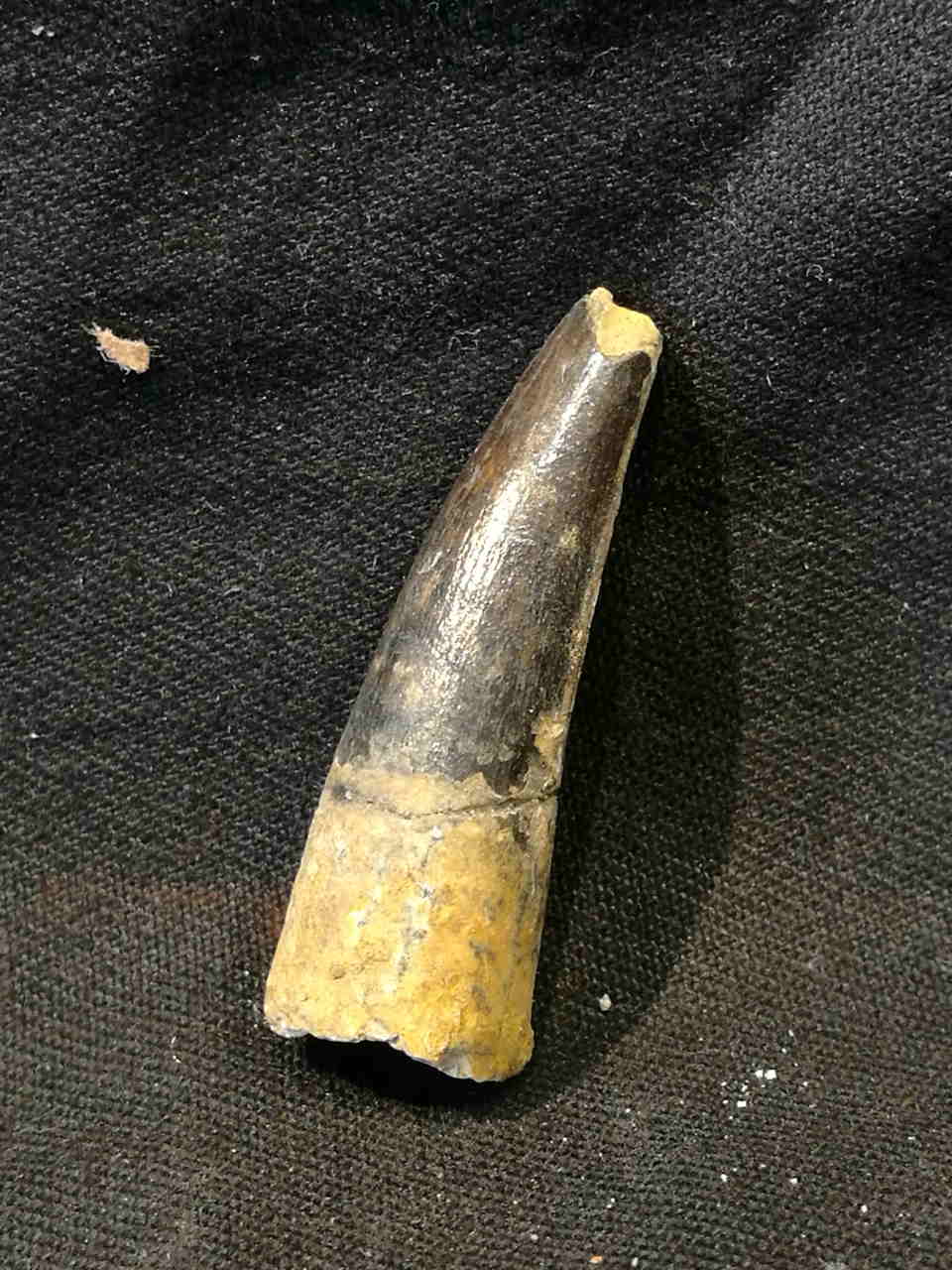
Spinosaurus spec. #VSM4108
Rare African Spinosaurus tooth,
Tegana Formation (Cenomanian)
Cretaceous 95 million years old
Kem Kem Beds, Morocco
Size: 1.28 inch / 3.2 cm
Price: Euro |
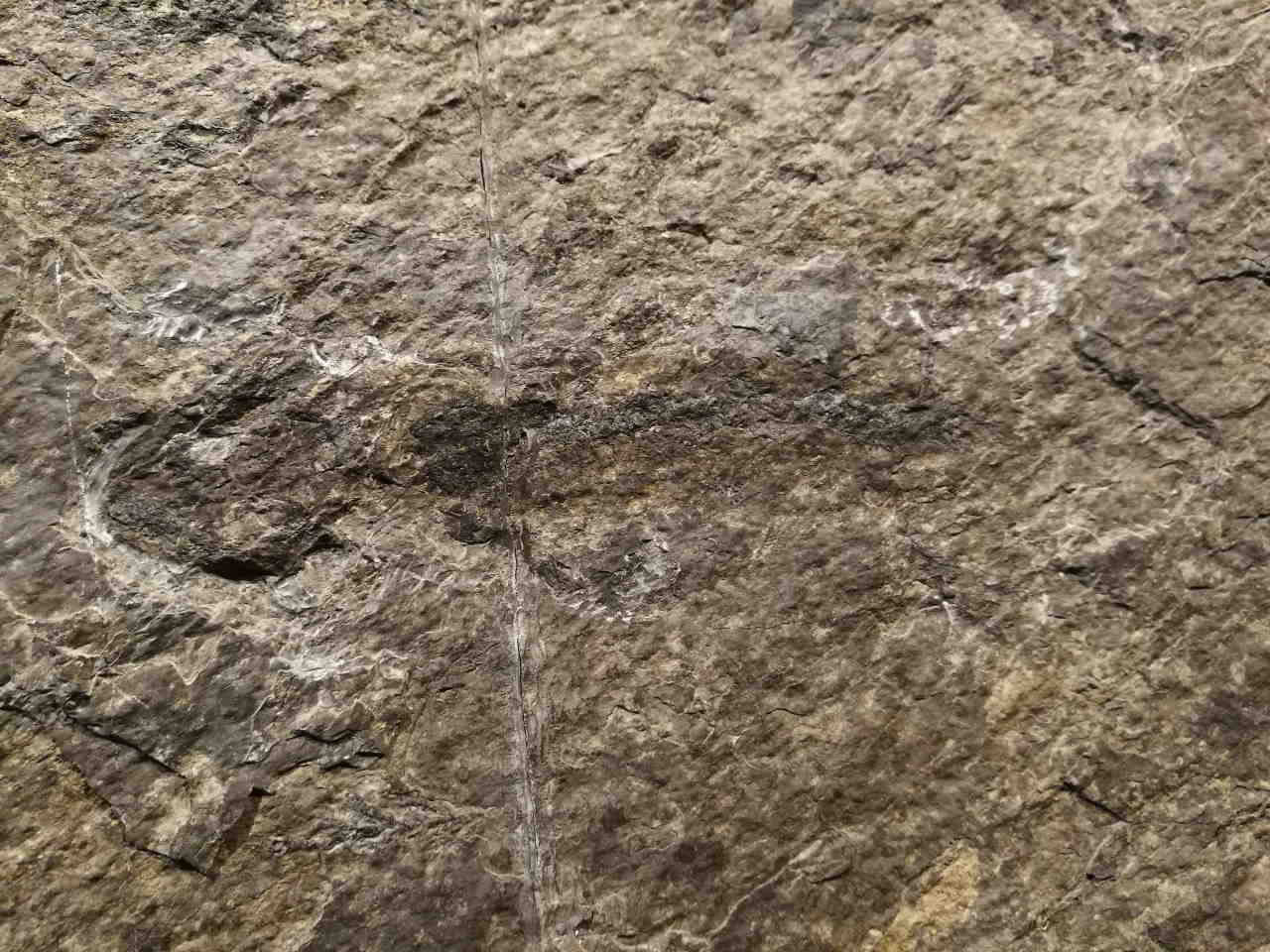
Melanerpeton humbergense #VDC9705
Nice Branchisaurid Amphibian
Old Collection, Altfund
Permian, Rotliegend, 285 million years old
Odernheim, Pfalz, Germany
Size span: 6.2 inch / 15.5 cm
Price:
|
|
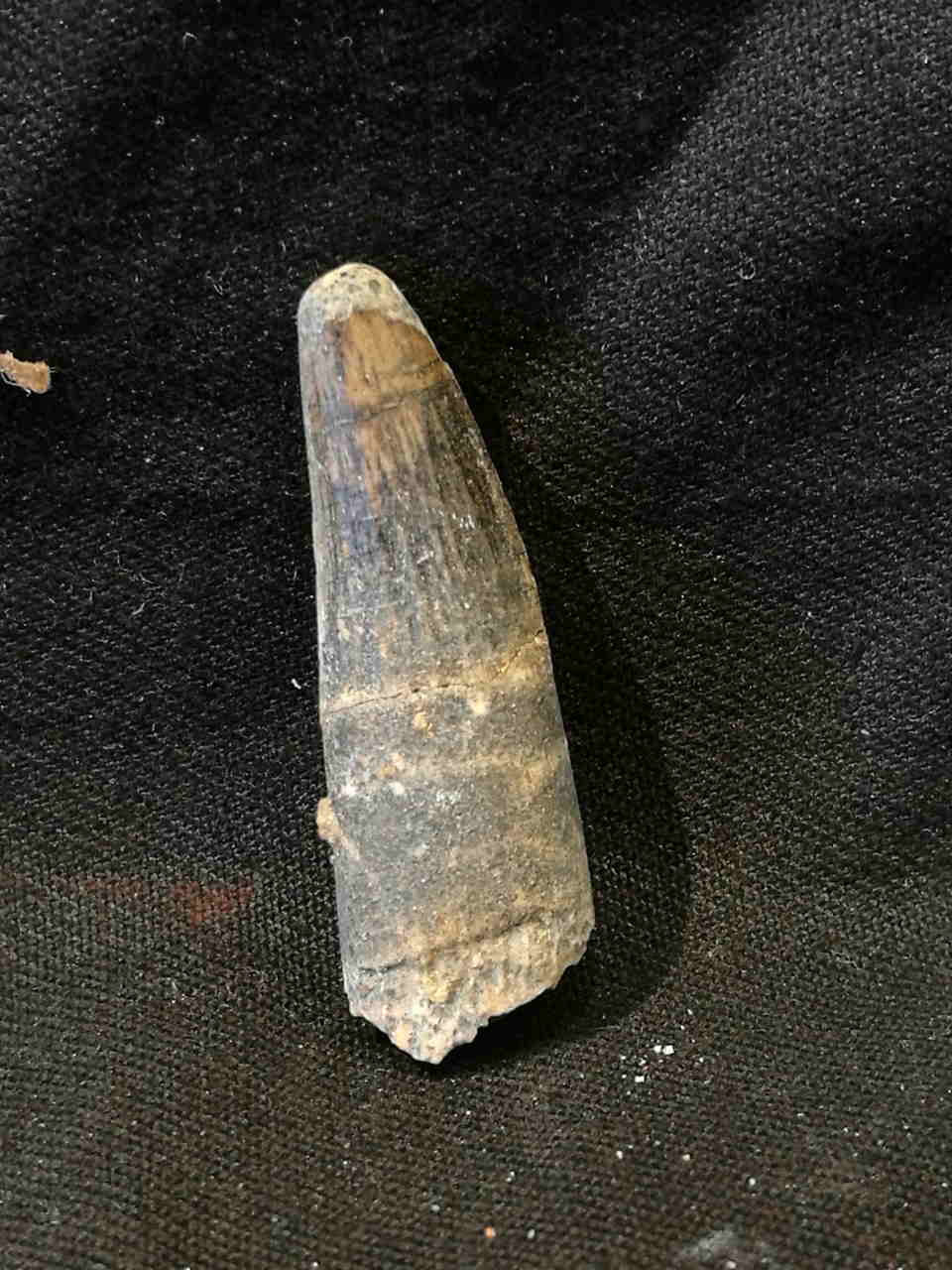
Spinosaurus spec. #VSM4107
Rare African Spinosaurus tooth,
Tegana Formation (Cenomanian)
Cretaceous 95 million years old
Kem Kem Beds, Morocco
Size: 1.2 inch / 3 cm
Price: Euro |
|
|
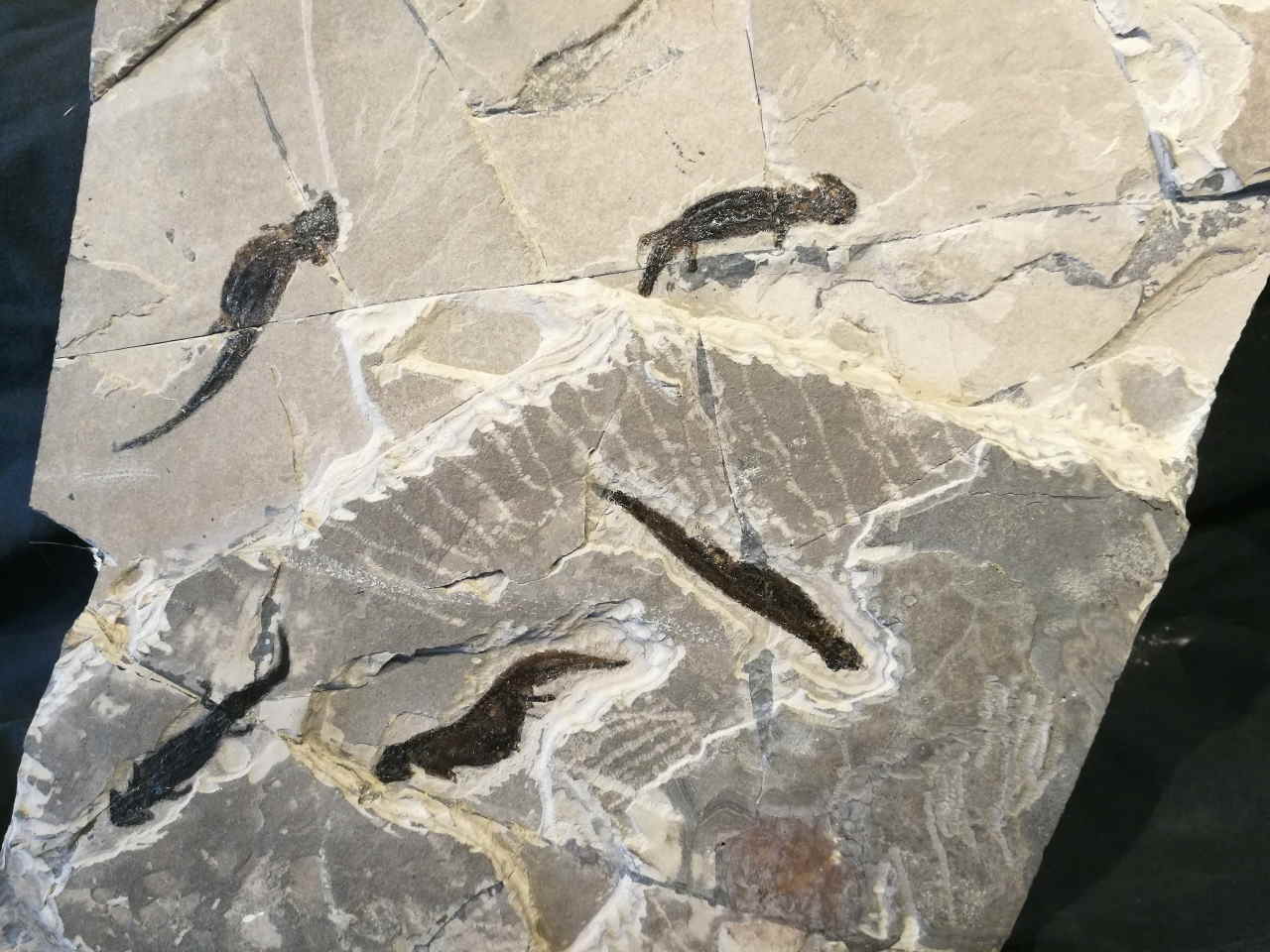
Melanerpeton humbergense #VDP4140
5 Nice Branchisaurid Amphibian
Old Collection, Altfund
Permian, Rotliegend, 285 million years old
Odernheim, Pfalz, Germany
Size biggest span: 3.4 inch / 8.5 cm
Size plate: 12.5 by 11 inch / 32 by 28 cm
Price: |
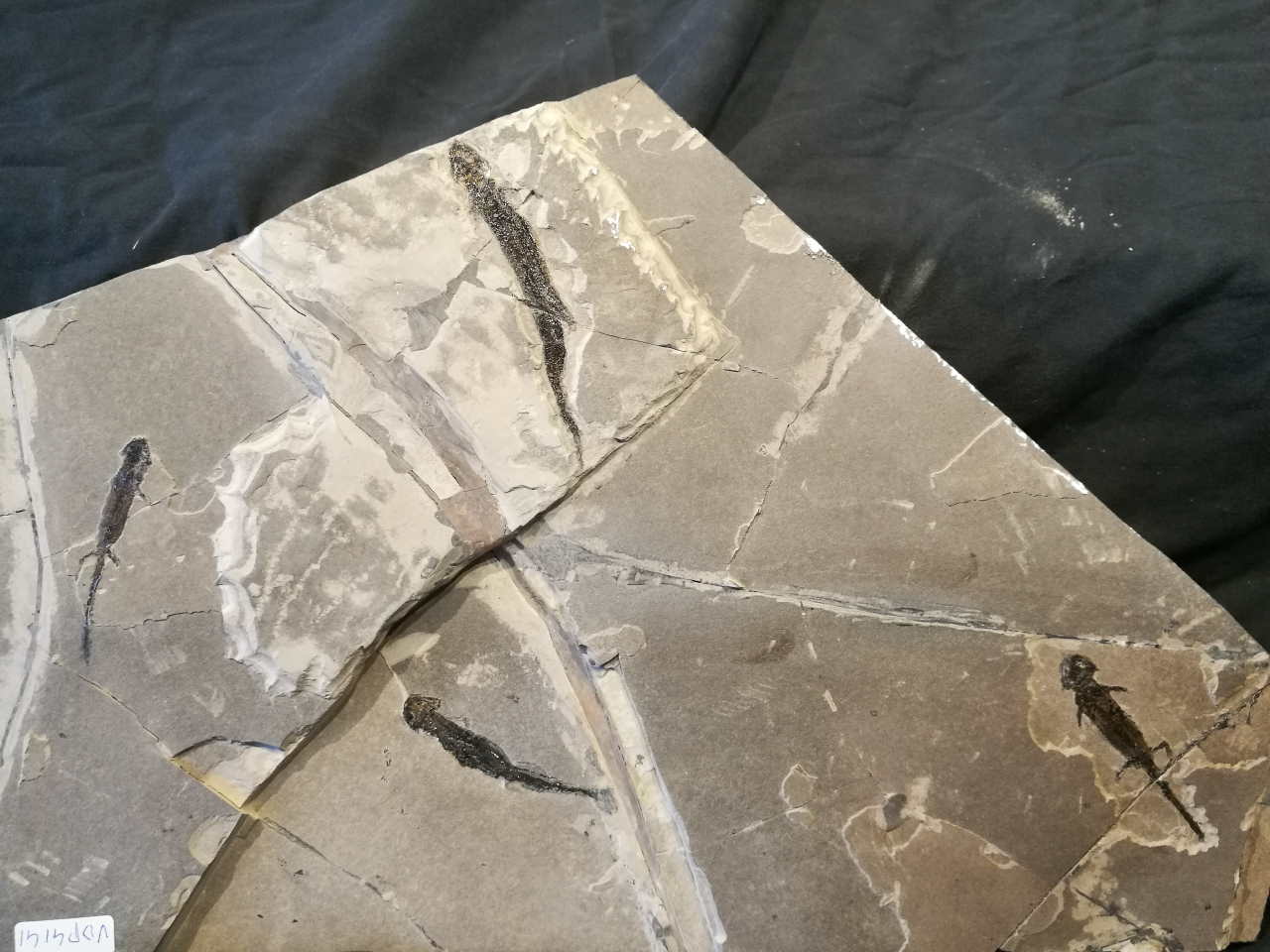
Melanerpeton humbergense #VDP4141
4 Nice Branchisaurid Amphibian
Old Collection, Altfund
Permian, Rotliegend, 285 million years old
Odernheim, Pfalz, Germany
Size biggest span: 4.4 inch / 11 cm
Size plate: 18.5 by 11 inch / 47 by 28 cm
Price: |
|

|
Batrachichnus delicatulus #VVM4224
Amphibian footprints.
Old collection
L. Permian, 280 million years old
Heuco Formation, New Mexico
Size matrix: 6.2 by 6.6 inch / 15.5 by 16.5 cm
Price: |
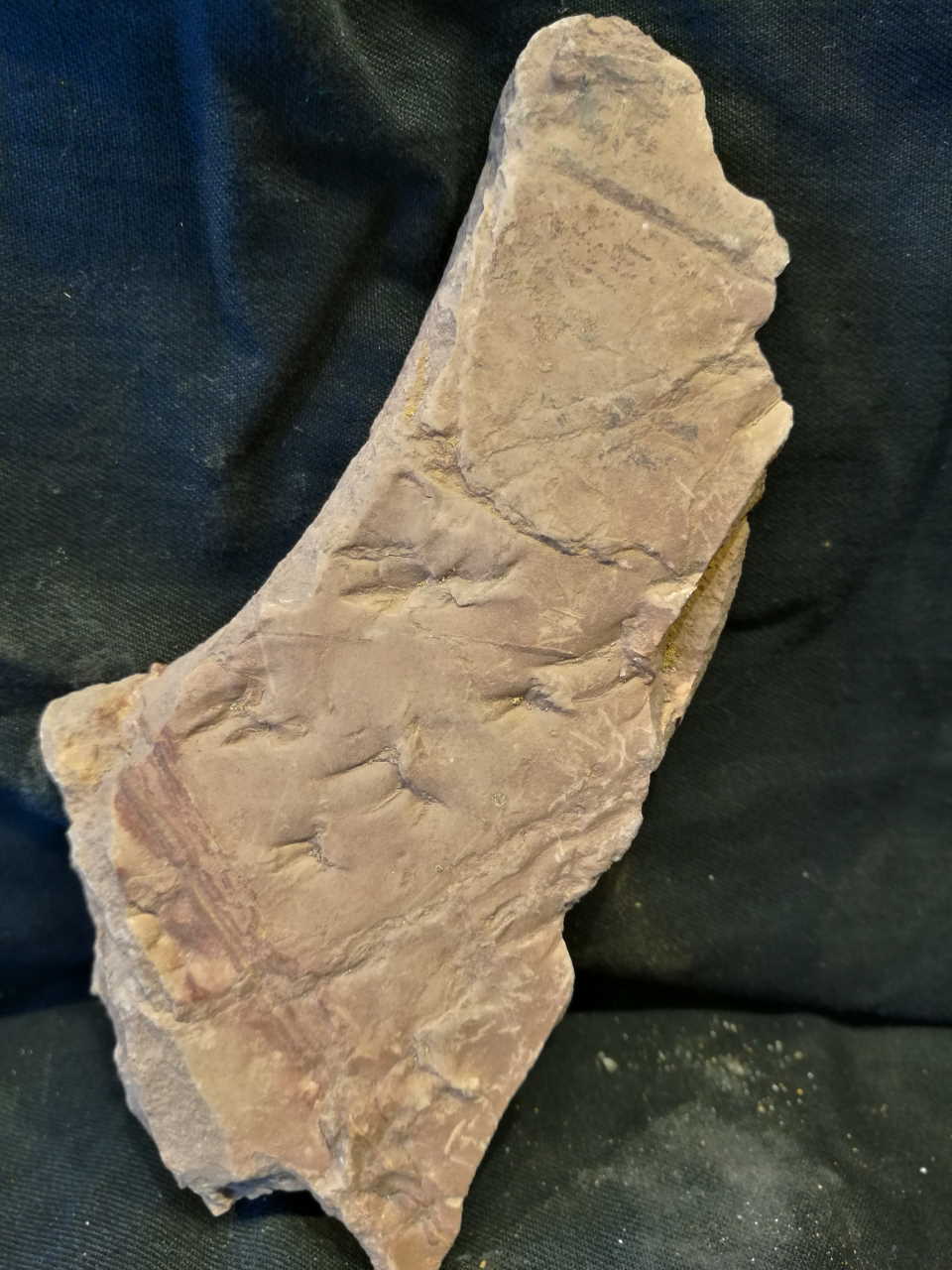
Batrachichnus delicatulus #VVM4225
Amphibian footprints track
Old collection
L. Permian, 280 million years old
Heuco Formation, New Mexico
Size matrix: 5 by 2.4 inch / 12.5 by 6 cm
Price: |
|

|
Dyrosaurus phosphaticus #VPG4230
Partial Gavial Crocodile jaw No restoration!
Late Cretaceous 66 million years old
Khouribga, Morocco
Size: 4.4 inch / 11 cm
Price:
|
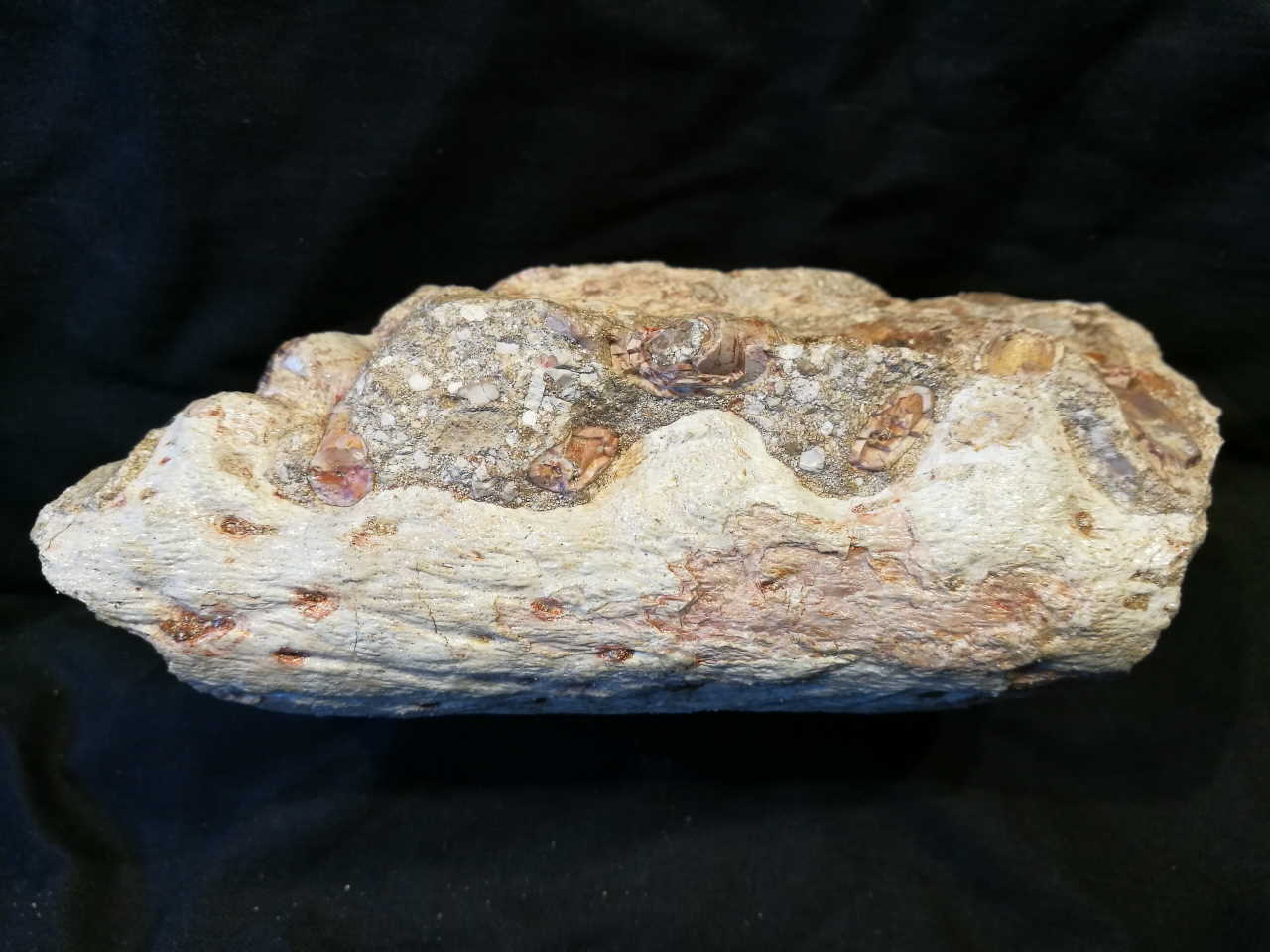
Dyrosaurus phosphaticus #VPG4231
Partial Gavial Crocodile jaw No restoration!
Late Cretaceous 66 million years old
Khouribga, Morocco
Size: 6.4 inch / 16 cm
Price: |
|
|
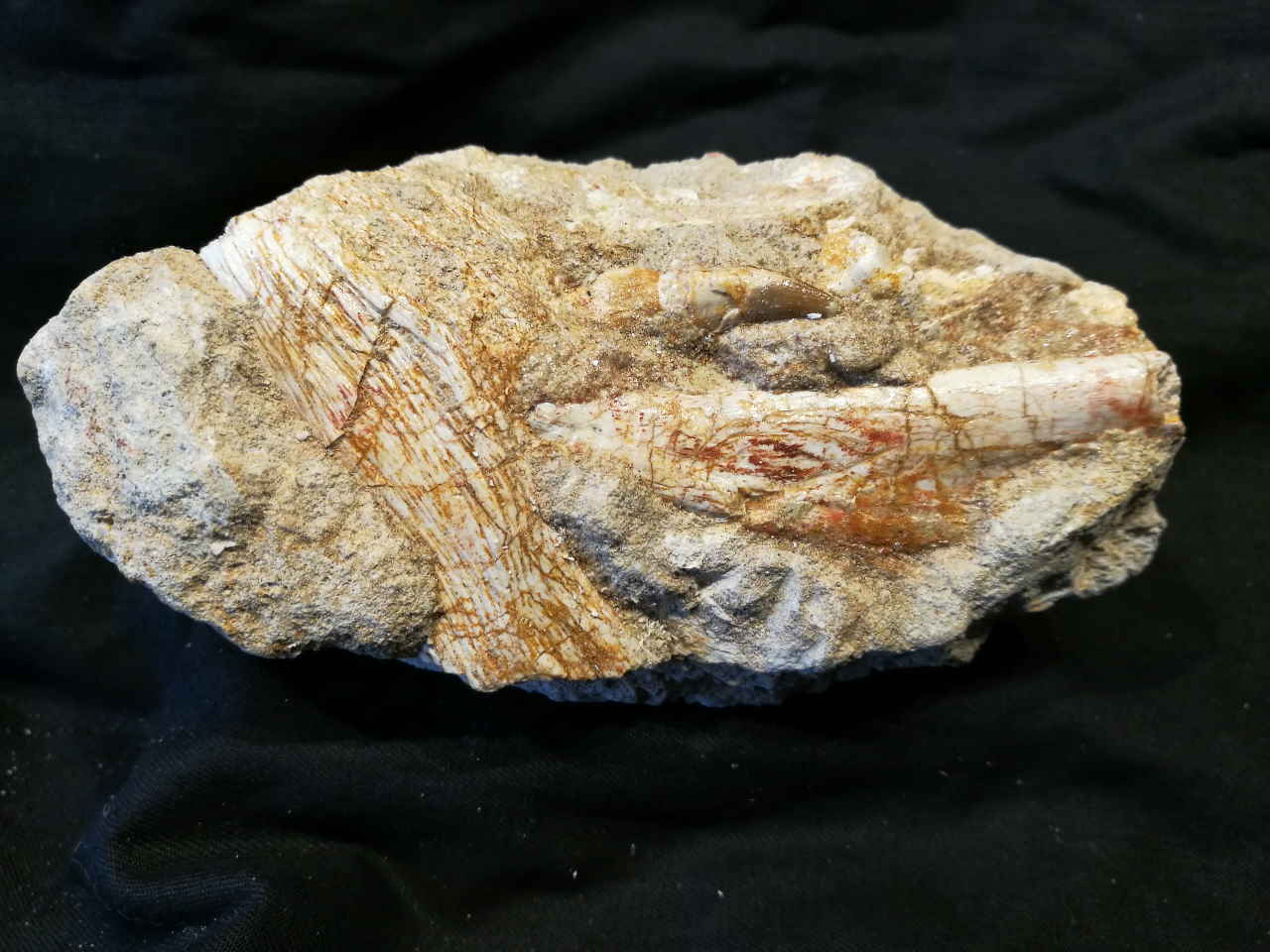
Dyrosaurus phosphaticus #VPG4232
Partial Gavial Crocodile jaw No restoration!
Late Cretaceous 66 million years old
Khouribga, Morocco
Size: 5.2 by 2.8 inch / 13 by 7 cm
Price: |
Dyrosaurus phosphaticus #VPG4233
Partial Gavial Crocodile jaw No restoration!
Late Cretaceous 66 million years old
Khouribga, Morocco
Size: 8.4 inch / 21 cm
Price: |

|
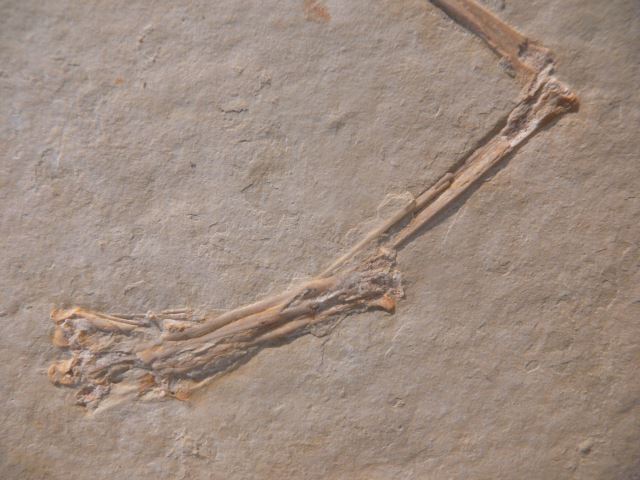 | 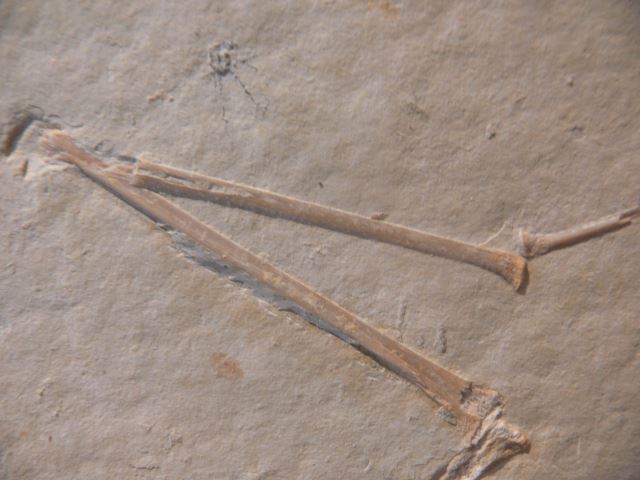 |
 | Pterodactylus kochi #VPW8431
Fine detailed Shorttail Pterosaur Wing. Above and left.
With middlehand bone, 1 small flightfinger 4 phalanges
Upper Jurassic, 148 Million years old
Eichstatt, Germany
Size plate: 20 by 20 cm
Size fossil span: 5.2 inch / 13 cm
Price:
Old collection. |
|
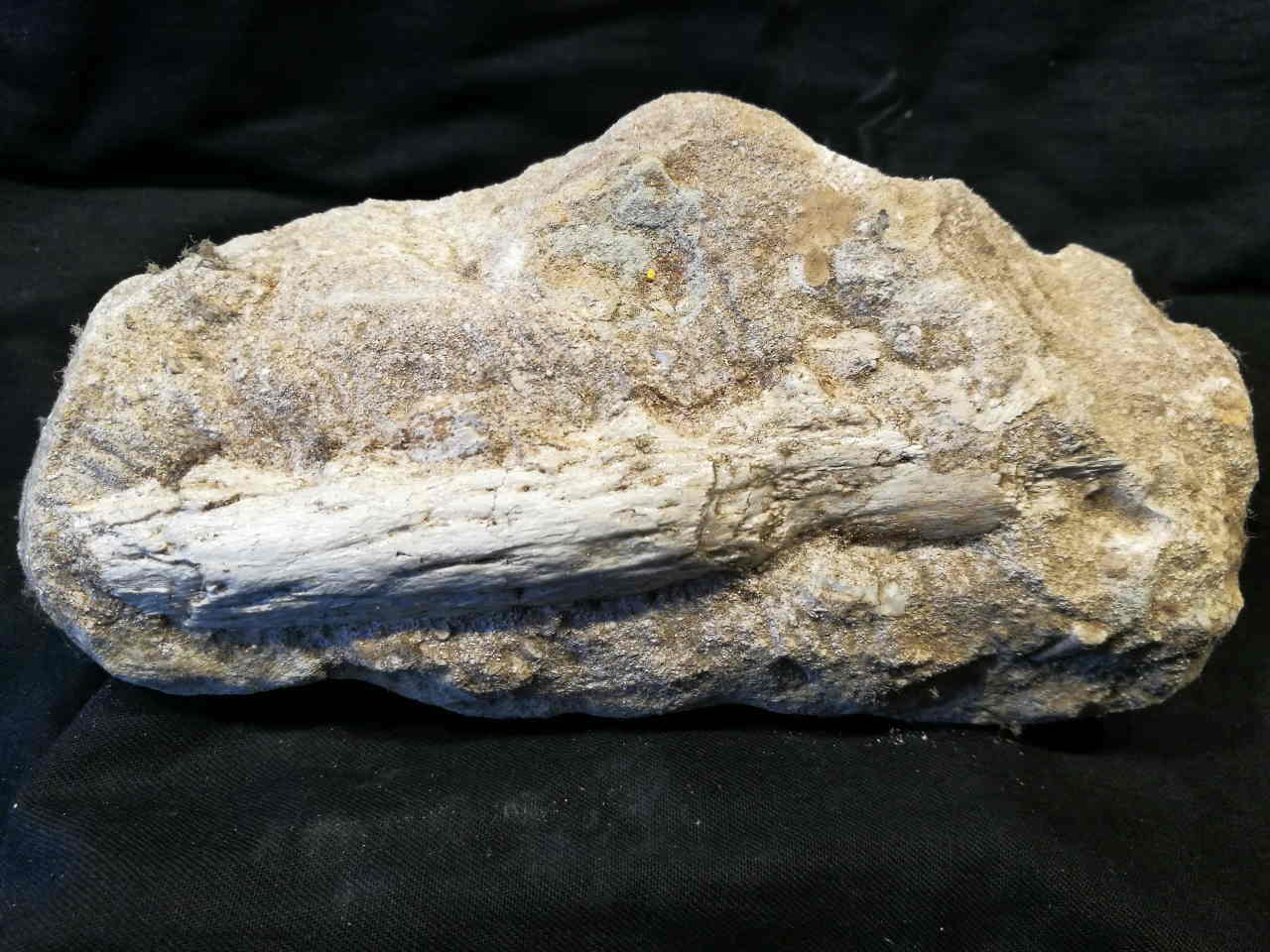
Dyrosaurus phosphaticus #VPG4234
Partial Gavial Crocodile jaw No restoration!
Late Cretaceous 66 million years old
Khouribga, Morocco
Size: 4 inch / 10 cm
Price: |
|
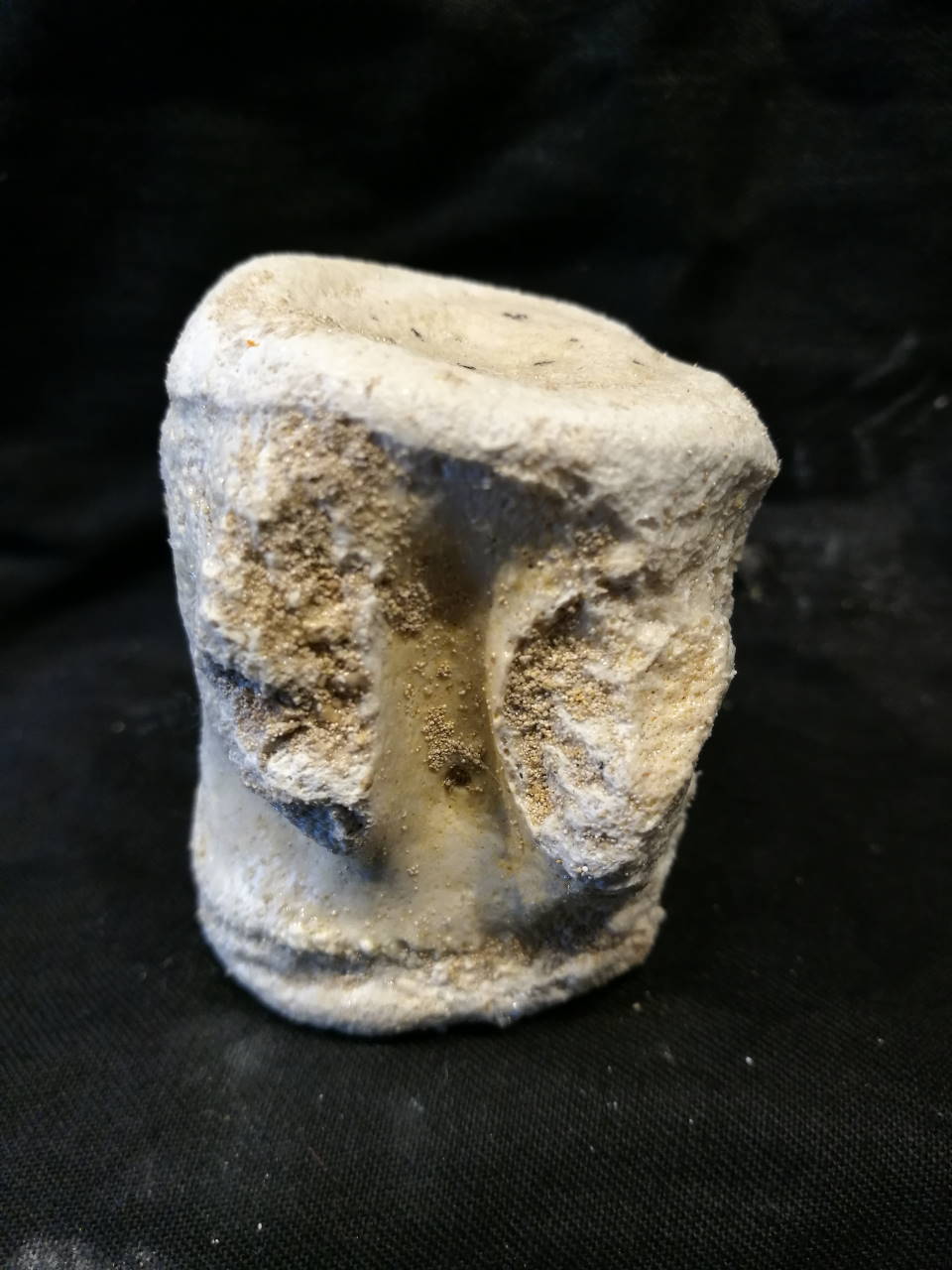
Dyrosaurus phosphaticus #VPV4236
Partial Gavial Crocodile Vertebra No restoration!
Late Cretaceous 66 million years old
Khouribga, Morocco
Size: 2 inch / 5 cm
Price: |
Dyrosaurus phosphaticus #VPG4237
Partial Gavial Crocodile Vertebra No restoration!
Late Cretaceous 66 million years old
Khouribga, Morocco
Size: 1.8 inch / 4.5 cm
Price: |
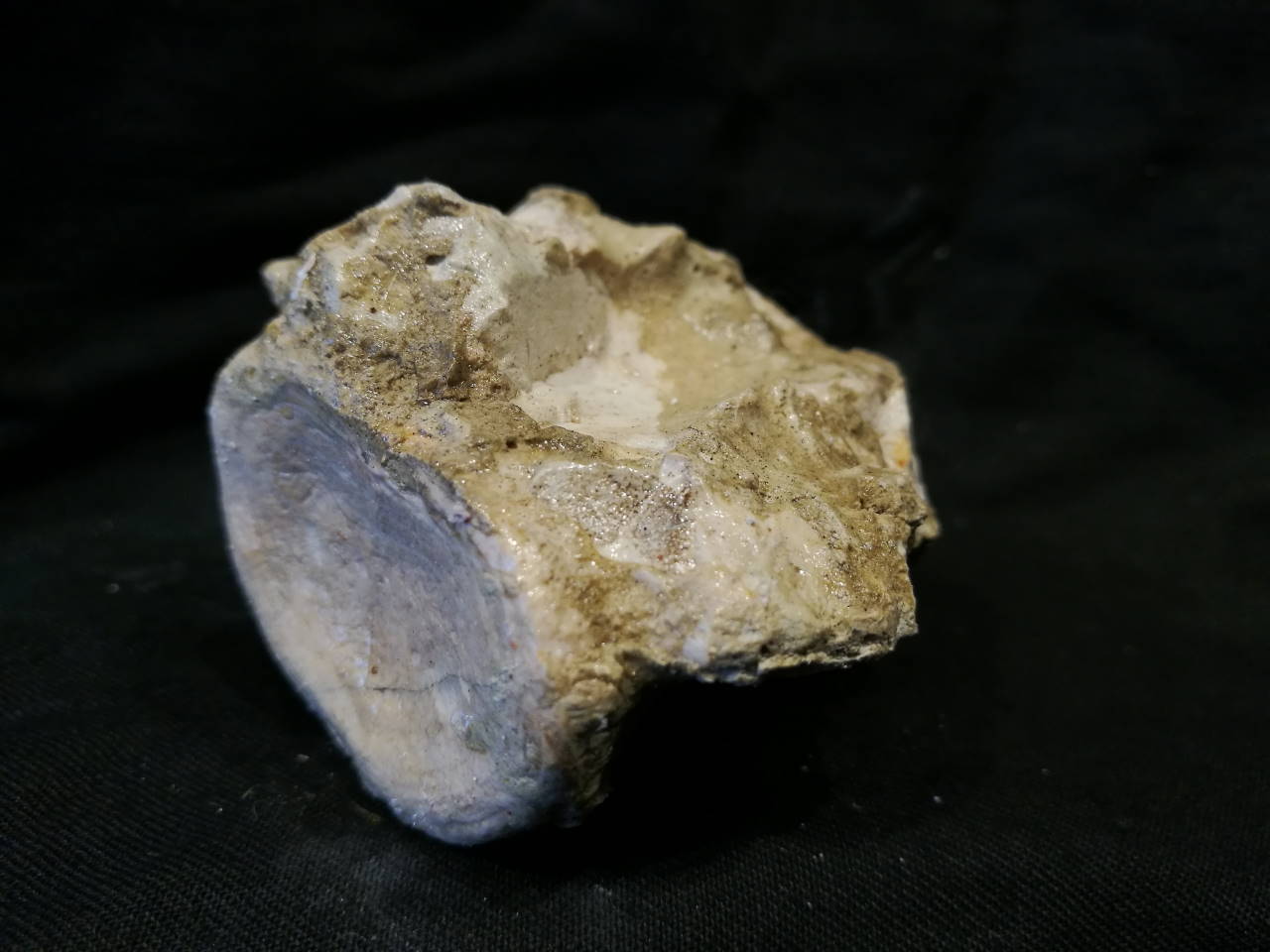
|

|
Mosasaurus sp. #VMV4238
Partial Vertebra
Maastrichtian, Cretaceous 65.6 million years old
Khouribga, Morocco
Size : 3.2 inch / 8 cm
Price: Euro |
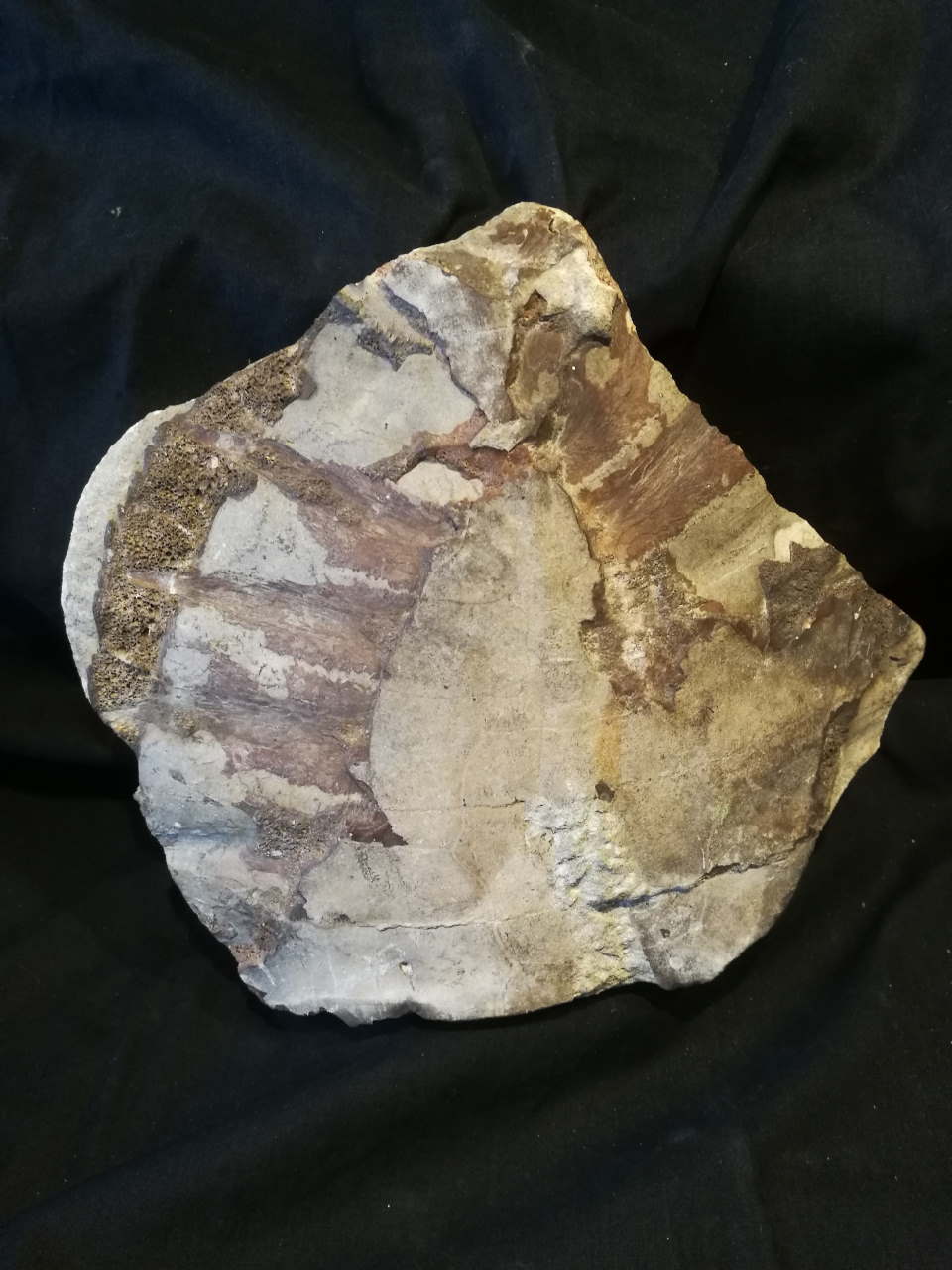
|
Unknown Turtle species #VSM4505
Very Rare specimen!!
L. Cretaceous, Barremian, 126 Million years old
Imessouane, Morocco
Size: 9.2 by 9.6 inch / 23 by 24 cm
Price: |
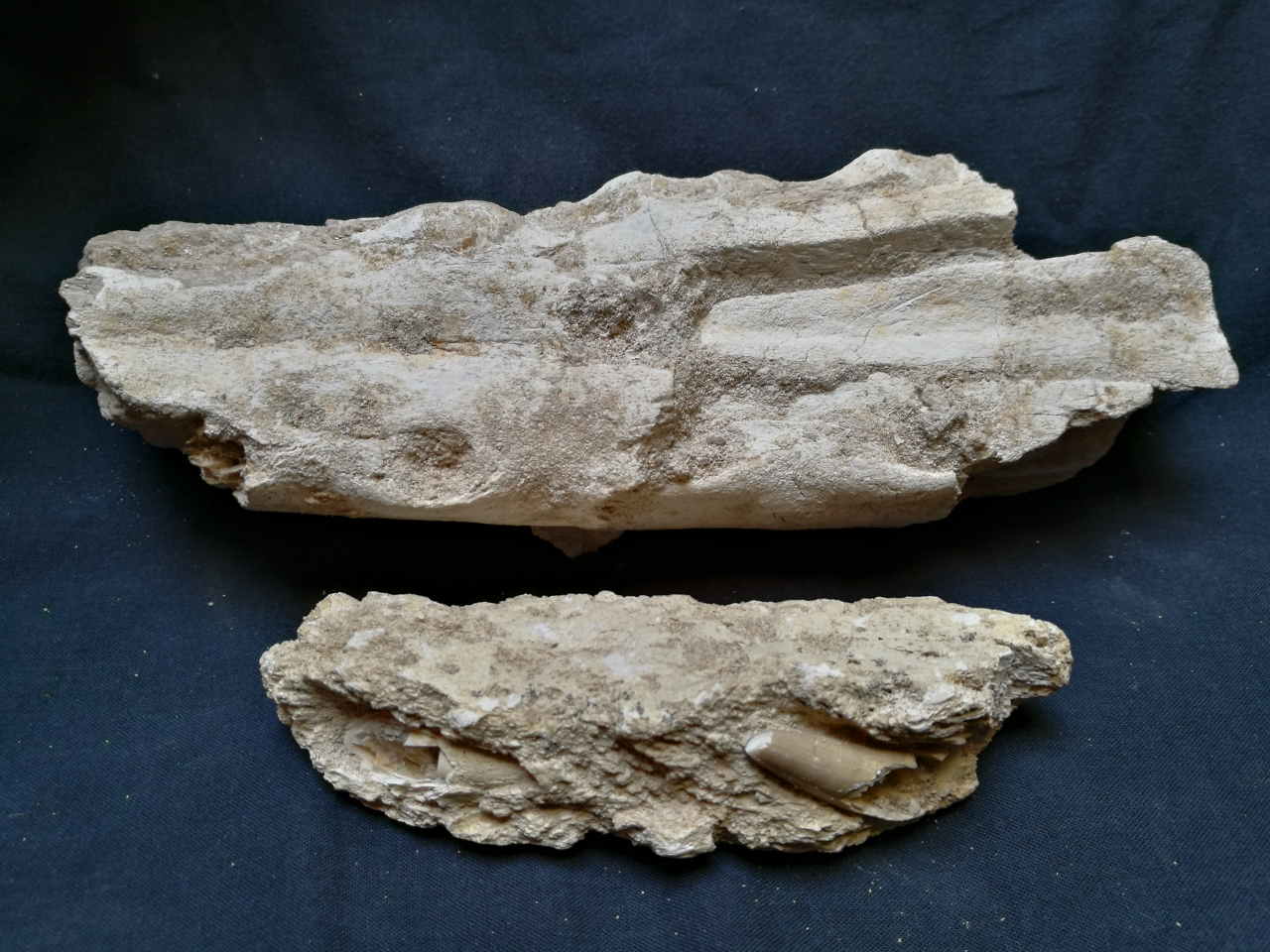
Dyrosaurus phosphaticus #VKP4442
Partial Gavial Crocodile jaw No restoration!
Late Cretaceous 66 million years old
Khouribga, Morocco
Size: 7.8 inch / 19.5 cm
Price: |
|

|
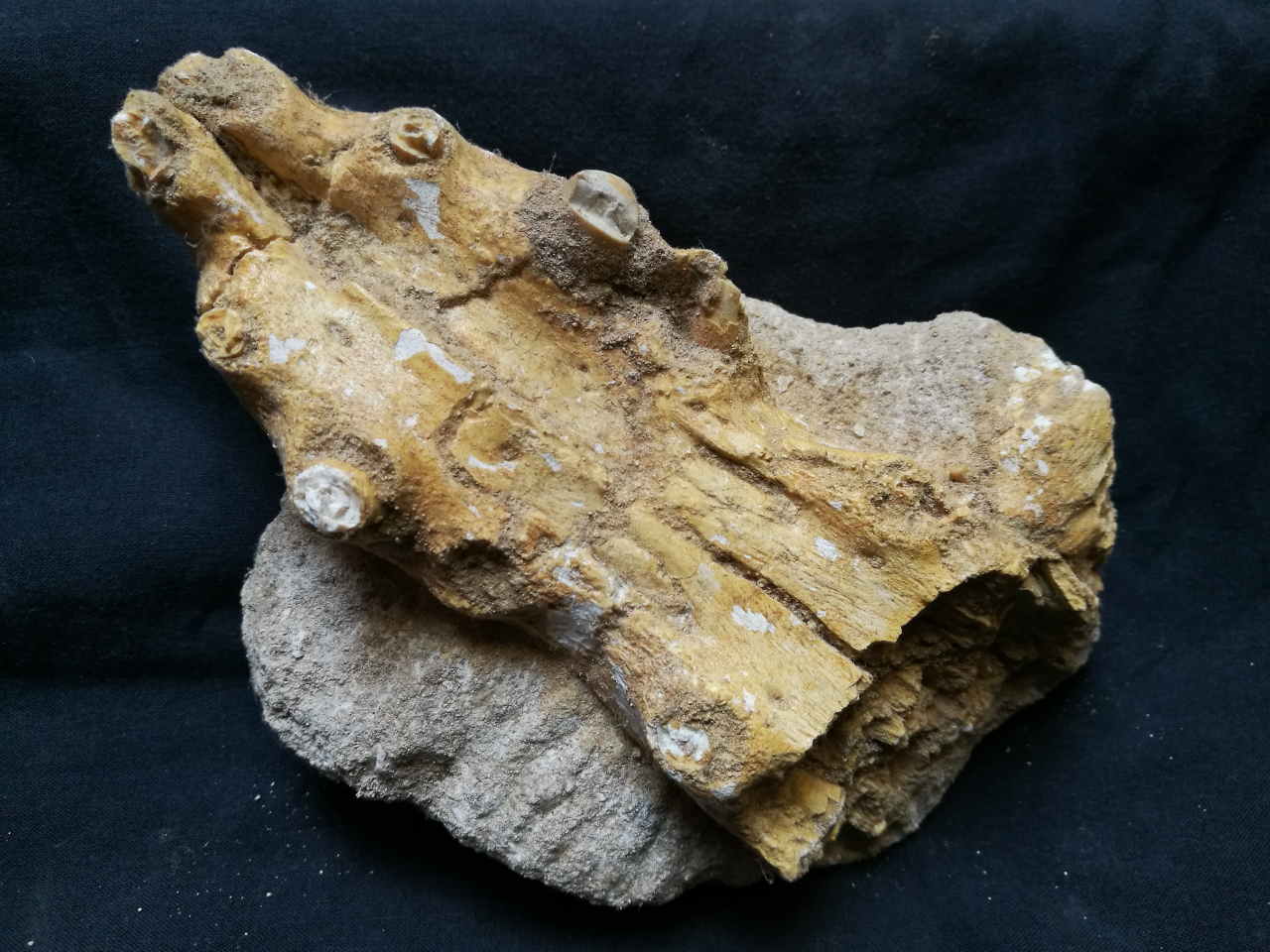
Dyrosaurus phosphaticus #VKP4443
Partial Gavial Crocodile jaw No restoration!
Some repair
Late Cretaceous 66 million years old
Khouribga, Morocco
Size: 14.6 inch / 37 cm
Price: |
Dyrosaurus phosphaticus #VKP4444
Partial Gavial Crocodile jaw No restoration!
Late Cretaceous 66 million years old
Khouribga, Morocco
Size: 6 inch / 15 cm
Price: |
|
 | Left Pterosaurus drawing is republished from:
Hone, David W. E. 2012. Fossil Focus: Pterosaurs. Palaeontology Online, Volume 2, Article 9, 1-9.
http://www.palaeontologyonline.com/
Please see below for actual items!
|
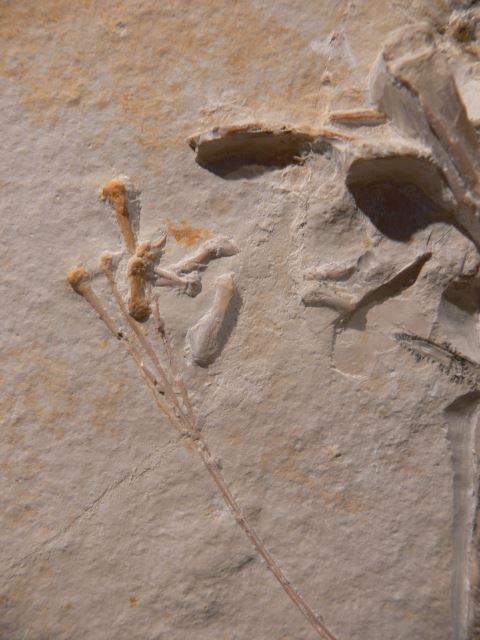 | 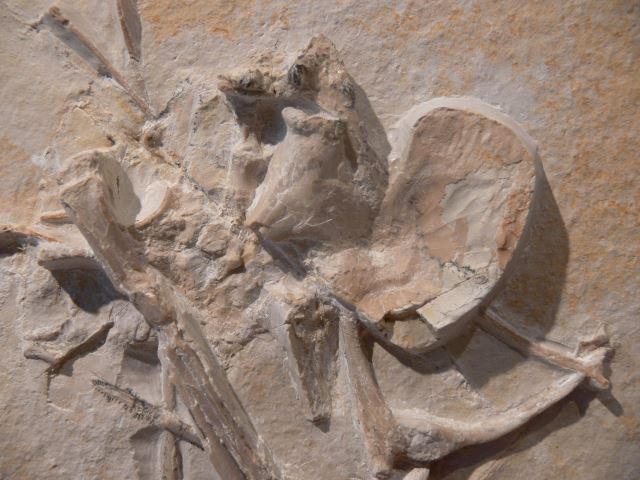 |
Pterosaur wing #VPW8420
Extreme rare Undescribed species
Fine detailed Shorttail Pterosaur Wing. Above and right.
With rare partial vertebra column, sternum and flightfingers!
Upper Jurassic, 148 Million years old
Eichstatt, Germany
Size plate: 37 by 35 cm
Size fossil span: 7.2 inch / 18 cm
Price:
Old collection. | 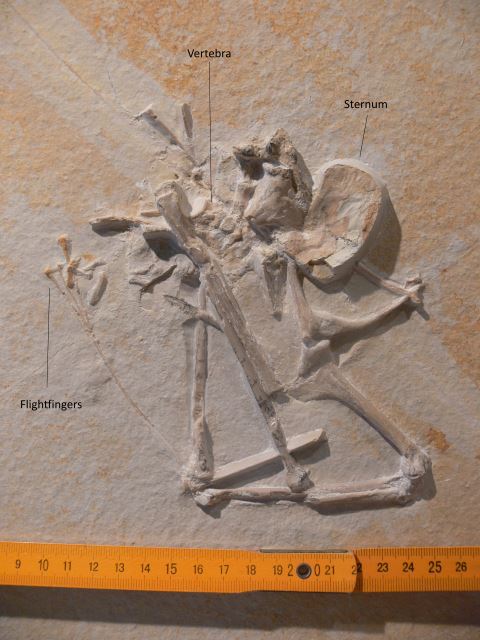 |
 | Rhamphorhynchus muensteri #VPW8424
Fine detailed Longtail Pterosaur Wing. Above and left.
With lower arm bones, 2 flightfinger claws, 4 phalanges and rare Flightskin preservation!
Upper Jurassic, 148 Million years old
Eichstatt, Germany
Size plate: 33 by 15.5 cm
Size fossil span: 10.8 inch / 27 cm
Price:
Old collection. |
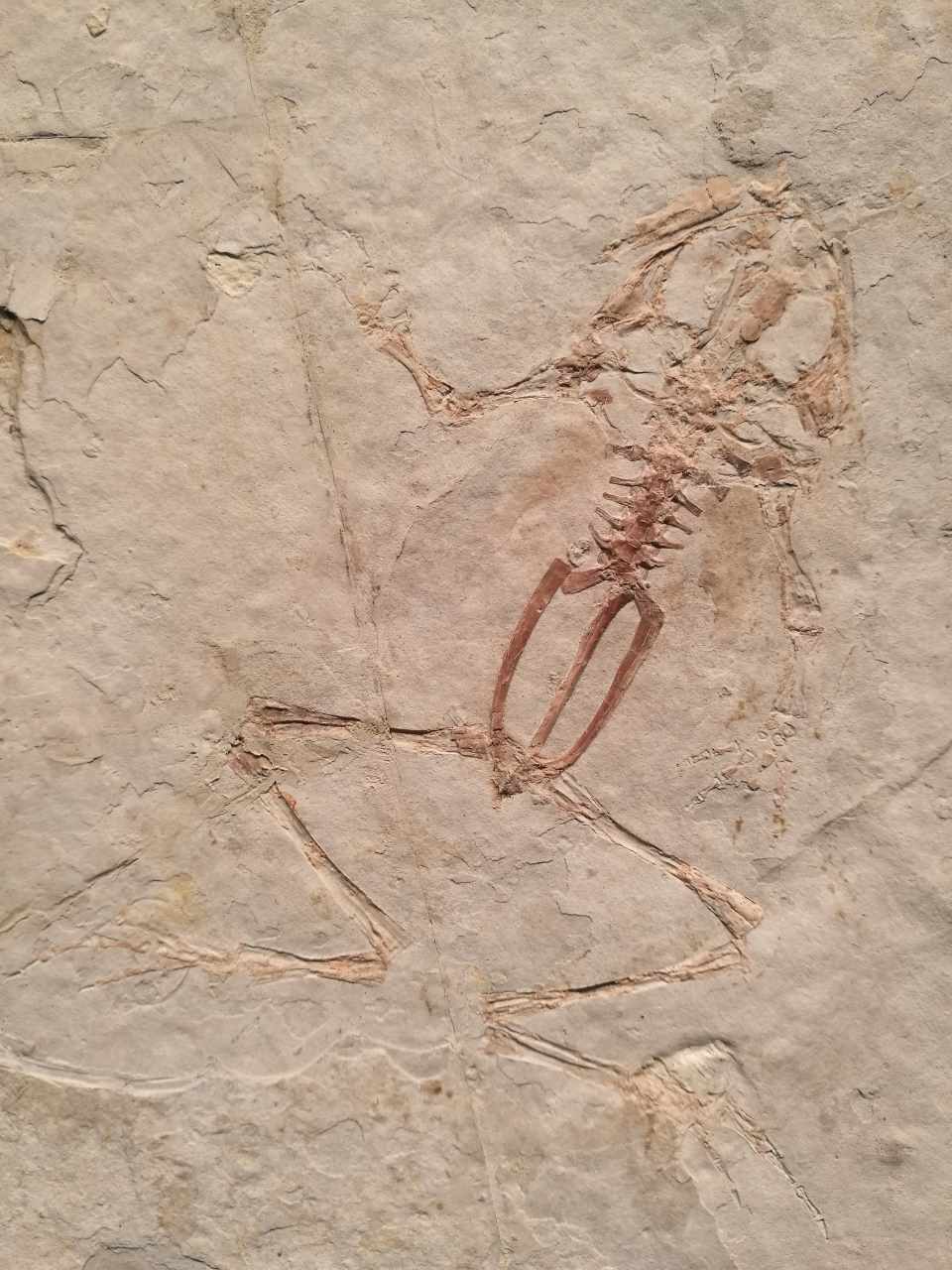 | 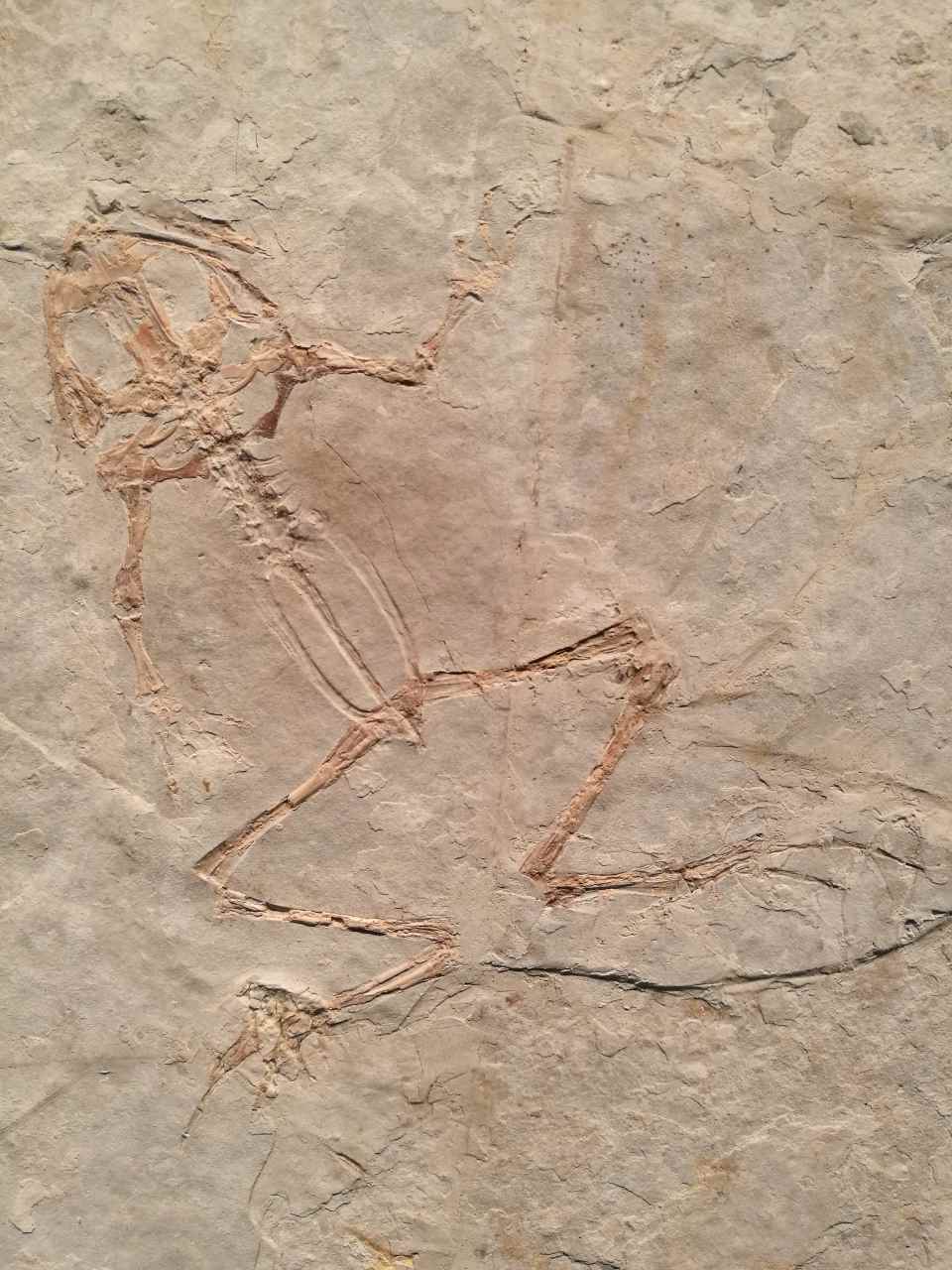 |
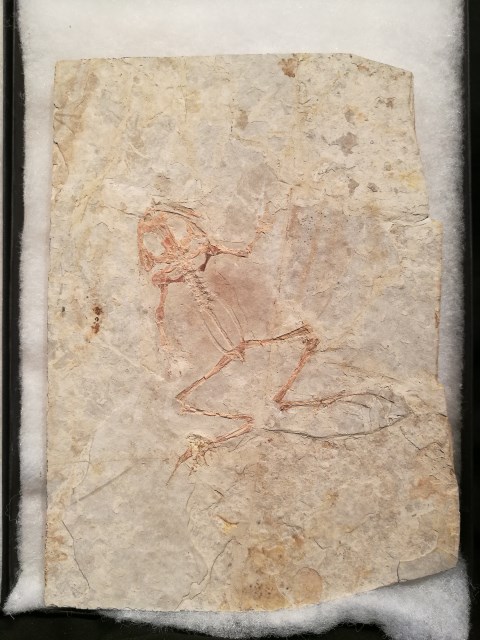
Liobactracus graduai #VLG3535
Ultra Rare fossil Positive Negative Frog,
Old Collection
U. Jurassic-L.Cretaceous, 145 million years old
Lower Yixian Formation
Beipiao Lioning, China
Matrix: 26 by 18 cm and 25 by 18 cm
Size span: 4.8 inch / 12 cm
Price:
|   |
 | 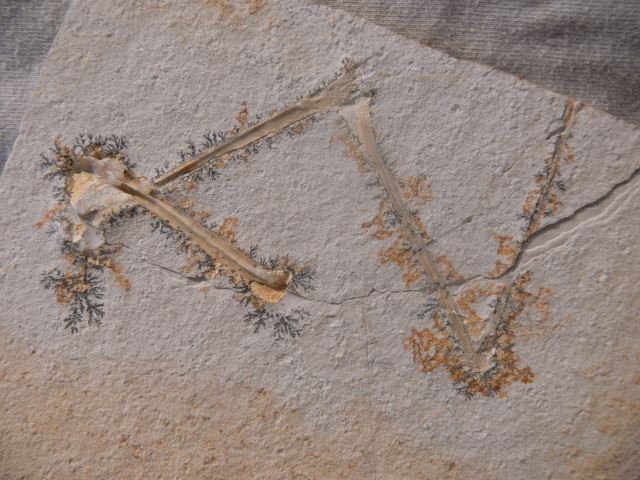 |
Rhamphorhynchus longicaudus #VPW8428
Fine detailed Longtail Pterosaur Wing Pos/Neg. Above and right.
With lower arm bones, middlehand bones, 3 small flightfingers and 3 phalanges
Upper Jurassic, 148 Million years old
Eichstatt, Germany
Size plates: 14 by 12.5 cm and 14 by 8 cm
Size fossil spans: both 2.8 inch / 7 cm
Price for both: Euro
Old collection. | 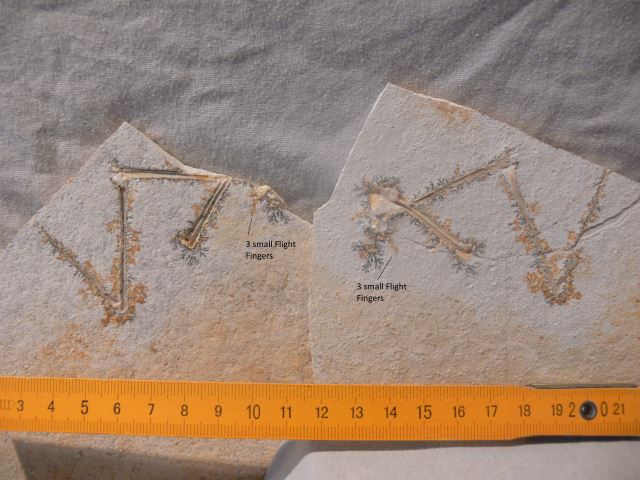 |
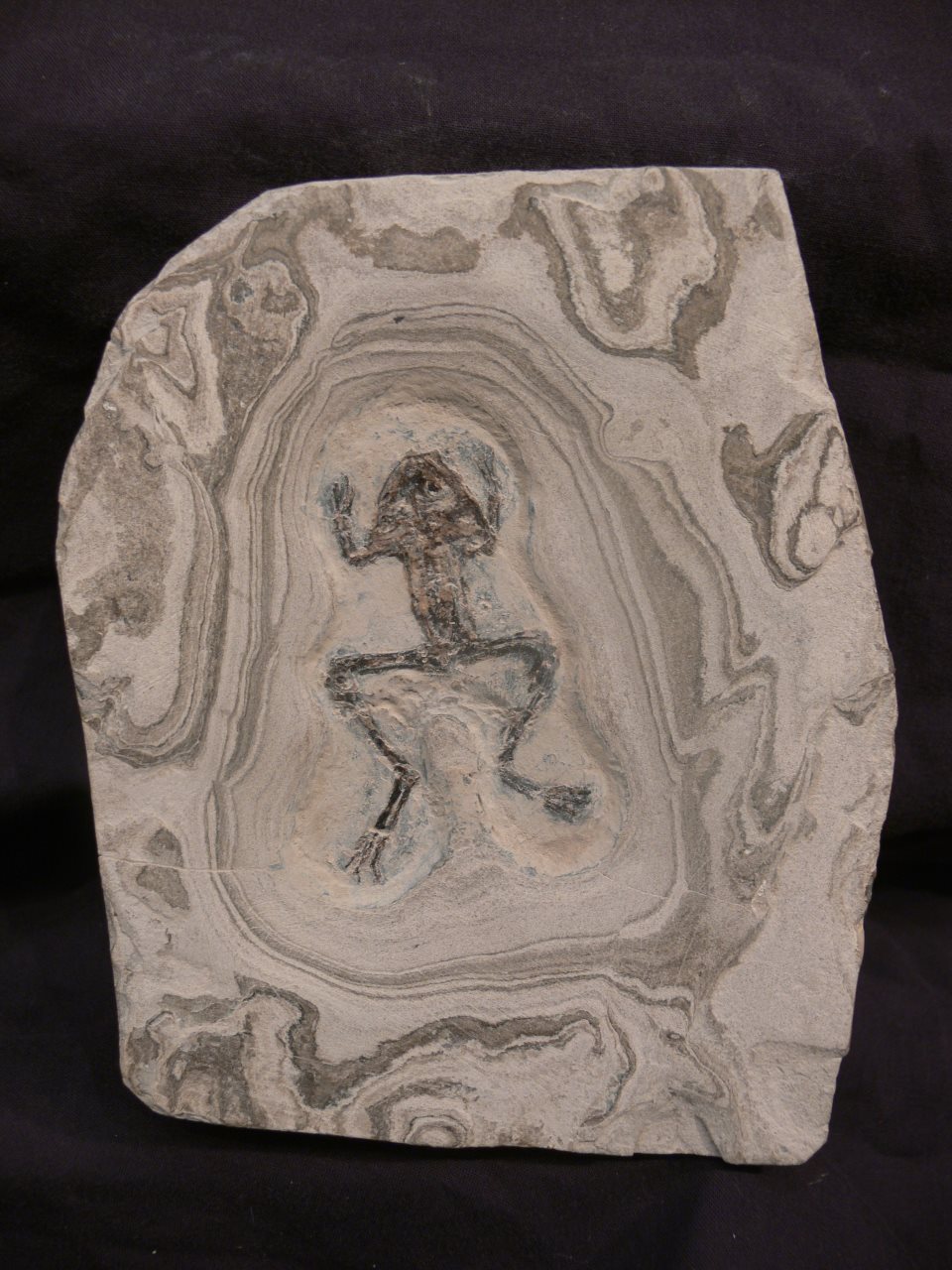 | Latonia cf. seyfriedi #VFD10112
Rare fossil Frog, Old Collection Discoglossidae
U. Miocene, 13 million years old
Sweetwater chalk, Ohningen layers
Ohningen - Hegau, Germany
Very nice matrix: 15 by 12 cm
Size : 2.16 inch / 5.4 cm
Price: |
 | 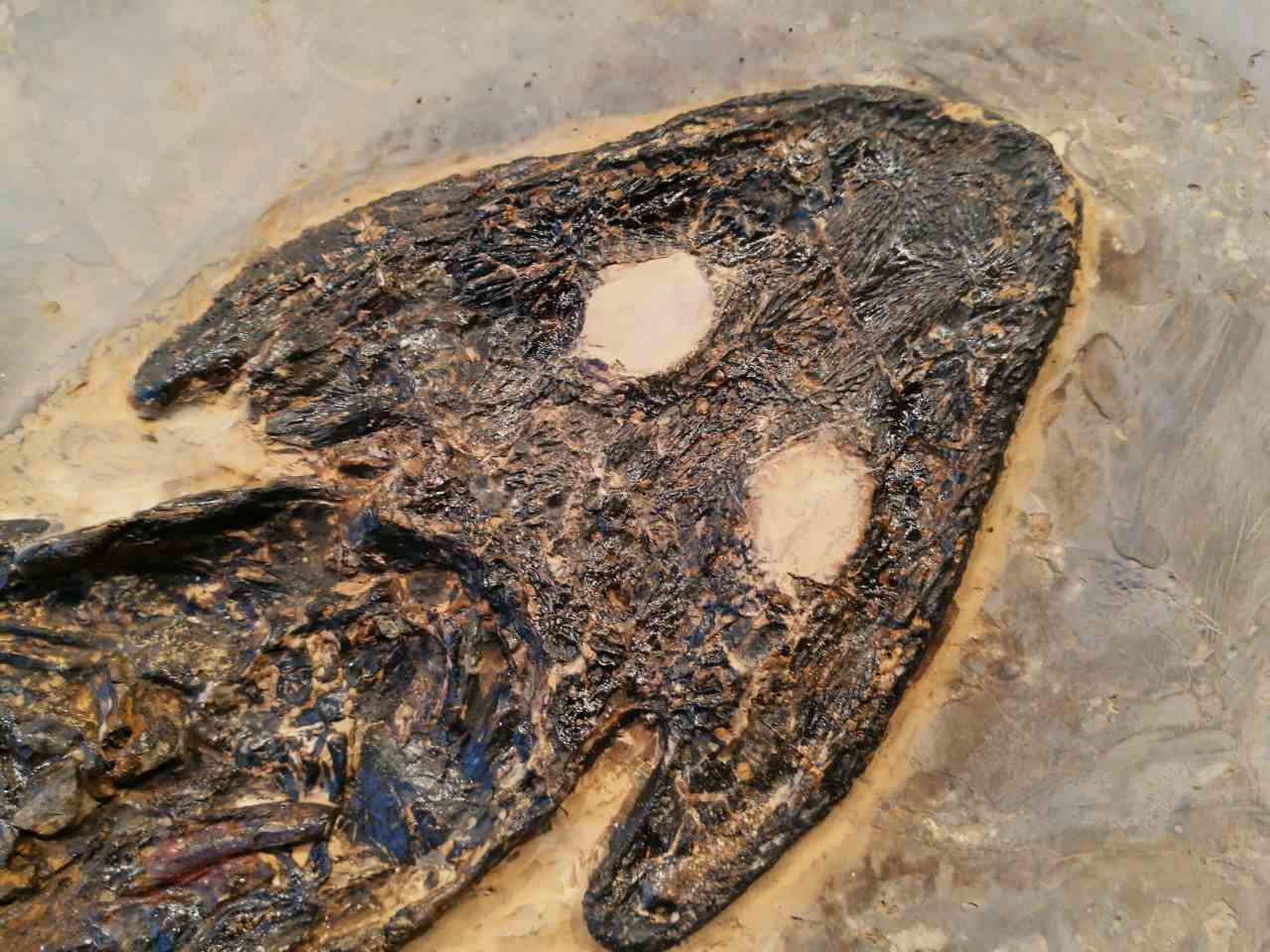 |
Sclerocephalus haeuseri #VSH3500
Marvelous Amphibian specimen, with visible teeth.
Old Collection, Altfund
Permian, Rotliegend, 285 million years old
Jeckenbacher kalkstein, Jeckenbach, Pfalz, Germany
Size plate: 75 by 40 cm
Size specimen span: 22.05 inch / 56 cm
Size specimen curved: 25.6 inch / 65 cm
Price: Euro |  |
Unknown Tadpole spec. #VFR8465
Extreme rare specimen, with developing legs,
Old collection/Alt-fund
Miocene, 20 million years old
Randecker Maar, Esslingen, Germany
Size: 2.84 inch / 6.2 cm
Price: Euro | 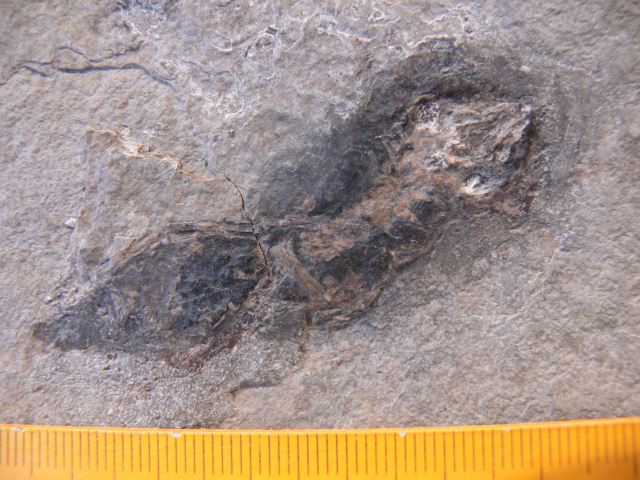 |
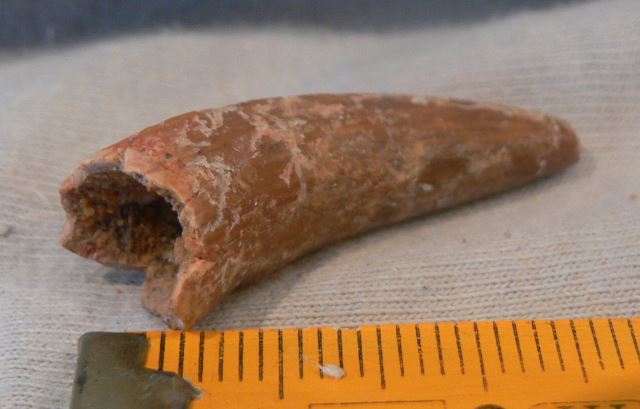 | Siroccopteryx moroccensis #VSM8477
African Pterosaur nice Tooth,
Tegana Formation (Cenomanian)
Cretaceous 95 million years old
Kem Kem Beds, Morocco
Size: 1.2 inch / 3 cm
Price: Euro |
 |  |
| Albertosaurus cf. dispar #VAM8060
> Tyrannosaurid dinosaur tooth.
Collected on Private lands
U. Cretaceous 69 million years old
Judith river formation, Montana, U.S.A.
Size: 1.6 inch / 4 cm
Price: Euro |
 | Deltadromeus cf. agilis #DC5146
African Raptor/Ceratosaur nice Foot bone,
No restoration
Tegana Formation (Cenomanian)
Cretaceous 95 million years old
Kem Kem Beds, Morocco
Size: 1.48 inch / 3.7cm
Price: Euro |
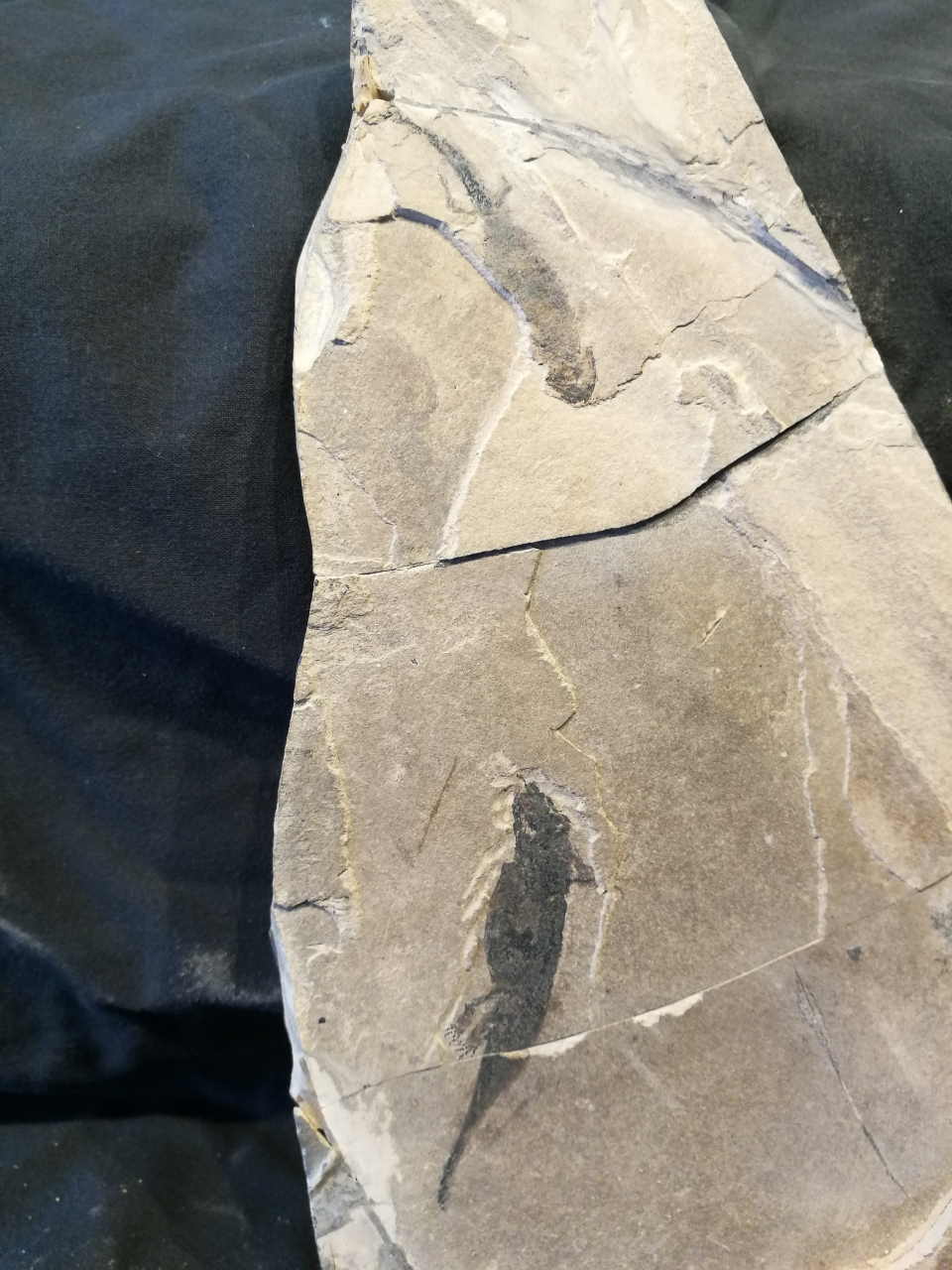
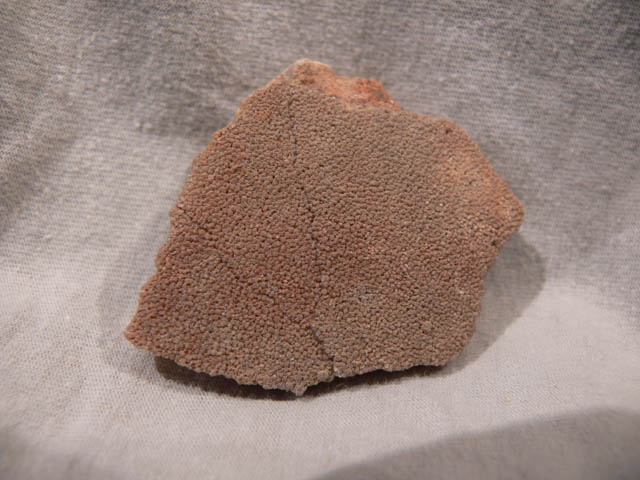 | Saltasaurus cf. loricatus #SA5727
Saurapod egg-shell
Maastrichtian, Cretaceous 70 million years old
S General Roca, Prov. Rio Negro, Argentina
Size wide : 4 cm Approx.
Price: Euro |
|
Melanerpeton humbergense #VDP4144
2 Nice Branchisaurid Amphibian
Old Collection, Altfund
Permian, Rotliegend, 285 million years old
Odernheim, Pfalz, Germany
Size biggest span: 3.2 inch / 8 cm
Size plate: 12.6 by 7.1 inch / 32 by 18 cm
Price: Euro |
Dyrosaurus phosphaticus #VPG4235
Partial Gavial Crocodile jaw No restoration!
Late Cretaceous 66 million years old
Khouribga, Morocco
Size: 5.6 inch / 14 cm
Price: Euro |

|
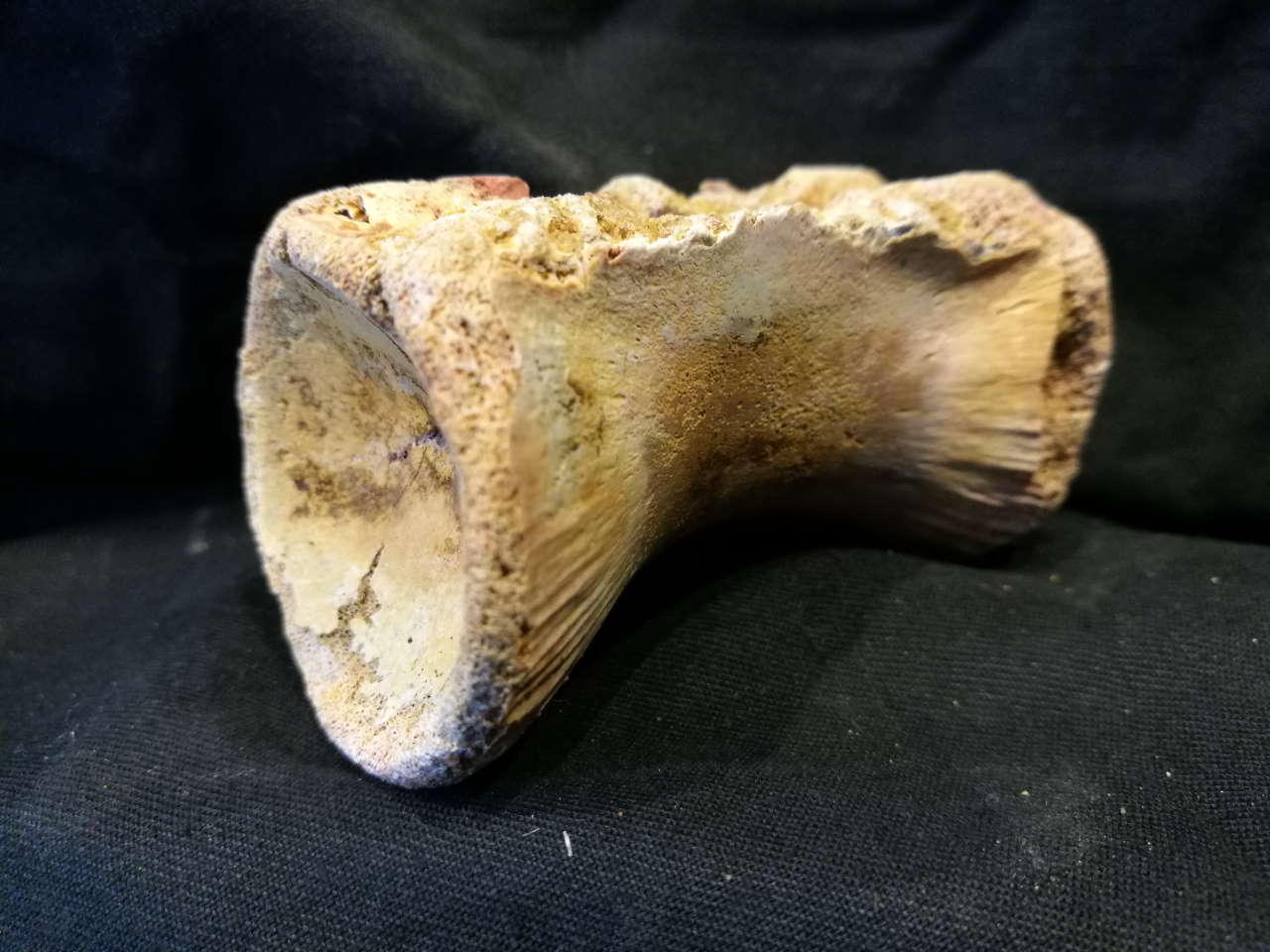
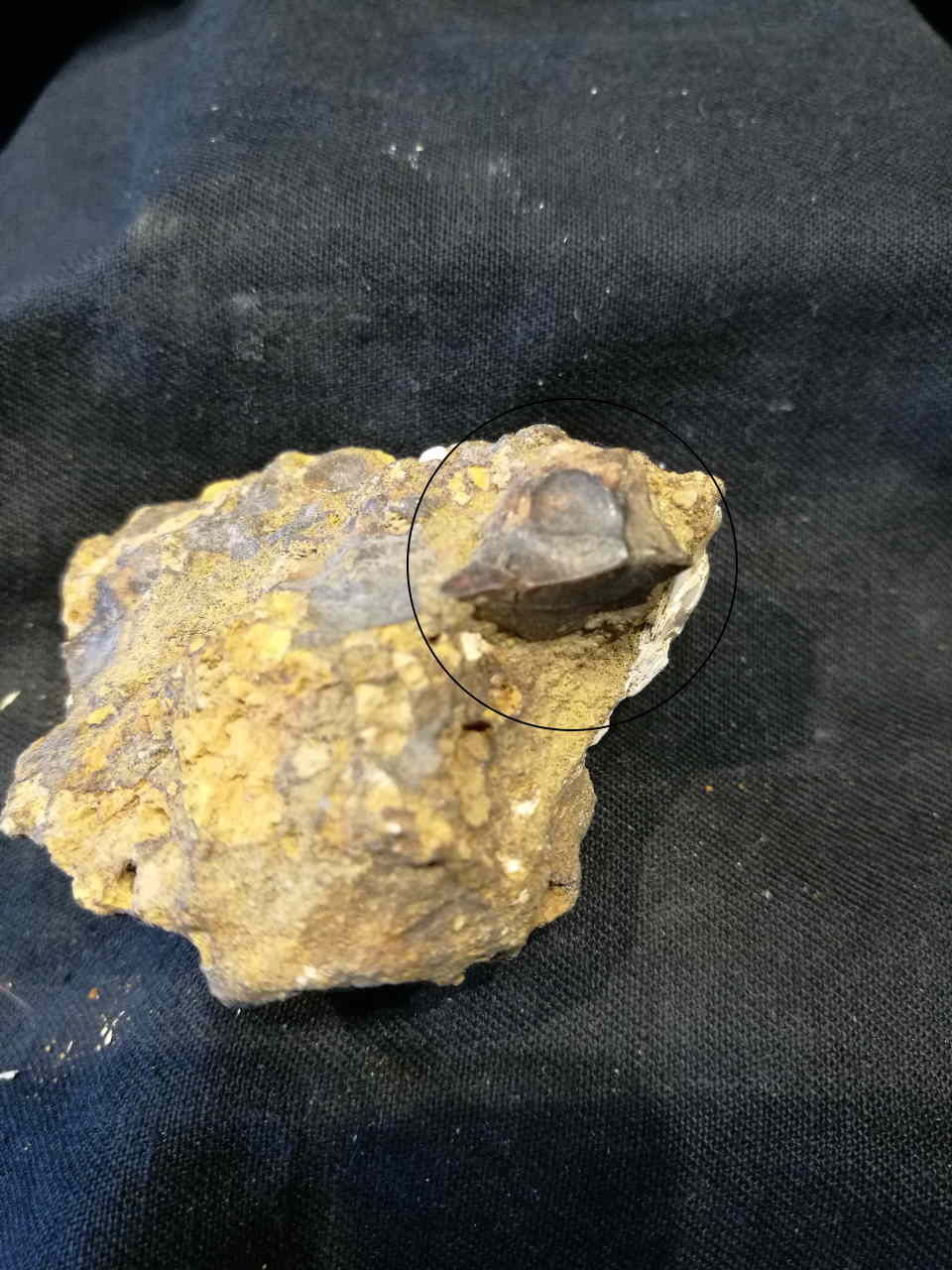
Rebbachisaurus spec. #VRM4221
African Sauropod nice tail Vertebra,
Tegana Formation (Cenomanian)
Cretaceous 95 million years old
Kem Kem Beds, Morocco
Size: 2.6 inch / 6.5 cm
Price Euro: |
|
|
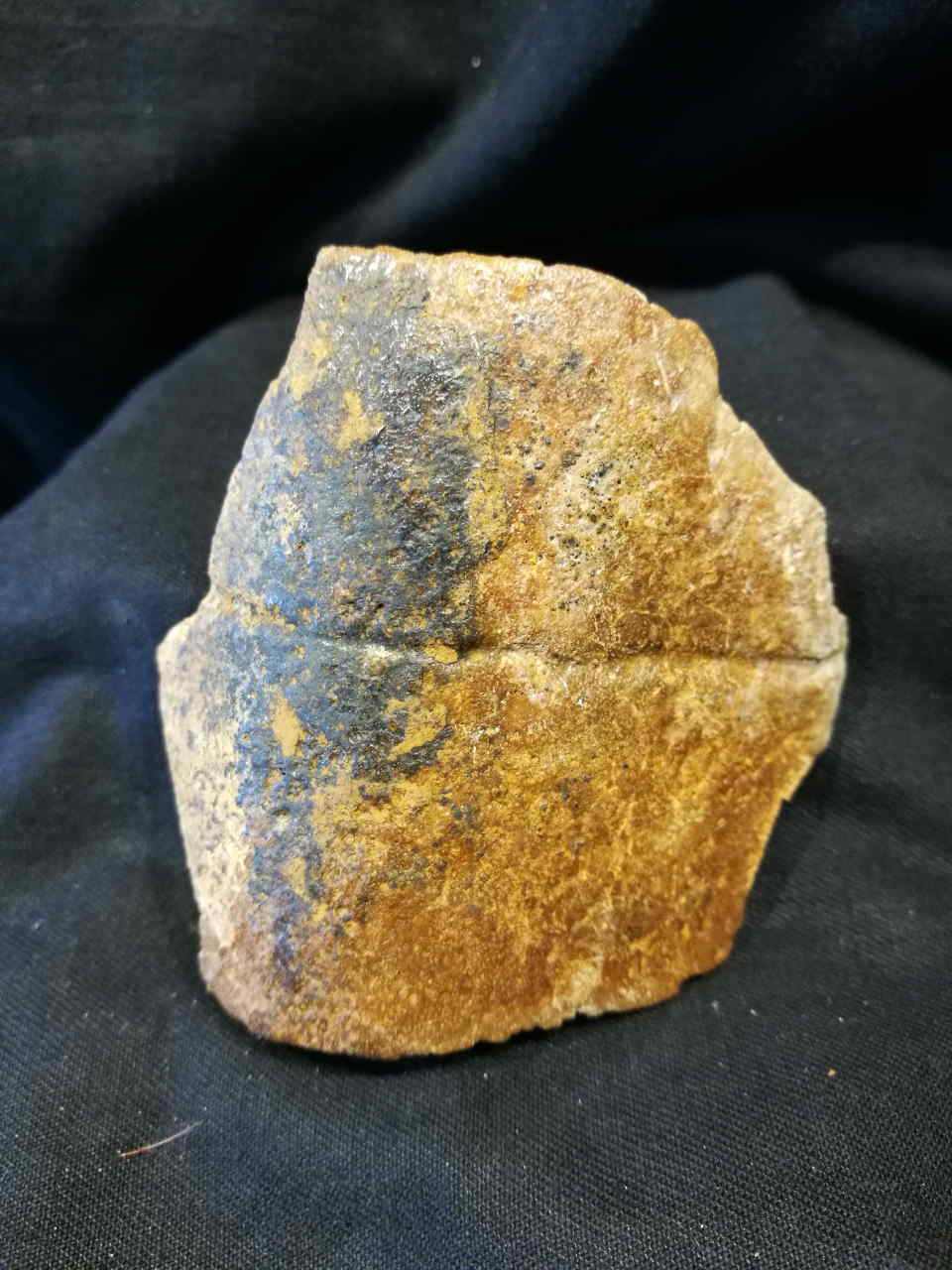
Triceratops sp. #VTW4253
Tooth of this remarkable Dinosaur in Matrix
Cretaceous 120 million years old
Lance Creek, Wyoming, U.S.A.
Size: 0.32 by 0.8 cm
Price: Euro |
|
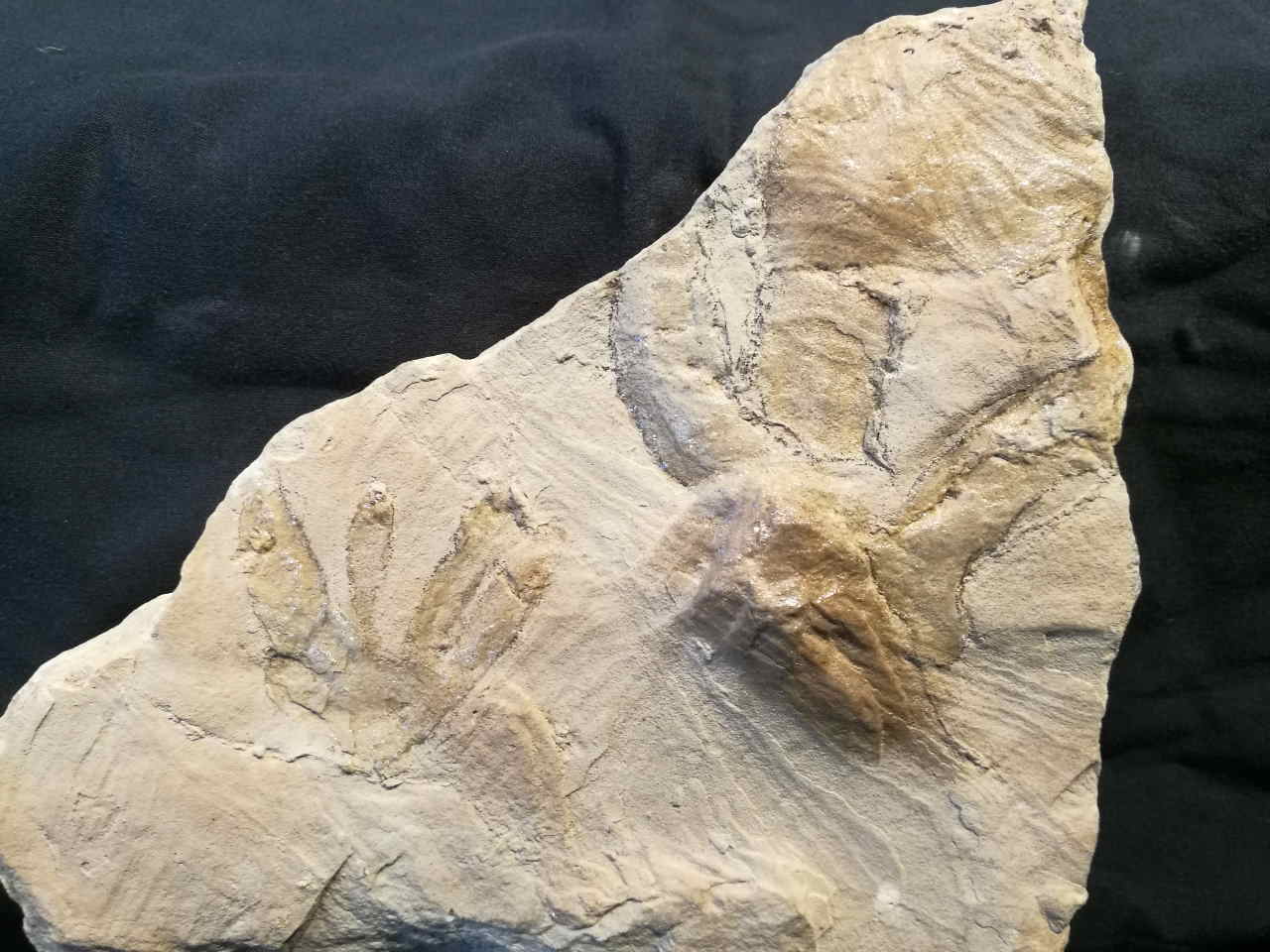
Emydura sp. #VEA4247
Turtle shell
Old collection! NO Restoration.
Pleistocene 50.000 years old
King creek, Darling Downs, SE Queensland,
Australia
Size : 2.6 inch / 6.5 cm
Price: Euro |
|
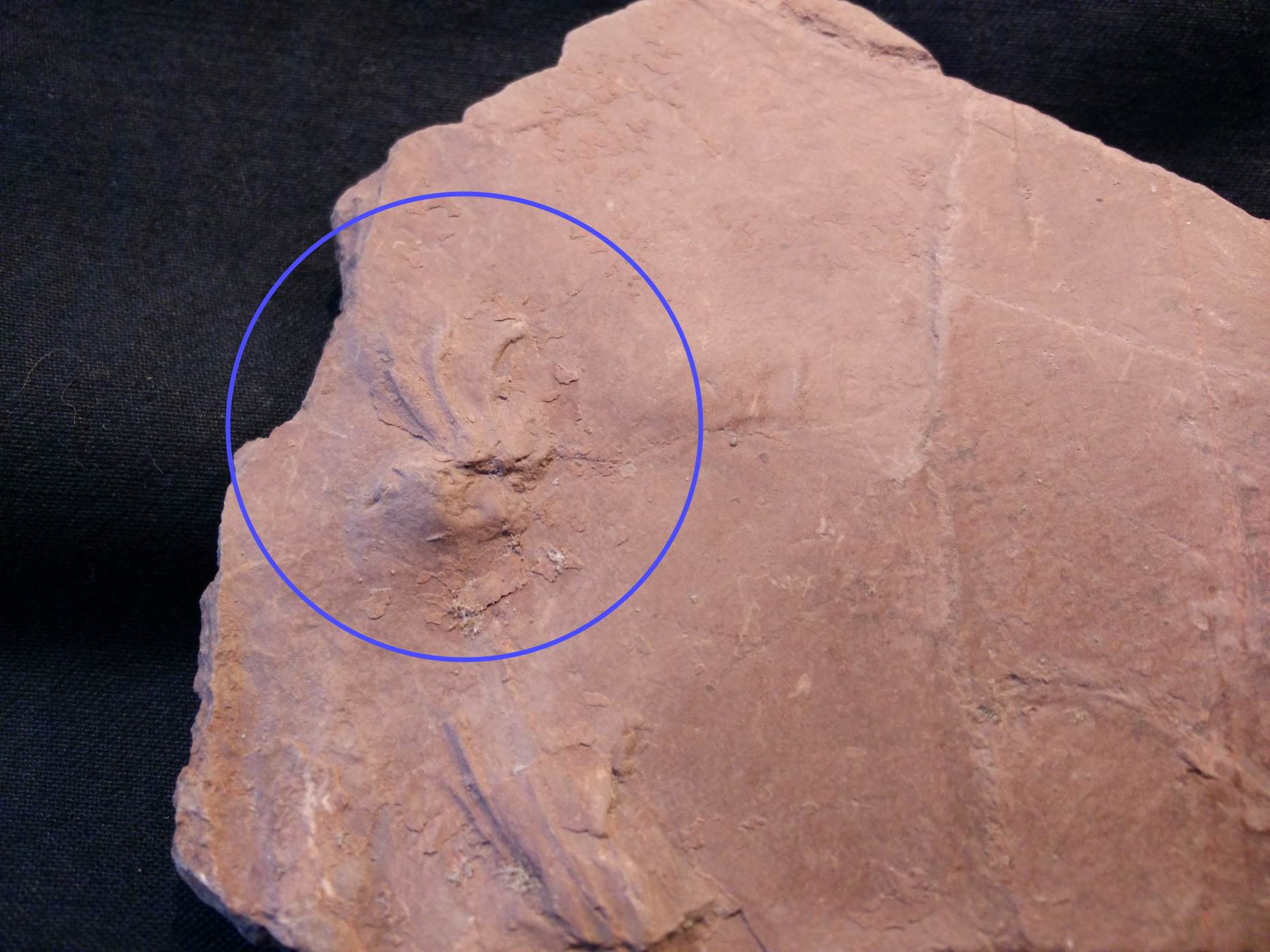
Prorotodactylus sp. #VDP4303
Basal Dinosauromorph Dinosaur footprint,
(cf. Lagerpeton) Very rare Old Collection
L. Triassic, Olenekian 250 Million years old
Holy Cross Mountains, Poland
Matrix: 8.8 by 8 inch / 22 by 20 cm
Price: Euro |
Batrachichnus delicatulus #VAT3401
Amphibian footprints.
Old collection
L. Permian, 280 million years old
Heuco Formation, New Mexico
Size matrix: 4.3 by 3.5 inch / 11 by 9 cm
Size print: 0.6 inch / 1.5 cm
Price: Eur |
 |
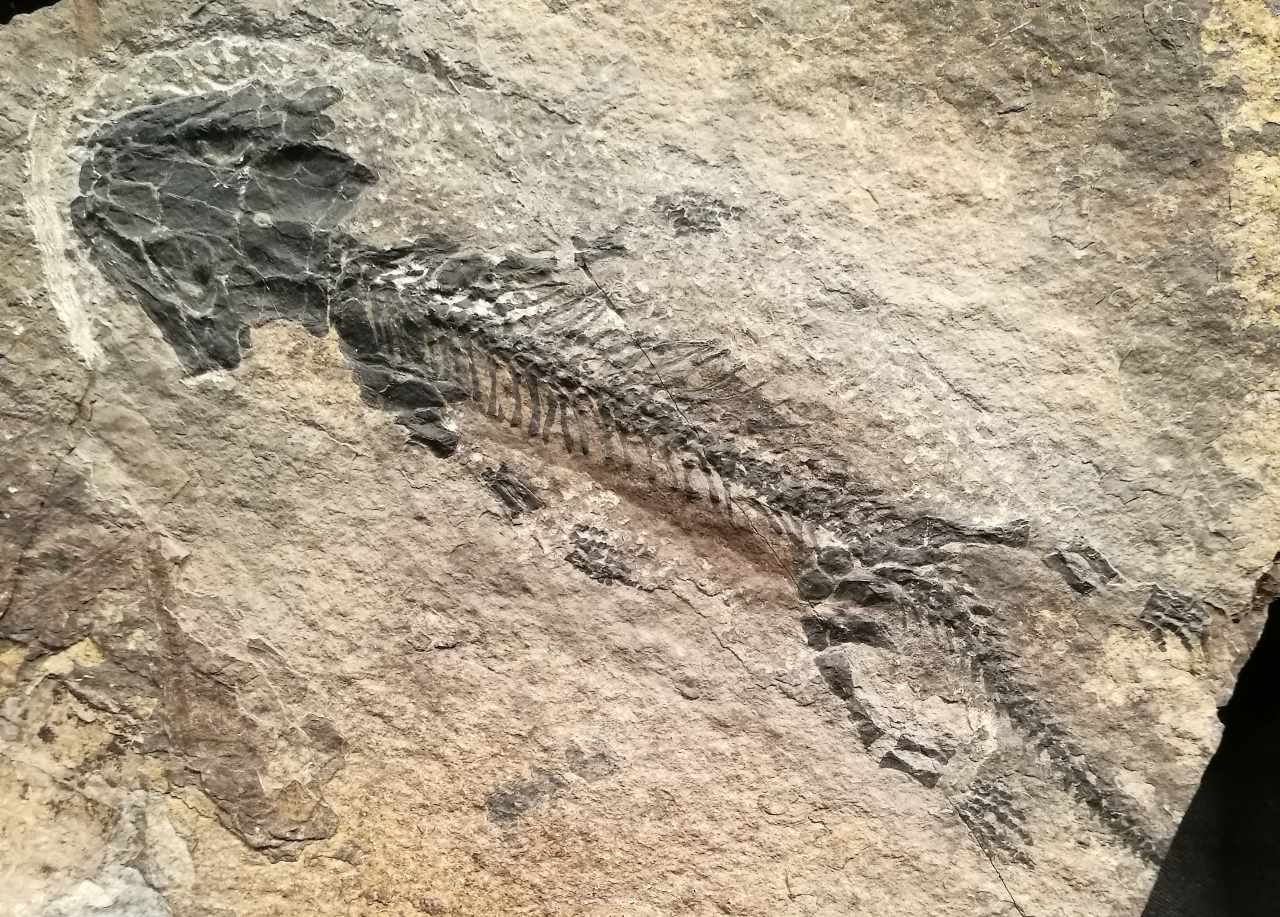
| Discosauriscus pulcherrimus
#VDP3301
SUPERB specimen Amphibian specimen.
With very rare fossilized visible radial Gills, original Skin on both sides and Plant remains.
L Permian, Rotliegend, 290 million years old
Boskovice, Czech Republic
Size matrix: 36.5 by 17 cm
Size specimen: 6.6 inch / 16.5 cm
Price: Euro |
Captorhinus aguti #VCA6607
Vertebrates from an undescribed bonebed
Permian, Arroyo formation, 270 million years old
Northern Archer county, Texas, U.S.A.
Size see ruler.
Price: Eur | 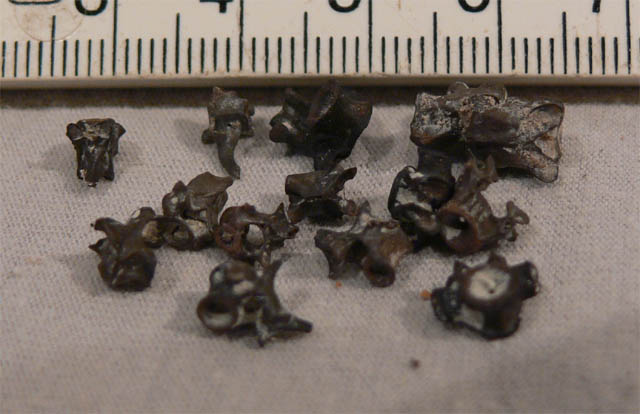 |
 | Labidosaurus spec. #VLV6609
Vertebrates from an undescribed bonebed
Permian, Arroyo formation, 270 million years old
Northern Archer county, Texas, U.S.A.
Size see ruler.
Price: Eur |
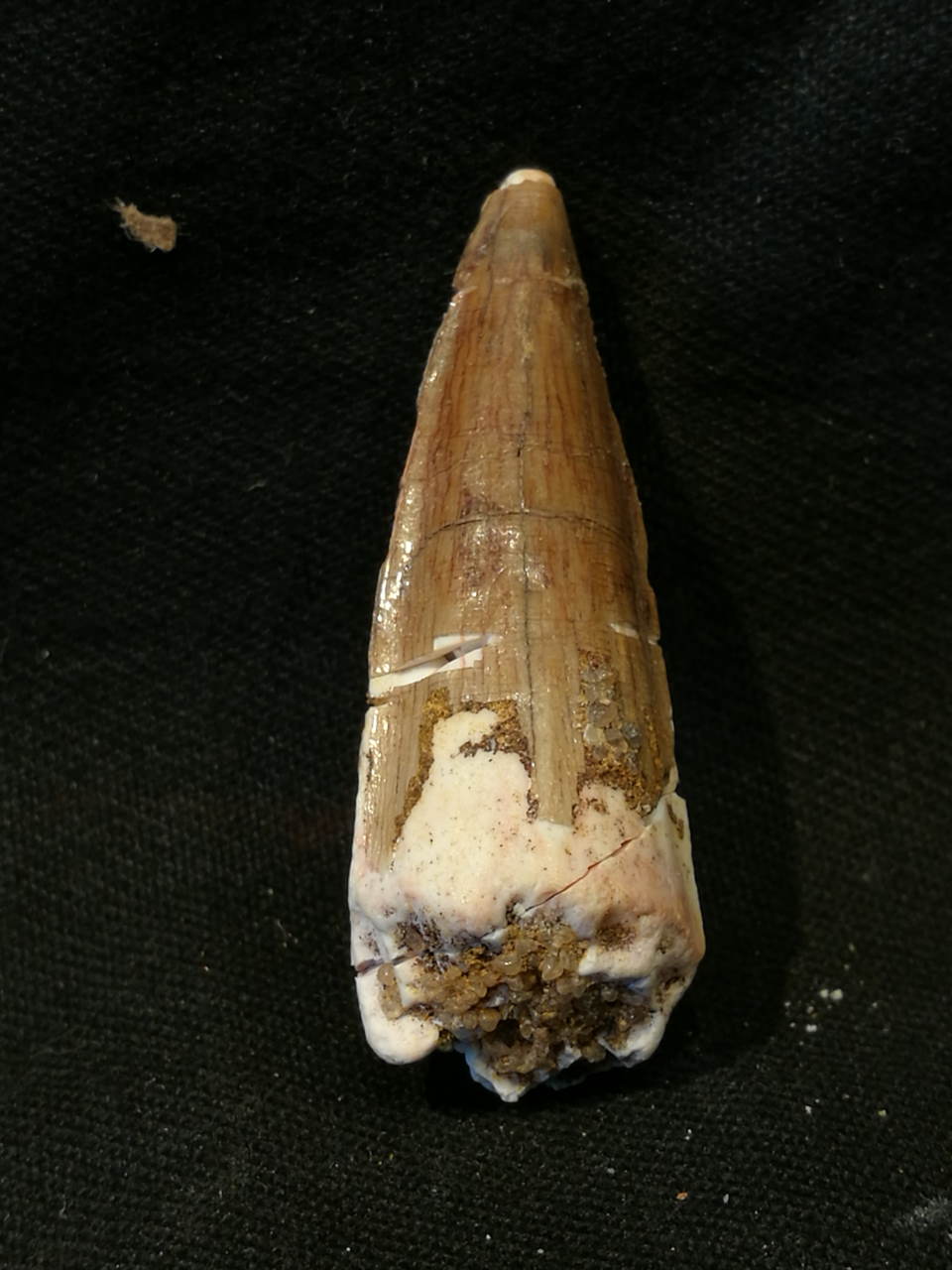
Spinosaurus spec. #VSM4109
Rare African Spinosaurus tooth,
Tegana Formation (Cenomanian)
Cretaceous 95 million years old
Kem Kem Beds, Morocco
Size: 1.32 inch / 3.3 cm
Price: Euro |
|
|
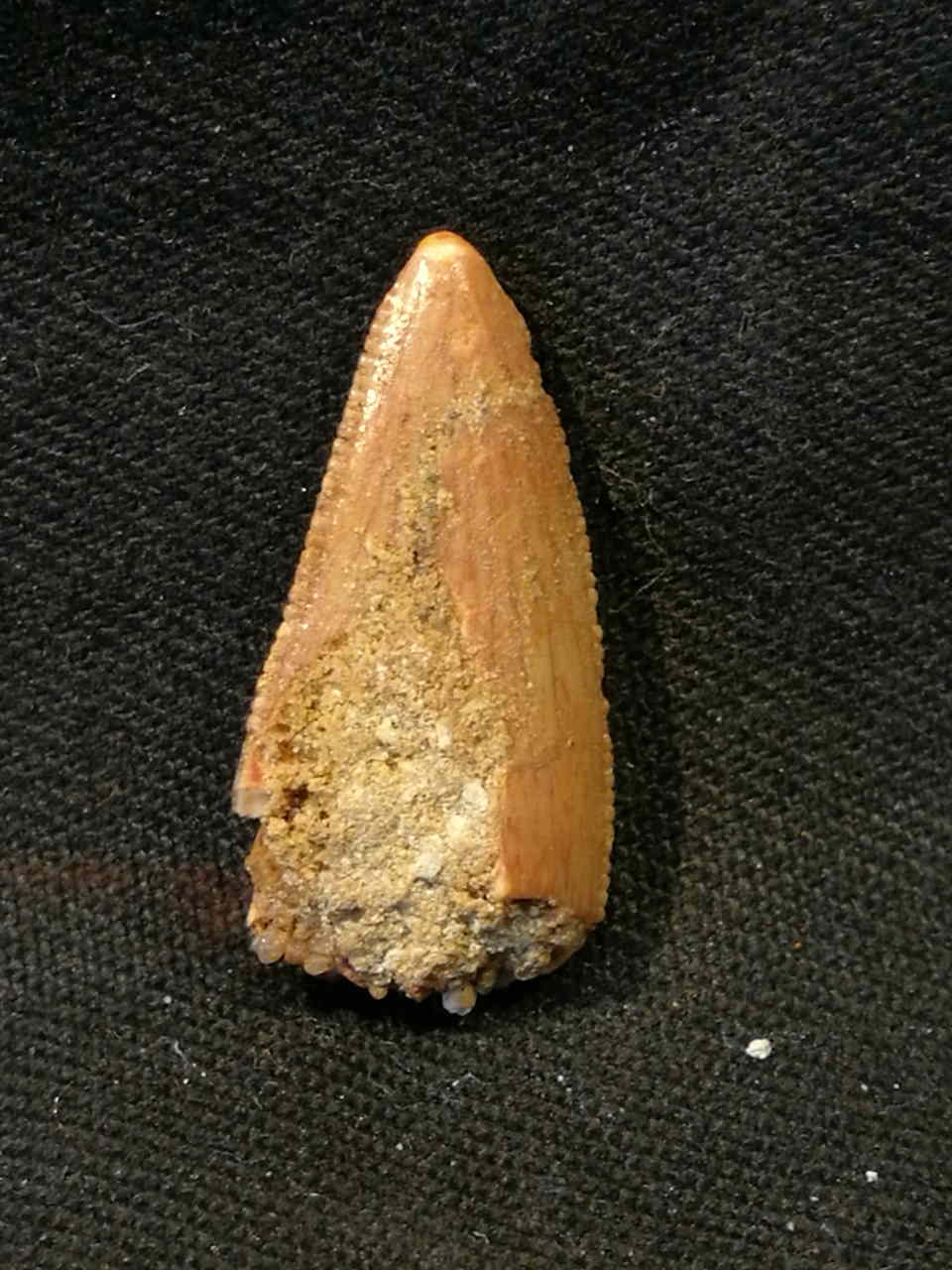
Deltadromeus cf. agilis #VDM4110
Rare African Raptor/Ceratosaur nice Tooth
Tegana Formation (Cenomanian)
Cretaceous 95 million years old
Kem Kem Beds, Morocco
Size: 0.76 inch / 1.9 cm
Price: Euro |
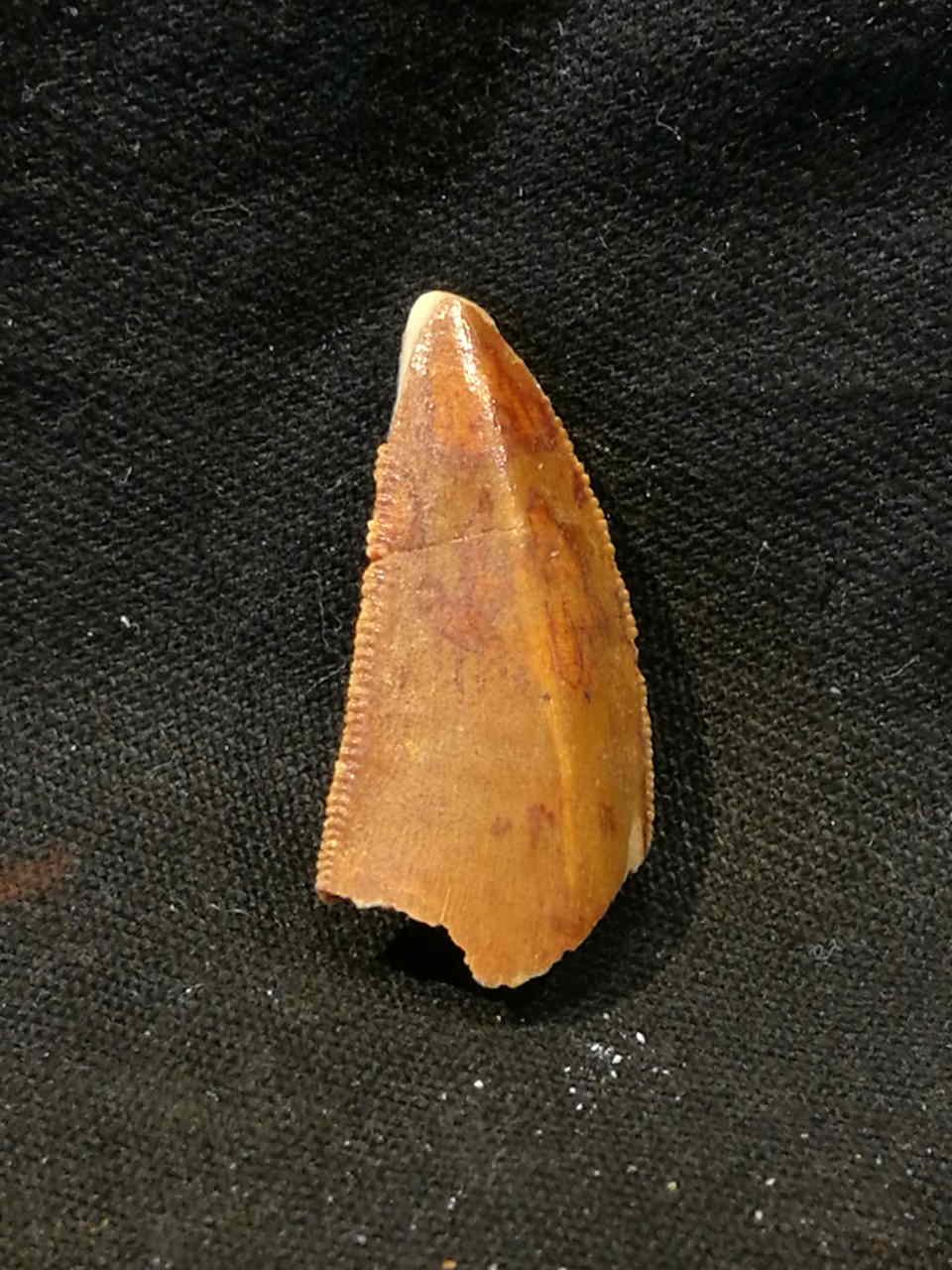
Deltadromeus cf. agilis #VDM4111
Rare African Raptor/Ceratosaur nice Tooth
Tegana Formation (Cenomanian)
Cretaceous 95 million years old
Kem Kem Beds, Morocco
Size: 0.96 inch / 2.4 cm
Price: Euro |
|

|
Deltadromeus cf. agilis #VDM4112
Rare African Raptor/Ceratosaur nice Tooth
Tegana Formation (Cenomanian)
Cretaceous 95 million years old
Kem Kem Beds, Morocco
Size: 0.72 inch / 1.8 cm
Price: Euro |
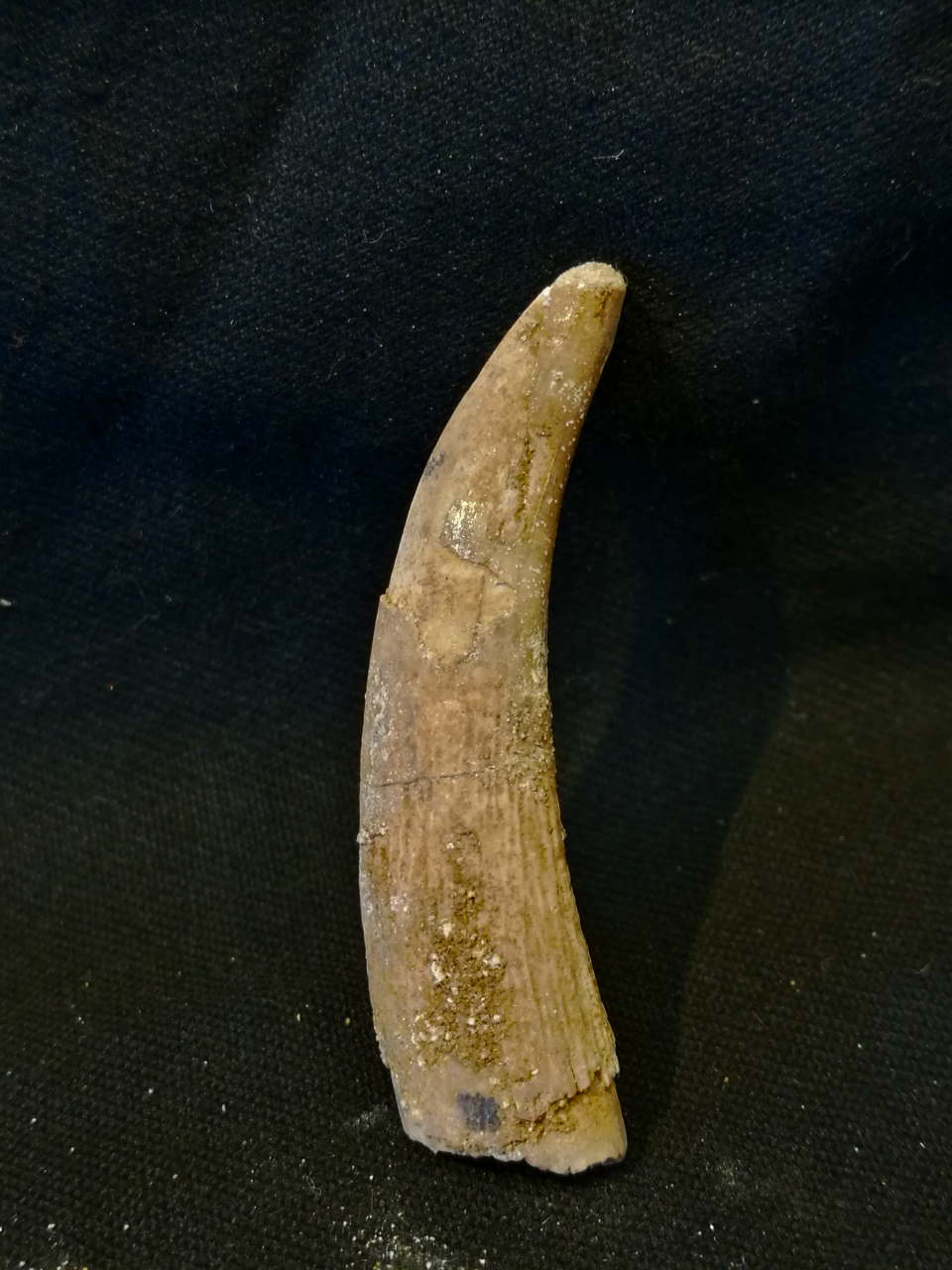
Spinosaurus spec. #VSM4101
Rare African Spinosaurus tooth,
Tegana Formation (Cenomanian)
Cretaceous 95 million years old
Kem Kem Beds, Morocco
Size: 4 inch / 10 cm
Price: Euro |

|
|
Siroccopteryx moroccensis #VSM4104
Rare African Pterosaur nice Tooth,
Tegana Formation (Cenomanian)
Cretaceous 95 million years old
Kem Kem Beds, Morocco
Size: 1.6 inch / 4 cm
Price: Euro |
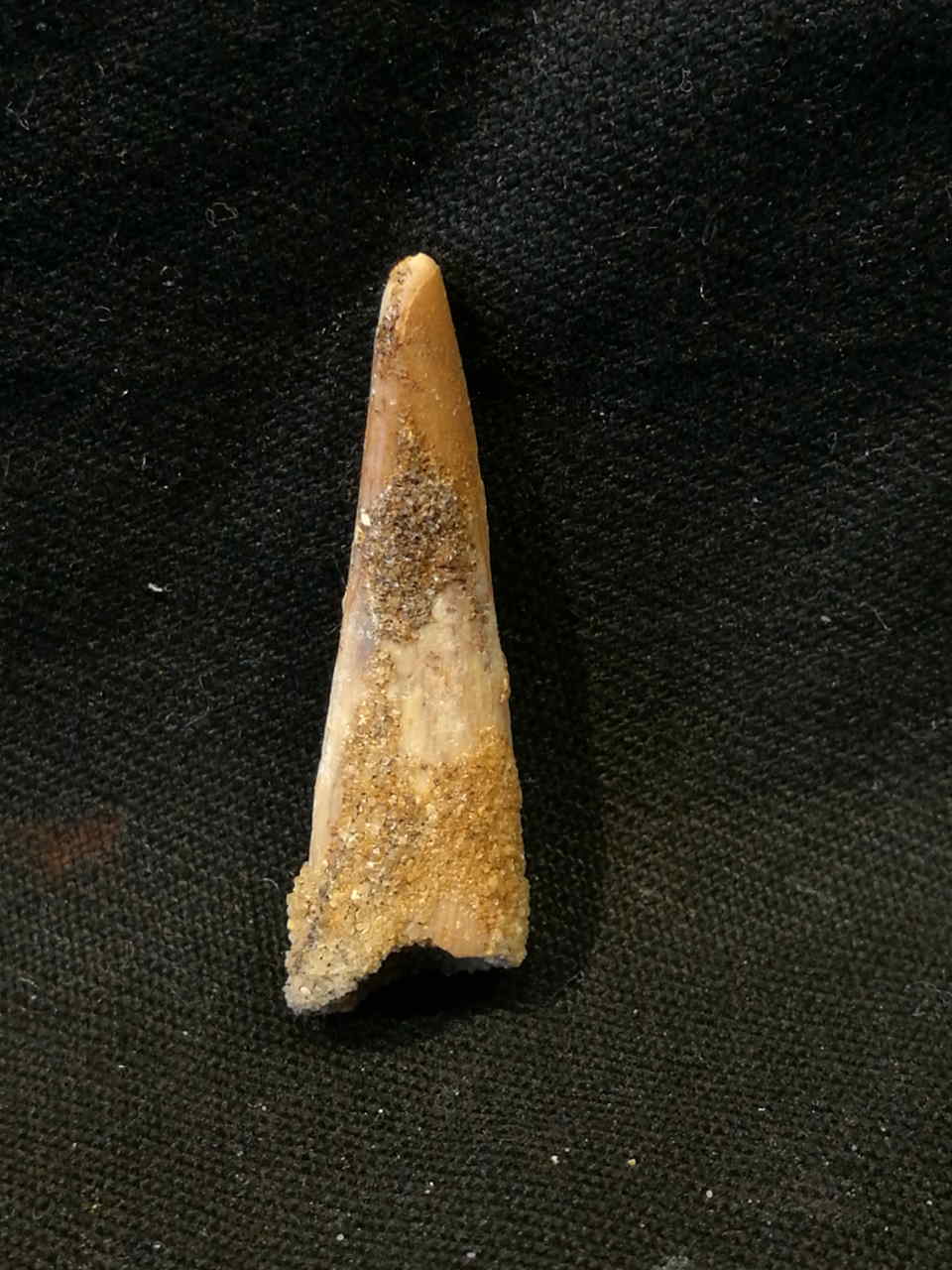
Siroccopteryx moroccensis #VSM4105
Rare African Pterosaur nice Tooth,
Tegana Formation (Cenomanian)
Cretaceous 95 million years old
Kem Kem Beds, Morocco
Size: 1.08 inch / 2.7 cm
Price: Euro |
|
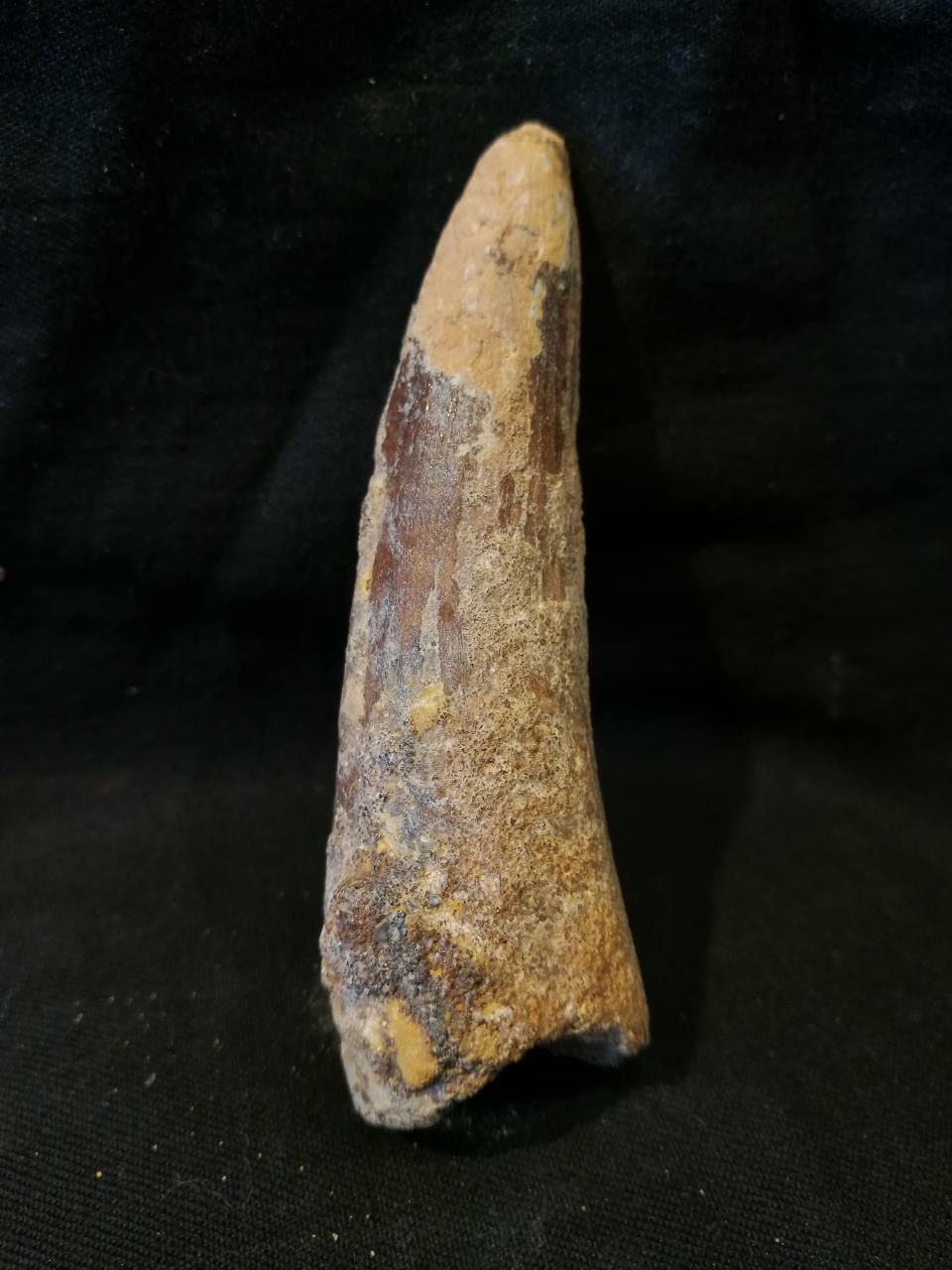
 | Mosasaurus cf. hoffmanni #VMH4081
Tooth in Matrix
Maastrichtian, Cretaceous 65.6 million years old
Khouribga, Morocco
Size : 1.8 inch / 5 cm
Price: Euro |
|
Spinosaurus spec. #VSM4102
Rare African Spinosaurus tooth,
Tegana Formation (Cenomanian)
Cretaceous 95 million years old
Kem Kem Beds, Morocco
Size: 3 inch / 7.5 cm
Price: Euro |
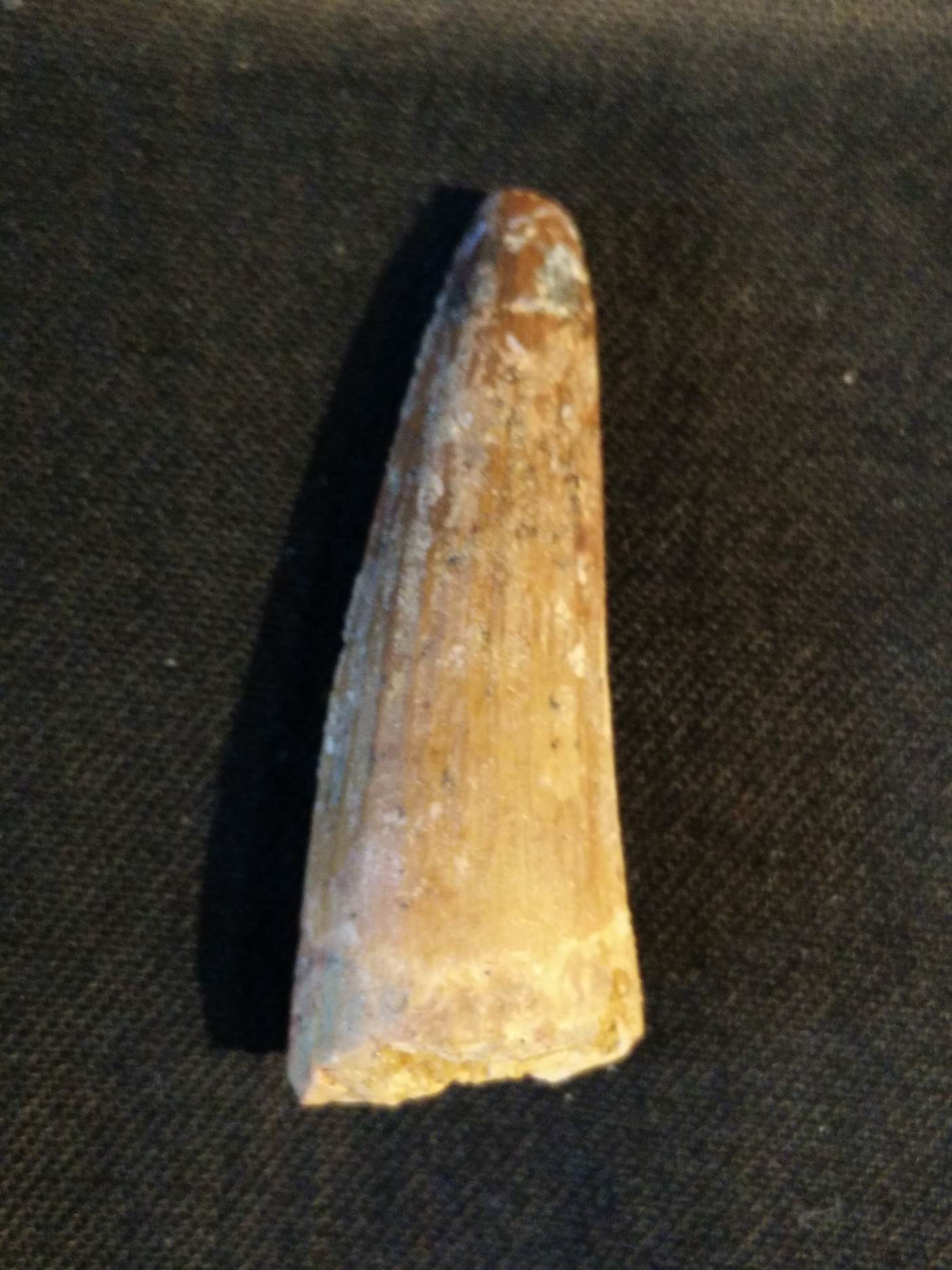 | Spinosaurus spec. #VSA3402
Rare African Spinosaurus tooth,
Tegana Formation (Cenomanian)
Cretaceous 95 million years old
Kem Kem Beds, Morocco
Size: 1.4 inch / 3.7 cm
Price: Euro |
|
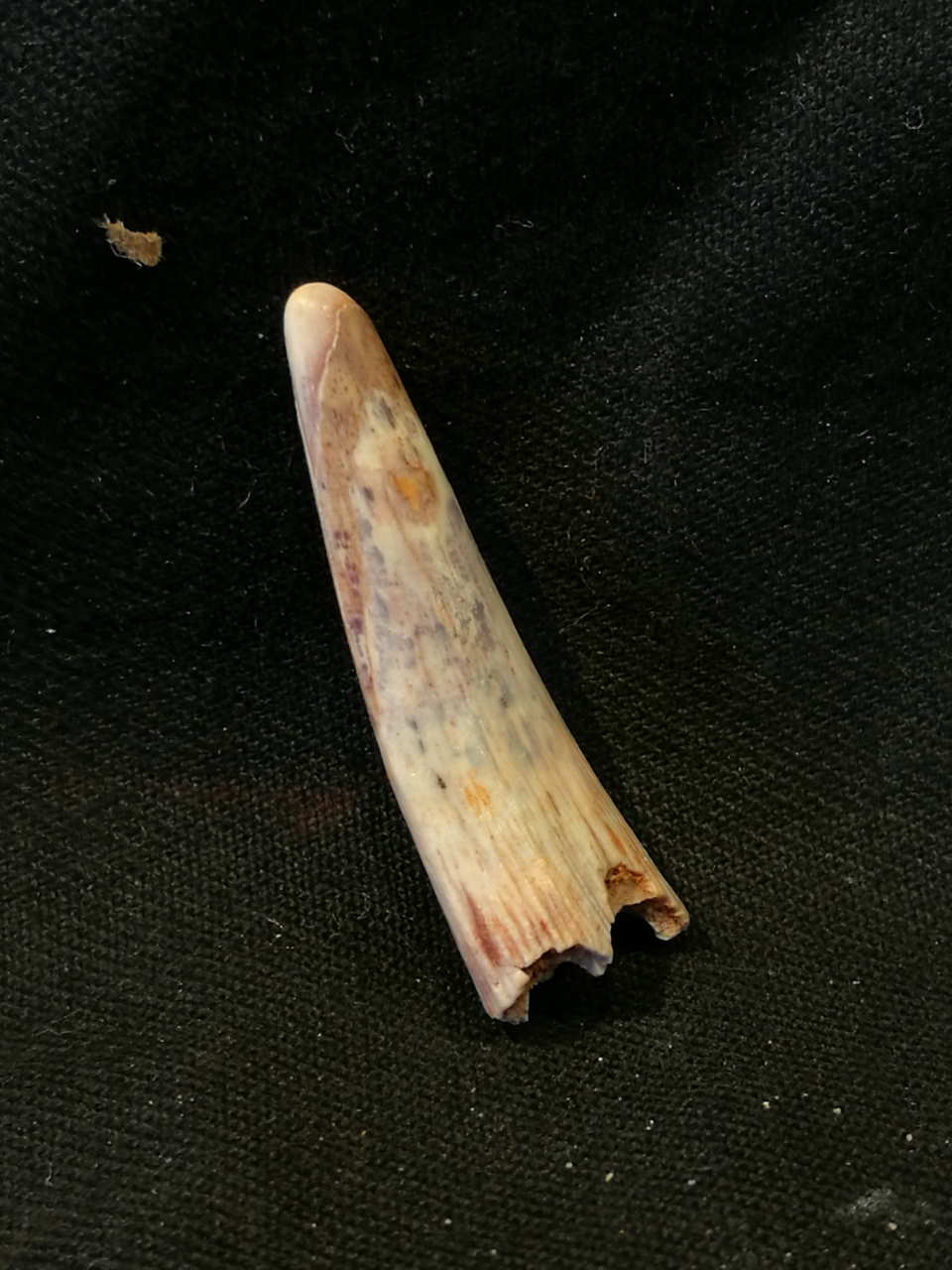
Siroccopteryx moroccensis #VSM4106
Rare African Pterosaur nice Tooth,
Tegana Formation (Cenomanian)
Cretaceous 95 million years old
Kem Kem Beds, Morocco
Size: 1.12 inch / 2.8 cm
Price: Euro |
Mosasaurus cf. hoffmanni #VMH10229
Tooth in Matrix
Maastrichtian, Cretaceous 65.6 million years old
Khouribga, Morocco
Size : 1.8 inch / 4.5 cm
Price: |  |
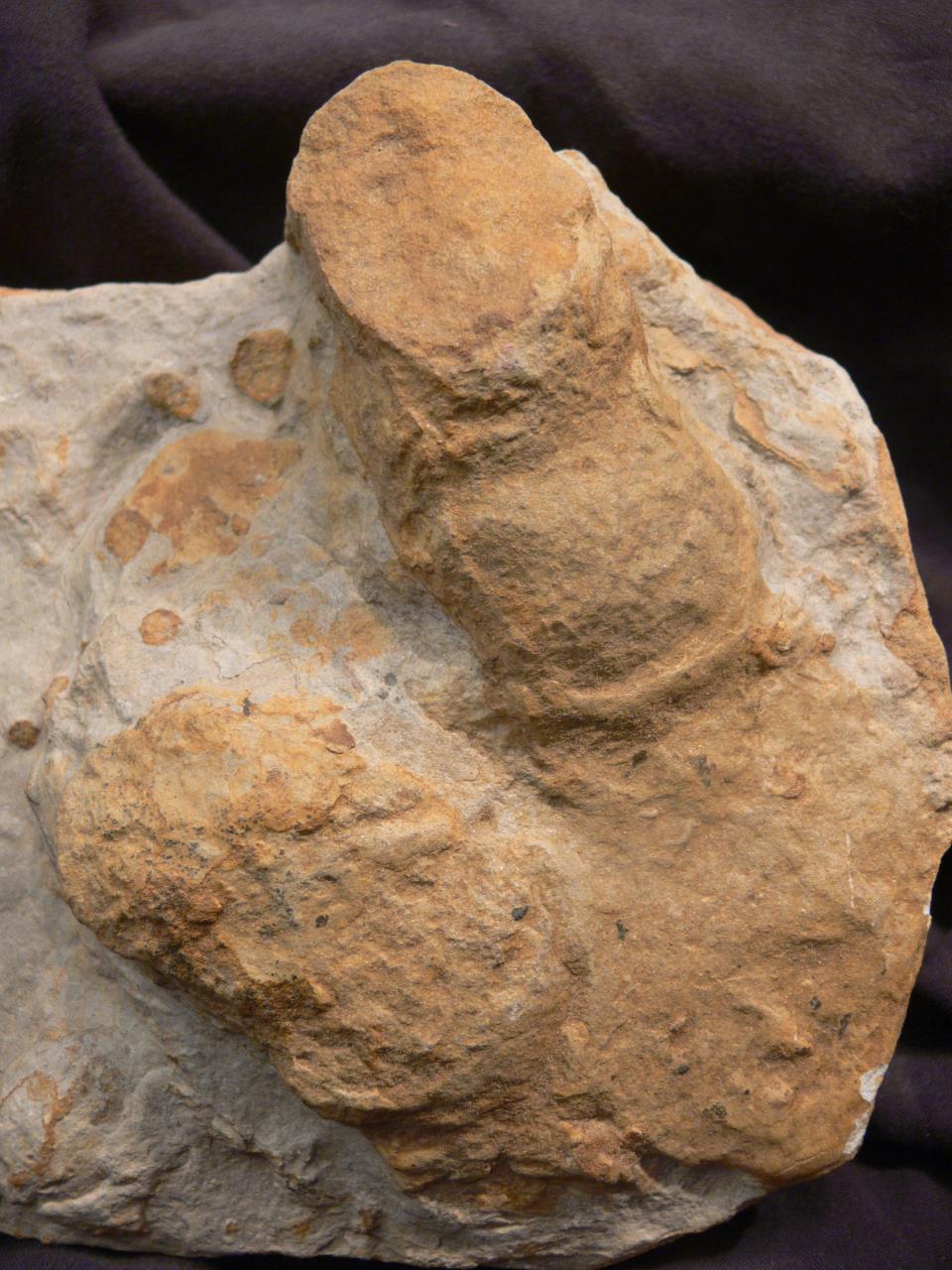 | Irenesauripus sp. #VFH10131
Theropod Dinosaur footprint, Very rare
(Kurkowski 1994) Old Collection
U. Cretaceous, Turonian 90 Million years old
Gaizes Potok, Holy Cross Mountains, Poland
Matrix: 18 by 12 cm
Size footprint span: 5.6 inch / 14 cm
Price: EuroM |
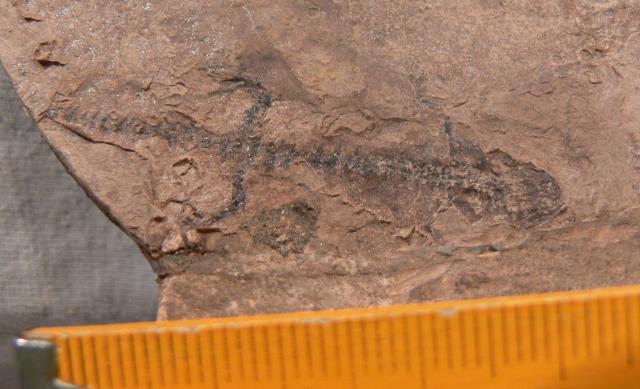 | Tritursus spec.#VCA9339
Very Rare Salamandria, Old Collection
Oligocene, 28 million years old
Laminated mudstone
Bechlejovice, Czech Republic
Size : 1.88 inch / 4.7 cm
Price: Eur |
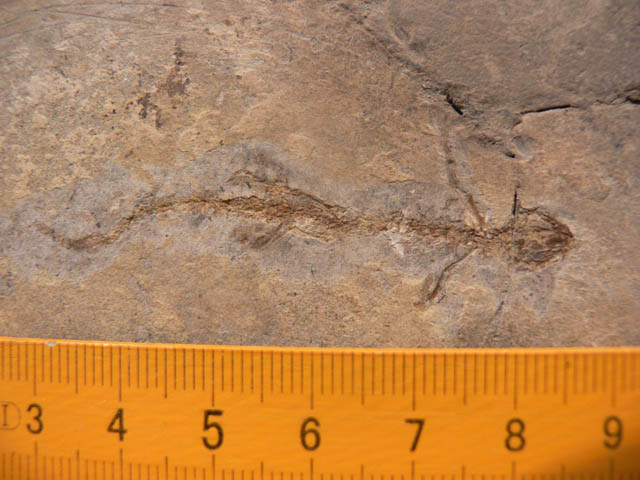 | Tritursus spec.#VAT8081
Very Rare Salamandria, Old Collection
Burdigalian, L. Miocene, 19 million years old
Laminated mudstone
Teruel Libros, NE Spain
Size : 2.4 inch / 6 cm
Price: |
Spinosaurus spec. #VSA9192
African Spinosaurus tooth,
Tegana Formation (Cenomanian)
Cretaceous 95 million years old
Kem Kem Beds, Morocco
Size: 2.2 inch / 5.5 cm
Price: | 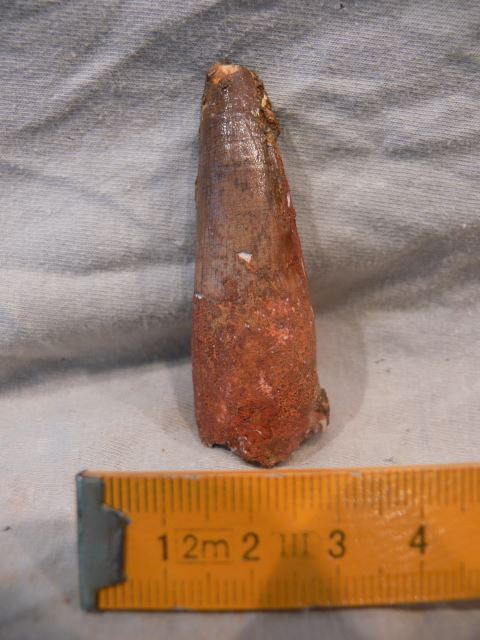 |
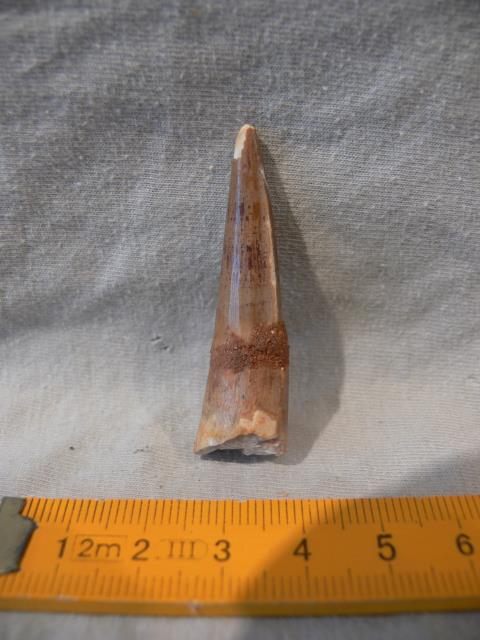 | Spinosaurus spec. #VS9008
African Spinosaurus tooth
Tegana Formation (Cenomanian)
Cretaceous 95 million years old
Kem Kem Beds, Morocco
Size: 1.84 inch / 4.6 cm
Price: |
Suchomimus spec. #VSS9010
Rare African Spinosaurus tooth
Tegana Formation (Cenomanian)
Cretaceous 95 million years old
Kem Kem Beds, Morocco
Size: 2.4 inch / 6 cm
Price: | 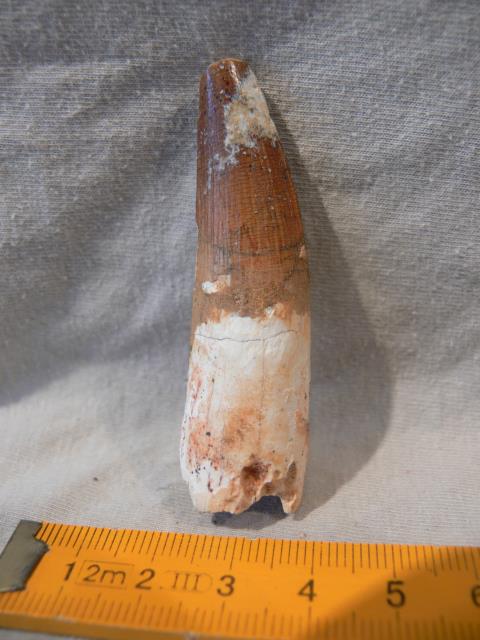 |
| | Siroccopteryx moroccensis #VSM9012
African Pterosaur nice Tooth,
Tegana Formation (Cenomanian)
Cretaceous 95 million years old
Kem Kem Beds, Morocco
Size: 1 inch / 2.5 cm
Price: |
Rebbachisaurus spec. #VRM8485
African Sauropod nice Vertebra,
Tegana Formation (Cenomanian)
Cretaceous 95 million years old
Kem Kem Beds, Morocco
Size: 6.4 inch / 16 cm
Price: | 
|
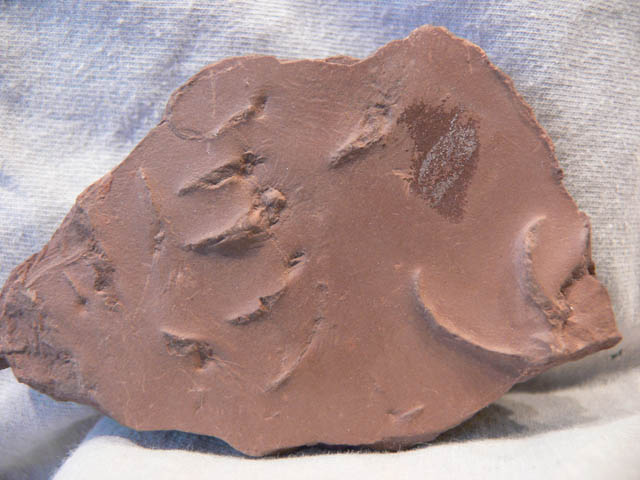 | Batrachichnus delicatulus #VAT6944
Amphibian footprints.
Old collection
L. Permian, 280 million years old
Heuco Formation, New Mexico
Size largest: 1 inch / 2.5 cm wide
Price: |
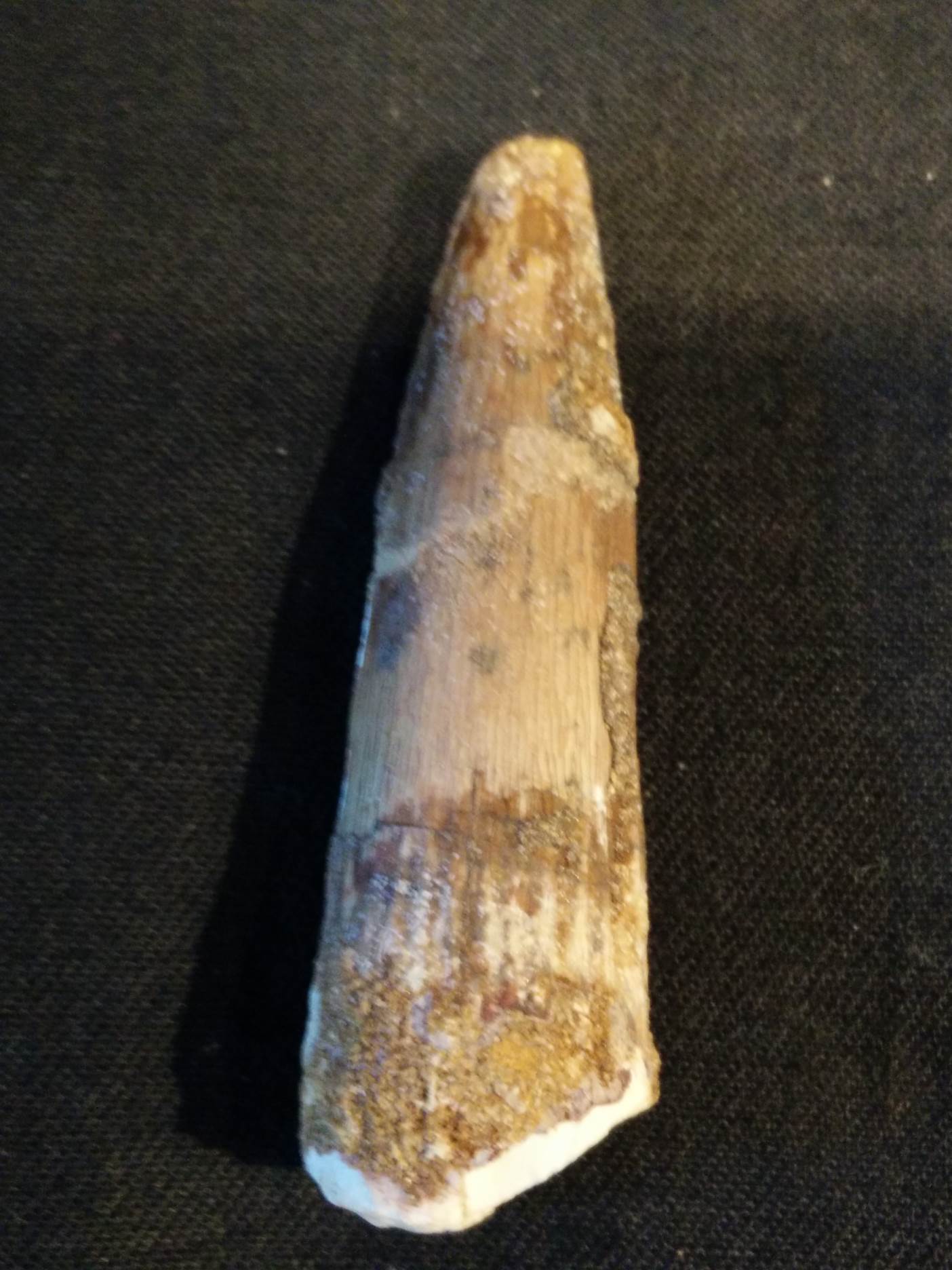
Spinosaurus spec. #VSA3403
Rare African Spinosaurus tooth,
Tegana Formation (Cenomanian)
Cretaceous 95 million years old
Kem Kem Beds, Morocco
Size: inch 2 / 5.2 cm
Price: Euro |
 |
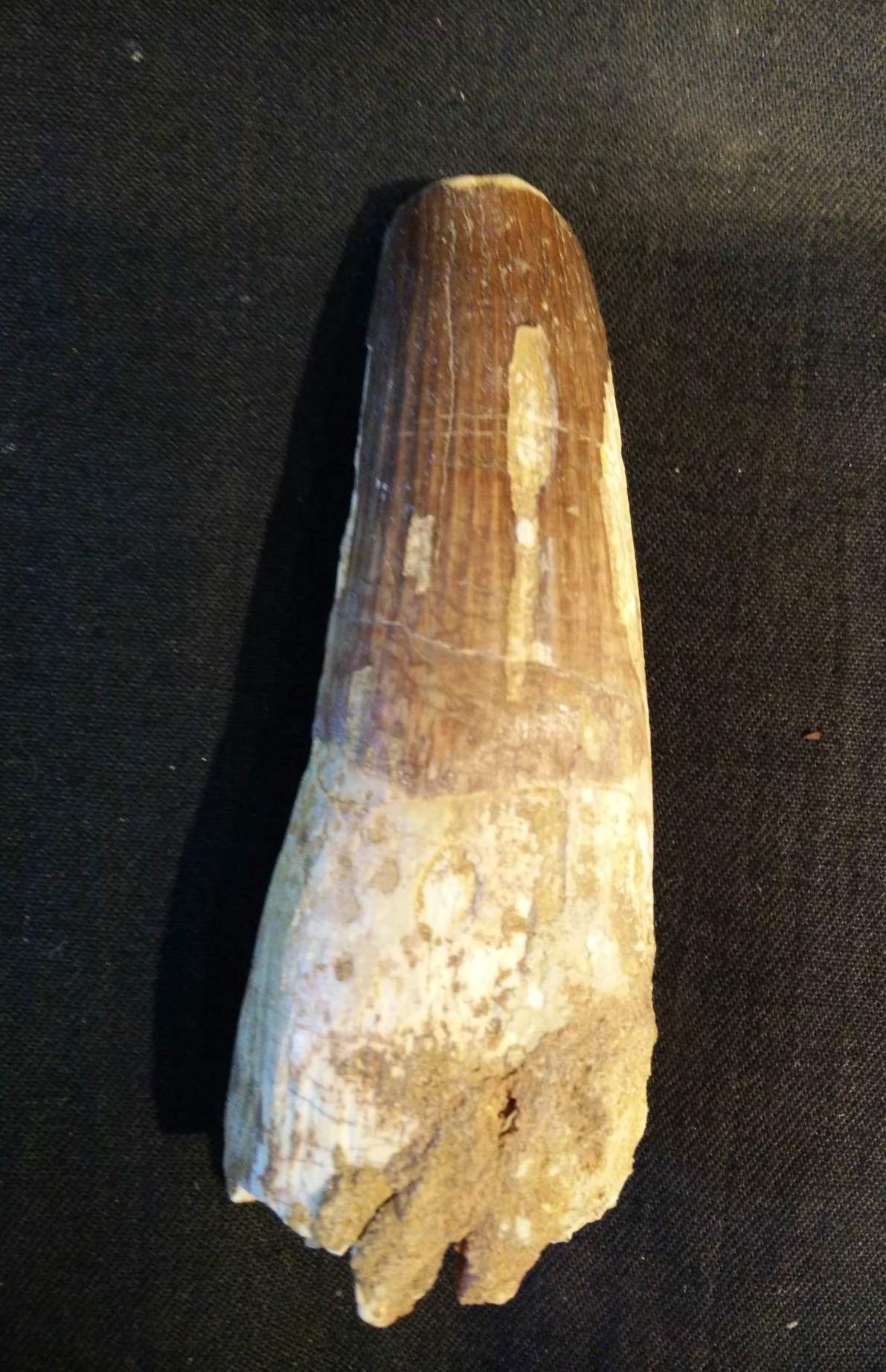 |
Spinosaurus spec. #VSA3404
Rare African Spinosaurus tooth,
Tegana Formation (Cenomanian)
Cretaceous 95 million years old
Kem Kem Beds, Morocco
Size: inch 3.4 / 8.6 cm
Price: |
Unknown species #VVP3950
Bird Coracoid bone
From the Rhine river gravel deposits.
Pleistocene 20,000 years old
Darmstadt / Germany
Size : 2 inch / 5 cm
Price: | 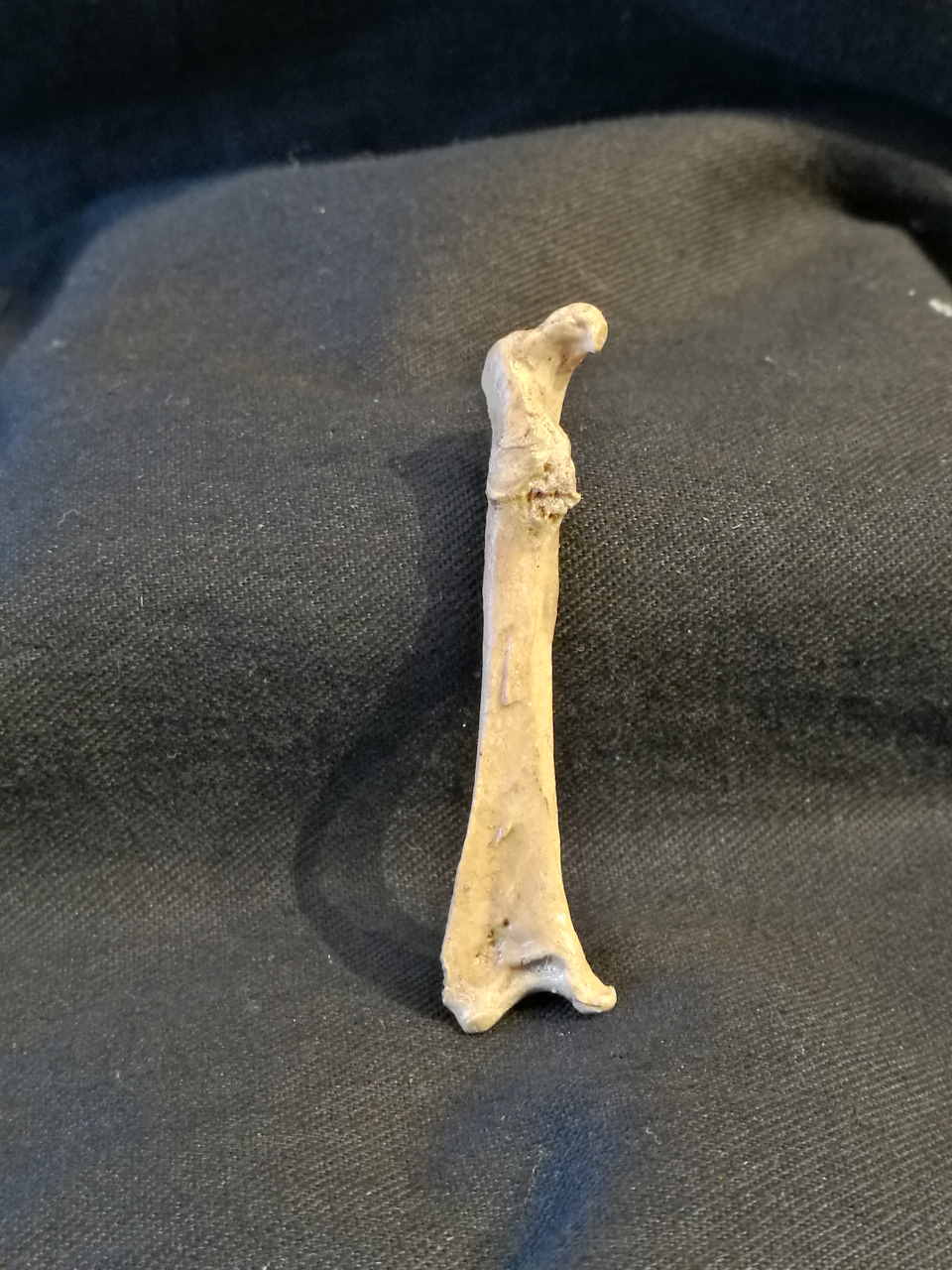 |
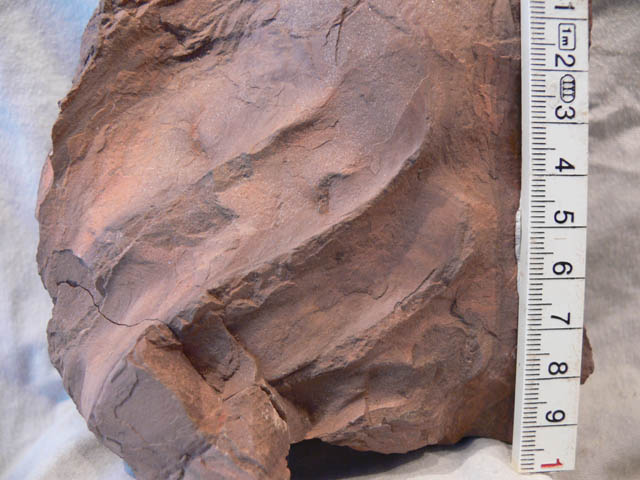 | Chelichnus gigas #VAT6949
Amphibian footprint .
Old collection
L. Permian, 280 million years old
Heuco Formation, New Mexico
Size print: 2.6 inch / 6.5 cm wide
Price: Eur |
Melanerpeton humbergense #VBP9488
Very nice Branchisaurid Amphibian No restoration.
Old Collection, Altfund
Permian, Rotliegend, 285 million years old
Odernheim, Pfalz, Germany
Size span: 2.8 inch / 7 cm
Price: | 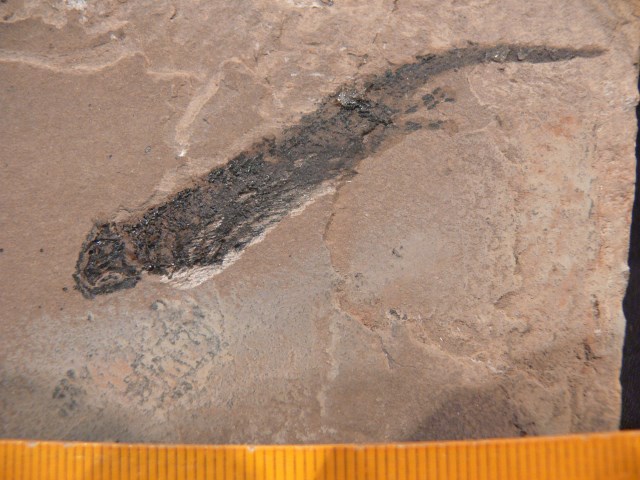 |
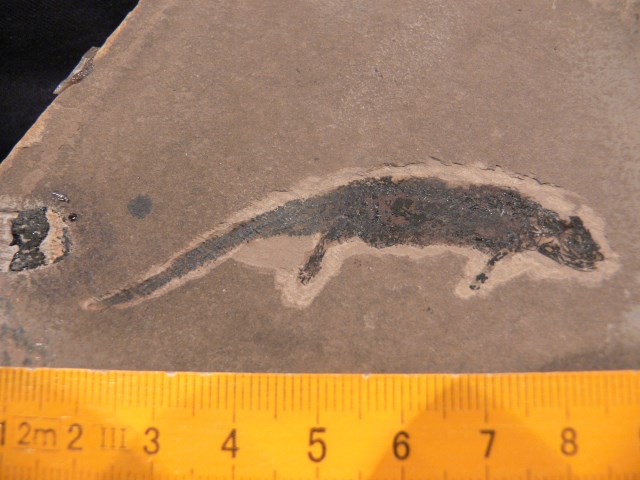 | Melanerpeton humbergense #VBP9486
Very nice Branchisaurid Amphibian No restoration.
Old Collection, Altfund
Permian, Rotliegend, 285 million years old
Odernheim, Pfalz, Germany
Size span: 2.8 inch / 7 cm
Price: |
 |  |
Palaeophis cf. maghrebianus #SM5173
Set of 12 African Sea Snake vertebrae, No restoration
Maastrichtian, Cretaceous 65.6 million years old
Khouribga, Morocco
Size average: 0.4 inch / 1cm
Set Price: |
|
Ichniotherium spec. #VAM7086
Amphibian footprints Pos/Neg
Old collection
L. Permian, 280 million years old
Heuco Formation, New Mexico
Size span: 0.8 inch / 2 cm long
Price: Eur | 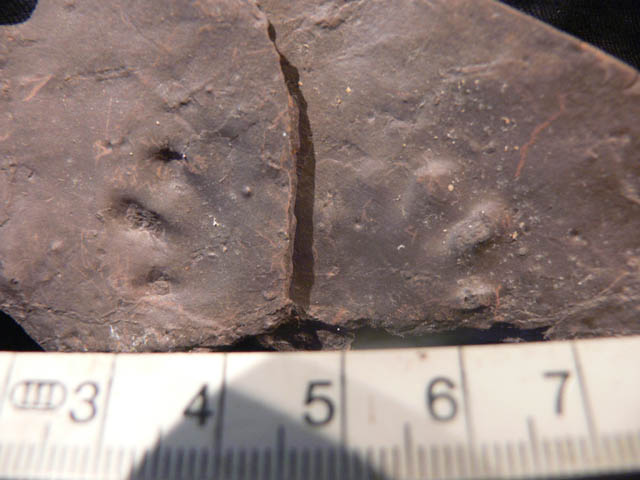 |
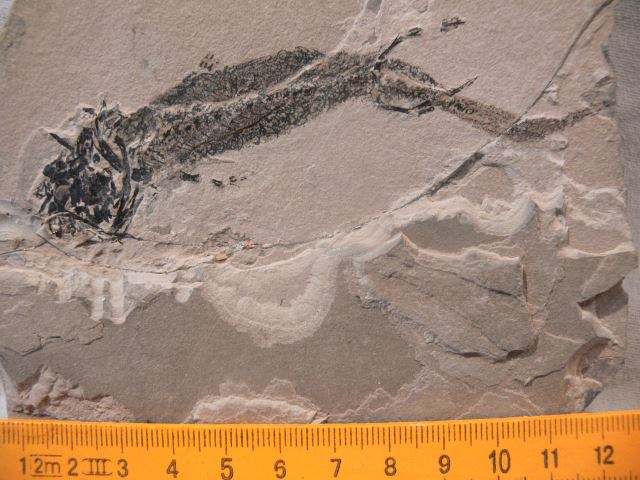 | Melanerpeton humbergense #VDD8643
Very nice Branchisaurid Amphibian No restoration
Old Collection, Altfund
Permian, Rotliegend, 285 million years old
Odernheim, Pfalz, Germany
Size span: 4.4 inch / 11 cm
Price: |

| Discosauriscus pulcherrimus
#VDP3305
Very Nice Amphibian specimen.
L Permian, Rotliegend, 290 million years old
Boskovice, Czech Republic
Size matrix: 28.5 by 24 cm
Size specimen: 7.2 inch / 18 cm
Price: |
Nothosaurus mirabilis #VNM8145
Tooth in matrix (v. Munster)
Triassic, Muschelkalk, 240 million years old
Heming, France
Size span: 0.6 inch / 1.5 cm
Price: | 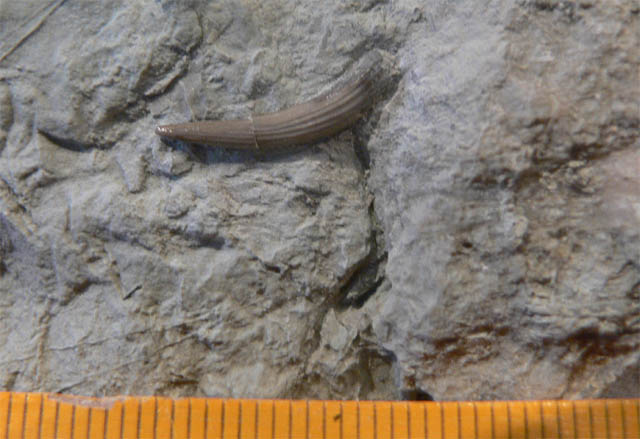 |
 | Prognathodon sp. #VPA9928
Nice Mosasaurus skull parts with both upper jaws
No restoration! On matrix from 68 by 31 cm
Late Cretaceous 66 million years old
Khouribga, Morocco
Size biggest tooth : 1.8 inch / 4.5 cm approx
Price: Euro |
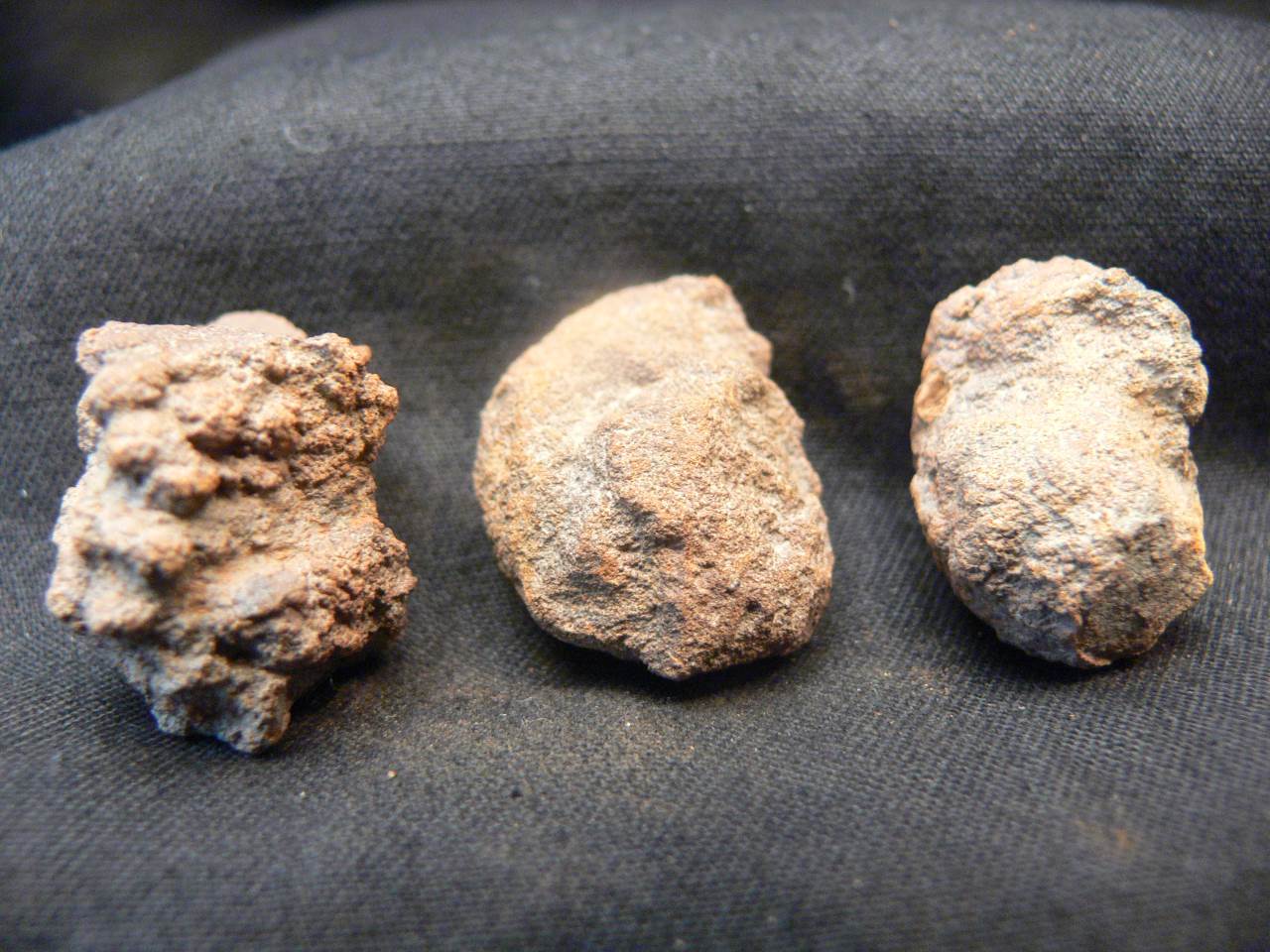 | 3 Herbivore Dinosaur coprolite #VCP10257
Probably Scelidosaurid Rare Old Collection
L. Jurassic, Hettangian 200 Million years old
Holy Cross Mountains, Poland
Size biggest: 1.08 inch / 2.7 cm
Price: Euro |
3 Carnivore Dinosaur coprolites #VCP10261
Probably Coelophysid Rare Old Collection
L. Jurassic, Hettangian 200 Million years old
Holy Cross Mountains, Poland
Size biggest: 1.2 inch / 3 cm long
Price: Euro | 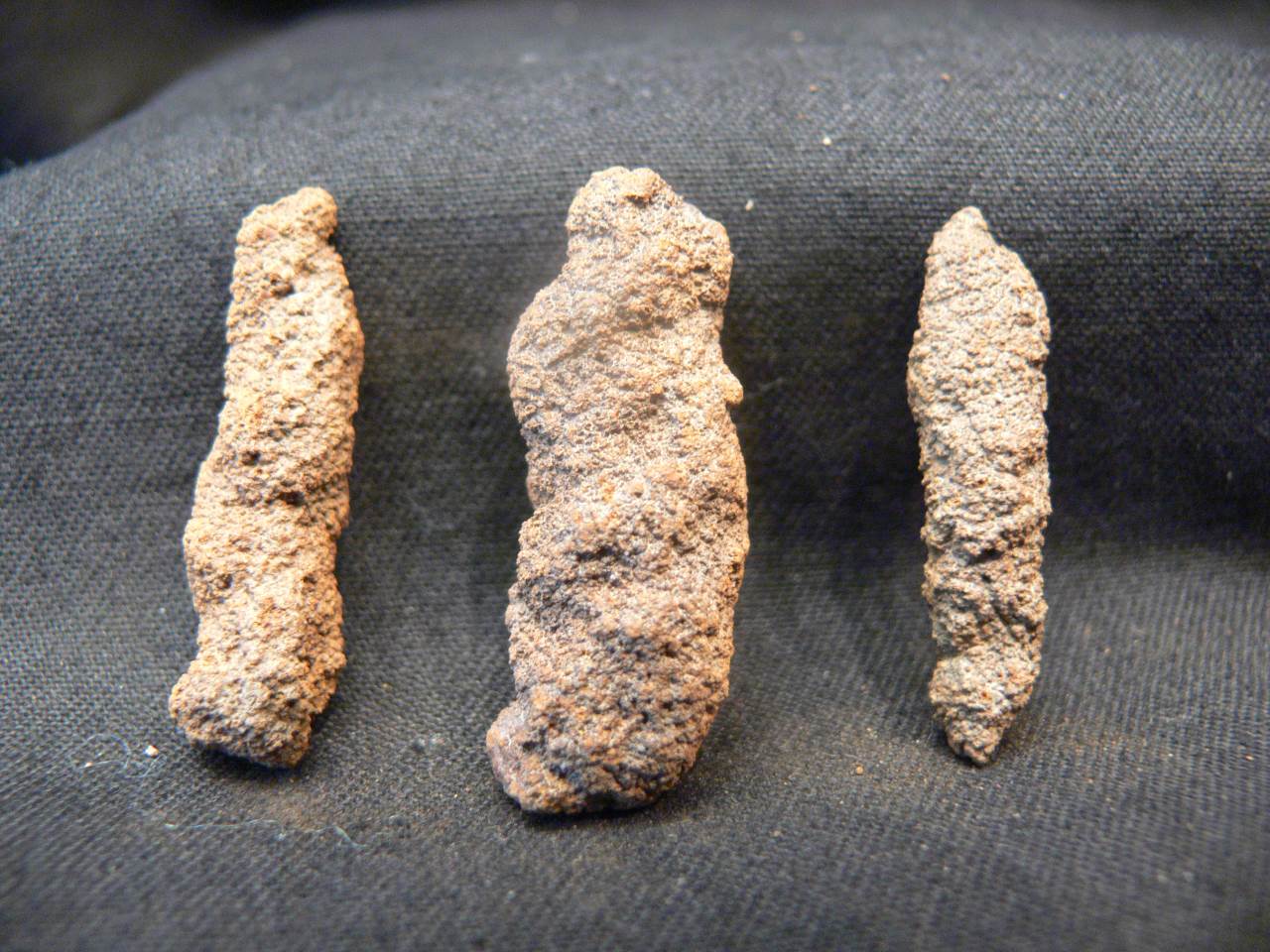 |
Irenesauripus sp. #VFH10130
Theropod Dinosaur footprint, Very rare
(Kurkowski 1994) Old Collection
U. Cretaceous, Turonian 90 Million years old
Gaizes Potok, Holy Cross Mountains, Poland
Matrix: 23 by 17.5 cm
Size footprint span: 6 inch / 15 cm
Price: Euro |  |
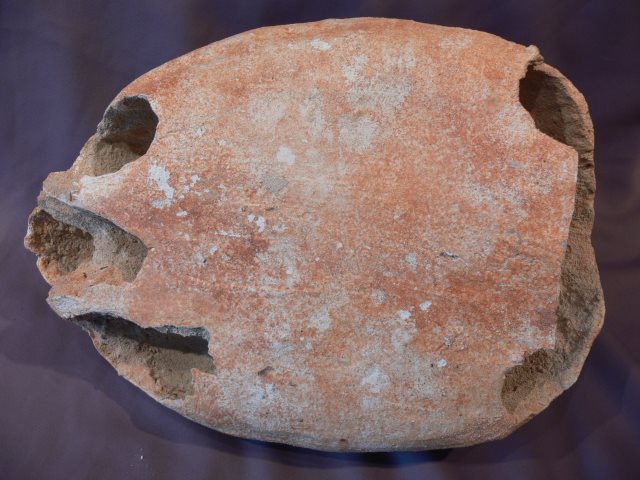 | 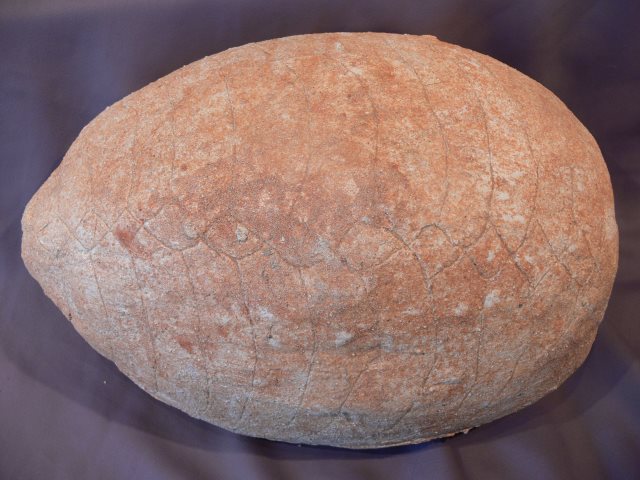 |
Lytoloma elegans #VSM9702 VSM9704
Extreme Rare complete Tortoise shell.- Chelonia
Maastrichtian, K/T border towards the
Eocene, Ypressian 56 million years old
Oedzem, Khouribga, Morocco
Size: 14.37 L by 9.2 W inch / 36.5 L by 23 W cm
Price: |  |
 | Dendrolithus sp. #VCD9917
3 Duckbill Dinosaur eggs OLD COLLECTION
Campanian U. Cretaceous 75 million years old
Kaoguo formation
Xixia basin, Henan Province, China
Matrix across: 24 by 27 cm
Size biggest: 5.6 inch / 14 cm
Price: |
Discosauriscus pulcherrimus
#VDP3304
2 Very Nice Amphibian specimen.
L Permian, Rotliegend, 290 million years old
Boskovice, Czech Republic
Size matrix: 31.5 by 20.5 cm
Size specimen: 6.96 inch / 17.4 cm
Price: Euro | 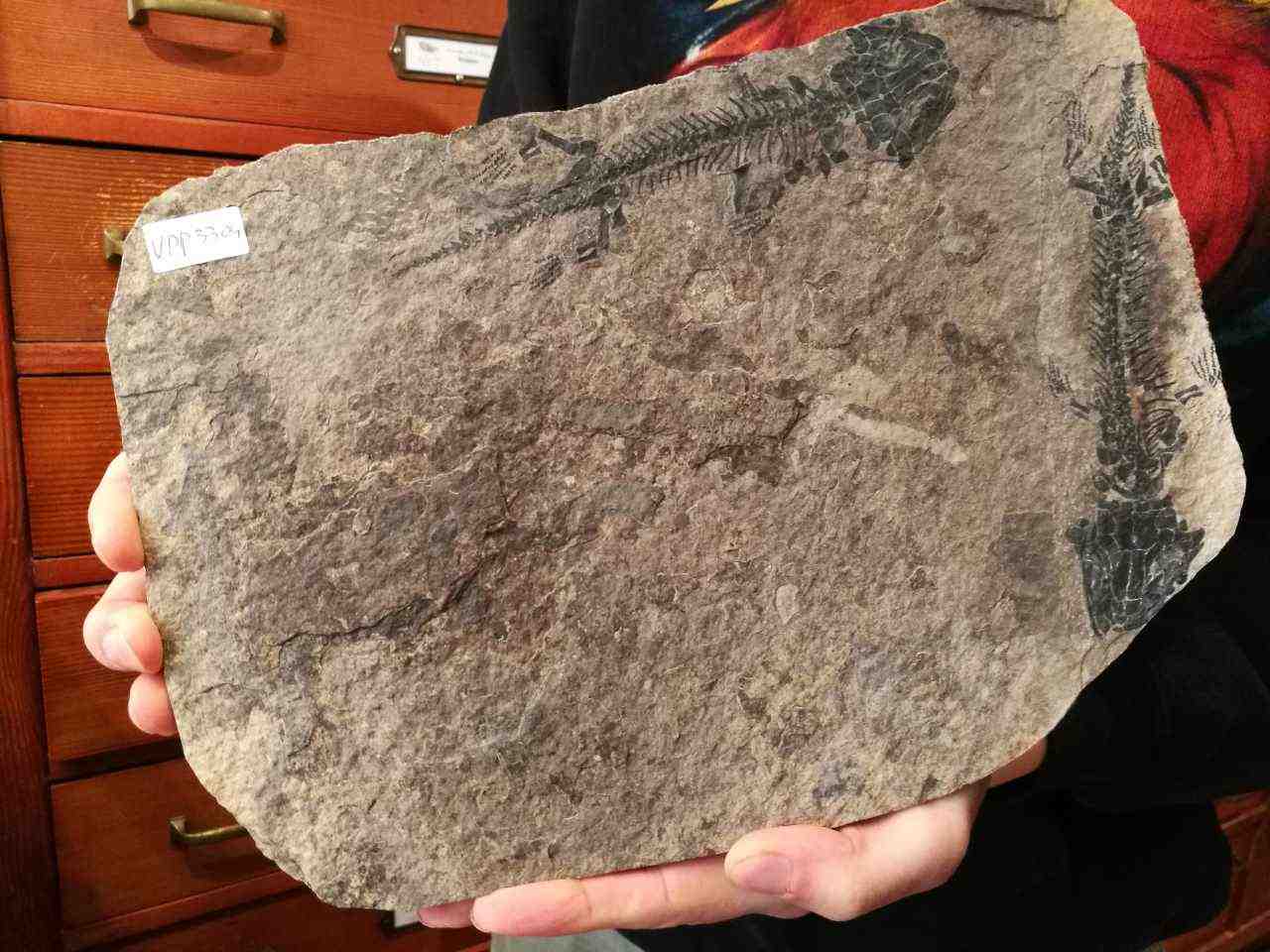 |
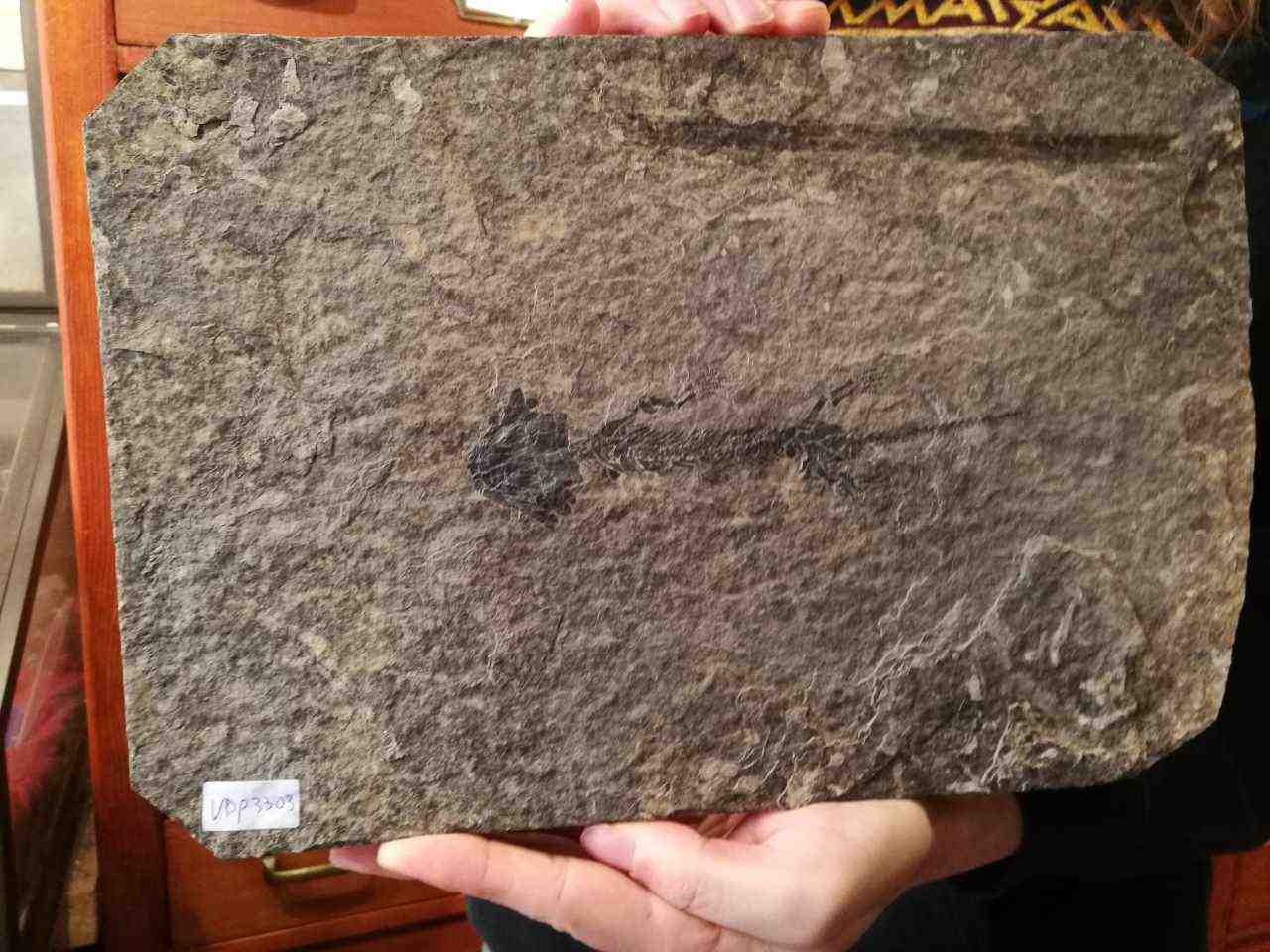 | Discosauriscus pulcherrimus
#VDP3303
Very Nice Amphibian specimen. With plant remains.
L Permian, Rotliegend, 290 million years old
Boskovice, Czech Republic
Size matrix: 34 by 23 cm
Size specimen: 6.8 inch / 17 cm
Price: Euro |
Discosauriscus pulcherrimus
#VDP3302
Very Nice Amphibian specimen.
L Permian, Rotliegend, 290 million years old
Boskovice, Czech Republic
Size matrix: 30 by 27 cm
Size specimen: 6.2 inch / 15.5 cm
Price: | 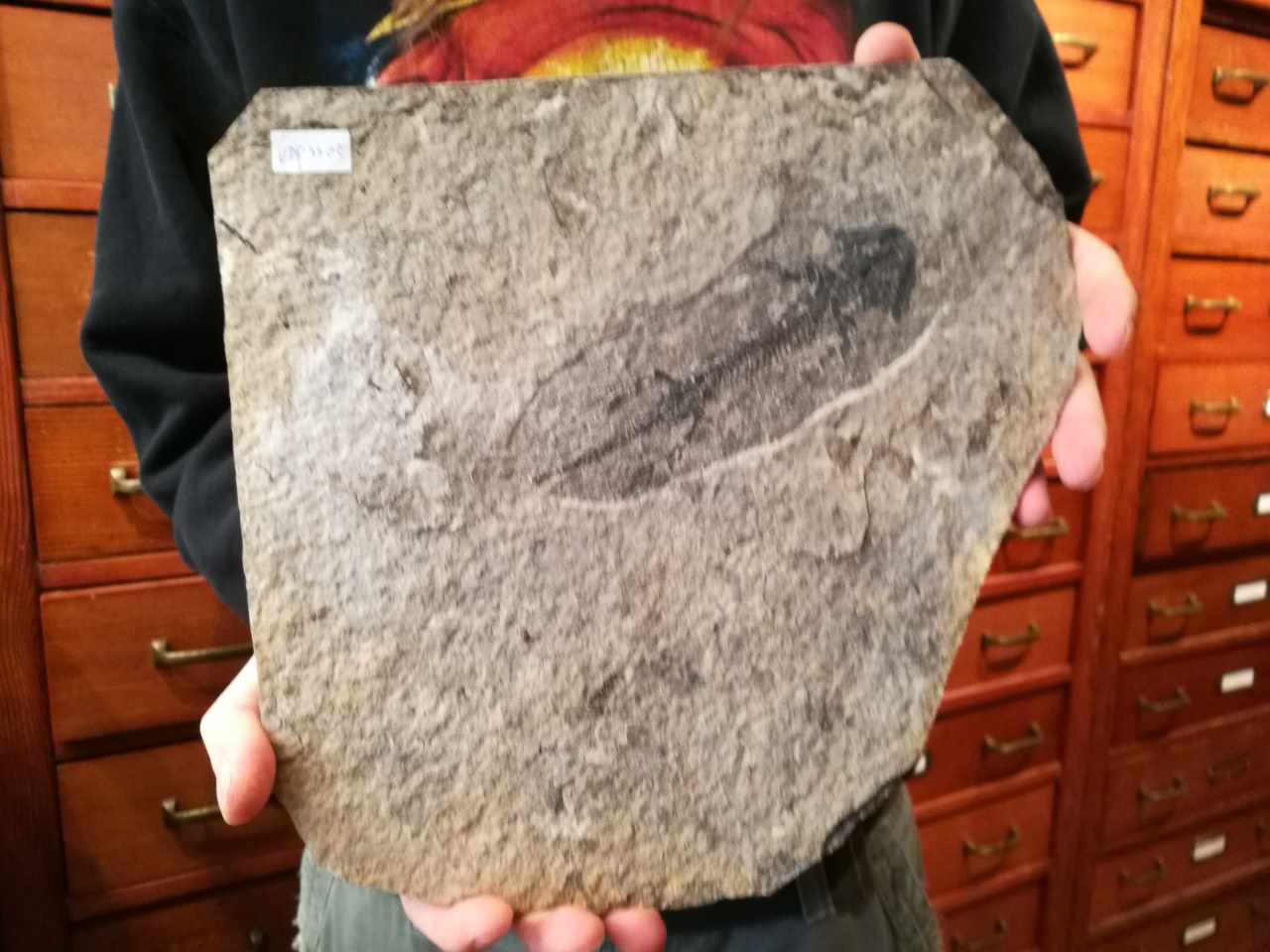 |
| Albertosaurus cf. dispar #VAM8066
Tyrannosaurid dinosaur tooth.
Collected on Private lands
U. Cretaceous 69 million years old
Judith river formation, Montana, U.S.A.
Size: 1 inch / 2.5 cm
Price: |  |
 | Albertosaurus cf. dispar #VAM8064
Tyrannosaurid dinosaur tooth.
Collected on Private lands
U. Cretaceous 69 million years old
Judith river formation, Montana, U.S.A.
Size: 1.2 inch / 3 cm
Price: |
Sclerocephalus cf. haeuseri
#VSD10114
Old Collection, Altfund
Nice Amphibian specimen. Some restoration.
Permian, Rotliegend, 285 million years old
Odernheim, Pfalz, Germany
Size matrix: 40 by 23 cm
Size specimen: 10.2 inch / 25.5 cm
Price: |  |
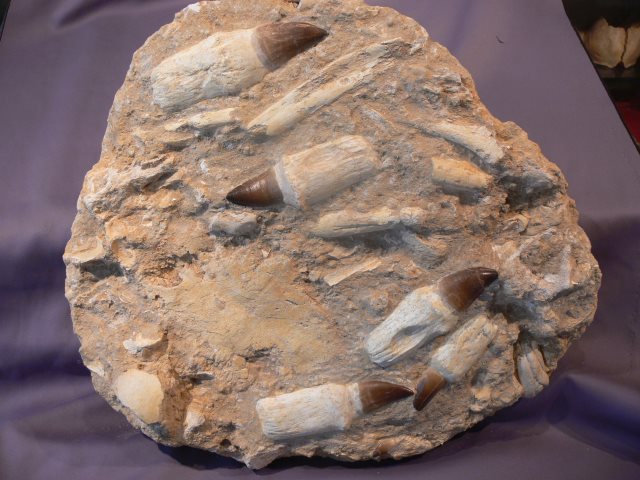 | Mosasaurus cf. hoffmanii #VMH9625
Nice & very huge piece of Mosasaurus skull parts and other fossils like sharkteeth.
No restoration! On matrix from 45 by 48 cm
Late Cretaceous 66 million years old
Khouribga, Morocco
Size biggest tooth : 5.4 inch / 13.5 cm
Price: Euro |
Micromelerpetontidae spec. #VBP9484
Very nice Amphibian specimen No restoration.
Old Collection, Altfund
Permian, Rotliegend, 285 million years old
Odernheim, Pfalz, Germany
Size span: 3.68 inch / 9.2 cm
Price: Euro | 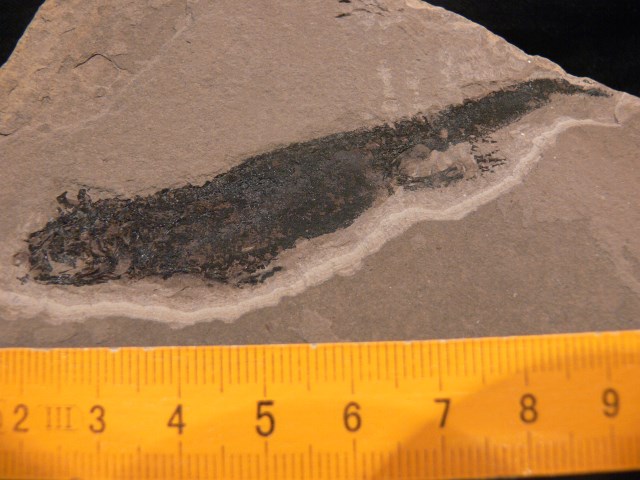 |
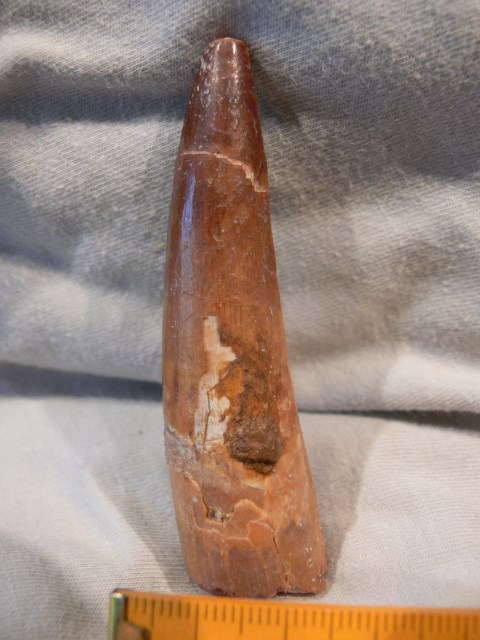 | Suchomimus spec. #VSA9473
Rare African Spinosaurus tooth,
Tegana Formation (Cenomanian)
Cretaceous 95 million years old
Kem Kem Beds, Morocco
Size: 3 inch / 7.5 cm
Price: |
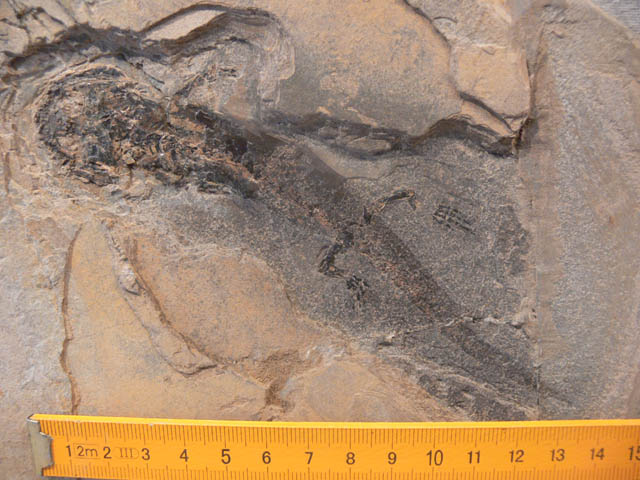 | Micromelerpetontidae spec.#VSR8050
Amphibian specimen
Old Collection, Altfund
Permian, Rotliegend, 285 million years old
Odernheim, Pfalz, Germany
Size specimen: 6 inch / 15 cm
Price: |
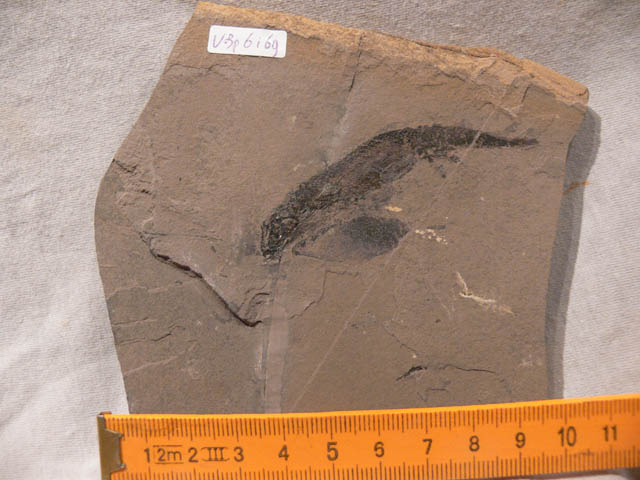 | Melanerpeton humbergense #VBP6169
Very nice Branchisaurid Amphibian No restoration
Old Collection, Altfund
Permian, Rotliegend, 285 million years old
Odernheim, Pfalz, Germany
Size : 2.8 inch / 7 cm
Price: |
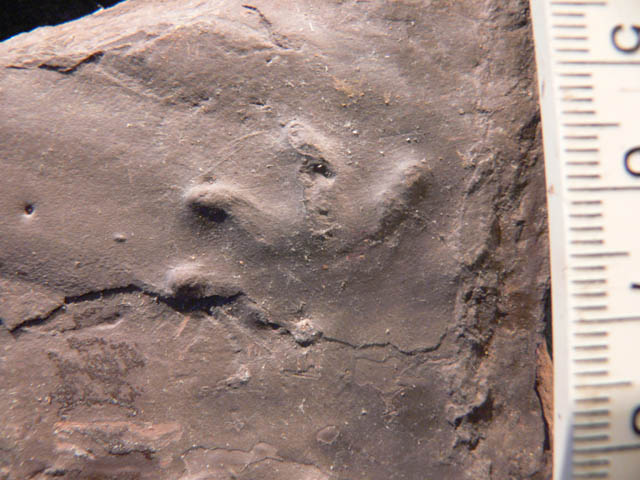 | Ichniotherium spec. #VAM7087
Amphibian footprints .
Old collection
L. Permian, 280 million years old
Heuco Formation, New Mexico
Size span: 0.96 inch / 2.4 cm long
Price: |
Chelichnus gigas #VAT6948
Amphibian footprint .
Old collection
L. Permian, 280 million years old
Heuco Formation, New Mexico
Size print: 3.2 inch / 8 cm wide
Price: | 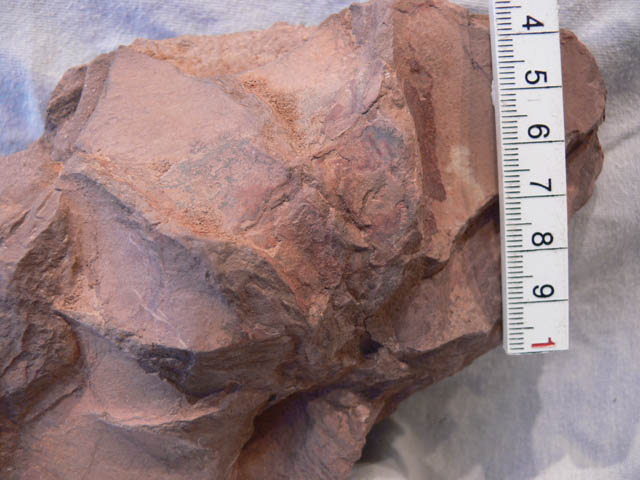 |
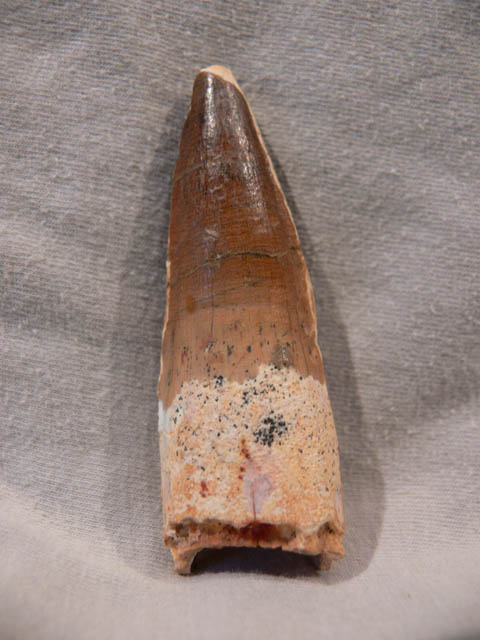 | Spinosaurus spec. #SS5608
African Spinosaurus tooth, No restoration
Tegana Formation (Cenomanian)
Cretaceous 95 million years old
Kem Kem Beds, Morocco
Size: 2.4 inch / 6 cm
Price: |
Melanerpeton humbergense #VDD8642
Very nice Branchisaurid Amphibian No restoration
Old Collection, Altfund
Permian, Rotliegend, 285 million years old
Odernheim, Pfalz, Germany
Size span: 4 inch / 10 cm
Price: Euro | 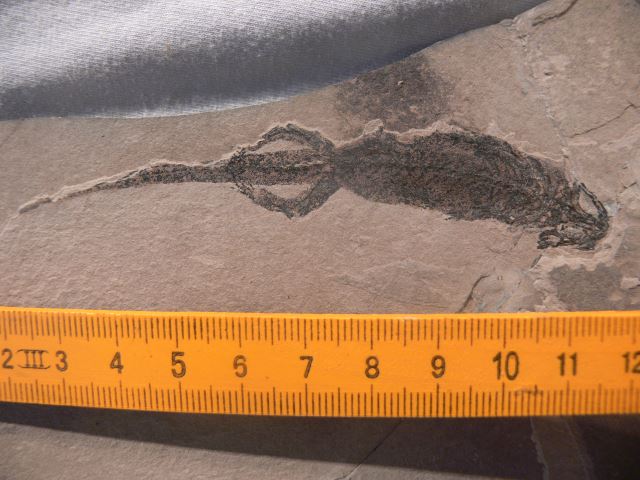 |
Discosauriscus pulcherrimus
#VDP3300
Nice Amphibian specimen. Sme restoration.
L Permian, Rotliegend, 290 million years old
Boskovice, Czech Republic
Size matrix: 23 by 11 cm
Size specimen: 5 inch / 12.5 cm
Price: | 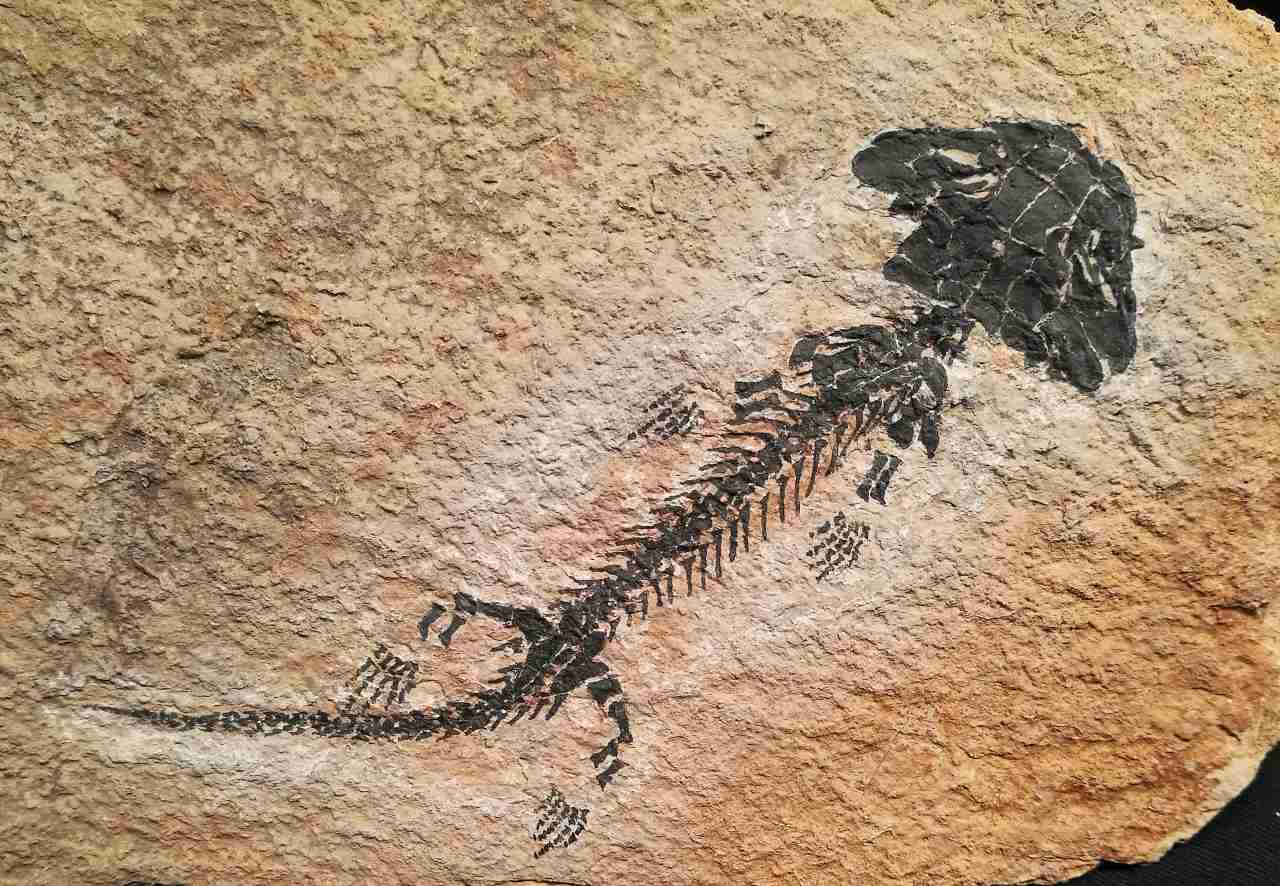 |
 | Deltadromeus cf. agilis #DC5145
African Raptor/Ceratosaur nice Foot bone,
No restoration
Tegana Formation (Cenomanian)
Cretaceous 95 million years old
Kem Kem Beds, Morocco
Size: 1.6 inch / 4cm
Price: |
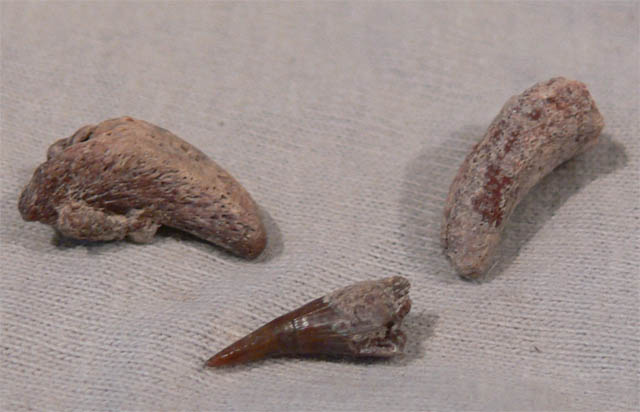 | Eryops spec. #Tex005
Set of 2 Claw cores and 1 Tooth RARE
Permian, Lueders Limestone, Wagoner Ranch form. 280 million years old
Archer County, Texas
Size tooth: 0.4 inch / 1 cm
Price for the set: Euro |
| Ophiacodon spec. #Tex006
Set of 3 Claws and 2 Teeth RARE
Permian, Kemp limestone with Fissile Red clay
280 million years old
Lake Kemp, Baylor county, Texas
Size tooth: 0.52 inch / 1.3 cm
Price for the set: | 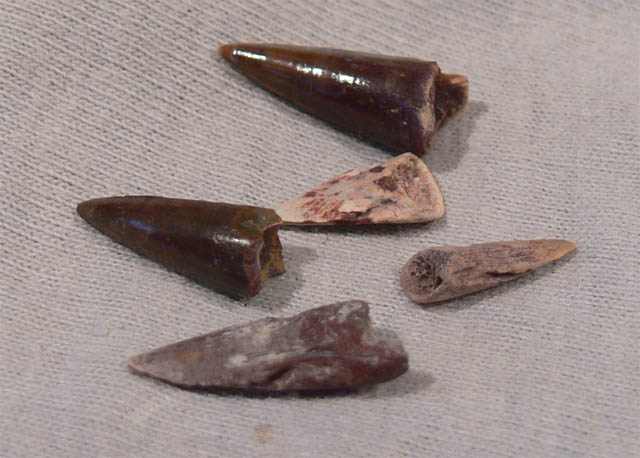 |
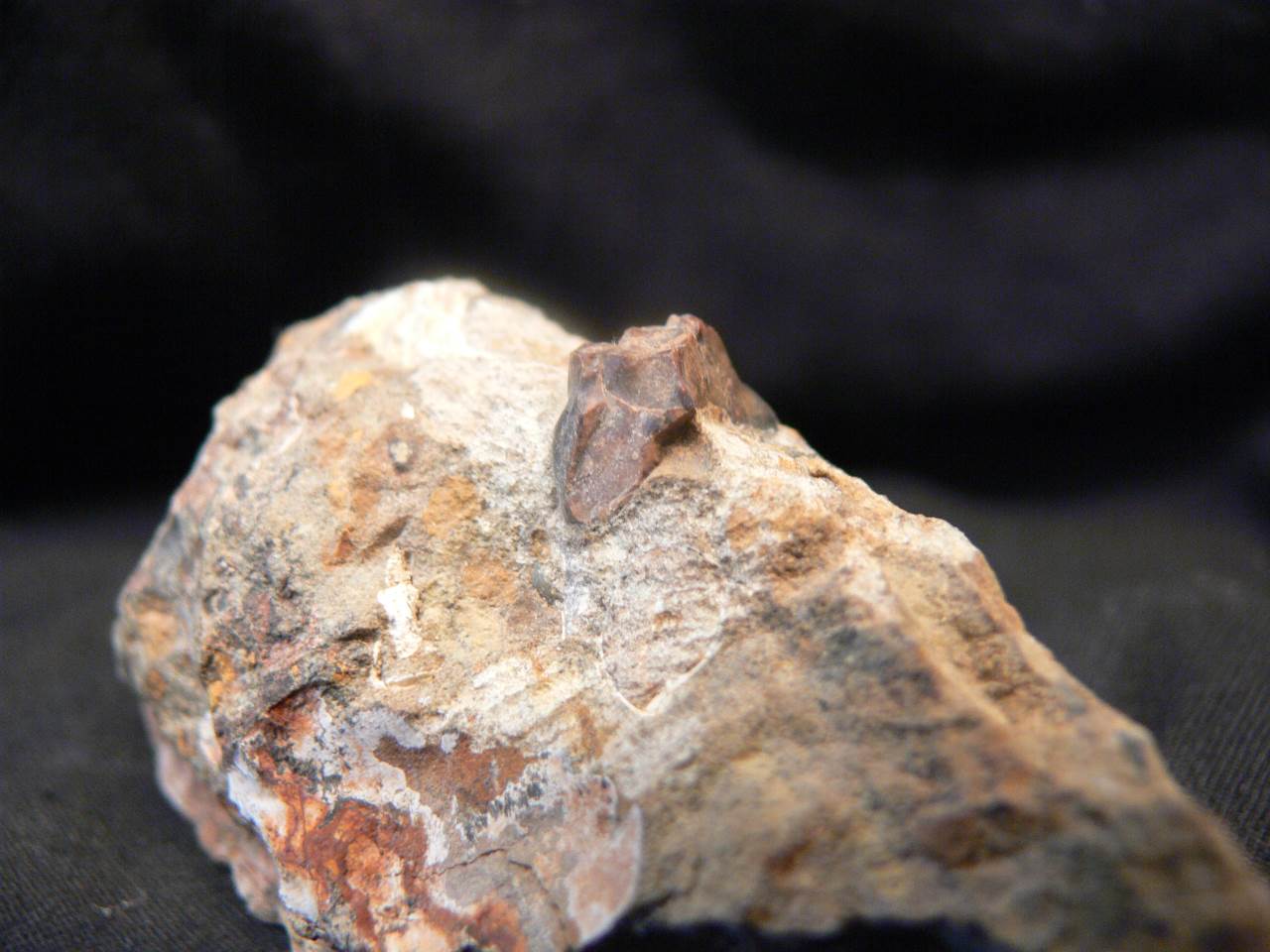 | Triceratops sp. #VTB10224
Tooth in matrix
U. Cretaceous, Maastrichtian 70 Million years old
Near Douglas, Wyoming, U.S.A.
Size tooth: 0.48 inch / 1.2 cm
Price: Euro |
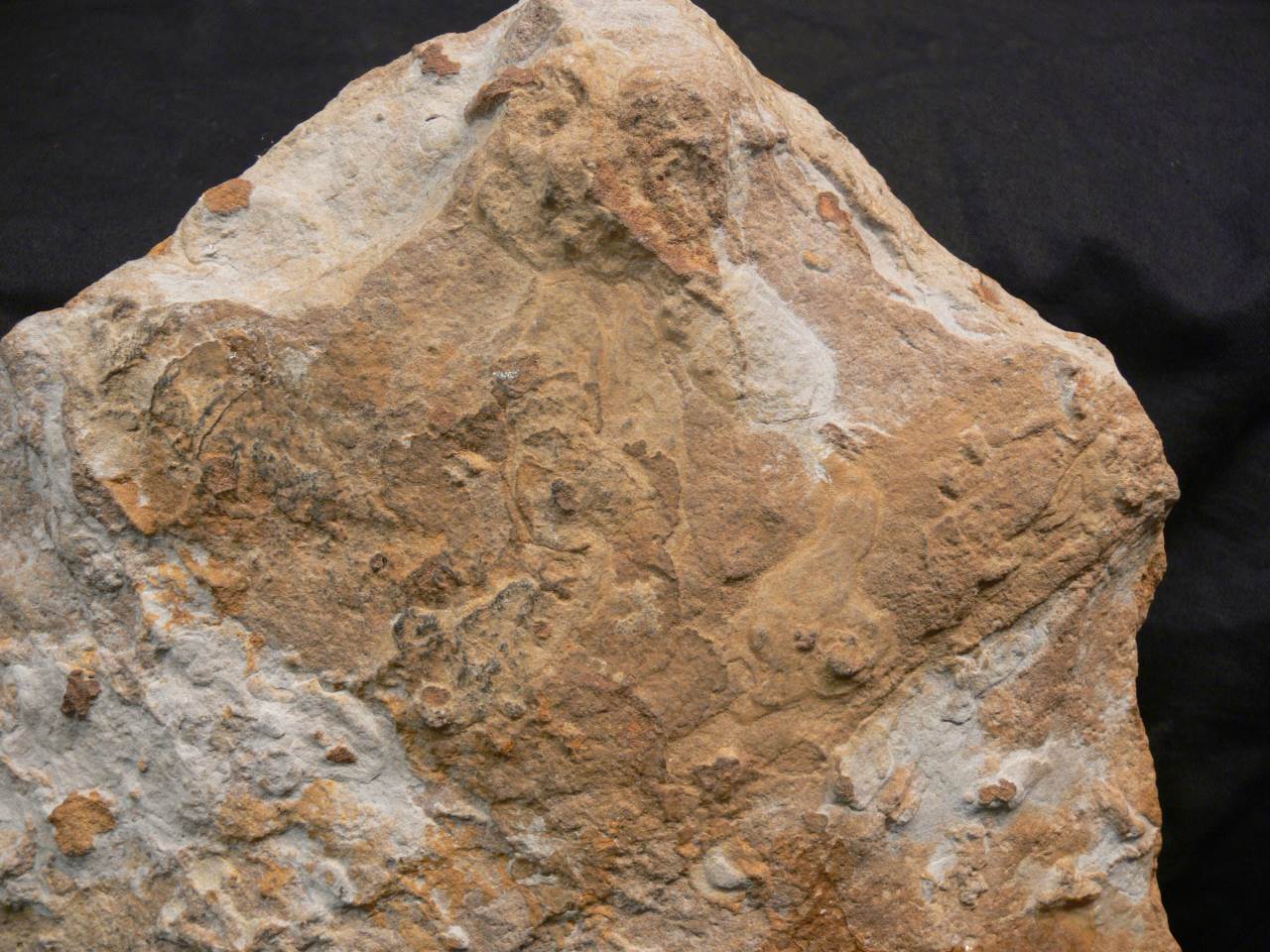
| cf. Hadrosauropodus sp. #VFP10156
Theropod Dinosaur footprint, Very rare.
Above left the print through on the other side
(Kurkowski 1994) Old Collection
U. Cretaceous, Turonian 90 Million years old
Gaizes Potok, Holy Cross Mountains, Poland
Matrix: 21 by 21 cm
Size footprint span: 6.4 inch / 16 cm
Price: Euro |
Irenesauripus sp. #VFP10157
Theropod Dinosaur footprint, Very rare
(Kurkowski 1994) Old Collection
U. Cretaceous, Turonian 90 Million years old
Gaizes Potok, Holy Cross Mountains, Poland
Matrix: 26 by 14 cm
Size footprint span: 5.2 inch / 13 cm
Price: Euro | 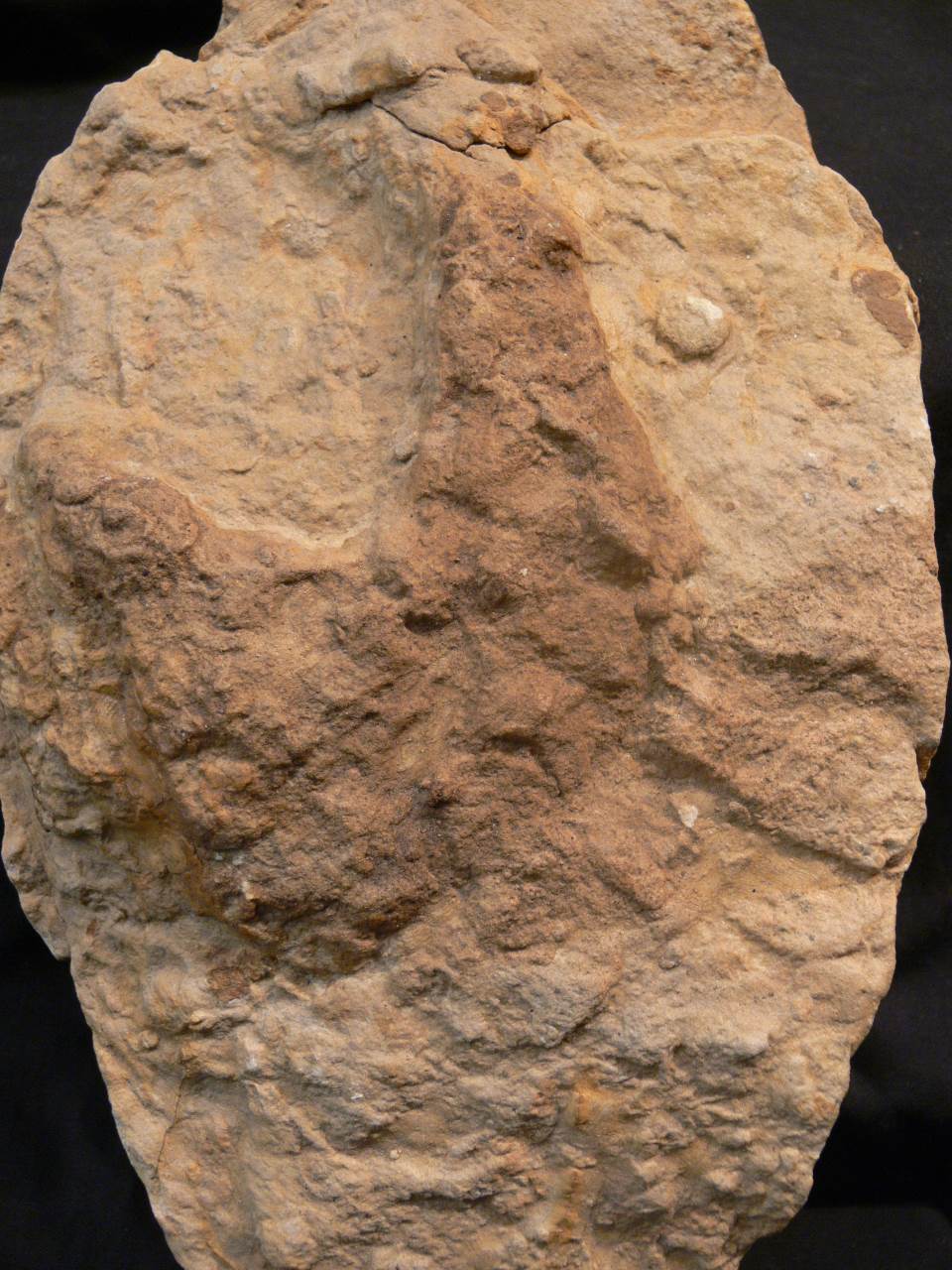 |
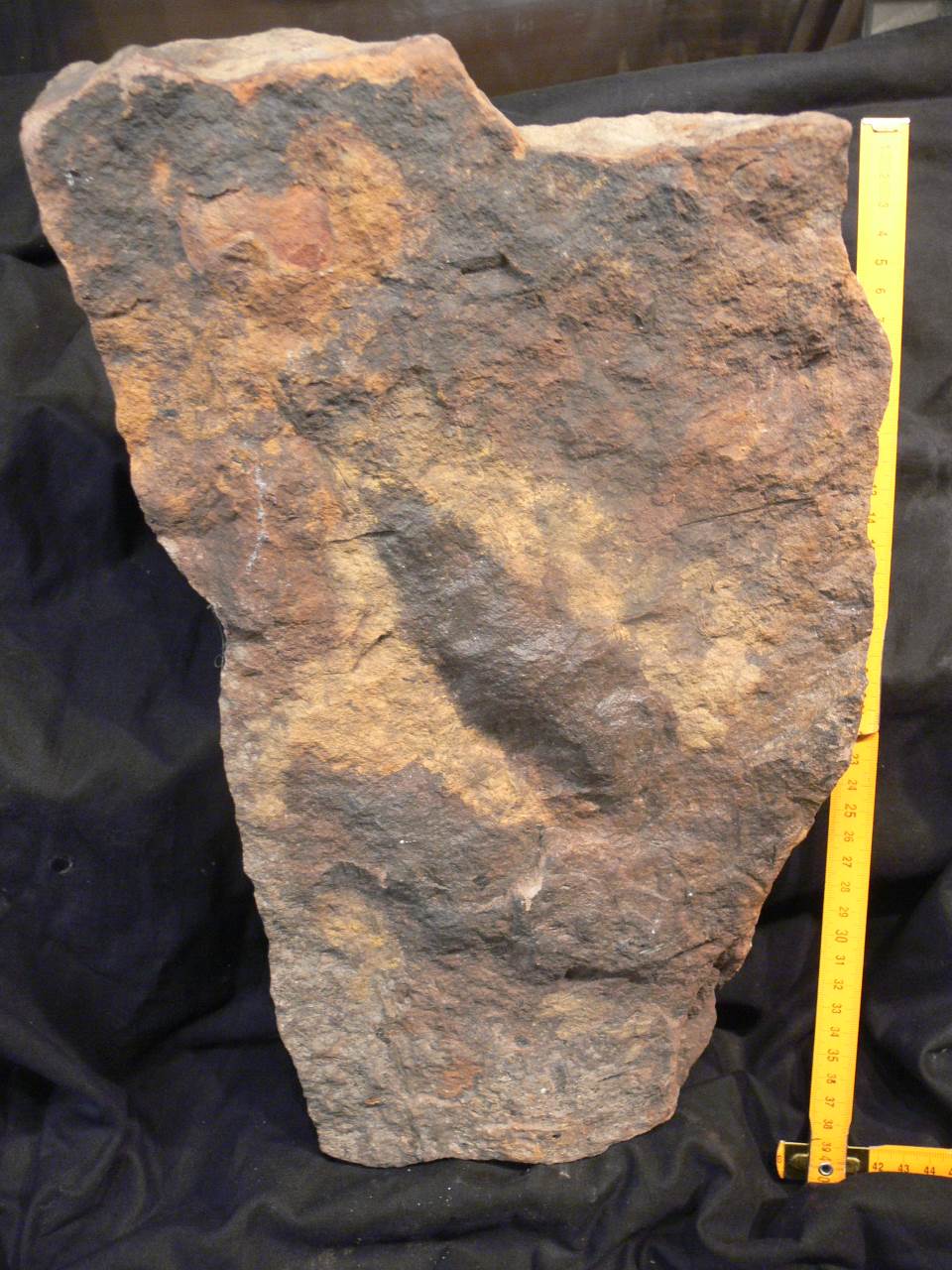
| cf. Iguanodon sp. #VIP10160
Theropod Dinosaur footprint, Extreme rare
Old Collection (Heavy!)
L. Cretaceous, Albian 90 Million years old
Gaizes Potok, Holy Cross Mountains, Poland
Matrix: 40 by 21 cm
Size footprint wide: 9.4 inch / 23.5 cm
Price: Euro |
Characichnos sp. #VCP10162
Swimming Archasauriform Dinosaur footprint,
(cf. Erythrosuchid) Very rare Old Collection
L. Triassic, Olenekian 250 Million years old
Holy Cross Mountains, Poland
Matrix: 28 by 21 cm
Size footprint span: 6.8 inch / 17 cm
Price: Euro |  |
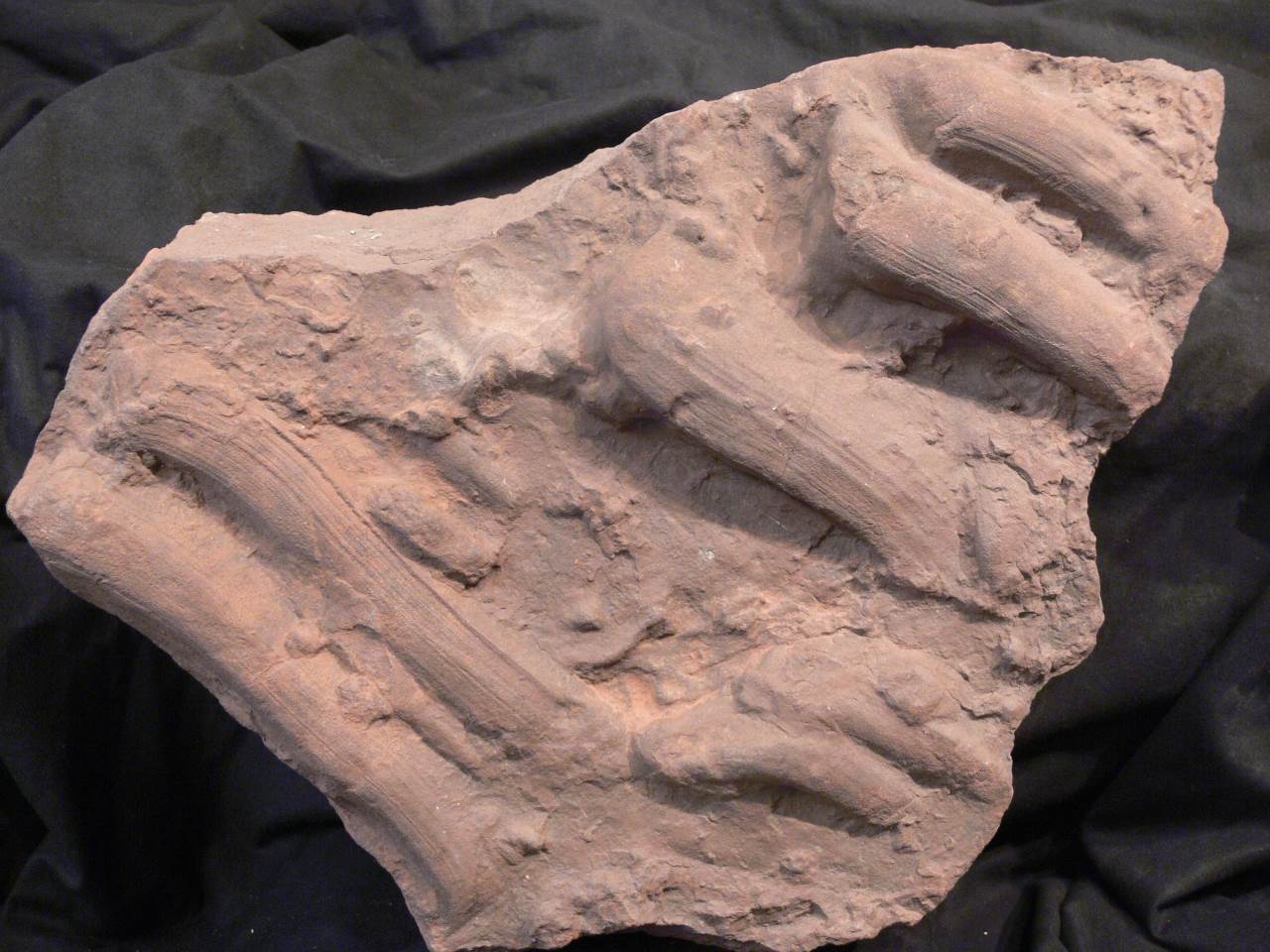 | Characichnos sp. #VCP10163
Swimming Archasauriform Dinosaur "slippery" footprints, (cf. Erythrosuchid)
Very rare Old Collection
L. Triassic, Olenekian 250 Million years old
Holy Cross Mountains, Poland
Matrix: 34 by 24 cm
Price: Euro |
cf. Iguanodon sp. #VIP10148
Theropod Dinosaur footprint, Extreme rare
Old Collection (Heavy!)
L. Cretaceous, Albian 90 Million years old
Gaizes Potok, Holy Cross Mountains, Poland
Matrix: 23 by 37 cm
Size footprint wide: 9.2 inch / 23 cm
Price: Euro | 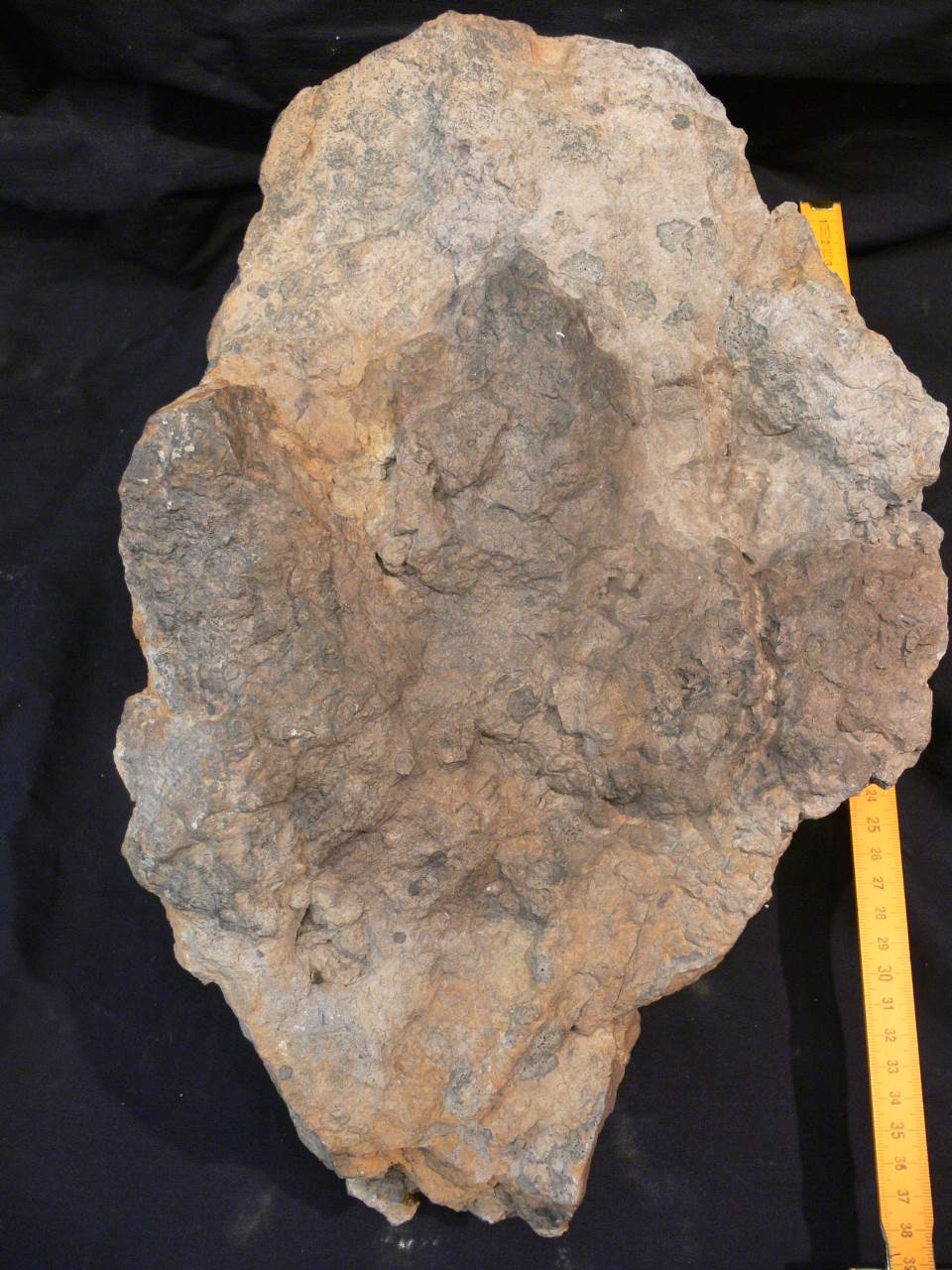
|
 | Grallator parallelus #VGP10147
Coelophysid Dinosaur footprint, Very rare
Old Collection
L. Jurassic, Pliensbachian 185 Million years old
Gaizes Potok, Holy Cross Mountains, Poland
Matrix: 11 by 11 cm
Size footprint span: 3.08 inch / 7.7 cm
Price: Euro |
Grallator parallelus #VGP10146
2 Coelophysid Dinosaur footprint, Very rare
Old Collection
L. Jurassic, Pliensbachian 185 Million years old
Gaizes Potok, Holy Cross Mountains, Poland
Matrix: 21 by 17 cm
Size biggest span: 4.8 inch / 12 cm
Price: Euro | 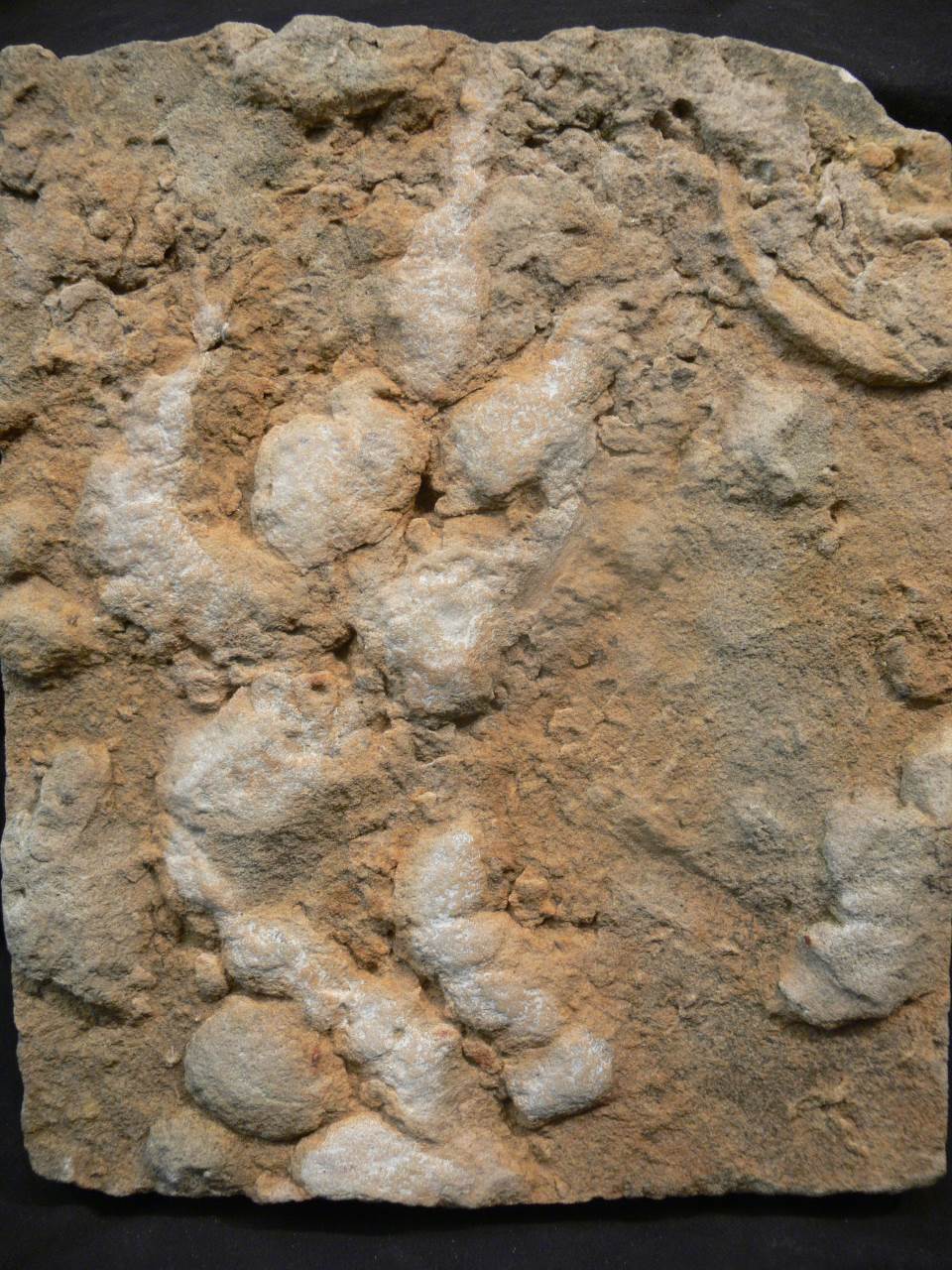 |
 | Characichnos sp. #VTP10145
Swimming Archasauriform Dinosaur footprint,
(cf. Erythrosuchid) Very rare Old Collection
L. Triassic, Olenekian 250 Million years old
Holy Cross Mountains, Poland
Matrix: 15 by 14 cm
Size footprint span: 4.2 inch / 10.5 cm
Price: Euro |
Prorotodactylus sp. #VTP10144
Basal Dinosauromorph Dinosaur footprint,
(cf. Lagerpeton) Very rare Old Collection
L. Triassic, Olenekian 250 Million years old
Holy Cross Mountains, Poland
Matrix: 5.5 by 4.5 cm
Size footprint span: 0.88 inch / 2.2 cm
Price: Euro | 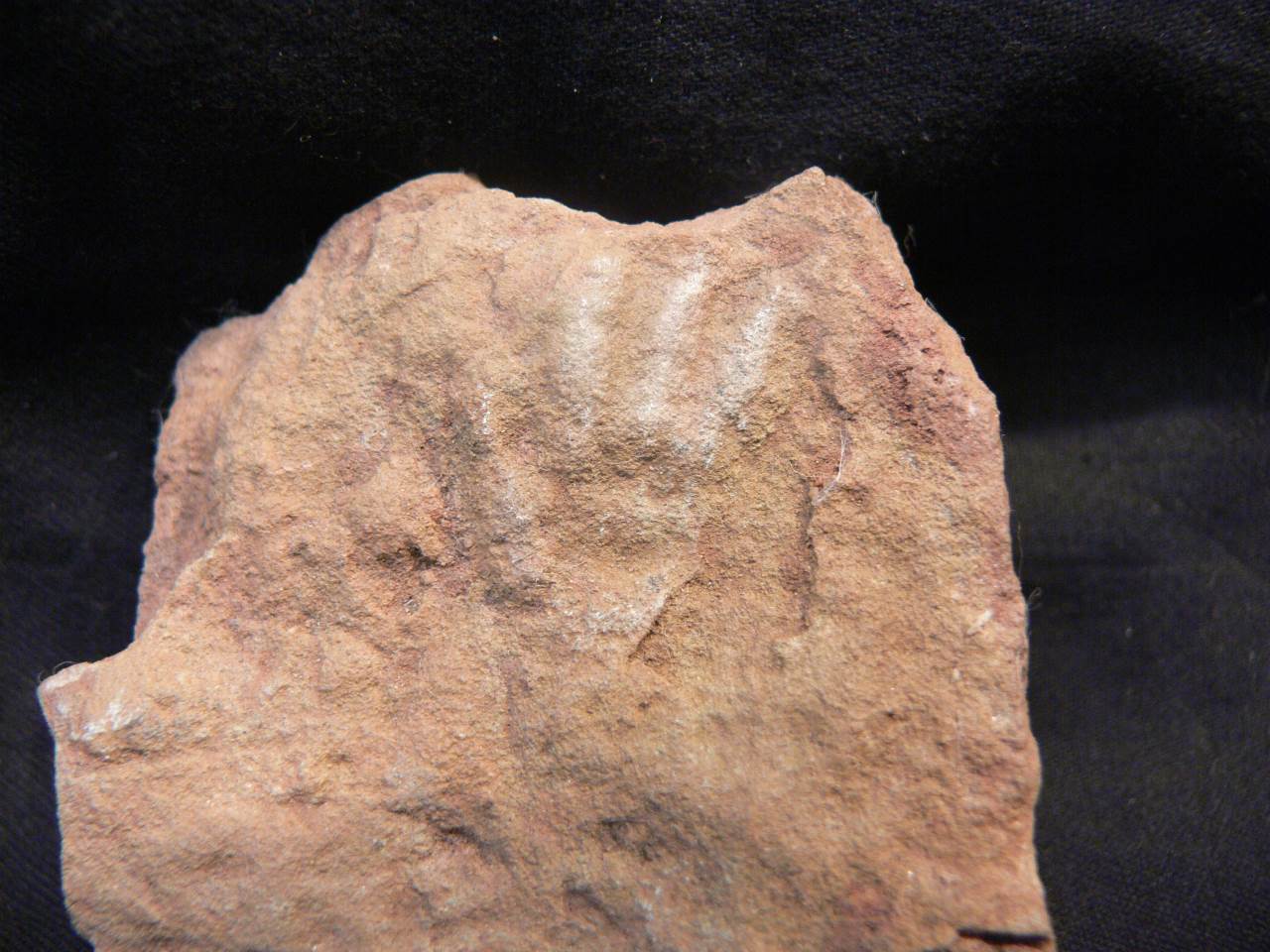 |
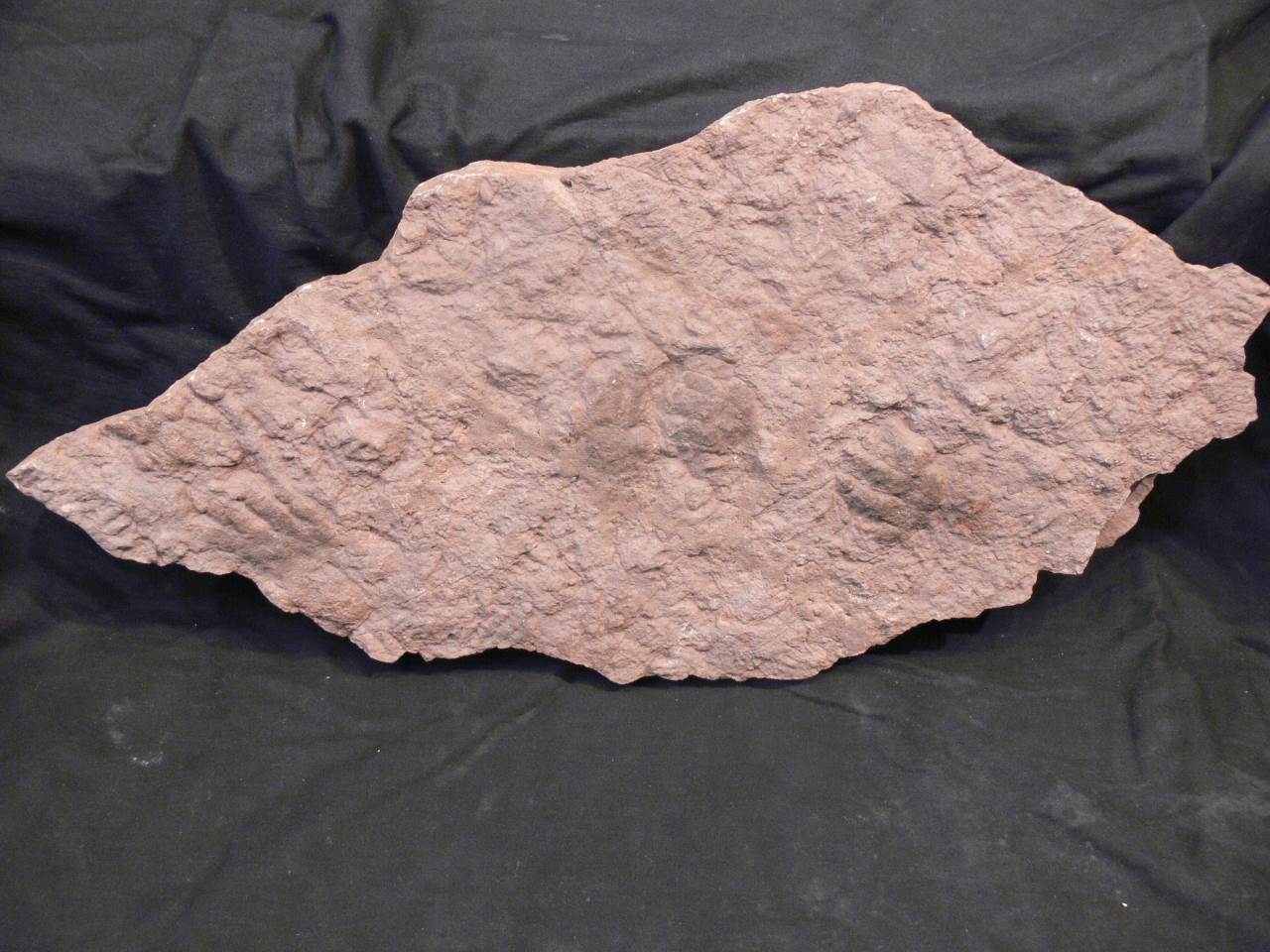 |  |
| Prorotodactylus sp. #VTP10142
Basal Dinosauromorph Dinosaur footprints,
4 clear tracks and several small
(cf. Lagerpeton) Very rare Old Collection
L. Triassic, Olenekian 250 Million years old
Holy Cross Mountains, Poland
Matrix: 49 by 22 cm
Size biggest footprint span: 1.6 inch / 4 cm
Price: Euro |
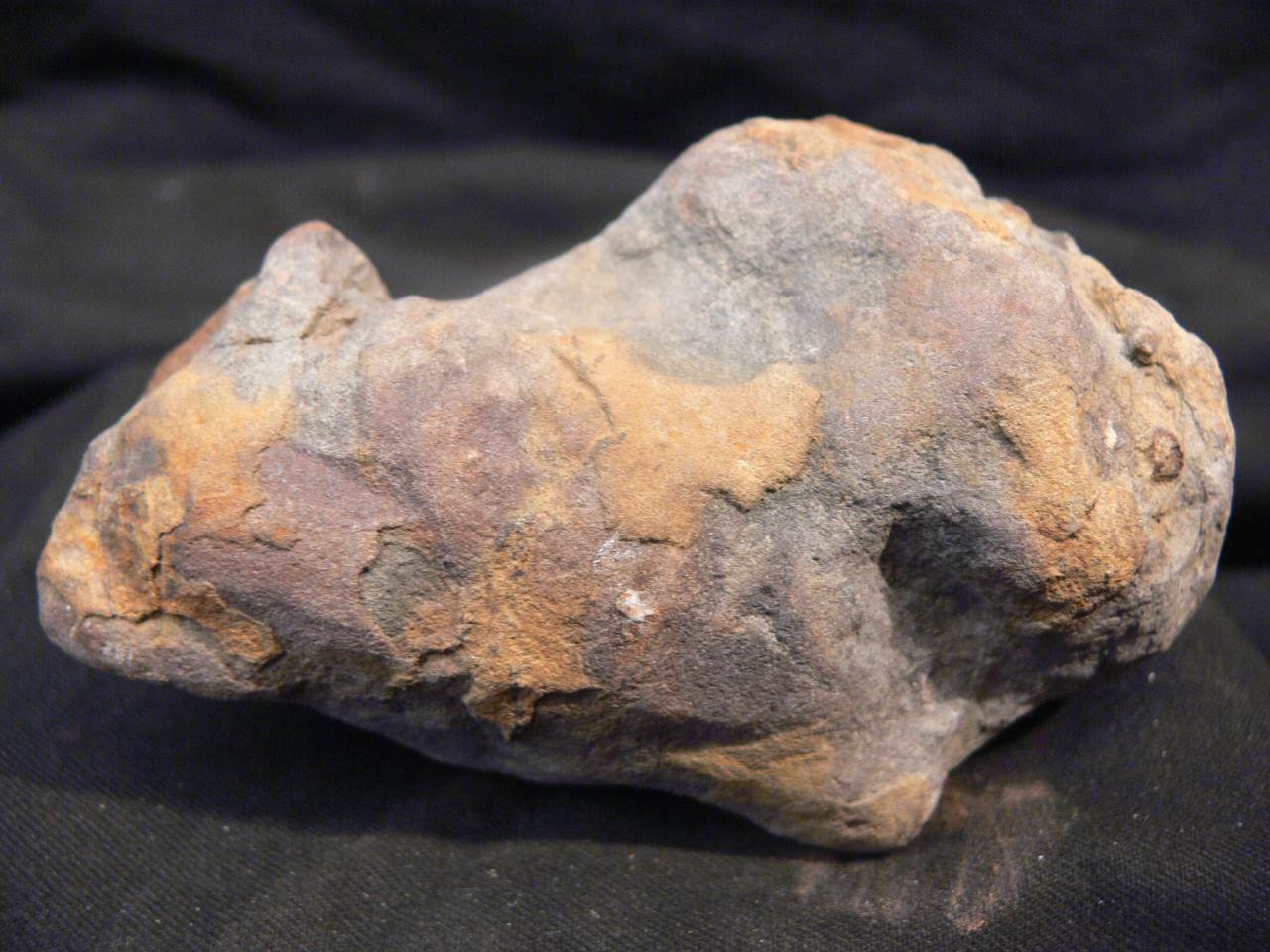 | Herbivore Dinosaur coprolite #VCP10152
Probably Scelidosaurid Rare Old Collection
L. Jurassic, Hettangian 200 Million years old
Holy Cross Mountains, Poland
Size span: 3.6 inch / 9 cm
Price: Euro |
Protochirotherium sp. #VFH10132
Basal Archosauriform Dinosaur footprint
(cf. Erythrosuchid) Extreme rare
Old Collection
L. Triassic, Olenekian 250 Million years old
Holy Cross Mountains, Poland
Matrix: 21 by 16.5 cm
Size footprint span: 3.8 inch / 9.5 cm
Price: Euro | 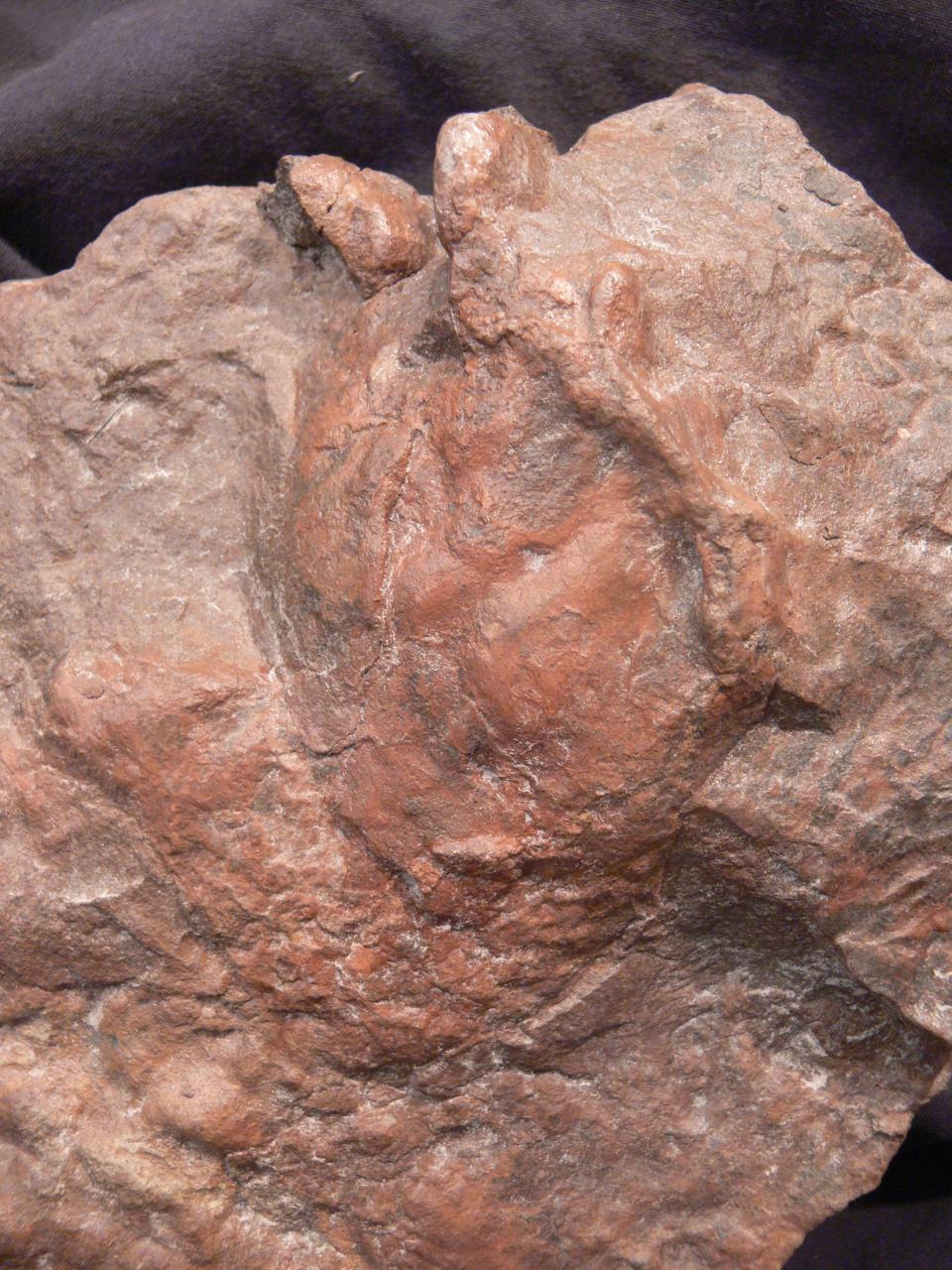 |
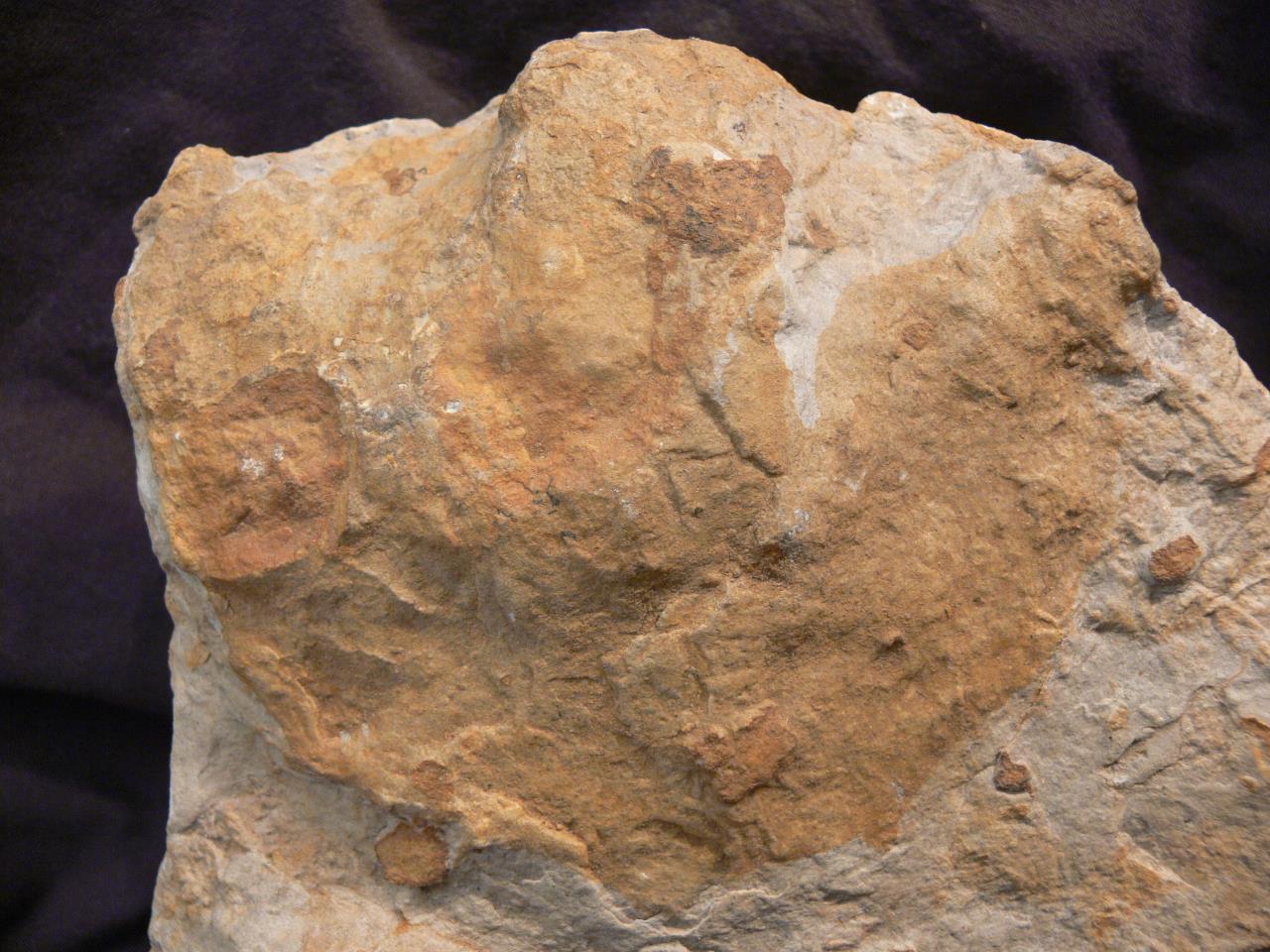 | cf. Hadrosauropodus sp. #VFH10135
Theropod Dinosaur footprint, Very rare
(Kurkowski 1994) Old Collection
U. Cretaceous, Turonian 90 Million years old
Gaizes Potok, Holy Cross Mountains, Poland
Matrix: 15 by 12 cm
Size footprint span: 4.8 inch / 12 cm
Price: Euro |
Grallator cunceatus #VGV9914
Early Dinosaur footprint
L. Jurassic, Hettangian 200 Million years old
New Britain County, Connecticut, U.S.A.
Size plate: 34 by 29 cm
Size fossil span: 8 inch / 20 cm
Price only: Euro | 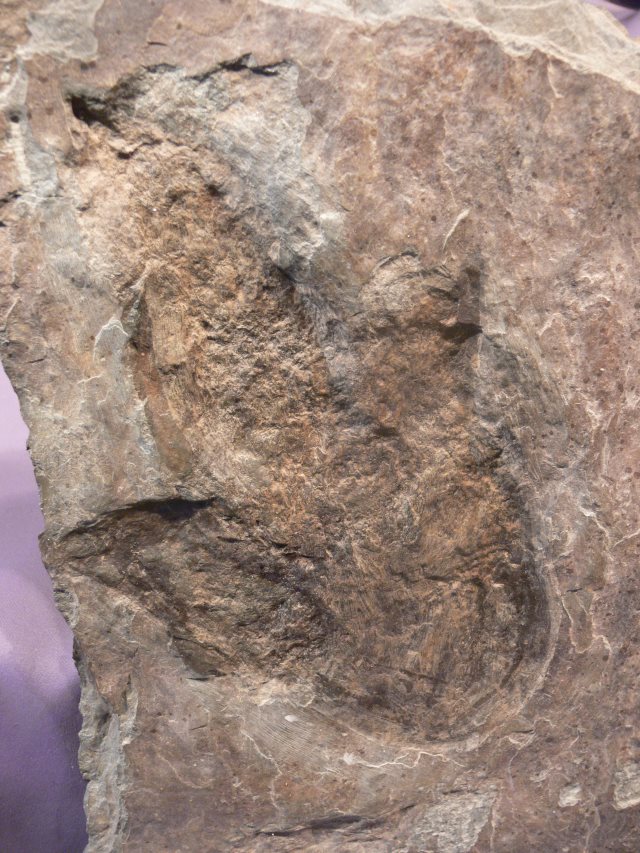
|
Latonia cf. seyfriedi #VSO9700
Ultra Rare fossil Frog, Old Collection
Discoglossidae
U. Miocene, 13 million years old
Sweetwater chalk, Ohningen layers
Ohningen - Hegau, Germany
Size : 8.4 inch / 21 cm
Matrix: 25.5 by 15 cm
Price: Eur | 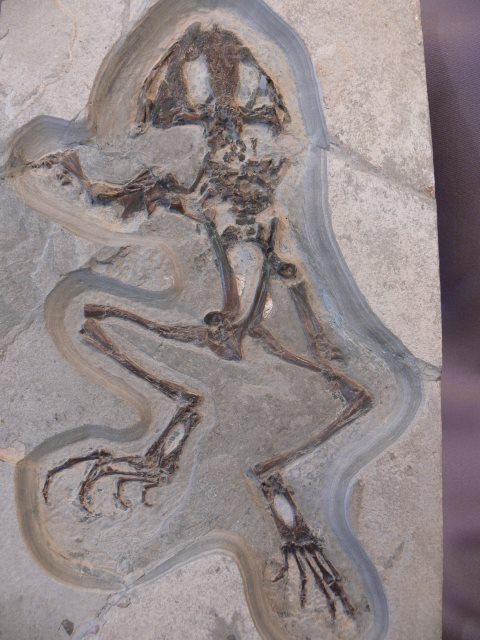 |
Carcharodontosaurus saharicus #VCS9696
Nice African T-rex tooth, No restoration
Tegana Formation (Cenomanian)
Cretaceous 95 million years old
Kem Kem Beds, Morocco
Size: 3 inch / 7.5 cm
Price: | 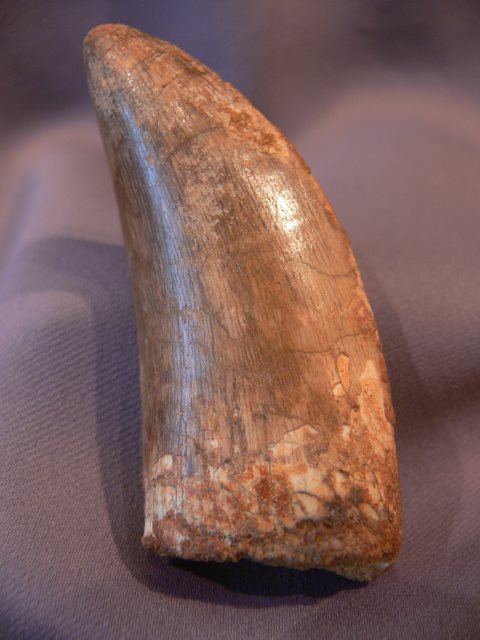
|
Cryptobranchidae spec.#VSO9719
Ultra Rare Scheuchzers Salamandria, Old Collection
U. Miocene, 13 million years old
Sweetwater chalk, Ohningen layers
Ohningen, Germany
Size : 7.08 inch / 17.7 cm
Matrix: 22.5 by 13.5 cm
Price: Eur | 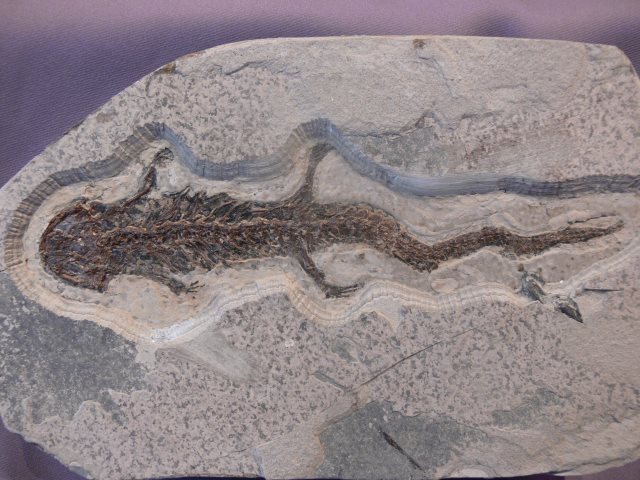 |
| Dyrosaurus phosphaticus #VDP9555
Nice & very complete Crocodile Skull with lower jaw
No restoration!
Late Cretaceous 66 million years old
Khouribga, Morocco
Size approx: 40 inch / 1 m
Price: Euro | 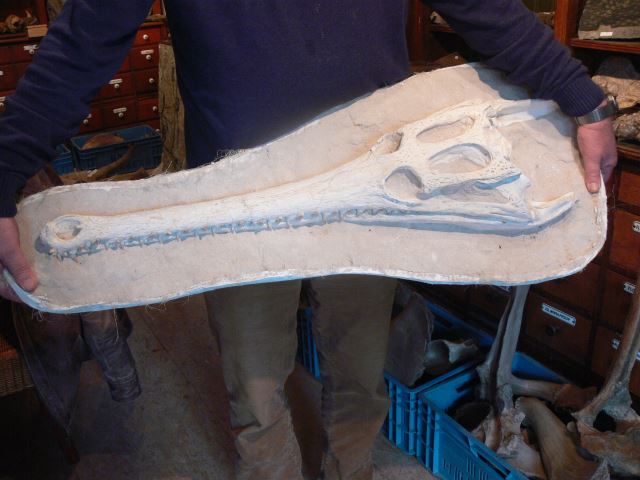 |
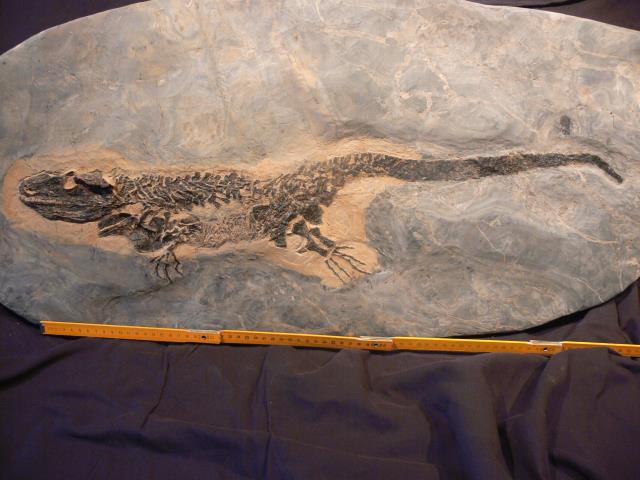 |  |
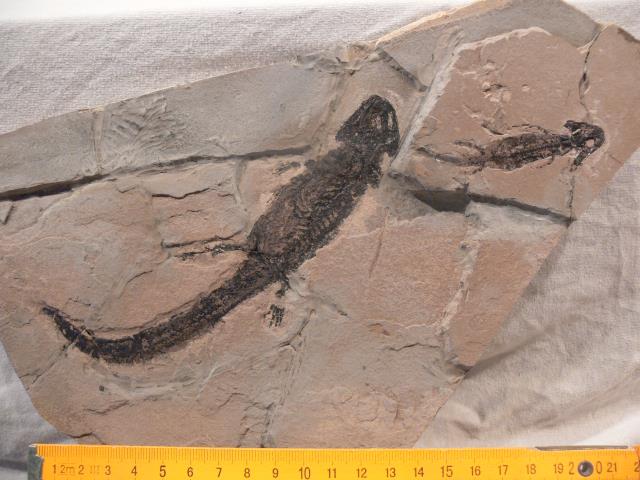
Cheliderpeton latirostre #VSO9350
|Extreme rare and marvelous Amphibian adult specimen.
Teeth clearly showing and has still stomach contents
Old Collection, Altfund
No restoration, some repair
Permian, Rotliegend, 285 million years old
Jeckenbacher kalkstein, Jeckenbach, Pfalz, Germany
Size plate: 90 by 40 cm
Size specimen: 27.56 inch / 70 cm
Price: | 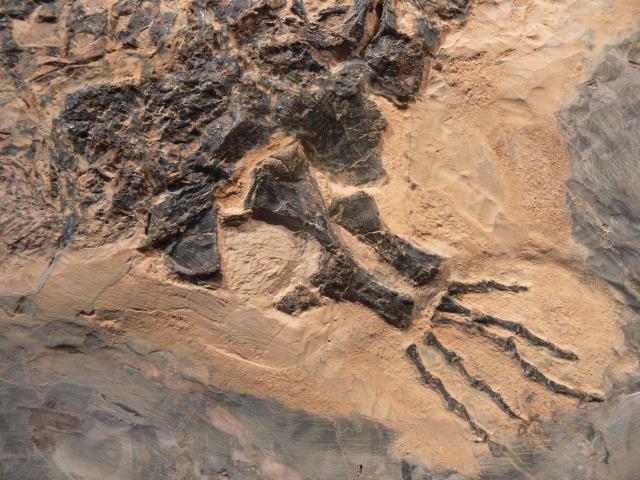 |
 | Micromelerpetontidae spec.#VMO9345
Amphibian specimen,No restoration, some repair
Old Collection, Altfund
Permian, Rotliegend, 285 million years old
Odernheim, Pfalz, Germany
Size biggest: 6 inch / 15 cm
Price: |
 | Sclerocephalus haeuseri #VSP9271
Marvelous Amphibian specimen.
Old Collection, Altfund
Some restoration.
Permian, Rotliegend, 285 million years old
Jeckenbacher kalkstein, Jeckenbach, Pfalz, Germany
Size plate: 132 by 56 cm
Size specimen: 41.7 inch / 106 cm
Price: Euro |
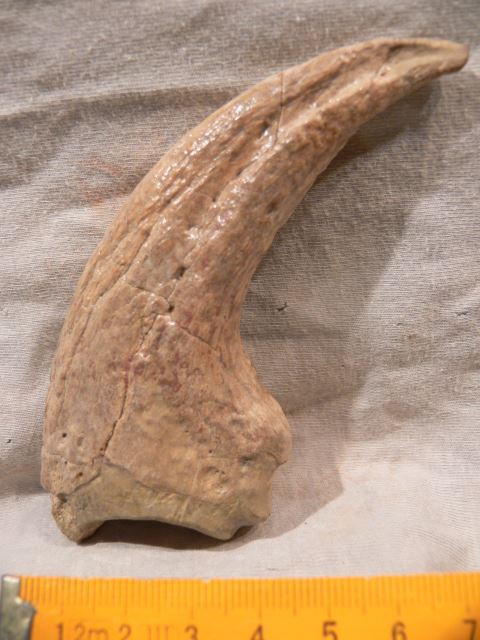 | 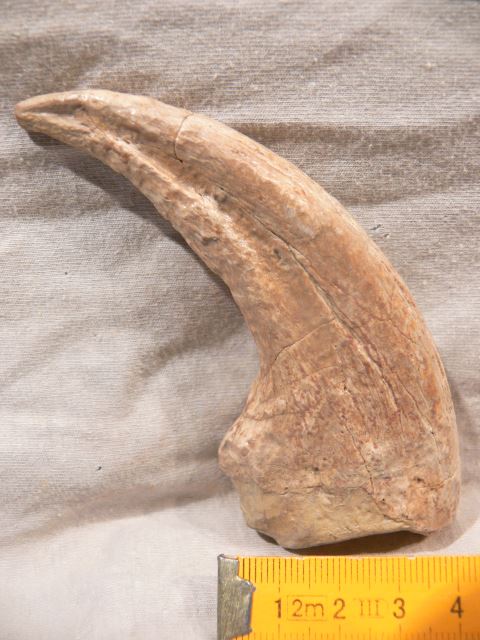 |
| Achillobator giganticus #VAG9287
(Perle & all 1999) Dromaeosaurid
Ultra Rare GIANT RAPTOR CLAW
Old collection, 4% restoration
Upper Cretaceous 93-83 million years old
Bayan Shireh formation, Dormogovi, Mongolia
Size span: 4.4 inch / 11 cm
Price: |
| Sarcosuchus arcosuchus imperator #VSI9196
Nice dermal plate of biggest Crocodillian ever
(Broin & Taquet 1966)
Albian L. Cretaceous 112 million years old
"Valley of the Bones"
Gadoufaoua, Tenere desert, Niger
Size : 3.2 inch / 8 cm
Price: | 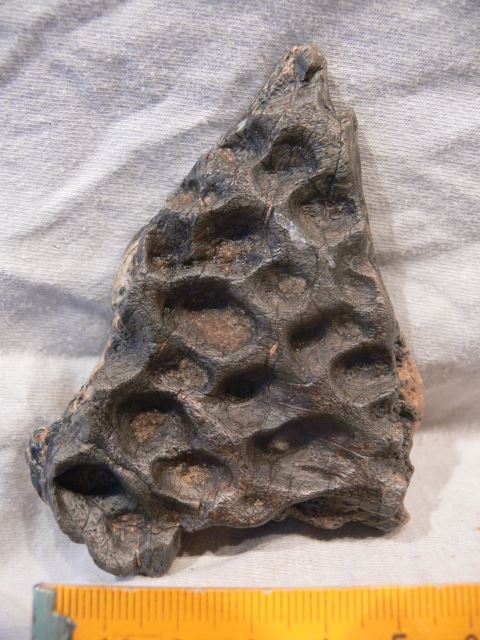 |
Hyphalosaurus lingyuanensis #VHC9057
Aquatic reptile, Very Nice specimen
Old Collection, Yixian formation
Aptian, Cretaceous, 122 million years old
Liaoning province, China
Size plate: 59 by 27 cm
Size specimen: 49.5 cm
Price: | 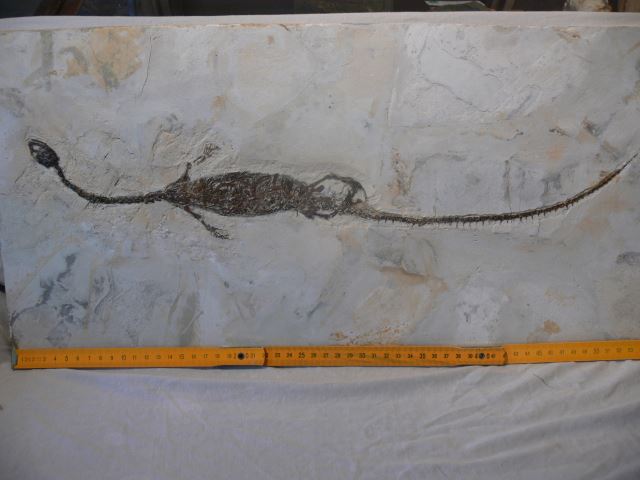 |
 | Keichosaurus hui #VKH8450
Fine detailed semi aquatic reptile. Above and right.
Lower Triassic, 242 Million years old
Huxia form, Guanglin, Guizhou province, China
Size fossil span: 9.4 inch / 23.5 cm
Price:
Old collection. |
| Chirotherium spec. #VTG8183
Very well detailed and rare footsteps positive
(Thecodontae Archosaurid) in original Matrix
Pelsonian, M. Muschelkalk, M. Triassic,
237 million years old
Bernburg, Germany
Size plate length: 111 cm
Price: |  |
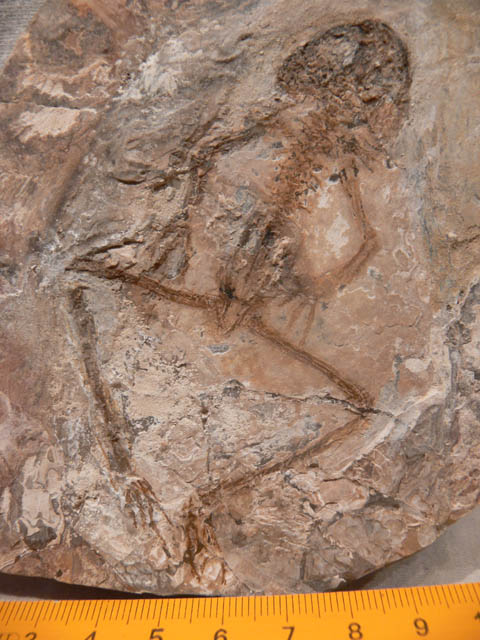 | Rana spec. (cf. Pelophylax pueyoi) #VKT8079
Fossilized Frog, Old Collection
EXTREME RARE!
Tortonian, U. Miocene, 10 million years old
Libros Konservat-Lagestatte, Teruel, NE Spain
Size span: 3.6 inch / 9 cm
Price: Eur |
Tritursus spec.#VAT8080
Very Rare Salamandria, Old Collection
Burdigalian, L. Miocene, 19 million years old
Laminated mudstone
Teruel Libros, NE Spain
Size : 3.4 inch / 8.5 cm
Price: Eur | 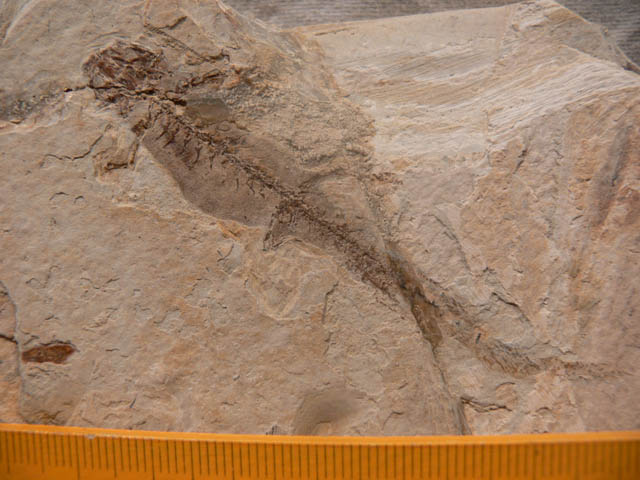 |
Tritursus spec.#VAT8082
Very Rare Salamandria, Old Collection
Burdigalian, L. Miocene, 19 million years old
Laminated mudstone
Teruel Libros, NE Spain
Size : 2.4 inch / 6 cm
Price: Eur |  |
Stenopterygius spec. #VIH0001
Kamikaze Ichtyosaurus!!.
While chasing prey it slammed into the Sea-floor and died of massive Skull damage.
Posidonien schiefer tc 1
L. Jurassic, Lias Epsilon 181 Million years old
Holzmaden, Germany
Size: 2.5 meter
Price: | 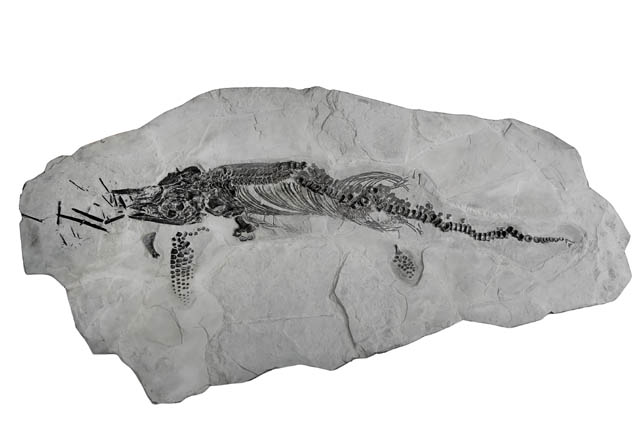 |